What Happened on Holy Saturday? A Few Reflections on Matthew 27:52–53

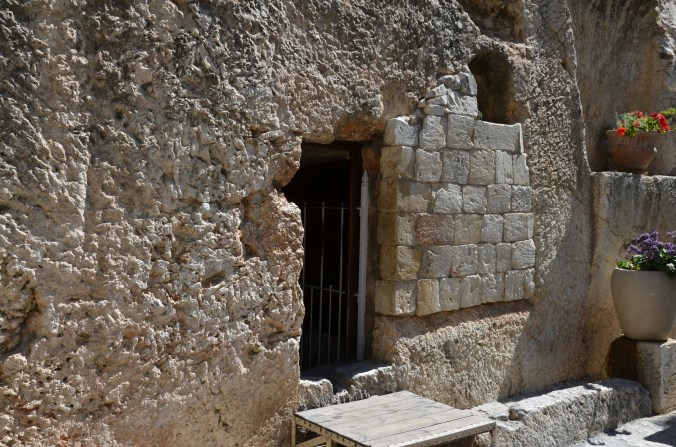
jonny-gios-TZ50uMfAK3E-unsplash

The tombs also were opened. And many bodies of the saints who had fallen asleep were raised,
and coming out of the tombs after his resurrection they went into the holy city and appeared to many.

— Matthew 27:52–53 —

What happened on Holy Saturday, the day situated between Good Friday and Resurrection Sunday? That is a good question that my fellow elder, Jared Bridges, has answered at the Washington Stand. And in his article, he takes a “topside” view—what was happening in Jerusalem on the day between Jesus’s cross and resurrection.

But there is another answer that needs to be considered, an answer that takes us below the surface, if you will. On Holy Saturday, while Jesus’s body rested in the grave, Jesus’s soul pronounced his victory over the spirits in prison (1 Pet. 3:19). That is to say, that when Jesus died, his body and soul were torn asunder, just like the temple veil (see Luke 23:44–46). As his body hung lifeless on the cross, soon to be buried, his soul, like all human souls, departed and went to realm of the dead, the place known as sheol in Hebrew or hades in Greek.

Importantly, sheol (or hades in Greek) is not the same thing as Hell (Gehenna), the place of eternal torment for the damned. Indicating their difference, hades gave up the dead to the lake of fire (i.e., hell) in Revelation 20:14. This means, Jesus did not go to “hell” after he died. But he did go to sheol, the realm of the dead. Often, we miss this fact, and missing what Jesus did in sheol, we miss the impact of Christ’s cross on the cosmos. Continue reading
Jesus is Prophet, Priest, and King: A Good Friday Meditation

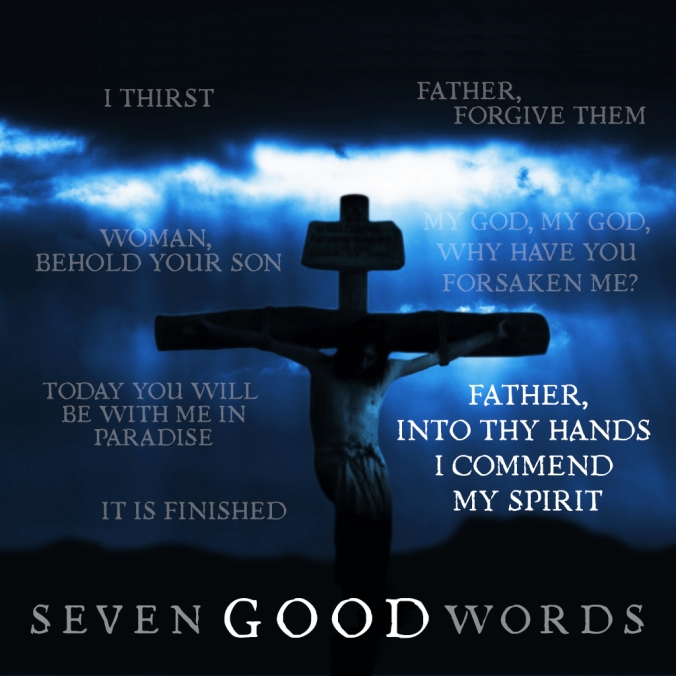
Into Thy HandsOn this Good Friday, I want to share a meditation from Alexander Watson (1815?–1865) related to the cross of Christ and the way Jesus’s death brought to fulfillment his triple office of prophet, priest, and king. But first, a little background.
Seven Sayings and Seven Sermons

For the last six years (beginning in 2018), I have preached a Good Friday sermon that has focused on one of Jesus’s words from the cross. In all, there are seven statements found across the four gospels. Here they are in order.

  1. Father, forgive them, for they know not what they do. (Luke 23:34)
  2. Truly, I say to you, today you will be with me in paradise. (Luke 23:43)
  3. Woman, behold your son . . . Son, behold your mother. (John 19:26–27)
  4. My God, My God, why have you forsaken me? (Matthew 27:46; Mark 15:43)
  5. I thirst. (John 19:28)
  6. It is finished. (John 19:30)
  7. Father, into your hands I commit my spirit (Luke 23:46)

You can also listen to these songs in Andrew Peterson’s Tenebrae.

For the last six years, I have preached six sermons. And you can find them here.

  1. Father, Forgive Them (2018)
  2. Today, You Will Be With Me In Paradise (2019, no audio)
  3. Woman, Behold Your Son (2020, Covid year)
  4. My God, My God, Why Have You Forsaken Me? (2021)
  5. I Thirst (2022)
  6. It is Finished (2023)
  7. Father, Into Your Hands I Commit My Spirit (2024)

Along the way, I have found great help in preparing these messages and thinking about the cross of Christ by reading Alexander Watson, The Seven Sayings on the Cross; Or, The Dying Christ Our Prophet, Priest, and King. Continue reading

A Primer on Elder-Led Congregationalism

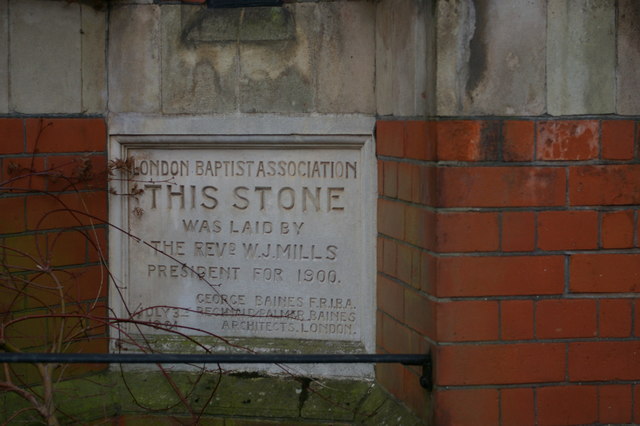
Foundation stone, Muswell Hill Baptist Church

Sometime in seminary, my ecclesiology class was tasked with defining a biblical view of church polity. Here is that paper, refined and updated. It argues for an unmistakably Baptist reading of the Bible, as it conjoins congregational authority with elder leadership.

*******

Should the church be congregational or should it be led by a plurality of elders?

This oft-debated question finds its difficulty in the fact that both approaches find substantial biblical support. So the question, “What does the Bible say,” does not sufficiently lead to a one-sided resolution. To answer this question, the first thing that must be seen is the asymmetry implicit in the question. Congregationalism pertains to authority. Plurality of elders concerns leadership. Together, it is vital to recognize that authority and leadership are not synonymous, and that, in fact, God has wisely designed authority and leadership to be distributed through the church, even as the church recognizes and submits to appointed elders.

Therefore, even though many Baptist churches elevate congregationalism over, and at the expense of, elder leadership (i.e., congregational democracies) and other Presbyterian churches elevate elders over the congregation (i.e., elder ruled), it is best to have congregational authority and elder leadership, or so I will argue. Continue reading

The First Day of the Lord (Genesis 3): Seven Reasons the Fall Occurred on the Seventh Day

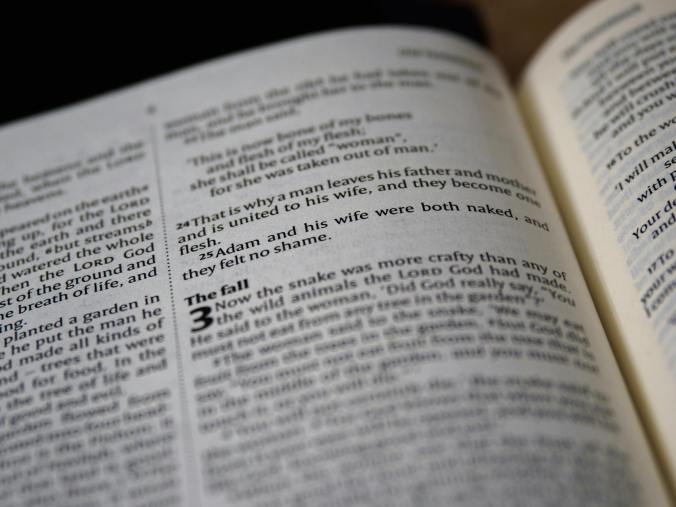
close up photo of bible

A few weeks ago, in a sermon on Genesis 3:8–13, I made the case that the events of Genesis 3 took place on the seventh day of the creation week, not some undefined time after the creation week. Instead of seeing Adam and Eve having days or weeks of communion with God in the Garden of Eden, I argued that Adam and Eve sinned against God on their very first day.

Just as Genesis 2 expounds the events of Day 6 (Gen. 1:24–31) in the creation week, so Genesis 3 develops the events of Day 7 (Gen. 2:1–3). At the end of the seventh day, God came down from heaven onto his mountain in order to rest on his holy hill. Yet, because he found two unclean sinners hiding in the garden, and a serpent standing there triumphant, God’s response was one of covenantal judgment, with an eschatological promise of salvation.

Genesis 3:14–19 is the centerpiece of the chapter, where God issues a curse on the serpent and on creation. And as a result, the first week of creation ends with the need of a new creation. Indeed, just as the eighth day, which is the first day of the week, will become in redemptive history the day of new creation, so Genesis 3 ends looking for this new creation. Or, at least, that is the implication of reading Genesis 3 as the seventh day of the creation week.

Yet, it may take some convincing to prove that Genesis 3 is the seventh day. After all, many commentators imagine a backstory to Genesis 3, which includes a series of “daily chats” occurring in the Garden before the Serpent arrives. Yet, such a backstory cannot be found in the text of Genesis 1–3.

Instead, what is found is the immediate entrance of the Serpent in Genesis 3:1. There is no “intertestamental period” between the union of man and woman (Genesis 2:24–25) and the arrival of the Serpent (3:1). And to create such an apocryphal tale is to go beyond the text. Nevertheless, the absence of backstory doesn’t automatically prove that Genesis 3 is the seventh day, unless there are others evidences in the text. And that is what I aim to argue in the seven points below.

Today, I will argue that Genesis 3 occurs on the seventh day of the creation week. And next week, I will return for at least four more reasons related to understanding the “Spirit of the Day” for proving the same point. Continue reading