To those who are elect exiles of the Dispersion in Pontus, Galatia, Cappadocia, Asia, and Bithynia, 2 according to the foreknowledge of God the Father, in the sanctification of the Spirit, for obedience to Jesus Christ and for sprinkling with his blood:
May grace and peace be multiplied to you.
Born Again to a Living Hope
3 Blessed be the God and Father of our Lord Jesus Christ! According to his great mercy, he has caused us to be born again to a living hope through the resurrection of Jesus Christ from the dead, 4 to an inheritance that is imperishable, undefiled, and unfading, kept in heaven for you, 5 who by God’s power are being guarded through faith for a salvation ready to be revealed in the last time. 6 In this you rejoice, though now for a little while, if necessary, you have been grieved by various trials, 7 so that the tested genuineness of your faith—more precious than gold that perishes though it is tested by fire—may be found to result in praise and glory and honor at the revelation of Jesus Christ. 8 Though you have not seen him, you love him. Though you do not now see him, you believe in him and rejoice with joy that is inexpressible and filled with glory, 9 obtaining the outcome of your faith, the salvation of your souls.
10 Concerning this salvation, the prophets who prophesied about the grace that was to be yours searched and inquired carefully, 11 inquiring what person or time the Spirit of Christ in them was indicating when he predicted the sufferings of Christ and the subsequent glories. 12 It was revealed to them that they were serving not themselves but you, in the things that have now been announced to you through those who preached the good news to you by the Holy Spirit sent from heaven, things into which angels long to look.
Called to Be Holy
13 Therefore, preparing your minds for action, and being sober-minded, set your hope fully on the grace that will be brought to you at the revelation of Jesus Christ. 14 As obedient children, do not be conformed to the passions of your former ignorance, 15 but as he who called you is holy, you also be holy in all your conduct, 16 since it is written, “You shall be holy, for I am holy.” 17 And if you call on him as Father who judges impartially according to each one’s deeds, conduct yourselves with fear throughout the time of your exile, 18 knowing that you were ransomed from the futile ways inherited from your forefathers, not with perishable things such as silver or gold, 19 but with the precious blood of Christ, like that of a lamb without blemish or spot. 20 He was foreknown before the foundation of the world but was made manifest in the last times for the sake of you 21 who through him are believers in God, who raised him from the dead and gave him glory, so that your faith and hope are in God.
22 Having purified your souls by your obedience to the truth for a sincere brotherly love, love one another earnestly from a pure heart, 23 since you have been born again, not of perishable seed but of imperishable, through the living and abiding word of God; 24 for
“All flesh is like grass
and all its glory like the flower of grass.
The grass withers,
and the flower falls,
25 but the word of the Lord remains forever.”
And this word is the good news that was preached to you.
2 And you were dead in the trespasses and sins 2 in which you once walked, following the course of this world, following the prince of the power of the air, the spirit that is now at work in the sons of disobedience— 3 among whom we all once lived in the passions of our flesh, carrying out the desires of the body and the mind, and were by nature children of wrath, like the rest of mankind. 4 But God, being rich in mercy, because of the great love with which he loved us, 5 even when we were dead in our trespasses, made us alive together with Christ—by grace you have been saved— 6 and raised us up with him and seated us with him in the heavenly places in Christ Jesus, 7 so that in the coming ages he might show the immeasurable riches of his grace in kindness toward us in Christ Jesus. 8 For by grace you have been saved through faith. And this is not your own doing; it is the gift of God, 9 not a result of works, so that no one may boast. 10 For we are his workmanship, created in Christ Jesus for good works, which God prepared beforehand, that we should walk in them.
One in Christ
11 Therefore remember that at one time you Gentiles in the flesh, called “the uncircumcision” by what is called the circumcision, which is made in the flesh by hands— 12 remember that you were at that time separated from Christ, alienated from the commonwealth of Israel and strangers to the covenants of promise, having no hope and without God in the world. 13 But now in Christ Jesus you who once were far off have been brought near by the blood of Christ. 14 For he himself is our peace, who has made us both one and has broken down in his flesh the dividing wall of hostility 15 by abolishing the law of commandments expressed in ordinances, that he might create in himself one new man in place of the two, so making peace, 16 and might reconcile us both to God in one body through the cross, thereby killing the hostility. 17 And he came and preached peace to you who were far off and peace to those who were near. 18 For through him we both have access in one Spirit to the Father. 19 So then you are no longer strangers and aliens, but you are fellow citizens with the saints and members of the household of God, 20 built on the foundation of the apostles and prophets, Christ Jesus himself being the cornerstone, 21 in whom the whole structure, being joined together, grows into a holy temple in the Lord. 22 In him you also are being built together into a dwelling place for God by the Spirit.
1 Paul, an apostle of Christ Jesus by the will of God, To the saints who are in Ephesus, and are faithful in Christ Jesus:
2 Grace to you and peace from God our Father and the Lord Jesus Christ.
Spiritual Blessings in Christ
3 Blessed be the God and Father of our Lord Jesus Christ, who has blessed us in Christ with every spiritual blessing in the heavenly places, 4 even as he chose us in him before the foundation of the world, that we should be holy and blameless before him. In love 5 he predestined us for adoption to himself as sons through Jesus Christ, according to the purpose of his will, 6 to the praise of his glorious grace, with which he has blessed us in the Beloved. 7 In him we have redemption through his blood, the forgiveness of our trespasses, according to the riches of his grace, 8 which he lavished upon us, in all wisdom and insight 9 making known to us the mystery of his will, according to his purpose, which he set forth in Christ 10 as a plan for the fullness of time, to unite all things in him, things in heaven and things on earth.
11 In him we have obtained an inheritance, having been predestined according to the purpose of him who works all things according to the counsel of his will, 12 so that we who were the first to hope in Christ might be to the praise of his glory. 13 In him you also, when you heard the word of truth, the gospel of your salvation, and believed in him, were sealed with the promised Holy Spirit, 14 who is the guarantee of our inheritance until we acquire possession of it, to the praise of his glory.
Thanksgiving and Prayer
15 For this reason, because I have heard of your faith in the Lord Jesus and your love toward all the saints, 16 I do not cease to give thanks for you, remembering you in my prayers, 17 that the God of our Lord Jesus Christ, the Father of glory, may give you the Spirit of wisdom and of revelation in the knowledge of him, 18 having the eyes of your hearts enlightened, that you may know what is the hope to which he has called you, what are the riches of his glorious inheritance in the saints, 19 and what is the immeasurable greatness of his power toward us who believe, according to the working of his great might 20 that he worked in Christ when he raised him from the dead and seated him at his right hand in the heavenly places, 21 far above all rule and authority and power and dominion, and above every name that is named, not only in this age but also in the one to come. 22 And he put all things under his feet and gave him as head over all things to the church, 23 which is his body, the fullness of him who fills all in all.
6 After this Jesus went away to the other side of the Sea of Galilee, which is the Sea of Tiberias. 2 And a large crowd was following him, because they saw the signs that he was doing on the sick. 3 Jesus went up on the mountain, and there he sat down with his disciples. 4 Now the Passover, the feast of the Jews, was at hand. 5 Lifting up his eyes, then, and seeing that a large crowd was coming toward him, Jesus said to Philip, “Where are we to buy bread, so that these people may eat?” 6 He said this to test him, for he himself knew what he would do. 7 Philip answered him, “Two hundred denarii worth of bread would not be enough for each of them to get a little.” 8 One of his disciples, Andrew, Simon Peter’s brother, said to him, 9 “There is a boy here who has five barley loaves and two fish, but what are they for so many?” 10 Jesus said, “Have the people sit down.” Now there was much grass in the place. So the men sat down, about five thousand in number. 11 Jesus then took the loaves, and when he had given thanks, he distributed them to those who were seated. So also the fish, as much as they wanted. 12 And when they had eaten their fill, he told his disciples, “Gather up the leftover fragments, that nothing may be lost.” 13 So they gathered them up and filled twelve baskets with fragments from the five barley loaves left by those who had eaten. 14 When the people saw the sign that he had done, they said, “This is indeed the Prophet who is to come into the world!”
15 Perceiving then that they were about to come and take him by force to make him king, Jesus withdrew again to the mountain by himself.
Jesus Walks on Water
16 When evening came, his disciples went down to the sea, 17 got into a boat, and started across the sea to Capernaum. It was now dark, and Jesus had not yet come to them. 18 The sea became rough because a strong wind was blowing. 19 When they had rowed about three or four miles, they saw Jesus walking on the sea and coming near the boat, and they were frightened. 20 But he said to them, “It is I; do not be afraid.” 21 Then they were glad to take him into the boat, and immediately the boat was at the land to which they were going.
I Am the Bread of Life
22 On the next day the crowd that remained on the other side of the sea saw that there had been only one boat there, and that Jesus had not entered the boat with his disciples, but that his disciples had gone away alone. 23 Other boats from Tiberias came near the place where they had eaten the bread after the Lord had given thanks. 24 So when the crowd saw that Jesus was not there, nor his disciples, they themselves got into the boats and went to Capernaum, seeking Jesus.
25 When they found him on the other side of the sea, they said to him, “Rabbi, when did you come here?” 26 Jesus answered them, “Truly, truly, I say to you, you are seeking me, not because you saw signs, but because you ate your fill of the loaves. 27 Do not work for the food that perishes, but for the food that endures to eternal life, which the Son of Man will give to you. For on him God the Father has set his seal.” 28 Then they said to him, “What must we do, to be doing the works of God?” 29 Jesus answered them, “This is the work of God, that you believe in him whom he has sent.” 30 So they said to him, “Then what sign do you do, that we may see and believe you? What work do you perform? 31 Our fathers ate the manna in the wilderness; as it is written, ‘He gave them bread from heaven to eat.’ ” 32 Jesus then said to them, “Truly, truly, I say to you, it was not Moses who gave you the bread from heaven, but my Father gives you the true bread from heaven. 33 For the bread of God is he who comes down from heaven and gives life to the world.” 34 They said to him, “Sir, give us this bread always.”
35 Jesus said to them, “I am the bread of life; whoever comes to me shall not hunger, and whoever believes in me shall never thirst. 36 But I said to you that you have seen me and yet do not believe. 37 All that the Father gives me will come to me, and whoever comes to me I will never cast out. 38 For I have come down from heaven, not to do my own will but the will of him who sent me. 39 And this is the will of him who sent me, that I should lose nothing of all that he has given me, but raise it up on the last day. 40 For this is the will of my Father, that everyone who looks on the Son and believes in him should have eternal life, and I will raise him up on the last day.”
41 So the Jews grumbled about him, because he said, “I am the bread that came down from heaven.” 42 They said, “Is not this Jesus, the son of Joseph, whose father and mother we know? How does he now say, ‘I have come down from heaven’?” 43 Jesus answered them, “Do not grumble among yourselves. 44 No one can come to me unless the Father who sent me draws him. And I will raise him up on the last day. 45 It is written in the Prophets, ‘And they will all be taught by God.’ Everyone who has heard and learned from the Father comes to me— 46 not that anyone has seen the Father except he who is from God; he has seen the Father. 47 Truly, truly, I say to you, whoever believes has eternal life. 48 I am the bread of life. 49 Your fathers ate the manna in the wilderness, and they died. 50 This is the bread that comes down from heaven, so that one may eat of it and not die. 51 I am the living bread that came down from heaven. If anyone eats of this bread, he will live forever. And the bread that I will give for the life of the world is my flesh.”
52 The Jews then disputed among themselves, saying, “How can this man give us his flesh to eat?” 53 So Jesus said to them, “Truly, truly, I say to you, unless you eat the flesh of the Son of Man and drink his blood, you have no life in you. 54 Whoever feeds on my flesh and drinks my blood has eternal life, and I will raise him up on the last day. 55 For my flesh is true food, and my blood is true drink. 56 Whoever feeds on my flesh and drinks my blood abides in me, and I in him. 57 As the living Father sent me, and I live because of the Father, so whoever feeds on me, he also will live because of me. 58 This is the bread that came down from heaven, not like the bread the fathers ate, and died. Whoever feeds on this bread will live forever.” 59 Jesus said these things in the synagogue, as he taught at Capernaum.
The Words of Eternal Life
60 When many of his disciples heard it, they said, “This is a hard saying; who can listen to it?” 61 But Jesus, knowing in himself that his disciples were grumbling about this, said to them, “Do you take offense at this? 62 Then what if you were to see the Son of Man ascending to where he was before? 63 It is the Spirit who gives life; the flesh is no help at all. The words that I have spoken to you are spirit and life. 64 But there are some of you who do not believe.” (For Jesus knew from the beginning who those were who did not believe, and who it was who would betray him.) 65 And he said, “This is why I told you that no one can come to me unless it is granted him by the Father.”
66 After this many of his disciples turned back and no longer walked with him. 67 So Jesus said to the twelve, “Do you want to go away as well?” 68 Simon Peter answered him, “Lord, to whom shall we go? You have the words of eternal life, 69 and we have believed, and have come to know, that you are the Holy One of God.” 70 Jesus answered them, “Did I not choose you, the twelve? And yet one of you is a devil.” 71 He spoke of Judas the son of Simon Iscariot, for he, one of the twelve, was going to betray him.
This month our church returns to the Gospel of John, and specifically we have started to look at the Upper Room Discourse (John 13–17), picking up in John 14. For those familiar with John 14–16, as well as the whole book of John, you know how often trinitarian themes, doctrines, and verses emerge. As John recounts the way Jesus speaks of his Father, the promise of sending the Spirit, and the relationship between Father, Son, and Spirit, we have perhaps the richest vein in Scripture for mining trinitarian gold.
To help our church, and those reading along here, I am going to begin posting some short pieces on the doctrine of the trinity and the key ideas related our God who is Father, Son, and Holy Spirit. Today, I will begin with a note from Scott Swain, author of many works on the Trinity, including Crossway’s Short Studies in Systematic Theology volume, The Trinity: An Introduction.
In his blogpost, “How John Says Jesus is ‘God’,” he offers four ways to think about Christ’s deity in John, and he concludes with this fourfold textual proof of Jesus’s divinity from John. All told, Swain actually offers seven ways to think of Jesus as God. And what I include here is the four point, with four proofs. Take time to consider each, and then as you read John, keep your eye out for the ways that John presents Jesus as God.
1. Jesus shares the divine name(s).
According to the Fourth Gospel, Jesus shares his Father’s holy “name” (Jn 17:11; cf. 12:41). Throughout the Gospel, Jesus is not only acclaimed as “God” (Jn 1:1; 20:28), he is also identified by God’s proper name YHWH, “the linguistic token of God’s uniqueness par excellence,” along with the “corona of connotation” established by various OT ways of expounding God’s proper name (Kendall Soulen). The monogenēs is called “the one who is” in John 1:18 (echoing Exod 3:14 LXX). Jesus is called “the Lord” in John 1:23 (citing the Tetragrammaton from Isa 40:3) and John 20:28 (echoing Ps 35:23 [34:23 LXX], which calls YHWH “my Elohim and my Adonai”). Perhaps most significantly, Jesus identifies himself as the one true God by means of a series of absolute (Jn 4:26; 6:20; 8:24, 28, 58; 13:19; 18:5, 6, 8) and predicate (Jn 6:35, 41, 48; 8:12; 10:7, 9, 11, 14; 11:25; 14:6; 15:1) “I am” statements, which echo YHWH’s own self-identification in the Old Testament (Deut 32:39; Isa 41:4; 43:10, 13, 25; 46:4; 48:12; 51:12; 52:6).
2. Jesus possesses divine attributes.
He shares God’s eternal and unchangeable being, in contrast to temporal and changeable creatures (Jn 1:1-3; 8:35, 58). He manifests YHWH’s unique “glory” (Jn 12:41, alluding to Isaiah 6), abounding in “grace and truth” (Jn 1:14, which alludes to Exod 34:6). He has “life in himself,” just “as the Father has life in himself” (Jn 5:26). Jesus is a divine king (Jn 18:36) who holds all divine authority in his hands (Jn 3:35; 13:3).
3. Jesus performs divine works.
As the Word who created all things (Jn 1:3-5), Jesus also proclaims the divine name to creatures (Jn 1:14, 18; 17:6, 26). Because he holds all divine authority in his hands, he executes divine judgment, raises the dead, and grants eternal life to whomever he will (Jn 5:21-22, 25, 27; 10:18; 17:2). Jesus predicts the future, revealing that “I am he” (Jn 13:19). Whatever the Father does, the Son does likewise (Jn 5:19), completing the divine work of salvation that the Father gave him to do on the cross (Jn 13:1; 19:3). For all the aforementioned reasons and others,
4. Jesus is worthy of divine honor.
The Father “has given all judgment to the Son, that all might honor the Son, just as they honor the Father” (Jn 5:22-23). Jesus is worthy of the same faith that is due God (Jn 14:1; cf. 3:14-15; 8:24; 20:31), and also the same love (Jn 14:15). As one who shares the divine name, he is “lifted up” and “glorified” as “I am” (Jn 8:28; 12:32, 41). After Jesus’ resurrection, Thomas exclaims, “my Lord and my God” (Jn 20:28), a scriptural expression of covenant devotion (Ps 35:23). Though personally distinct from the Father as his Word and monogenēs, Jesus, according to John, is “one” God with the Father in every way (Jn 10:30).
From these four points and others, we have every reason to see that the Bible is unequivocal in calling Jesus ‘God.’ And thus, we should worship him not only as a good and great man, but as our God—Creator, Redeemer, Lord, and Second Person of the Trinity. Indeed, let us come to the Father, through the Son, by the Spirit, bringing him all the praise he deserves.
On Sunday, our church began a new series in the book of 1 Peter. Introducing the book, we focused on the salutation (1 Peter 1:1–2), two verses that introduce Peter, the elect exiles, and the triune God from whom all grace and peace come. From this short introduction we discovered a number of things about the book, its author, its setting, and the sovereign grace of God.
If you are unfamiliar with 1 Peter, it is well worth your time to study in 2021. Because, as those who are familiar with 1 Peter know, Peter’s message of living hope is tailor-made for Christians living in difficult times. For us living in a time of pan(dem)ic, political upheaval, and cultural breakdown, we need Peter’s strong words of encouragement. For the next five months, we will (as the Lord wills) focus on this encouraging book.
You can find the sermon audio. The video is below, along with these articles that might be of help after listening to the message.
Few books in the Bible give us more “raw material” about the Trinity than John’s Gospel. While the word “Trinity” is not found in the Bible, testimony to God as Father, Son, and Holy Spirit is. And in the Fourth Gospel, the works of the Trinity are displayed in their greatest fullness.
Helping us to see the inseparable operations of the Father, Son, and Holy Spirit, the ESV Study Bible nicely charts most of the instances of God’s Work. In what follows, notice how every work of God is “shared” by Father, Son, and Holy Spirit. To say it more carefully, whenever God acts he acts as Father, Son, and Holy Spirit.
Whether it is in creation, salvation, or revelation, each person of the Trinity acts in a way appropriate to their personhood. Yet, such personal properties are never divided from the other members of the Trinity. We can speak variously about the work of the Father, Son, and Holy Spirit, but we can never speak of them independent from one another, or as if the Father does one thing, the Son another, the Spirit a third.
While personal properties apply in all of God’s actions—e.g., the Father creates as the Father, the Son creates as the Son, and Spirit creates as the Spirit—the triune God always works as one God. This reality helps us to know God in his triune glory and to appreciate how each member works in union with one another. Even more, as we see in John’s Gospel, when the Father sends the Son and Spirit and the Father and Son send the Spirit, we begin to learn who God is through what God has done in redemptive history.
Expanding this vision of God’s triune work in redemption, the ESV Study Bible’s chart will assist greatly. Continue reading →
All things have been handed over to me by my Father, and no one knows the Son except the Father, and no one knows the Father except the Son and anyone to whom the Son chooses to reveal him.
— Matthew 11:27 —
Perhaps of the most surprising (and edifying) aspects of the Sermon on the Mount is the emphasis Jesus’ makes on his Father in heaven. While we may consider the Sermon as a explanation of the Law (see 5:17–48), or instructions for true piety (see 6:1–18), or a warnings to walk in the true way (see 7:13–28), the heartbeat of the Sermon is a love for the Father. And more than that, the Sermon is about how disciples of Christ might know and enjoy the Father’s love.
The importance of this Father-centered vision of the Sermon cannot be understated. As John 14:6 indicates, Jesus came to bring us to the Father. Likewise, Matthew’s own Gospel identifies how Jesus seeks to reveal the Father to those whom the Father has given (see above, Matthew 11:25–27). Therefore, it is worth noting how in his first discourse, the Father plays a prominent role. In what follows, I’ve notated twelve truths about what Jesus tells us about his Father and his Father’s love for those who seek first the kingdom of God and his righteousness. Continue reading →
These are just a few of the most complex issues we face when we read the Bible and formulate doctrine. They are debated by well-meaning and biblically-committed Christians, and often they leave us perplexed, if not flummoxed, at how to understand them and apply them to life.
Certainly, there are mysteries related to each of these doctrines, but in God’s revealed word, we still find ample evidence for explaining them as Scripture teaches. That said, I believe it is impossible to understand any of these doctrines rightly without a self-conscious awareness of how they all relate to the nature of God as Father, Son, and Holy Spirit. Or, to put it the other way, how a robust doctrine of the Trinity sheds light on these doctrines that relate God to his world and his Word. Let me try to illustrate. Continue reading →
In his excellent book on the Trinity, Fred Sanders makes a number of key observations related to seeing (and not seeing) the Trinity in the Old Testament. (This subject takes up the whole of chapter 8 in The Triune God).
A biblical formulation of the Trinity should not begin with the Old Testament. Because the doctrine is revealed in the historical events of the Incarnation and Pentecost, not the propositions of the text, we must begin with the events recorded in the New Testament, not the hints contained in the Old. Sanders rightly corrects strictly chronological approaches to the Trinity: “The root idea of revelation is not verbal announcement but the unveiling or disclosing of something that has been present, though concealed. . . . The triunity of God was revealed when the persons of the Trinity became present among us in a new way, showing up in person and becoming the object of our human observation” (40).
With the full revelation of God as Father, Son, and Holy Spirit, we can look backwards to see “adumbrations” of the Trinity in the Old Testament. As Sanders notes, “The doctrine of the Trinity did not arise and cannot stand without the Old Testament, but the Old Testament’s usefulness for Trinitarianism is retrospective and dependent on the light provided by the fullness of revelation” (212).
In this way, the doctrine of the Trinity is a ‘mystery’ in the biblical sense. In the New Testament, mysterion speaks of those realities that were once hidden, but are now revealed. The Trinity fits well into this biblical category: “God did not yet reveal his triunity until the fullness of time had come. The Trinity is a mystery in the biblical sense: always true, once concealed, now revealed” (210).
More specifically, trinitarian exegesis in the Old Testament is prosoponic (from the Greek word for person). Prosoponic or “prosopological exegesis is a technical expression, but an important one for discussions about the Trinity. It simply means reading the Old Testament in light of the New, where the persons (prosopon) are distinguished in the Old Testament text. “Having met Christ and the Spirit [in the Incarnation and Pentecost], we can look for them in the Old Testament in a way we could not have without having met them in person” (227).
Prosoponic exegesis requires rereading. “What is required for doctrinal interpretation of the Old Testament is a hermeneutical framework that acknowledge the complex structures of the revelation, and an approach to reading the documents that precede and follow the revelation. The key hermeneutical category for this kind of interpretation is rereading” (215, emphasis mine). In rereading, we gain new understanding, insight not available on a first reading. In this way, readers do not add meaning to the text, but instead see the text in the fullness of later revelation. A good example of this is reading Genesis 1 in light of John 1, Colossians 1, and Hebrews 1.
From hermeneutical commitments like these, Sanders helps us get our bearings on reading the Old Testament. In fact, his chapter on reading the Old Testament retrospectively is one of the best I’ve read on grasping the theological unity and eschatological development of the Bible. For these reasons, I would highly recommend his book, especially if you struggle to see how grammatical-historical exegesis relates to the whole Bible. Continue reading →




 This month our church returns to the Gospel of John, and specifically we have started to look at the Upper Room Discourse (John 13–17), picking up in John 14. For those familiar with John 14–16, as well as the whole book of John, you know how often trinitarian themes, doctrines, and verses emerge. As John recounts the way Jesus speaks of his Father, the promise of sending the Spirit, and the relationship between Father, Son, and Spirit, we have perhaps the richest vein in Scripture for mining trinitarian gold.
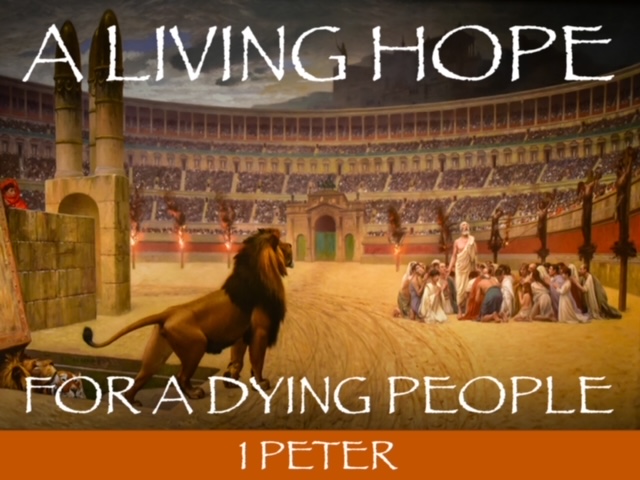 On Sunday, our church began a new series in the book of 1 Peter. Introducing the book, we focused on the salutation (1 Peter 1:1–2), two verses that introduce Peter, the elect exiles, and the triune God from whom all grace and peace come. From this short introduction we discovered a number of things about the book, its author, its setting, and the sovereign grace of God.
 Few books in the Bible give us more “raw material” about the Trinity than John’s Gospel. While the word “Trinity” is not found in the Bible, testimony to God as Father, Son, and Holy Spirit is. And in the Fourth Gospel, the works of the Trinity are displayed in their greatest fullness.
 Free will.
 In his excellent book on the Trinity, Fred Sanders makes a number of key observations related to seeing (and not seeing) the Trinity in the Old Testament. (This subject takes up the whole of chapter 8 in
  should not begin with the Old Testament. Because the doctrine is revealed in the historical events of the Incarnation and Pentecost, not the propositions of the text, we must begin with the events recorded in the New Testament, not the hints contained in the Old. Sanders rightly corrects strictly chronological approaches to the Trinity: “The root idea of revelation is not verbal announcement but the unveiling or disclosing of something that has been present, though concealed. . . . The triunity of God was revealed when the persons of the Trinity became present among us in a new way, showing up in person and becoming the object of our human observation” (40).
 Via Emmaus