3 Are we beginning to commend ourselves again? Or do we need, as some do, letters of recommendation to you, or from you? 2 You yourselves are our letter of recommendation, written on our hearts, to be known and read by all. 3 And you show that you are a letter from Christ delivered by us, written not with ink but with the Spirit of the living God, not on tablets of stone but on tablets of human hearts.
4 Such is the confidence that we have through Christ toward God. 5 Not that we are sufficient in ourselves to claim anything as coming from us, but our sufficiency is from God, 6 who has made us sufficient to be ministers of a new covenant, not of the letter but of the Spirit. For the letter kills, but the Spirit gives life.
7 Now if the ministry of death, carved in letters on stone, came with such glory that the Israelites could not gaze at Moses’ face because of its glory, which was being brought to an end, 8 will not the ministry of the Spirit have even more glory? 9 For if there was glory in the ministry of condemnation, the ministry of righteousness must far exceed it in glory. 10 Indeed, in this case, what once had glory has come to have no glory at all, because of the glory that surpasses it. 11 For if what was being brought to an end came with glory, much more will what is permanent have glory.
12 Since we have such a hope, we are very bold, 13 not like Moses, who would put a veil over his face so that the Israelites might not gaze at the outcome of what was being brought to an end. 14 But their minds were hardened. For to this day, when they read the old covenant, that same veil remains unlifted, because only through Christ is it taken away. 15 Yes, to this day whenever Moses is read a veil lies over their hearts. 16 But when one turns to the Lord, the veil is removed. 17 Now the Lord is the Spirit, and where the Spirit of the Lord is, there is freedom. 18 And we all, with unveiled face, beholding the glory of the Lord, are being transformed into the same image from one degree of glory to another. For this comes from the Lord who is the Spirit.
9 Am I not free? Am I not an apostle? Have I not seen Jesus our Lord? Are not you my workmanship in the Lord? 2 If to others I am not an apostle, at least I am to you, for you are the seal of my apostleship in the Lord.
3 This is my defense to those who would examine me. 4 Do we not have the right to eat and drink? 5 Do we not have the right to take along a believing wife, as do the other apostles and the brothers of the Lord and Cephas? 6 Or is it only Barnabas and I who have no right to refrain from working for a living? 7 Who serves as a soldier at his own expense? Who plants a vineyard without eating any of its fruit? Or who tends a flock without getting some of the milk?
8 Do I say these things on human authority? Does not the Law say the same? 9 For it is written in the Law of Moses, “You shall not muzzle an ox when it treads out the grain.” Is it for oxen that God is concerned? 10 Does he not certainly speak for our sake? It was written for our sake, because the plowman should plow in hope and the thresher thresh in hope of sharing in the crop. 11 If we have sown spiritual things among you, is it too much if we reap material things from you? 12 If others share this rightful claim on you, do not we even more?
Nevertheless, we have not made use of this right, but we endure anything rather than put an obstacle in the way of the gospel of Christ. 13 Do you not know that those who are employed in the temple service get their food from the temple, and those who serve at the altar share in the sacrificial offerings? 14 In the same way, the Lord commanded that those who proclaim the gospel should get their living by the gospel.
15 But I have made no use of any of these rights, nor am I writing these things to secure any such provision. For I would rather die than have anyone deprive me of my ground for boasting. 16 For if I preach the gospel, that gives me no ground for boasting. For necessity is laid upon me. Woe to me if I do not preach the gospel! 17 For if I do this of my own will, I have a reward, but if not of my own will, I am still entrusted with a stewardship. 18 What then is my reward? That in my preaching I may present the gospel free of charge, so as not to make full use of my right in the gospel.
19 For though I am free from all, I have made myself a servant to all, that I might win more of them. 20 To the Jews I became as a Jew, in order to win Jews. To those under the law I became as one under the law (though not being myself under the law) that I might win those under the law. 21 To those outside the law I became as one outside the law (not being outside the law of God but under the law of Christ) that I might win those outside the law. 22 To the weak I became weak, that I might win the weak. I have become all things to all people, that by all means I might save some. 23 I do it all for the sake of the gospel, that I may share with them in its blessings.
24 Do you not know that in a race all the runners run, but only one receives the prize? So run that you may obtain it. 25 Every athlete exercises self-control in all things. They do it to receive a perishable wreath, but we an imperishable. 26 So I do not run aimlessly; I do not box as one beating the air. 27 But I discipline my body and keep it under control, lest after preaching to others I myself should be disqualified.
1 Paul, called by the will of God to be an apostle of Christ Jesus, and our brother Sosthenes,
2 To the church of God that is in Corinth, to those sanctified in Christ Jesus, called to be saints together with all those who in every place call upon the name of our Lord Jesus Christ, both their Lord and ours:
3 Grace to you and peace from God our Father and the Lord Jesus Christ.
Thanksgiving
4 I give thanks to my God always for you because of the grace of God that was given you in Christ Jesus, 5 that in every way you were enriched in him in all speech and all knowledge— 6 even as the testimony about Christ was confirmed among you— 7 so that you are not lacking in any gift, as you wait for the revealing of our Lord Jesus Christ, 8 who will sustain you to the end, guiltless in the day of our Lord Jesus Christ. 9 God is faithful, by whom you were called into the fellowship of his Son, Jesus Christ our Lord.
Divisions in the Church
10 I appeal to you, brothers, by the name of our Lord Jesus Christ, that all of you agree, and that there be no divisions among you, but that you be united in the same mind and the same judgment. 11 For it has been reported to me by Chloe’s people that there is quarreling among you, my brothers. 12 What I mean is that each one of you says, “I follow Paul,” or “I follow Apollos,” or “I follow Cephas,” or “I follow Christ.” 13 Is Christ divided? Was Paul crucified for you? Or were you baptized in the name of Paul? 14 I thank God that I baptized none of you except Crispus and Gaius, 15 so that no one may say that you were baptized in my name. 16 (I did baptize also the household of Stephanas. Beyond that, I do not know whether I baptized anyone else.) 17 For Christ did not send me to baptize but to preach the gospel, and not with words of eloquent wisdom, lest the cross of Christ be emptied of its power.
Christ the Wisdom and Power of God
18 For the word of the cross is folly to those who are perishing, but to us who are being saved it is the power of God. 19 For it is written,
“I will destroy the wisdom of the wise,
and the discernment of the discerning I will thwart.”
20 Where is the one who is wise? Where is the scribe? Where is the debater of this age? Has not God made foolish the wisdom of the world? 21 For since, in the wisdom of God, the world did not know God through wisdom, it pleased God through the folly of what we preach to save those who believe. 22 For Jews demand signs and Greeks seek wisdom, 23 but we preach Christ crucified, a stumbling block to Jews and folly to Gentiles, 24 but to those who are called, both Jews and Greeks, Christ the power of God and the wisdom of God. 25 For the foolishness of God is wiser than men, and the weakness of God is stronger than men.
26 For consider your calling, brothers: not many of you were wise according to worldly standards, not many were powerful, not many were of noble birth. 27 But God chose what is foolish in the world to shame the wise; God chose what is weak in the world to shame the strong; 28 God chose what is low and despised in the world, even things that are not, to bring to nothing things that are, 29 so that no human being might boast in the presence of God. 30 And because of him you are in Christ Jesus, who became to us wisdom from God, righteousness and sanctification and redemption, 31 so that, as it is written, “Let the one who boasts, boast in the Lord.”
8 There is therefore now no condemnation for those who are in Christ Jesus. 2 For the law of the Spirit of life has set you free in Christ Jesus from the law of sin and death. 3 For God has done what the law, weakened by the flesh, could not do. By sending his own Son in the likeness of sinful flesh and for sin, he condemned sin in the flesh, 4 in order that the righteous requirement of the law might be fulfilled in us, who walk not according to the flesh but according to the Spirit. 5 For those who live according to the flesh set their minds on the things of the flesh, but those who live according to the Spirit set their minds on the things of the Spirit. 6 For to set the mind on the flesh is death, but to set the mind on the Spirit is life and peace. 7 For the mind that is set on the flesh is hostile to God, for it does not submit to God’s law; indeed, it cannot. 8 Those who are in the flesh cannot please God.
9 You, however, are not in the flesh but in the Spirit, if in fact the Spirit of God dwells in you. Anyone who does not have the Spirit of Christ does not belong to him. 10 But if Christ is in you, although the body is dead because of sin, the Spirit is life because of righteousness. 11 If the Spirit of him who raised Jesus from the dead dwells in you, he who raised Christ Jesus from the dead will also give life to your mortal bodies through his Spirit who dwells in you.
Heirs with Christ
12 So then, brothers, we are debtors, not to the flesh, to live according to the flesh. 13 For if you live according to the flesh you will die, but if by the Spirit you put to death the deeds of the body, you will live. 14 For all who are led by the Spirit of God are sons of God. 15 For you did not receive the spirit of slavery to fall back into fear, but you have received the Spirit of adoption as sons, by whom we cry, “Abba! Father!” 16 The Spirit himself bears witness with our spirit that we are children of God, 17 and if children, then heirs—heirs of God and fellow heirs with Christ, provided we suffer with him in order that we may also be glorified with him.
Future Glory
18 For I consider that the sufferings of this present time are not worth comparing with the glory that is to be revealed to us. 19 For the creation waits with eager longing for the revealing of the sons of God. 20 For the creation was subjected to futility, not willingly, but because of him who subjected it, in hope 21 that the creation itself will be set free from its bondage to corruption and obtain the freedom of the glory of the children of God. 22 For we know that the whole creation has been groaning together in the pains of childbirth until now. 23 And not only the creation, but we ourselves, who have the firstfruits of the Spirit, groan inwardly as we wait eagerly for adoption as sons, the redemption of our bodies. 24 For in this hope we were saved. Now hope that is seen is not hope. For who hopes for what he sees? 25 But if we hope for what we do not see, we wait for it with patience.
26 Likewise the Spirit helps us in our weakness. For we do not know what to pray for as we ought, but the Spirit himself intercedes for us with groanings too deep for words. 27 And he who searches hearts knows what is the mind of the Spirit, because the Spirit intercedes for the saints according to the will of God. 28 And we know that for those who love God all things work together for good, for those who are called according to his purpose. 29 For those whom he foreknew he also predestined to be conformed to the image of his Son, in order that he might be the firstborn among many brothers. 30 And those whom he predestined he also called, and those whom he called he also justified, and those whom he justified he also glorified.
God’s Everlasting Love
31 What then shall we say to these things? If God is for us, who can be against us? 32 He who did not spare his own Son but gave him up for us all, how will he not also with him graciously give us all things? 33 Who shall bring any charge against God’s elect? It is God who justifies. 34 Who is to condemn? Christ Jesus is the one who died—more than that, who was raised—who is at the right hand of God, who indeed is interceding for us. 35 Who shall separate us from the love of Christ? Shall tribulation, or distress, or persecution, or famine, or nakedness, or danger, or sword? 36 As it is written,
“For your sake we are being killed all the day long;
we are regarded as sheep to be slaughtered.” [Psalm 44:22]
37 No, in all these things we are more than conquerors through him who loved us. 38 For I am sure that neither death nor life, nor angels nor rulers, nor things present nor things to come, nor powers, 39 nor height nor depth, nor anything else in all creation, will be able to separate us from the love of God in Christ Jesus our Lord.
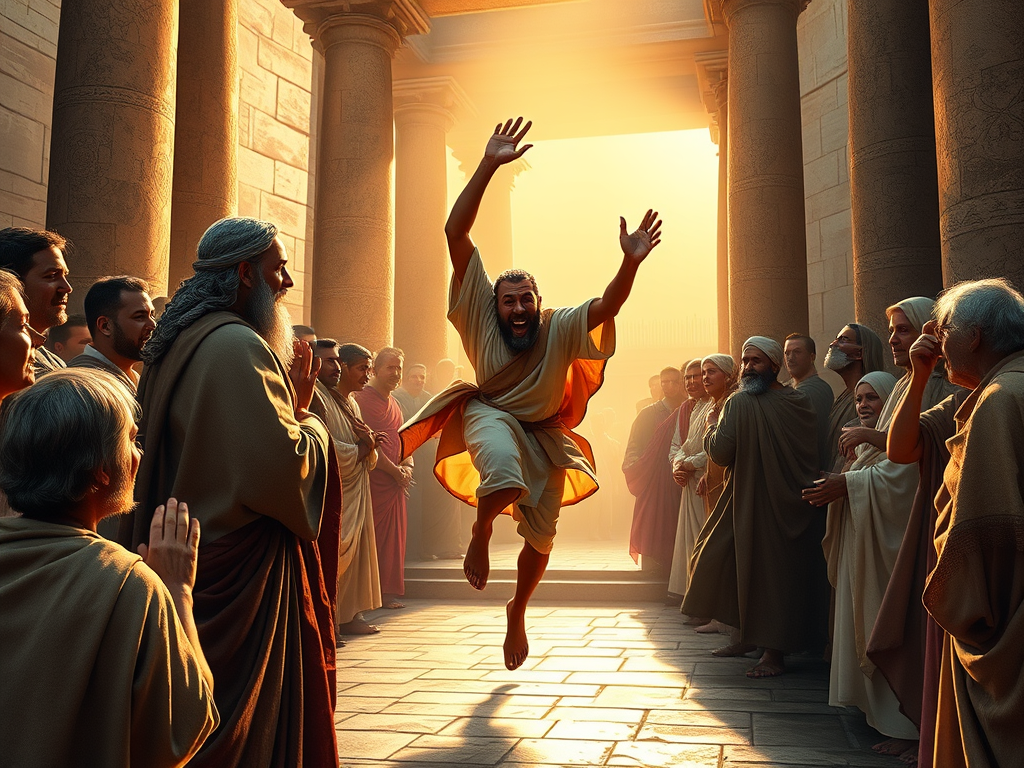
3 Now Peter and John were going up to the temple at the hour of prayer, the ninth hour. 2 And a man lame from birth was being carried, whom they laid daily at the gate of the temple that is called the Beautiful Gate to ask alms of those entering the temple. 3 Seeing Peter and John about to go into the temple, he asked to receive alms. 4 And Peter directed his gaze at him, as did John, and said, “Look at us.” 5 And he fixed his attention on them, expecting to receive something from them. 6 But Peter said, “I have no silver and gold, but what I do have I give to you. In the name of Jesus Christ of Nazareth, rise up and walk!” 7 And he took him by the right hand and raised him up, and immediately his feet and ankles were made strong. 8 And leaping up, he stood and began to walk, and entered the temple with them, walking and leaping and praising God. 9 And all the people saw him walking and praising God, 10 and recognized him as the one who sat at the Beautiful Gate of the temple, asking for alms. And they were filled with wonder and amazement at what had happened to him.
Peter Speaks in Solomon’s Portico
11 While he clung to Peter and John, all the people, utterly astounded, ran together to them in the portico called Solomon’s. 12 And when Peter saw it he addressed the people: “Men of Israel, why do you wonder at this, or why do you stare at us, as though by our own power or piety we have made him walk? 13 The God of Abraham, the God of Isaac, and the God of Jacob, the God of our fathers, glorified his servant Jesus, whom you delivered over and denied in the presence of Pilate, when he had decided to release him. 14 But you denied the Holy and Righteous One, and asked for a murderer to be granted to you, 15 and you killed the Author of life, whom God raised from the dead. To this we are witnesses. 16 And his name—by faith in his name—has made this man strong whom you see and know, and the faith that is through Jesus has given the man this perfect health in the presence of you all.
17 “And now, brothers, I know that you acted in ignorance, as did also your rulers. 18 But what God foretold by the mouth of all the prophets, that his Christ would suffer, he thus fulfilled. 19 Repent therefore, and turn back, that your sins may be blotted out, 20 that times of refreshing may come from the presence of the Lord, and that he may send the Christ appointed for you, Jesus, 21 whom heaven must receive until the time for restoring all the things about which God spoke by the mouth of his holy prophets long ago. 22 Moses said, ‘The Lord God will raise up for you a prophet like me from your brothers. You shall listen to him in whatever he tells you. 23 And it shall be that every soul who does not listen to that prophet shall be destroyed from the people.’ 24 And all the prophets who have spoken, from Samuel and those who came after him, also proclaimed these days. 25 You are the sons of the prophets and of the covenant that God made with your fathers, saying to Abraham, ‘And in your offspring shall all the families of the earth be blessed.’ 26 God, having raised up his servant, sent him to you first, to bless you by turning every one of you from your wickedness.”
On Sunday I preached an election sermon in two parts. Expounding Psalm 2, I considered four vital truths about God’s sovereignty from God’s promise to give his son the nations, and in response I outlined five practical steps to exercising our political stewardship.
In this sermon, I did not endorse a candidate or commend a singular church approved voting guide, but I did name names and identify a vote for Democrats as a sin. But more than just stressing the importance of Tuesday’s election, I attempted to show how a steadfast hope in Christ’s Lordship leads to a life of good works, even political good works such as voting.
And so, I offer that sermon here as one fallible example of an election sermon, followed by an email (now updated) I sent to our church explaining the background of election sermons and why they matter today. Indeed, as I noted in my Saturday blogpost, I have learned a lot about preaching and politics since 2016, and I offer this example and argument for an election sermon as help to any others who are taking the same path.
Sovereignty & Stewardship: An Election Sermon in Two Parts
God’s Sovereignty in Psalm 2
Enrages the Nations (vv. 1–3)
Rules over the Nations (vv. 4–6)
Rewards the Son with the Kingdom (vv. 7–9)
Requires Rulers to Kiss the Son (vv. 10–12)
Our Political Stewardship Today
Think Clearly
Speak Truthfully
Vote Righteously
Pray Earnestly
Gather Faithfully
All told, in these nine marks of an election sermon, I sought to exhort our congregation to trust God and to act accordingly. Here is the sermon.
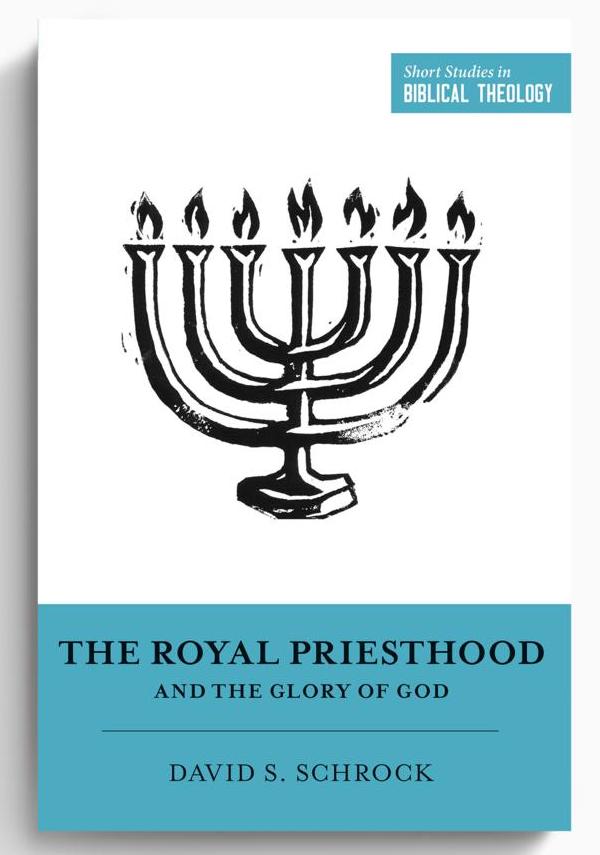
In 2022, I wrote a book entitled The Royal Priesthood and the Glory of God. This book clarified, synthesized, and streamlined my doctoral dissertation. In 2013, I finished a biblical theology of the priesthood which sought to answer the question: For whom did Christ die? Looking at the priesthood from Genesis to Revelation I argued for a definite atonement. In that large volume I came to love the theme of priesthood in the Bible and what that means for knowing Christ and for imitating Christ.
Since 2013, I have written a handful of articles on the priesthood, and in the last few weeks I have spoken twice on the subject. The first series of lectures took place at Eden Baptist Church in Burnsville, Minnesota, and the second lecture series is taking place this weekend at Toronto Baptist Seminary and Jarvis Street Baptist Church in Toronto, Canada.
To assist students, faculty, church members, and guests of the Bauman Lectures, I am posting notes here. I will add to them as the weekend goes on, and in the end, I hope this post will link to all the priestly things I have written to date.
The Bauman Lectures (2024)
Lecture 1: Building a Kingdom of Priests — In this lecture, I survey the way in which the institution of the Levitical Priesthood came into being. This lecture simplifies my larger SBJT article and puts into lecture form the second chapter of my book, The Royal Priesthood and the Glory of God.
Lecture 2: In Search of a Priest-King Like Melchizedek (Genesis 14, Psalm 110, Hebrews 5–7) –In this lecture, I examine the context, content, and concepts found in three places where Melchizedek is named. Together, this helps us understand who Jesus is, as a royal priest.
Lecture 3: Seeing Melchizedek in the Book of 1–2 Samuel: An Exploration in Typology — In this lecture, I have written a working manuscript (with limited annotation) to show how Melchizedek is a figure found in the book of 1–2 Samuel. This reading depends upon a careful comparison between Bera, king of Sodom, and Melchizedek, king of Salem. It also explains how David saw his own son as a priest after the order of Melchizedek.
Each month, I write editorial transition for the website Christ Over All. These “Intermissions” highlight the past month and introduce the next. Along the way, I offer a few reflections on Christ and Culture. Here is the most recent Intermission: ‘From Thinking about Israel to Thinking God’s Thoughts after Him.’
Adonijah the son of Haggith exalted himself, saying, ‘I will be king.” – 1 Kings 1:5 –
But seek first the kingdom of God and his righteousness,
and all these things will be added to you. – Matthew 6:33 –
There is nothing wrong with seeking the kingdom of God, or in seeking a place in that kingdom. In fact, it is absolutely right. Yet, with every good intention, there is the possibility to go astray, to take something good and to seek it badly. And for this reason, it is not sufficient to seek the kingdom. We must seek the kingdom and his righteousness.
In other words, seeking God’s kingdom is not the whole command. We must seek God’s kingdom righteously, which is to say, we must seek to be righteous in God’s kingdom. And this is the point that I want to pursue here and in the next two blogposts.
Unfortunately, too many followers of Christ have seen ministers who have sought the kingdom without righteousness. Likewise, too many who are now serving the Lord can reflect on the ways (multiple ways?) we have pursued ministry for vain reasons or with wrong motivations.
For instance, I learned of pastor last fall whose church had served as a money laundering front for his financial dealings. Clearly, he was seeking a kingdom, but not the Lord’s. Yet, as he stood in the pulpit each week, his vain pursuits were not seen. It took years for his self-interest to come to light. As Paul writes to Timothy, “The sins of some people are conspicuous, going before them to judgment, but the sins of others appear later” (1 Tim. 5:24).
So too, the fruit of ministry takes time to discover. Sometimes what looks like good fruit is not genuine. Similarly, for every ministry aspiration that is good, there are other aspirations that are corroded by pride, selfish ambition, and vain glory. As Paul David Tripp declared, ministry is A Dangerous Calling. How dangerous? So dangerous that three of the men who endorsed his book are no longer in ministry.
Accordingly, we should both be slow in seeking ministry (James 3:1). And we should be slow to affirm the ministries of others (1 Tim. 5:22). At the same time, we should be quick to learn from Scripture, what God says about seeking the ministry and a place of service in his kingdom. And to help us, I want to return to the book of 1 Kings and the story of Adonijah, the self-promoting son of David. For in him, and in comparison to Solomon, we can learn much about ministry. Continue reading →
From Brexit to the rise and fall of Donald Trump, we have heard a lot about the dangers of globalism and return of populism. Many charged Trump with a kind of nationalism that led to all kinds of racism, fascism, and other political maladies. But many others, would share a concern for commercial giants like Apple, Amazon, and Alphabet Inc. (that’s Google’s parent company) who are assuming powers that transcend geopolitical nations.
In short, debates range today over what is most dangerous: Is it the tyrannical rise of globalism which calls for diversity, antiracism, and economic justice? Or is the greater concern a view of the world that affirms boundaries, borders, and limited budgets?
Those are big questions which touch on every area inch of public life, but connecting them all is a shared history of how to make sure that the fascism of Nazi Germany and the race-based slavery of America don’t happen again. Indeed, the push towards diversity and the denial of strong authorities is strongly associated with a push against the world events that ran from 1917 to 1945. Throw in the boom of technology and the ideologies of the 1960s (chronicled in Carl Trueman’s The Rise and Triumph of the Modern Self ) and you have a starting place for understanding our age.
The Return of the Strong Gods
Adding to this understanding in R. R. Reno’s book The Return of the Strong Gods: Nationalism, Populism, and the Future of the West. In this work of history and cultural commentary, Reno begins with the idea of the Open Society put forward by Karl Popper. He argues that Popper, along with many others, pushed hard against the militant authorities of the two world wars and called for a society that had no such “strong gods.” Reno explains how this worked out in the liberal policies of the 1960s and following, and how our world today is suffering under the weight of a world without any strong ideas. In other words, by evacuating strong leaders, strong ideas, strong gods from the world, it created a nice, safe, open space for individuals to express themselves without destroying others. Continue reading →




 Each month, I write editorial transition for the website

 Adding to this understanding in R. R. Reno’s book
  Via Emmaus