In No Place for Truth, David Wells demonstrates how the last two centuries, and especially the last fifty years, have witnessed the evacuation of theology in evangelical churches. He attributes the cause of this theological decline to a number of factors, but two in particular: modernity (with its denial of biblical authority and its elevation of individual autonomy) and modernization (with its increase in technology, urbanization, cliché cultures).
Wells shows the pernicious effect that modernity and modernization have had on the church, and how evangelicals (like the liberals before them) have opted for life over doctrine, and as a result have lost both. His book is a clarion call to return to the Scriptures and to care once again about sound doctrine. Though, this book is short on solutions, it rightly diagnoses so many problems in the church, and causes pastors and churches alike to reconsider what they are doing, or better, what they are believing.
Wells book is full of quotes and insights. Here are a number on the (diminishing) importance of theology among evangelicals. (In trying to get a handle on his thesis, I typed a number of these quotes. Here’s a selection, the rest can be found in this PDF). Continue reading →
This year, I am reading through David Wells six works on the role of theology in American Evangelicalism (disambiguation: David Wells the South African-born theologian, not the former MLB pitcher). In years past, I’ve read selected chapters from his books, but this year I am taking the plunge and diving into his whole corpus.
For those who are not familiar with Wells, you should be. His six works include
Right now, I’m in the beginning of God in the Wasteland, the sequel to No Place for Truth. In this volume, Wells is trying to answer some of the problems and objections raised in his first volume. In both books, he argues that modernity (a hyper-rational way of thinking about the world) and modernization (e.g., urbanization, technology, consumerism, globalization, etc.) have effectively displaced truth from the church and left it with pragmatism and therapeutic psychology.
Synthesizing those issues, he makes this statement regarding the fundamental problem in evangelicalism:
The fundamental problem in the evangelical world today is not inadequate technique, insufficient organization, or antiquated music, and those who want to squander the church’s resources bandaging these scratches will do nothing stanch the flow of blood spilling from its true wound. The fundamental problem in the evangelical world today is that God rests too inconsequentially upon the church. His truth is too distant, his grace is to ordinary, his judgment is too benign, his gospel too easy, and his Christ too common. (God in the Wasteland, 30).
Wells assessment was true in 1994 and it remains true today. In most American churches, God is weightless. Churches offer Christianity lite and evangelicals speak of God in worn-out, glib cliches. God’s glory (originally defined in the Hebrew as his kavod, his heaviness) is lacking in churches. As a result, Christians have little ballast to hold them in place, and little grace and truth to see how much culture has shaped their lives and how little Christ has.
What the church needs more than anything today is a vision of a holy and loving God, sovereign over all life and infinitely gracious to send his Son to die for wicked sinners. Going into a century that increasingly marginalizes and ostracizes Christ and his church, we need to recapture the of glory of God, or better we need to be captured by God’s glory.
A few weeks ago I began a three part series on the Trinity. The first post affirmed God’s oneness. The second began to explicate how the one God is three persons. Today, I finish my series by looking at how the one God in three persons lives and moves in the world he created.
In Perfect Motion: How the Father, Son, and Spirit Work in the World
Because God created the world outside himself, creation is not a part of God. Yet, God in his omnipresence is present to bless, or curse, or to sustain his creation. In all places, at all times, and without diffusion of his deity or fluctuation of his power, God is active in the world.
However, as a triune God, each member of the Trinity performs a unique but unified role in creation. Together Father, Son, and Spirit created the universe; they preserve the cosmos; and they effect salvation for all the ones whom the Father gave the Son before the foundation of the world (see John 17). In short, their external activities are as harmonious, congruent, and seamless as their internal essence. Continue reading →
Putting our children to bed is always a precious time to read the Bible, sing hymns, and talk about the day. But precious as it is, it is not always simple.
A few days ago, as our five year old was minutes from dream land, he began asking questions about Jesus’ birth. I listened to my wife explain that Jesus had always existed. And I heard him respond, “Yes, but he was also born,” exposing the challenge that if Jesus was born than he must have had a beginning. Right?
Perhaps, we have the making of a little Arian in our home (as in Arius from the fourth century Africa, not the Third Reich in twentieth century), or perhaps he is simply experiencing the challenge that we all face when we begin to press into the incarnation of Jesus Christ. What does it mean that the eternal Son of God who was with God before the beginning of time (John 1:1) took on flesh and became a man in time?
The Incarnation
The subject of the incarnation is puzzling for adults let alone little boys with active imaginations. Continue reading →
In the years before seminary, when God was awakening a hunger in my heart for the bible and theology, I was introduced to the subject of ‘biblical theology.’ Now that makes sense right? Biblical theology is the mashup of ‘bible’ and ‘theology.’ Only it is more specific than that.
As my doctoral supervisor, Stephen Wellum, recently defined it: Biblical theology is the “hermeneutical discipline,” that
Seeks to unpack God’s unfolding redemptive plan, doing justice to the diversity of it, while always remembering that despite the diversity it is one plan which reaches its fulfillment in the person and work of Jesus Christ. Biblical theology is concerned to discover how the parts of Scripture fit in terms of the whole, according to God’s intention and purposes, not our own imaginative constructions. Biblical theology is utterly essential to rightly interpreting and ‘putting together’ the whole counsel of God and thus learning to ‘think God’s thoughts after him.’
In truth, everyone has a biblical theology. But not everyone has a good biblical theology. Since living the Christian life depends wholly on knowing God, his gospel, and how God’s word relates to our lives today, biblical theology is crucial matter of consideration for pastors and those in the pew. In other words, its not an optional class some Christians might enjoy. It is central to our Christian walk.
In that vein, for those who are interested in learning how to think God’s thoughts after him according to the way that God has revealed himself over time in the Scriptures, let me suggest a few quick resources.
Biblical Theology by Gerard Von Groningen. Covenant Seminary (St. Louis, MO) offers a whole seminary class on biblical theology taught by the insightful OT scholar Gerard Von Groningen. You have to sign up for the class, but the cost is free. (Covenant Seminary)
What’s in the Bible? Phil Vischer, the creator of Veggies Tales, has come up with a new and improved series that teaches biblical theology to young children. You can read about it hereor watch a preview below. (The Gospel Coalition)
Via Emmaus. It is my meager attempt to provide on this blog a collection of biblical, theological, and biblical-theological fodder for your edification, so that you might read the Bible better.
Yesterday, I posted my review of the first section in Michael Bird’s Evangelical Theology: A Biblical and Systematic Introduction. As with most theology textbooks, Bird opens with a discussion of how to do theology. In theological circles this is called the prolegomena and it portends to how the rest of the book will be developed.
As I mentioned in that review, I am encouraged by his focus on the gospel but concerned about how he is actually going to do his theology. In my review I mentioned in passing four general concerns. Today, I want to substantiate those concerns. Continue reading →
Compatibilism is the term of choice for how God’s absolute sovereignty rules in the universe without stripping man’s responsibility to choose and make decisions that have real, live consequences. Like ‘Trinity,’ ‘inerrancy,’ and ‘homoousia,’ compatibilism is not a ‘Bible word,’ but it summarizes what the Bible teaches about God’s sovereignty and man’s responsibility.
Today, I want to look at a sampling of Scriptures to help explain how the Bible talks about God’s sovereignty and man’s responsibility. To begin with, it might be helpful to state exactly what compatibilism is. Here is D. A. Carson’s definition from his book on suffering: How Long, O Lord? Reflections on Suffering and Evil.
(1) God is absolutely sovereign, but his sovereignty never functions in such a way that human responsibility is curtailed, minimized, or [negated].
(2) Human beings are morally responsible creatures—[we] significantly choose, rebel, obey, believe, defy, make decisions… but this characteristic never functions so as to make God absolutely contingent.[1]
With this definition in place, lets consider from Scripture how the Bible describes the relationship between God’s exhaustive, meticulous sovereignty and man’s freedom to choose. Continue reading →
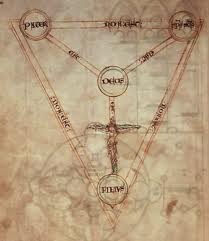
Over the weekend I presented the first part of a ‘bare-bones’ outline of the Trinity. In short order, I argued that the doctrine can be sub-divided into two basic assertions, which each require a healthy dose of explaining. The first proposition is God is oneGod. The second proposition is God is three Persons. Under those headings I added the following points.
God is One God
The Father is God.
The Son is God.
The Holy Spirit is God.
The Father, Son, and Holy Spirit are Uncreated, Co-Eternal, Inseparable, and Perfectly Equal in Essence.
God is Three Persons
God is Father, Son, and Holy Spirit.
The Father Sends the Son and the Spirit.
The Son is Sent by the Father, and Sends the Spirit.
The Spirit is One Sent by Father and Son.
Father, Son, and Holy Spirit works together to create the cosmos, sustain life, and redeem the church.
God’s visible actions in history reveals his invisible triune nature.
Because of the difference in classification (God and persons) there is no logical inconsistency between saying God is ‘one’ and God is ‘three.’ Still, there is natural difficulty (not too mention the effect of sin on our thinking) in trying to understand how God is one and three. On the one hand, natural man cannot grasp an infinite God—even with God’s inspired word. On the other hand, God’s revelation under the guidance of the Holy Spirit guides Christians to a true but incomplete knowledge of him.
Keeping our creatureliness and Godward-dependence in mind as we approach this doctrine, this outline aims to help us put some of the pieces together. Since, I’ve already laid out a defense of God as one God, the next step is to pick up the second proposition—God is three persons—and consider the first four points. Continue reading →
There is nothing bare-bones about the Trinity. But sometimes when introducing this doctrine it helps to give a brief, ‘bare-bones’ outline to help young believers or novice theologians understand the parameters of orthodox belief about Scripture’s deepest mystery.
With such an intention, let me lay out a bare-bones doctrine of the Trinity. In its shortest and most incomplete delineation, the Christians doctrine affirms two things: (1) God is One God and (2) God is Three Persons. This denies modalism (one god in three forms) and tritheism (three gods), and gets on the way to a right view of the doctrine. Continue reading →
Earlier this week, I considered the personal effect of meditating on and living in the truth of being made in God’s image. Today, I want to show how the image Dei should inform our public theology and social ethics. In a sentence, the image of God should inform the way we look at the world, because only when we keep the image of God at the forefront of our mind will we rightly be able to glorify God in all of life. Here are five ways the image of God should inform our ethics—four specific, one generic. Continue reading →





 Over the weekend I presented the first part of a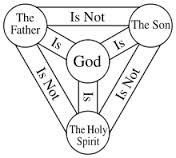
 Via Emmaus