Made Alive By the Spirit: The Pneumatology of Galatians (pt. 1)

windIn Galatians Paul spends a great amount of time explaining justification. That is to say, he argues that people are declared “right with God” as they place their faith in the finished work of Jesus Christ. In this way, Paul lays the ground work for the Reformation doctrine of Sola Fide: By Faith Alone are we saved.

In Galatians 2:16, he writes,

A person is not justified by works of the law but through faith in Jesus Christ, so we also have believed in Christ Jesus, in order to be justified by faith in Christ and no by works of the law, because by works of the law no one will be justified.

And again in Galatians 3:10–14,

For all who rely on the works of the law are under a curse…but the law is not of faith, rather…’Cursed is everyone who is hanged on a tree’–so that in Christ Jesus the blessing of Abraham might come to the Gentiles, so that we might receive the promised Spirit through faith.

However, this leads to the question, for those justified by faith, what does Paul say about sanctification? If salvation (in this case, righteousness) has nothing to do with personal holiness or obedience, how does Paul’s gospel restrain anyone from gross immorality or ethical indifference? His answer is the Holy Spirit. And in systematic fashion he unfolds in Galatians a powerful description of what the Spirit does in the life of the believer. While Paul does not undertake the task of providing a comprehensive pneumatology, he does provide a rough outline of the Spirit’s work from conversion to consummation, with the absence of the gifts of the Spirit.

In what follows, I will outline a brief pneumatology from the book of Galatians. Here is the outline. I will tackle three of these today and three in the next week or so.

  1. Born of the Spirit (4:29)
  2. Received the Spirit (3:2–3, 14)
  3. Alive in the Spirit (5:5, 25)
  4. Walk in the Spirit (5:16)
  5. Desires of… Led by… Fruit of the Spirit (5:17, 18, 22–23)
  6. Walk in the Spirit (5:25)

Continue reading

Indianapolis Theological Seminary at Together for the Gospel

its

FREE BREAKFAST FOR INDIANA PASTORS Wednesday, April 13 at 7:00am in the Aloft Hotel – downtown Louisville

This week thousands gospel-minded ministry leaders will gather in Louisville, Kentucky at an event called Together for the Gospel. Accomplishing many things, the conference reminds us of the importance of the gospel, its place in ministry, and its power to bring hope to a lost and dying world. At the same time, this gathering of gospel-minded brothers and sisters provides countless opportunities to fellowship together. In truth, after the worship in song and Scripture, my favorite part of T4G is reuniting with seminary friends who minister all over the globe and to scheme with many of them for upcoming gospel projects.

It’s this latter goal—what I like to call gospel scheming—that prompts this post.

Indianapolis Theological Seminary at Together for the Gospel

The one gospel venture I’m most excited about this week is gathering with pastors from Indiana to meet for breakfast on Wednesday morning to talk about Indianapolis Theological Seminary.

For more than 7 years (as a youth pastor and senior pastor) I ministered in the Hoosier State. And though rejoicing in the place God has moved us to serve (Occoquan Bible Church in Woodbridge, Virginia), I still love the state of Indiana and pray for the people and the pastors there.

More specifically, over the last year I’ve joined a group of pastors to pray and plan, to dream and develop a local seminary in Indianapolis. The name of the school is Indianapolis Theological Seminary, a school that “exists to collaborate with local churches for biblical and theological training unto the glory of God.”

While at first, this “school” was little more than a dream and a desire for a local seminary to equip pastors and teachers, it has in the last eighteen months become a growing reality. ITS had its first class last fall. It has begun to make partnerships with other seminaries to offer classes for credit. And it is looking to begin a Master of Arts in Biblical and Theological Ministry this fall .

If this sounds at all interesting, please get in touch with me or the leaders at ITS—Nicholas Piotrowski and Eric Bancroft in particular. You can also . . .

  • Check out the website to learn more.
  • Join us for breakfast on Wednesday at 7:00am in the Aloft Hotel. (Please RSVP) if you are an Indiana pastor and at Together for the Gospel.
  • Consider taking a class, if you are within driving distance of Indianapolis. This fall, a Greek class will be offered. And Steven Wellum and myself will co-teach Systematic Theology I.
  • And most importantly, PRAY—pray that the founding directors would have wisdom in laying the foundation of this school and that God would grant growth as he desires.

May God be pleased to raise up leaders and laborers to advance the gospel in Indiana and around the world.

Soli Deo Gloria, ds


The Making of a ‘Theologian’: Twelve Ways to Grow in Grace and Knowledge of the Lord

lutherA few weeks ago I wrote a blogpost, “Theology is not Just for Theologians.” This week Edmond Sanganyado ran a post (“Becoming a Better Theologian“) on the same subject, where he queried more than twenty theologians on how to grow in knowing and loving God (i.e., theology). He received responses from Jonathan Leeman, Kevin Vanhoozer,  Tim Challies, to name a few. He also included a few thoughts I shared.

I’ve developed those reflections further below, and laid out twelve aspects to growing as a ‘theologian’ (i.e., one who thinks about God). These are addressed to individuals in the church but could easily be adapted by pastors to encourage his congregation to grow in grace and knowledge of the Lord Jesus Christ (2 Peter 3:18), which is the aim of spiritually-enriching theology.

Twelve Ways to Grow in the Grace and Knowledge of the Lord

1. Delight Yourself in the Lord. 

Good theology begins with a soul satisfaction in the Lord. This includes conversion, but goes further. Because understanding is enhanced or hindered by our loves, the first thing a good theologian must do is love God in and through the gospel of Jesus Christ. “Delight yourself in the Lord, and he will give you the desires of your heart” (Psalm 37:4) is not just a command for decision-making, it is also necessary for doctrine-making.

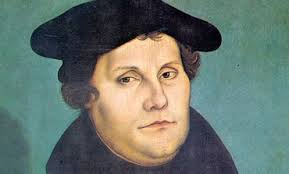
Often heresy and errant theology (which are not exactly the same) are produced by men who are embittered towards God or trying to win the approval of others. In other words, because biography shapes theology (as in the case of Friedrich Schleiermacher), it is possible for bad theology to crop up from some misunderstood crisis in life. At the same time, good theology is sweetened by the grace given in times of suffering. Martin Luther said suffering was essential for making a theologian. A good theologian, by implication, must think rightly about God in trying times. And thus he or she must begin with delighting in the Lord. Continue reading

On Biblical Theology and Interpretation

Christ in OT“Jesus became the direct and primary source of the
church’s understanding of the Old Testament”
— David Dockery, “Typological Exegesis”
in Reclaiming the Prophetic Mantle, 174 —

If reading the Bible well is a passion for you, you will appreciate the reflections of these interpreters of Scripture.


The Text, the Whole Text, and Nothing But the Text. Willem VanGemeren is right when he argues that the historical-grammatical interpretation is the way to read the Bible on its own terms.

Hermeneutics refers to the manner in which we listen to the text, relate it to other texts, and apply it. Hermeneutics calls for a discipline of mind and heart, by which the student of Scripture may patiently study the biblical text in its various contexts, including historical, grammatical, literary, and cultural.  This approach is best known as historical-grammatical analysis. (Van Gemeren, The Progress of Redemption, 27)

The Textual Horizon is not Enough. And VanGemeren is also correct to caution against exegesis which fails to consider the larger framework of the Bible.

The problem with the historical-grammatical method, however, is that students of the Word may be tempted to think that they have control over the text when all they have done is examine its constituent parts—but what grasp do they really have of its message?  Only after seeing how the parts fit together and how they relate to the rest of the book and to the rest of Scripture can the student master the clear message of the text.  Proper exegetical theology, therefore, requires synthesis. . . .

Interpretation also involves equal concern for the Old and New Testaments.  When the two parts of the Bible are held in careful balance, the continual tension between law and gospel, token and reality, promise and fulfillment, present age and future restoration, Israel and the church, and earthly and spiritual only enhances a christological and eschatological focus. (Van Gemeren, The Progress of Redemption, 29, 38) Continue reading

Theology is Not Just for Theologians

theology

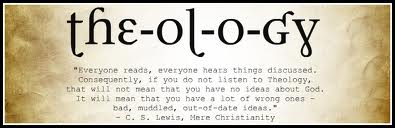
In other words, The­ol­ogy is prac­ti­cal: espe­cially now.
In the old days, when there was less edu­ca­tion and dis­cus­sion,
per­haps it was pos­si­ble to get on with a very few sim­ple ideas about God.
But it is not so now. Everyone reads, everyone hears things discussed.
Consequently, if you do not listen to Theology, that will not mean
that you have no ideas about God [i.e., theology].
It will mean that you have a lot of wrong ones —
bad, muddled, out-of-date ideas.
— C.S. Lewis —

Theology rightly understood is not a tangential part of Christian faith; it is the source, strength, and substance of vibrant faith. As A. W. Tozer famously said, “What comes into our minds when we think about God is the most important thing about us” (Knowledge of the Holy1). This is the core of theology—thinking God’s thoughts after him. And true theology is thinking biblically-informed thoughts about God. Theology is not an academic discipline consisting of esoteric terms, but sound doctrine that gives life and strength to every child of God made alive in Christ.

Sadly, this way of thinking about theology is often missed. Even among pastors, those called to instruct in sound doctrine, there is a sense in which theology is secondary to the real work of the ministry. Evangelism, discipleship, worship services, and church growth are elevated above “theology,” but only because they assume that each discipline and practice of the church is a-theological. In the short run, such doctrinal inattention may not create observable problems, but in the long run it will.

Paul understood this and that is why he writes in 1 Timothy 4:16: “Keep a close watch on yourself and on the teaching. Persist in this, for by so doing you will save both yourself and your hearers.” Faithful shepherds and growing sheep follow Paul’s model and give appropriate emphasis to theology as it informs and energizes spiritual life. In fact, close attention to the New Testament shows that wherever the apostles are giving practical instruction, they are doing so from deeply theological wells.

Mark Dever, in the preface of his book on 1 Corinthians (Twelve Challenges Churches Facemakes this very point. Continue reading

Recommended Reading: Ten Books on Prayer

praySunday I preached on the church’s calling to “pray for one another” (James 5:16). Among the seven points of application—“seven ways to improve your pray life today”—one of them had to do with learning how to pray.

In truth, nothing teaches you how to pray like praying, and especially by praying with others who know how to pray. The disciples asked Jesus “to teach us to pray, as John taught his disciples” (Luke 11:1). The assumption is that both John and Jesus prayed with and before their disciples, hence prompting their question.

Theologically, it is the Spirit who directs our prayers (see Romans 8:26; Ephesians 6:18; and Jude 20). But practically, like Jesus’ twelve disciples, we too need to learn from our Lord how to pray. Certainly, the Scriptures are the place to learn what it means to “pray in the Spirit,” “by the will of God,” “for his glory,” and “for our joy.” But if you are like me, you are helped when men and women gifted to teach and gifted to pray write books that relate Scriptural truth to real life.

Therefore, if you are earnestly desirous of learning how to pray, consider these ten books on the subject. I have found them helpful and encourage you to check them out too. Continue reading

Martyn Lloyd-Jones on Preaching and Preachers, Revival and Religion

mljA few months ago I finished Iain Murray’s condensed version of his two-volume biography on Martyn Lloyd-Jones, The Life of Martyn Lloyd-Jones, 1899–1981. For those who do not know of “The Doctor,” Martyn Lloyd-Jones left the medical profession to be a preacher. From the late 1920s to the 1970s he was a powerful Calvinistic evangelist, whose pastoral labors took his to Wales and London, England.

Situated at Westminster Chapel, Lloyd-Jones impacted many prominent scholars (J. I. Packer and Iain Murray), interacted with dozens of evangelical leaders, and carried out a preaching ministry that shaped the likes of John MacArthur and John Piper. Though a generation removed from the Young, Restless, and Reformed crowd, his expositional commitment and doctrinal convictions have been carried on in his preaching, his writing, and his publishing house—the Banner of Truth Trust, which was begun under his ministry.

In short, Lloyd-Jones lived remarkable life as a man committed to prayer and evangelistic, expositional preaching. I benefitted greatly from reading his biography, especially in his treatment of subjects like preaching, revival, religion, and evangelism. In what follows, I have listed a number of his insightful comments on these and others subjects.

May they spur you on towards love and good deeds and (re)fuel in you a hunger for the Word of God rightly preached and warmly embraced. Continue reading

The Trinity and Salvation: The Spirit as the Source for and Reward of Faith (Galatians 3:1–7)

angelic architecture art baptism

O foolish Galatians! Who has bewitched you? It was before your eyes that Jesus Christ was publicly portrayed as crucified. 2 Let me ask you only this: Did you receive the Spirit by works of the law or by hearing with faith? 3 Are you so foolish? Having begun by the Spirit, are you now being perfected by the flesh? 4 Did you suffer so many things in vain—if indeed it was in vain? 5 Does he who supplies the Spirit to you and works miracles among you do so by works of the law, or by hearing with faith—6 just as Abraham “believed God, and it was counted to him as righteousness”? (Galatians 3:1–7)

In keeping with his whole letter, Paul boldly rebukes the churches of Galatia for their turn from the true gospel (see 1:6–9). In this section, he recalls their reception of the Holy Spirit and how God’s Spirit came to them—by works of the flesh or by hearing with faith? The answer is plain in the text: the Galatians received the word with faith.

Theologically, this passage has much to say about the order and operations of the Holy Spirit, and I’d like to make a couple observations that will help us to see how the Spirit’s indwelling is different from his work of regeneration. Continue reading

Reading the Bible Better: How Out-of-Order Chronology Serves Biblical Theology

bibleWhat do you do when you come to a passage of Scripture that is out of sequence? Like in the case of Genesis 10, which speaks of various tongues (v. 5) before God confused human language in Genesis 11?

Do you challenge the authority and intent of the author, presuming that there is some kind of error?Do you simply ignore it, pretending that the problem is not that large?  Or do you stop and assess what the author is doing? How you proceed in those cases will, in large part, determine (over the course of time) how well you read the Bible.

Biblical Authors Write Selectively . . . Which Includes Order and Arrangement

When an inspired author of Scripture records a collection of events he naturally delimits his account with some measure of selectivity. In conveying his inspired message, he is not just rehashing history.  He is exercising his office as prophetic messenger.  This kind of intention is confessed in places like Luke 1:1–4 and John 20:30–31, but it is also seen in the warp and woof of the biblical text itself. Continue reading

A Severe Mercy: Rediscovering the Holiness of God

ok
Note then the kindness and severity of God: severity toward those who have fallen,
but God’s kindness to you, provided you continue in his kindness.
— Romans 11:22 —

When God created Adam and Eve, he endowed them with a holy calling to worship Him. In fact, made for God’s glory, it was the chief design of humanity to worship and serve the Creator—not only in holy assembly but in every human endeavor (cf. Col 3:17, 23).

Sadly, this original design was lost when the first couple rebelled against God (Gen 3:1–6). Seeking to be like God, they spurned their Creator. As Paul puts it, “For although they knew God, they did no honor him as God or give thanks to him, . . . Claiming to be wise, they became fools, and exchanged the glory of the immortal God for images” of created things (Rom 1:21–23).

The Idolatry of Self

In context, Paul is speaking about Gentiles, but indeed, he is using the backdrop of the Garden to explain the source of humanity’s sin. In a word, sin finds its source in idolatry (cf. Jer 2:13). Human hearts are compelled to worship, but after Eden, the Adam’s offspring worship what their hands can make, what their minds can imagine. Even the most avowed atheist cannot stop worshiping—even if he only worships himself. Continue reading