Via Emmaus on the Road: Philemon

Further Resources


Philemon (ESV)

Greeting

Paul, a prisoner for Christ Jesus, and Timothy our brother,

To Philemon our beloved fellow worker and Apphia our sister and Archippus our fellow soldier, and the church in your house:

Grace to you and peace from God our Father and the Lord Jesus Christ.

Philemon’s Love and Faith

I thank my God always when I remember you in my prayers, because I hear of your love and of the faith that you have toward the Lord Jesus and for all the saints, and I pray that the sharing of your faith may become effective for the full knowledge of every good thing that is in us for the sake of Christ. For I have derived much joy and comfort from your love, my brother, because the hearts of the saints have been refreshed through you.

Paul’s Plea for Onesimus

Accordingly, though I am bold enough in Christ to command you to do what is required, yet for love’s sake I prefer to appeal to you—I, Paul, an old man and now a prisoner also for Christ Jesus— 10 I appeal to you for my child, Onesimus, whose father I became in my imprisonment. 11 (Formerly he was useless to you, but now he is indeed useful to you and to me.) 12 I am sending him back to you, sending my very heart. 13 I would have been glad to keep him with me, in order that he might serve me on your behalf during my imprisonment for the gospel, 14 but I preferred to do nothing without your consent in order that your goodness might not be by compulsion but of your own accord. 15 For this perhaps is why he was parted from you for a while, that you might have him back forever, 16 no longer as a bondservant but more than a bondservant, as a beloved brother—especially to me, but how much more to you, both in the flesh and in the Lord.

17 So if you consider me your partner, receive him as you would receive me. 18 If he has wronged you at all, or owes you anything, charge that to my account. 19 I, Paul, write this with my own hand: I will repay it—to say nothing of your owing me even your own self. 20 Yes, brother, I want some benefit from you in the Lord. Refresh my heart in Christ.

21 Confident of your obedience, I write to you, knowing that you will do even more than I say. 22 At the same time, prepare a guest room for me, for I am hoping that through your prayers I will be graciously given to you.

Final Greetings

23 Epaphras, my fellow prisoner in Christ Jesus, sends greetings to you, 24 and so do Mark, Aristarchus, Demas, and Luke, my fellow workers.

25 The grace of the Lord Jesus Christ be with your spirit.

Soli Deo Gloria!

Via Emmaus on the Road: Ephesians 6

Further Resources

Ephesians 6 (ESV)

Children and Parents

Children, obey your parents in the Lord, for this is right. “Honor your father and mother” (this is the first commandment with a promise), “that it may go well with you and that you may live long in the land.” Fathers, do not provoke your children to anger, but bring them up in the discipline and instruction of the Lord.

Bondservants and Masters

Bondservants, obey your earthly masters with fear and trembling, with a sincere heart, as you would Christ, not by the way of eye-service, as people-pleasers, but as bondservants of Christ, doing the will of God from the heart, rendering service with a good will as to the Lord and not to man, knowing that whatever good anyone does, this he will receive back from the Lord, whether he is a bondservant or is free. Masters, do the same to them, and stop your threatening, knowing that he who is both their Master and yours is in heaven, and that there is no partiality with him.

The Whole Armor of God

10 Finally, be strong in the Lord and in the strength of his might. 11 Put on the whole armor of God, that you may be able to stand against the schemes of the devil. 12 For we do not wrestle against flesh and blood, but against the rulers, against the authorities, against the cosmic powers over this present darkness, against the spiritual forces of evil in the heavenly places. 13 Therefore take up the whole armor of God, that you may be able to withstand in the evil day, and having done all, to stand firm. 14 Stand therefore, having fastened on the belt of truth, and having put on the breastplate of righteousness, 15 and, as shoes for your feet, having put on the readiness given by the gospel of peace. 16 In all circumstances take up the shield of faith, with which you can extinguish all the flaming darts of the evil one; 17 and take the helmet of salvation, and the sword of the Spirit, which is the word of God, 18 praying at all times in the Spirit, with all prayer and supplication. To that end, keep alert with all perseverance, making supplication for all the saints, 19 and also for me, that words may be given to me in opening my mouth boldly to proclaim the mystery of the gospel, 20 for which I am an ambassador in chains, that I may declare it boldly, as I ought to speak.

Final Greetings

21 So that you also may know how I am and what I am doing, Tychicus the beloved brother and faithful minister in the Lord will tell you everything. 22 I have sent him to you for this very purpose, that you may know how we are, and that he may encourage your hearts.

23 Peace be to the brothers, and love with faith, from God the Father and the Lord Jesus Christ. 24 Grace be with all who love our Lord Jesus Christ with love incorruptible.

Soli Deo Gloria!

Oppression and Slavery Under God’s Sovereignty: Five (dis)Comforting Truths from Psalm 105

Maybe you have had an experience like this: While walking or driving somewhere, you suddenly realize that the beauty of the scenery around you is littered with complex moral issues. If you visit Mount Vernon or Monticello, you are struck by the beauty of both presidential homes. Yet, in learning the history, you are also confronted with the fact that both plantations depended on slave labor. Likewise, if you celebrate the Civil Rights victories of the 1960s, you must consider that many of the programs implemented to help blacks during that era have done more harm than good.

Something similar occurs in Psalm 105, only the findings there are not based upon fallible interpretations of history. In Psalm 105, we have the inspired and inerrant Word of God. And strikingly in these 45 verses, we find multiple, morally-complex statements. Some of these issues concern oppression (v. 14), others talk of slavery (v. 17), but in every case, God is praised for his sovereign actions in history.

Indeed, for all the beautiful comfort that Psalm 105 brings, for it is a Psalm that speaks of God’s faithfulness in leading his people from Abraham to Moses, it also introduces many complexities in God’s sovereignty over the nations. Yet, instead of impugning God with error or wrong-doing, a rightful understanding of Psalm 105 actually helps us to know who God is, how he works in the world, and how we can better understand our own morally-complicated history. To that end, let’s look at Psalm 105 and its discomforting truths which in time lead to a greater confidence in God.

1. God can and does stop oppression.

While the history of our fallen world knows no period when or where oppression has been absent, it is clear from Scripture that when God intends to prevent oppression and overturn slavery, he can. In Psalm 105, the Psalmist reflects on God’s care for Abraham, when the patriarch and his children had no land to call their own (vv. 12–15). As they sojourned among warring nations (see Genesis 14), Psalm 105:14 says that God “allowed no one to oppress them; he rebuked kings on their account, saying, ‘Touch not my anointed ones, do my prophets no harm!'”  Continue reading

How Justification by Faith Impels Justice: The Biographical Testimony of William Wilberforce

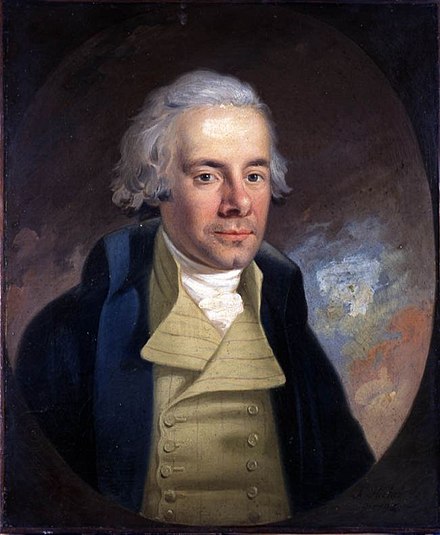
wilberforceAt 4:00am on February 24, 1807, the British Parliament voted to end the British slave trade. With a count of 267 to 16, the House of Commons voted with loud cheers for the abolition of this abominable institution.

Though it would take another 26 years for slavery to be ended in Britain and its colonies,  this decision by the House of Commons, which followed the majority decision of the House of Lords, proved that in the span of 50 years what was unthinkable—namely, the end of the slavery—could be put to an end through a radical change in public and political opinion.

This change raises the question: What led to that remarkable act of liberation? What changed the hearts of the British governors? Was it a war? No, not unless you count the war of words in parliament. Was it a pragmatic argument based upon economics. No, it actually cost Britain a fortune to end slavery. What was it then?

The answer can be given in three words—a man, a mission, and an unusual motivation. Continue reading

A Tragic Irony: What Blacks Lives Matter Means for the Family

Perhaps you have seen this Speak for Yourself  video about the NBA’s decision to paint “Black Lives Matter” on the basketball courts in Orlando. I saw this video last week, as it was sent to me by a handful of family and friends. It’s worth watching, especially the first section with Marcellus Wiley. Here’s the core of what he had to say (You can find a transcript of Wiley’s whole statement here):

I don’t know how many people really look into the mission statement of Black Lives Matter, but I did. And when you look into it, there’s a couple of things that jump out to me. And I’m a black man who has been black and my life has mattered since 1974. And this organization was founded in 2013 and I’m proud of you but I’ve been fighting this fight for me and for others a lot longer.

Two things: My family structure is so vitally important to me. Not only the one I grew up in but the one I am trying to create right now. Being a father and a husband, that’s my mission in life right now. How do I reconcile that with this, the mission statement that says, “We dismantle the patriarchal practice. We disrupt the Western-prescribed nuclear family structure requirement.”

When I know statistics, when I know my reality, forget statistics, I knew this before I even went to Columbia and saw these same statistics that I’m going to read to you right now.

Children from single-parent homes versus two-parent homes. The children from the single-parent homes — this was in 1995 I was reading this — five times more likely to commit suicide. Six times more likely to be in poverty. Nine times more likely to drop out of high school. Ten times more likely to abuse chemical substances. Fourteen times more likely to commit rape, 20 times more likely to end up in prison, and 32 times more likely to run away from home.

I knew that. You know why I knew it? Because a lot of my friends didn’t have family structures that were nuclear like mine, and they found themselves outside of their dreams and goals and aspirations. So when I see that as a mission statement for Black Lives Matter, it makes me scratch my head.

The irony in this statement is thick. Not only does it bring to the forefront the difference between affirming the statement, “black lives matter,” and rejecting the organization Black Lives Matter, a distinction Albert Mohler has helpfully noted. But Wiley’s point also gets at one of the chief aims of the organization, which is to “disrupt” the family and “dismantle” the place of fathers leading in their homes. In this concern, along with others, Black Lives Matter sets forth objectives which have proven devastating to families in and out of the black community. Continue reading

Answering the Call: Toward a Biblical View of Vocation (1 Corinthians 7:17–24)

sermon photo

Eight times in eight verses the apostle Paul speaks to the Corinthians about understanding their various vocations in light of God’s effectual “call.” These instructions about one’s calling before God broaden Paul’s focus in chapter 7 from marriage, singleness, and sexuality to matters concerning circumcision (Jew vs. Gentile) and slavery (bondservant and free).

All in all, Paul’s heavy emphasis on the Christians upward call in Christ make these verses a cornerstone for understanding our earthly labors at home, in the marketplace, or the church. You can listen to the audio from Sunday’s message (shortly) or peruse the sermon notes here. For those who want to go deeper, there are discussion questions below and links to a few other resources on the doctrine of vocation. Continue reading

William Wilberforce: A Factory of Good Works

I love the way politician William Wilberforce united his faith to his legislative action.  For those who don’t know Wilberforce, he was the single driving force in England to end the slave trade.  He was a peer of John Newton, pastor and author of the hymn “Amazing Grace.”  He was a bold advocate for public justice, but one who spent countless hours in personal meditation on the truth of God’s word.  In other words, his appeals for justice were fruit the Spirit at work in his life.

Consider John Piper’s description of Wilberforce in his biographical sermon, “Peculiar Doctrines, Public Morals, and the Political Welfare.”  He shows how good works overflowed from this man who was filling his mind with Christian truth and walking in the power of the Spirit.

What made Wilberforce tick was a profound Biblical allegiance to what he called the “peculiar doctrines” of Christianity. These, he said, give rise, in turn, to true affections – what we might call “passion” or “emotions” – for spiritual things, which, in turn, break the power of pride and greed and fear, and then lead to transformed morals which, in turn, lead to the political welfare of the nation. He said, “If . . . a principle of true Religion [i.e., true Christianity] should . . . gain ground, there is no estimating the effects on public morals, and the consequent influence on our political welfare.” [1]

But he was no ordinary pragmatist or political utilitarian, even though he was one of the most practical men of his day. He was a doer. One of his biographers said, “He lacked time for half the good works in his mind.” [2] James Stephen, who knew him well, remarked, “Factories did not spring up more rapidly in Leeds and Manchester than schemes of benevolence beneath his roof.” [3] “No man,” Wilberforce wrote, “has a right to be idle.” “Where is it,” he asked, “that in such a world as this, [that] health, and leisure, and affluence may not find some ignorance to instruct, some wrong to redress, some want to supply, some misery to alleviate?” [4] In other words, he lived to do good – or as Jesus said, to let his light shine before men that they might see his good deeds and give glory to his Father in heaven (Matthew 5:16).

But he was practical with a difference. He believed with all his heart that new affections for God were the key to new morals (or manners, as they were sometimes called) and lasting political reformation. And these new affections and this reformation did not come from mere ethical systems. They came from what he called the “peculiar doctrines” of Christianity. For Wilberforce, practical deeds were born in “peculiar doctrines.” By that term he simply meant the central distinguishing doctrines of human depravity, divine judgment, the substitutionary work of Christ on the cross, justification by faith alone, regeneration by the Holy Spirit, and the practical necessity of fruit in a life devoted to good deeds. [5]

Wilberforce’s public service is not only a model for Christian politicians, but a model for all Christians.  He was a factory of God works, as his friends attested, and in this way he shows the kind of worldly good the gospel can effect when a man is gripped by the “peculiar doctrines” of Jesus Christ.

May we consider his life and imitate his faith.  (Piper’s biography is available online and in print.  I would encourage you to read or listen to it).

Soli Deo Gloria, dss