The First Day of the Lord (Genesis 3): Seven Reasons the Fall Occurred on the Seventh Day

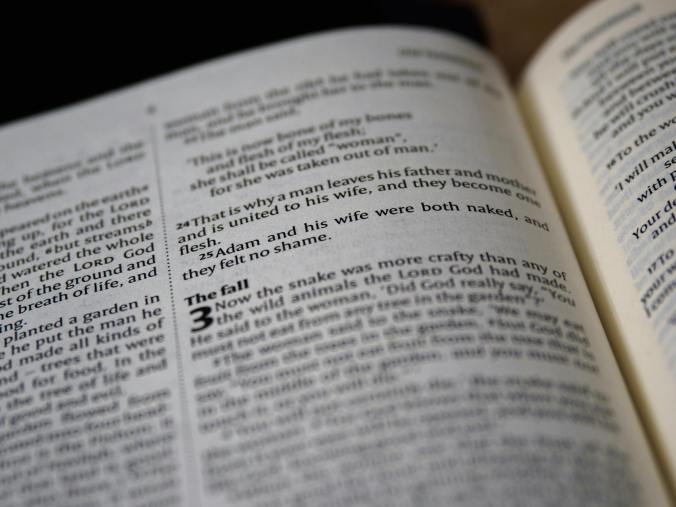
close up photo of bible

A few weeks ago, in a sermon on Genesis 3:8–13, I made the case that the events of Genesis 3 took place on the seventh day of the creation week, not some undefined time after the creation week. Instead of seeing Adam and Eve having days or weeks of communion with God in the Garden of Eden, I argued that Adam and Eve sinned against God on their very first day.

Just as Genesis 2 expounds the events of Day 6 (Gen. 1:24–31) in the creation week, so Genesis 3 develops the events of Day 7 (Gen. 2:1–3). At the end of the seventh day, God came down from heaven onto his mountain in order to rest on his holy hill. Yet, because he found two unclean sinners hiding in the garden, and a serpent standing there triumphant, God’s response was one of covenantal judgment, with an eschatological promise of salvation.

Genesis 3:14–19 is the centerpiece of the chapter, where God issues a curse on the serpent and on creation. And as a result, the first week of creation ends with the need of a new creation. Indeed, just as the eighth day, which is the first day of the week, will become in redemptive history the day of new creation, so Genesis 3 ends looking for this new creation. Or, at least, that is the implication of reading Genesis 3 as the seventh day of the creation week.

Yet, it may take some convincing to prove that Genesis 3 is the seventh day. After all, many commentators imagine a backstory to Genesis 3, which includes a series of “daily chats” occurring in the Garden before the Serpent arrives. Yet, such a backstory cannot be found in the text of Genesis 1–3.

Instead, what is found is the immediate entrance of the Serpent in Genesis 3:1. There is no “intertestamental period” between the union of man and woman (Genesis 2:24–25) and the arrival of the Serpent (3:1). And to create such an apocryphal tale is to go beyond the text. Nevertheless, the absence of backstory doesn’t automatically prove that Genesis 3 is the seventh day, unless there are others evidences in the text. And that is what I aim to argue in the seven points below.

Today, I will argue that Genesis 3 occurs on the seventh day of the creation week. And next week, I will return for at least four more reasons related to understanding the “Spirit of the Day” for proving the same point. Continue reading

The Test of Wisdom: Which Path Will You Take?

alex-shute-QnRDKNbKl9k-unsplash6 Go to the ant, O sluggard; consider her ways, and be wise.
7 Without having any chief, officer, or ruler,
8 she prepares her bread in summer and gathers her food in harvest. 

In Proverbs 6, the Word of God tells us to go to the ant and find wisdom. In the ant, we learn principles of initiative, preparation, and hard work. Indeed, by looking at this little creature, an insect found everywhere and anywhere, we are told to look and learn her ways.

In fact, Proverbs 6 is one of many places where we find wisdom from the animals. In Proverbs 30, we find four animals in direct order: there is the ant, the rock badger, the locust, and the lizard. And from each we can gain insight into the way we ought to live.[1]

If we go further, the whole Bible teaches us to gain wisdom from nature. From the sparrows who fall from the sky, to the sheep who follow their shepherd, and from the lions who prowl the hills, to the Leviathan who roams the sea, all of these animals were created by God to give us wisdom.

And in Genesis, we have already seen the way that animals are used to teach Adam. For in Genesis 2:19 we find this report,Now out of the ground the Lord God had formed every beast of the field and every bird of the heavens and brought them to the man to see what he would call them. And whatever the man called every living creature, that was its name.”

God tasked the man with naming the animals, but he also tasked these animals to teach the man that no suitable helper would be found for him among their ranks, as verse 20 indicates. Indeed, the man would need God to make a helper suitable for him, and that is what the rest of Genesis 2 reveals—the glorious formation of the woman and the establishment of the first marriage.

As Genesis 2:24–25 concludes the chapter, “Therefore a man shall leave his father and his mother and hold fast to his wife, and they shall become one flesh. And the man and his wife were both naked and were not ashamed.” Continue reading

The Seed of the Woman Has Come: The Real Reason for the Season (Genesis 3:15)

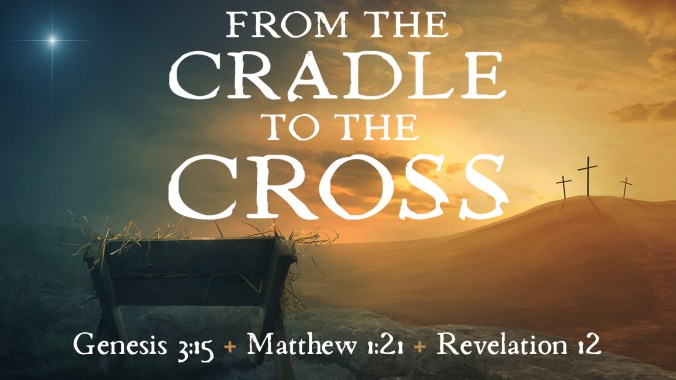
1920x1080 Cradle

15 I will put enmity between you and the woman, and between your offspring and her offspring;
he shall bruise your head, and you shall bruise his heel.”
— Genesis 3:15 —

When we lived in Indiana, our parsonage was located next to the church. The church sat at 1200 North Ewing, our home was next door at 1202 North Ewing. At the same time, our house sat next to a snake pit. And to be clear, I’m not talking about the church. Rather, I am referring to the swamp-ish depression that ran alongside the parking lot, what we might call 1198 North Ewing.

Indeed, right next to the church building, the place where the bride of Christ would gather every Sunday, there was a nesting-ground for snakes. It was very much like Genesis 3. And how did we know that we had a snake infestation?

Well, every year, we had snakes in our garden, on our driveway, and in our house. And during the five years we lived there, I became quite skilled at picking up the shovel and beheading the snakes that drew near.

Now, why do I bring up snakes, especially as at Christmas time? The answer is that Christmas is often filled with trees and lights, but not enough trees and snakes. It’s like we get our messaging about Christmas from the Victorian Era of Charles Dickens, instead of letting the victory of Christ over the serpent be the reason for the season.

And so, to make Christmas more meaningful, I suggest we add a few pictures of dead snakes to our holiday decorations. Let me know if you have a crafty friend on Etsy who can work that up for us.

For as strange as it sounds to think about snakes at Christmas time, the fulfillment of Genesis 3:15 is why we celebrate the birth of Christ. His birth in Bethlehem is but the first step for the Son of God towards the cross on which he would hang like the bronze serpent (see John 3:14–15). And by keeping the impaled serpent in view at Christmas time we are reminded that the babe born in a manger is the Victorious Warrior who now reigns on high.

In truth, Christmas is a war memorial. Or at least, we discover the military imagery as soon as we read the birth story in light of the Big Story. In fulfillment of all the Old Testament prophecies (see Isa. 7:14; 9:6–7; 11:1ff.; etc.) we celebrate at Christmas the arrival (read: invasion) of God’s king entering the enemy occupied territory.

Accordingly, the goal of Christmas is not to merely coo over baby Jesus, but to bow down before him as the King of kings and Lord of lords. For it is the victorious Christ whose birth we celebrate. And we celebrate his birth because in his life and death, we finally see the head of the serpent crushed, just as God promised at the very beginning.

The Seed of the Woman

The first promise of the gospel, the protoevangelion found in Genesis 3:15, was the theme of this week’s sermon. And in that sermon, I tried to show how this promise is enlarged and illustrated in the history of Israel. And for those celebrating the birth of Christ this year, this sermon outlines how the birth of Christ begins to fulfill the promise of the seed (singular) of the woman coming to crush the seed of the serpent, and thereby saving the seed (plural) of the woman.

This is a gospel promise that runs from Genesis to Jesus and one that is outlined in the chart below and in the sermon entitled “The Seed of the Woman.” Indeed, as Christmas draws near, may we celebrate the fact that the babe born in Bethlehem is the killer of serpents and victorious warrior-king. Continue reading