What is an Election Sermon? An Example and An Argument

On Sunday I preached an election sermon in two parts. Expounding Psalm 2, I considered four vital truths about God’s sovereignty from God’s promise to give his son the nations, and in response I outlined five practical steps to exercising our political stewardship.

In this sermon, I did not endorse a candidate or commend a singular church approved voting guide, but I did name names and identify a vote for Democrats as a sin. But more than just stressing the importance of Tuesday’s election, I attempted to show how a steadfast hope in Christ’s Lordship leads to a life of good works, even political good works such as voting.

And so, I offer that sermon here as one fallible example of an election sermon, followed by an email (now updated) I sent to our church explaining the background of election sermons and why they matter today. Indeed, as I noted in my Saturday blogpost, I have learned a lot about preaching and politics since 2016, and I offer this example and argument for an election sermon as help to any others who are taking the same path.

Sovereignty & Stewardship: An Election Sermon in Two Parts

God’s Sovereignty in Psalm 2

  1. Enrages the Nations (vv. 1–3)
  2. Rules over the Nations (vv. 4–6)
  3. Rewards the Son with the Kingdom (vv. 7–9)
  4. Requires Rulers to Kiss the Son (vv. 10–12)

Our Political Stewardship Today

  1. Think Clearly
  2. Speak Truthfully
  3. Vote Righteously
  4. Pray Earnestly
  5. Gather Faithfully

All told, in these nine marks of an election sermon, I sought to exhort our congregation to trust God and to act accordingly. Here is the sermon.
The Case for Preaching An Election Sermon

Continue reading

Rejoicing in Christ’s Royal Priesthood: The 2024 Bauman Lectures (Toronto Baptist Seminary)

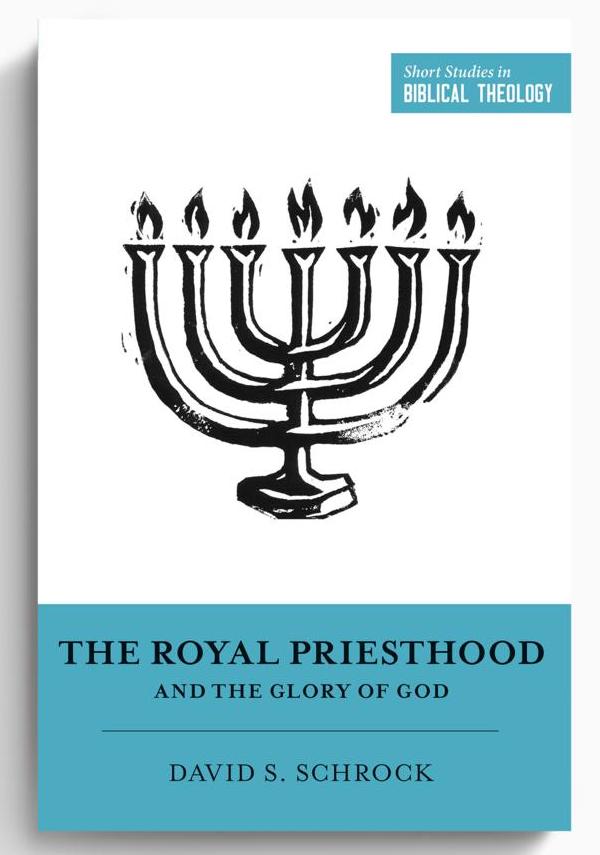
In 2022, I wrote a book entitled The Royal Priesthood and the Glory of GodThis book clarified, synthesized, and streamlined my doctoral dissertation. In 2013, I finished a biblical theology of the priesthood which sought to answer the question: For whom did Christ die? Looking at the priesthood from Genesis to Revelation I argued for a definite atonement. In that large volume I came to love the theme of priesthood in the Bible and what that means for knowing Christ and for imitating Christ.

Since 2013, I have written a handful of articles on the priesthood, and in the last few weeks I have spoken twice on the subject. The first series of lectures took place at Eden Baptist Church in Burnsville, Minnesota, and the second lecture series is taking place this weekend at Toronto Baptist Seminary and Jarvis Street Baptist Church in Toronto, Canada.

To assist students, faculty, church members, and guests of the Bauman Lectures, I am posting notes here. I will add to them as the weekend goes on, and in the end, I hope this post will link to all the priestly things I have written to date.

The Bauman Lectures (2024)

  • Lecture 1: Building a Kingdom of Priests — In this lecture, I survey the way in which the institution of the Levitical Priesthood came into being. This lecture simplifies my larger SBJT article and puts into lecture form the second chapter of my book, The Royal Priesthood and the Glory of God.
  • Lecture 2: In Search of a Priest-King Like Melchizedek (Genesis 14, Psalm 110, Hebrews 5–7) –In this lecture, I examine the context, content, and concepts found in three places where Melchizedek is named. Together, this helps us understand who Jesus is, as a royal priest.
  • Lecture 3: Seeing Melchizedek in the Book of 1–2 Samuel: An Exploration in Typology — In this lecture, I have written a working manuscript (with limited annotation) to show how Melchizedek is a figure found in the book of 1–2 Samuel. This reading depends upon a careful comparison between Bera, king of Sodom, and Melchizedek, king of Salem. It also explains how David saw his own son as a priest after the order of Melchizedek.
  • Sunday Morning Sermon: Getting to Know Our Great High Priest (Exodus 28–30; Hebrews)
  • Sunday Evening Sermon: A Kingdom of Priests: Washed, Worshiping, Working, Witnessing (Exodus 19:5–6; 1 Peter 1:22–2:10)

More to come . . .

Soli Deo Gloria, ds

The Test of Wisdom: Which Path Will You Take?

alex-shute-QnRDKNbKl9k-unsplash6 Go to the ant, O sluggard; consider her ways, and be wise.
7 Without having any chief, officer, or ruler,
8 she prepares her bread in summer and gathers her food in harvest. 

In Proverbs 6, the Word of God tells us to go to the ant and find wisdom. In the ant, we learn principles of initiative, preparation, and hard work. Indeed, by looking at this little creature, an insect found everywhere and anywhere, we are told to look and learn her ways.

In fact, Proverbs 6 is one of many places where we find wisdom from the animals. In Proverbs 30, we find four animals in direct order: there is the ant, the rock badger, the locust, and the lizard. And from each we can gain insight into the way we ought to live.[1]

If we go further, the whole Bible teaches us to gain wisdom from nature. From the sparrows who fall from the sky, to the sheep who follow their shepherd, and from the lions who prowl the hills, to the Leviathan who roams the sea, all of these animals were created by God to give us wisdom.

And in Genesis, we have already seen the way that animals are used to teach Adam. For in Genesis 2:19 we find this report,Now out of the ground the Lord God had formed every beast of the field and every bird of the heavens and brought them to the man to see what he would call them. And whatever the man called every living creature, that was its name.”

God tasked the man with naming the animals, but he also tasked these animals to teach the man that no suitable helper would be found for him among their ranks, as verse 20 indicates. Indeed, the man would need God to make a helper suitable for him, and that is what the rest of Genesis 2 reveals—the glorious formation of the woman and the establishment of the first marriage.

As Genesis 2:24–25 concludes the chapter, “Therefore a man shall leave his father and his mother and hold fast to his wife, and they shall become one flesh. And the man and his wife were both naked and were not ashamed.” Continue reading

Situational Awareness: Restoring Fellowship with Truth and Love (A Sermon on 3 John)

Unknown

Situational Awareness: Restoring Fellowship with Truth and Love
(A Sermon on 3 John)

In 3 John, we move from the universal church of 1 John, to the local church of 2 John, to an individual Christian by the name of Gaius. Interestingly, if we titled 3 John the way we title 1–2 Timothy and Titus, this letter would actually be called Gaius, not 3 John. And though I don’t think we need to rename this letter, recognizing this name change helps us see how personal this letter is.

In fact, across its 15 verses, there are four individuals named (the Elder, Gaius, Diotrephes, and Demetrius), plus a group of traveling evangelists, who serve as faithful reporters to John, who in turn writes this letter to encourage Gaius and to communicate his intentions to come and address Diotrephes.

Long story short, this letter is filled with personal relationships. And as we think about fellowship, it is necessary to get into the specific details of such relationships. For in truth, not all relationships are equally good, healthy, or true.

Just the same, with fellowship focused on the Lord and his church, there are questions that Christians must ask about the relationships they form. How do we decide with whom to spend time? What is a healthy relationship? What is harmful? And how can we tell the difference?

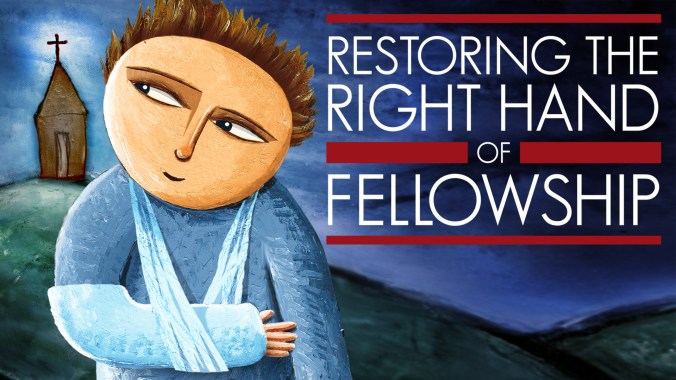
On Sunday, I addressed those questions and more, as we finished our mini-series on “Restoring the Right Hand of Fellowship.” You can find the sermon here, and below are the twelve points of application I drew from 3 John. Continue reading

Four Loves: The Path to True Fellowship

Unknown

Four Loves: The Path to True Fellowship (A Sermon on 2 John)

In 2020, ESPN published a ten-part series call The Last Dance. The series followed the 1998 Chicago Bulls, the team led by Michael Jordan. This was the sixth and final championship series, the one that ended the dynasty.

As a basketball player growing up in the 1990s, this series was pure nostalgia. Every episode brought back memories and added backstories. It was the best of the old and the new. It returned me to a period of basketball glory, and it scratched a prevalent modern itch—the need to know all the details of what happened behind the scenes.

It’s funny a thing that today we live at a time when people think they need to know everything. Undercover surveillance, tell-all documentaries, and best-selling books by whistle-blowers are all uber-popular, and all of these feed the belief that we deserve all the facts.

Yet, such a god-like desire to know everything is confronted by the fallout of The Last Dance. That is to say that by bringing everything out the open, The Last Dance did untold harm. For not only did it reveal tensions and troubles from the 1990s, but it also started new fires. Continue reading

How Fellowship Works: Cain, the Cross, and the Command to Love One Another

UnknownHow Fellowship Works: Cain, the Cross, and the Command to Love One Another (A Sermon on 1 John 3:11–18)

Love. One. Another. If you type those three words into your search engine, you’ll find a dozen references.

The first two are found in John 13:34–35, when Jesus tells his disciples to love one another, just as he has loved them.  Next, “love one another” repeats in John 15:12 and 17, as Jesus connects the love of God with the love of God’s children.

Paul uses these same three words, when he says in Romans 12:10, “Love one another with brotherly affection.” And Peter echoes Paul’s brotherly instruction in 1 Peter 1:22, when he says, “Having purified your souls by your obedience to the truth for a sincere brotherly love, love one another earnestly from a pure heart.”

Those are the first six uses of “love one another.” Then the last six are found in John’s Epistles. One is found in 2 John 5 and five in 1 John 3–4 (1 John 3:11, 23; 4:7, 8, 12).

From this basic survey, then, we can conclude two things. First, the command to love one another is always a command to members of one body (Rom. 12:5) to love one another with brotherly affection. This command is not an abstract instruction for individuals to do loving things. It is a mutual command for the body of Christ to love those in Christ.

That’s the first thing. The second thing is that the passage that most fully details how to love one another is 1 John 3–4. And yesterday, as I preached again on the theme of fellowship, I looked at three things.

  1. The Command to Love One Another is a command fulfilled in the body of Christ.
  2. The Command to Love One Another is a command that rejects the violent competition of Cain.
  3. The Command to Love One Another is a command that finds life in the cross of Christ.

In short, to love another as God commands we must reject the spirit of Cain’s violent competition and embrace Christ and his willingness to put others ahead of himself. This is the key to abiding fellowship with God and one another. And yesterday, this is what I tried to show from 1 John 3:11–18. You can find that sermon here.

Check back later this week too, as I share parts 2 and 3 of “A Dangerous Calling: Two Ways to Seek Ministry.”

Soli Deo Gloria, ds

Restoring the Right Hand of Fellowship: A New Sermon Miniseries

jack-sharp-ShCVvQbQBDk-unsplashFour Truths About Fellowship: A Sermon on 1 John 1:1–2:6

As we know all too well, sin always separates. And thus, when fellowship breaks, there is, lurking somewhere, sin unconfessed. In those times, it is tempting to fix the problem(s) with our own wisdom and to work overtime to recreate the fellowship that was had before. Yet, in times when fellowship is lost, we must remember that God alone can “fix” it. And accordingly we should seek him first and all his righteousness.

To put it seasonally, before the Lord gives his church spring rains, he often makes us feel the bitterness of winter’s cold. This coldness may have known sources, or its chilling drafts may strike us without ever revealing the source of their cold. Yet, whatever the source of winter, we should remember that God is working, and that spring is coming. As Hosea 6:1–3 tells us, we must remember that the Lord is the one who breaks us, so that he can bind us; he hurts us (or permits us to feel pain), so that he can heal us (see Psalm 105). Then, from this place of weakened condition, we are invited to return to know the Lord.

This is the promise: God will sanctify his people, and he will bring them to confess their sins. And until sin is confessed, joy will be withheld. Yet, when we seek his light and see our darkness, it will prompt true confession, repentance, forgiveness, and grace. And this grace will bring a new season of fellowship, all provided by the Lord. Continue reading

Worshiping Christ at Christmas: Two Christmas Sermons (Isaiah 60 and Matthew 2)

three kings figurines

This year, Christmas Day afforded the church a double blessing. Each Lord’s Day, the saints gather to celebrate the resurrection of Christ. And on that day, the first day of the week, the day of new creation, we (God’s new creations) bear testimony to the world that Jesus Christ is Lord.  This we do every Sunday, in order to worship God and bear witness to his gospel.

This year, however, with Christmas on the Lord’s Day, we also gathered to declare that Jesus Christ, the Lord, is born. Indeed, Christmas is the holiday that reminds us of the Lord come to earth, such that those of earth might come to heaven. Wonderfully, our church gathered twice in less than 24 hours to rejoice in all that Christ is and has done.

On Christmas Eve, we gathered to meditate on what it means that the Magi came to worship Christ, the king of the Jews (Matt. 2:1-12). Then, on Christmas morning, we gathered again to see how the Magi’s gifts of gold, frankincense, and myrrh fulfilled the prophecy of Isaiah 60. Indeed, Isaiah tells us that light has come into the world (vv. 1–3) and that light will one day engulf creation (vv. 19–22)—a prophecy that Revelation 21–22 picks up and applies to the new creation. In between the first coming of the light (in Christ’s birth) and its final establishment (in the new creation), we can continue to see how the light of God is coming into all the world, as the nations come to Zion and worship the Lord.

Those were the themes of our Christmas celebration. And I share the sermons below, so you might be able to dwell on these glorious truths. You can also find a pair of theological reflections on Isaiah 60 here and here. And if you need more Christological gold, take a look at what Christ Over All has published this month—Christology at Christmas. These essays are some of the best things I’ve read on the meaning of Christ and Christmas.

Come and Worship the True King (Matthew 2:1–12)

Let Us Come to Zion and Worship Christ (Isaiah 60)

Indeed, Christmas is one day behind us, or 364 days ahead us, if you are already counting. But the realities of Christ’s Incarnation, as well as his Lordship, abide year round. Therefore, may we continue to worship the Lord who was born in Bethlehem and the Lord who now reigns in Zion.

Soli Deo Gloria, ds

Photo by Jonathan Meyer on Pexels.com

The Servant-King Who Brings Peace to Earth: An Advent Message on Isaiah 49–54

three kings figurines

But he was pierced for our transgressions; he was crushed for our iniquities;
upon him was the chastisement that brought us peace, and with his wounds we are healed.
­­– Isaiah 53:4–5 –

I heard the bells on Christmas Day / Their old, familiar carols play,
and wild and sweet / The words repeat / Of peace on earth, good-will to men!

And thought how, as the day had come, / The belfries of all Christendom
Had rolled along / The unbroken song / Of peace on earth, good-will to men!

Till ringing, singing on its way, The world revolved from night to day,
A voice, a chime, A chant sublime / Of peace on earth, good-will to men!

These are the opening words to Henry Wadsworth Longfellow famous Christmas song, “I Heard the Bells on Xmas Day.” You’ve probably heard it, but if not I’d recommend the version by Caroline Cobb + Sean Carter. At the same time, you may not know the story behind the song, but it’s worth the telling.

Continue reading

Faith, Hope, Love, and a True Savior: Four Questions of Life and Death (Isaiah 36–39)

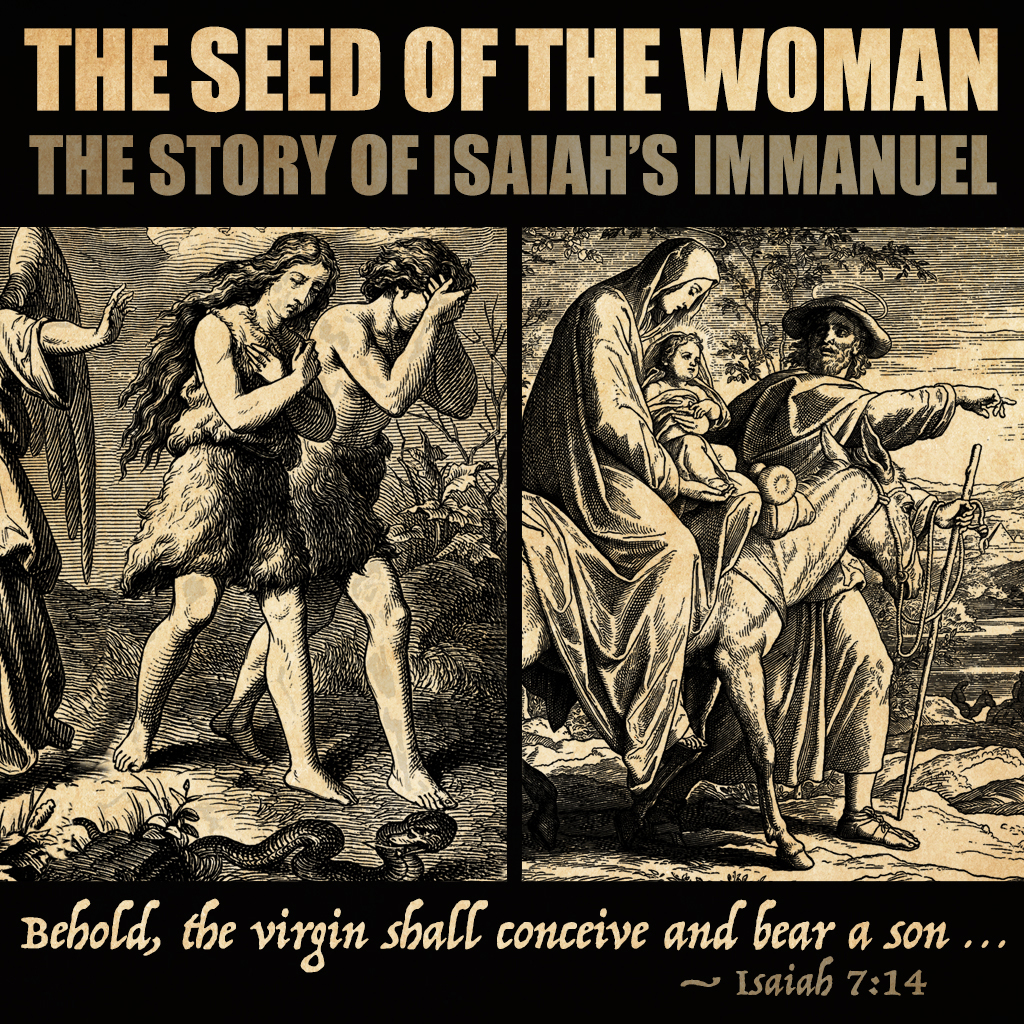
Seed of the Woman 1024x1024

Faith, Hope, Love, and a True Savior: Four Questions of Life and Death (Isaiah 36–39)

In Isaiah, the middle of the book presents us with a series of questions: Will you trust God when you are under threat? Will you turn to God when your life is in peril? Will you see God’s discipline as an act of love? And who is the king that can save you?

Truly, the book of Isaiah is not only one that foretells the coming of the messiah. It is also one that calls us to trust in the God who promised to send his Son as our messiah. In the events of Hezekiah’s life, which take center stage in Isaiah 36–39, we find an example of how one man trusted God and then failed to trust God. Indeed, Isaiah 36–39 is both a living parable for believers and a series of historical events that moves the story along in Isaiah’s long book.

On Sunday I preached a sermon these four chapters, complete with a spiritual parable about squirrels. If you are looking to learn how to have faith, hope, and love in the midst of hard times, this sermon may serve you well. In looking at Hezekiah’s faith and folly, we learn how to trust God and how to look for the greater king to come, the son of David who is greater than Hezekiah, the greatest of Israel’s kings (2 Kgs. 18:5).

Indeed, during this advent season, we continue to walk through Isaiah’s Gospel in order to see God’s plan of salvation. And in God’s plan of salvation, we not only find the promise of a king who will save his people (Matt. 1:21). We also find instructions for how the people of God shall respond to this Savior-King. To that end, you can listen to this sermon on Isaiah 36–39 to see how God calls us to trust him even when it costs us. This handout on Isaiah 36–39 may also help you to see what is in the text.

Until next time, let us continue to proclaim Christ from all Scriptures in order to make disciples of all the nations.

Soli Deo Gloria, ds