Five Truths About the Sinfulness of Sin

sinThe sinfulness of sin, to borrow Ralph Venning’s language, is beyond our natural comprehension. Born in sin (Ps 51:4), we are unable to see the sinfulness that engulfs our hearts, minds, decisions, and daily activities. Because we love sin so much, we do not even realize the way we manufacture and fondle our idols. Only with the light of God’s Word can we begin to see what sin is, and only as the Spirit illumines our minds do we begin to see our darkness.

Indeed, simply to know truth about sin does in no way eviscerate the presence of sin in our lives, but it is a start. Truth about sin is necessary for putting sin to death. Such knowledge is not sufficient to grow in holiness, but it is necessary for sanctification. With that hope in mind, I have listed out five points regarding the (1) prevalence, (2) power, (3) pervasiveness, (4) partnership, and (5) pleasure of sin.

May God use these biblical truths to help you and I understand the enemy that lives within that we might cry out with greater earnestness for the grace that pardons sin and the power to say no to sin. Continue reading

Food for Thought: Competing Visions of Heaven

heaven2What would a trip to heaven look like?

In 2004, Baker Books decided to test-run a book about one man’s trip to heaven. The book was Don Piper’s Ninety Minutes in Heaven. In ten years, his book has sold over 6 million copies, been translated 46 times, and prompted a whole new genre of “Christian “ book—heavenly tourism.

I put “Christian” in quotes because even as visions of heaven are known in Scripture, the descriptions are nothing like the visions described in newfangled spiritual journeys. In fact, it is worth asking: What should we think about  Heaven is for Real, Ninety Minutes in Heaven, Twenty-three minutes in Hell, etc.? Let me offer five thoughts.

First, descriptions of heaven are superfluous to and compete with the Bible.

There are a number of times in Scripture when God’s word speaks of prophets and apostles entering God’s heavenly court. However, in the case of Isaiah (Isa 6), Paul (2 Cor 12), and John (Revelation), their vision became recorded Scripture. This is categorically different from the accounts offered by Piper, Burpo, and others. In a world of competing sound bytes, these books add to Scripture’s testimony of what to know and believe about God, heaven, and how we get there.

Likewise, for those raised back to life, Scripture has no record of their experience. Apparently, God’s sufficient word did not (and does not) need such testimony. In fact, in Jesus’ parable with the rich man and Lazarus (Luke 16:19–31), Jesus makes it clear that if earth-dwellers “do not hear Moses and the Prophets, neither will they be convinced if someone should rise from the dead.” In context, this has direct application to Jesus death and resurrection, but it also relates to near death experiences today. If Heaven is for Real is considered a way to engender faith in those who won’t read the Bible, such thinking is a vain invention of man, not the ways of God. The Spirit (who inspired the Word) will do nothing to undermine the authority of the Scripture.

Second, in Scripture heavenly visions were accompanied by great afflictions.

John was not brought into heaven until his tortured exile on Patmos; when Isaiah left God’s throne room, he was tasked with proclaiming the ‘gospel’ to a nation who wouldn’t believe (Isa 6:9–11). And in Paul’s case, the apostle declared that a messenger from Satan accompanied his visions, so as to keep him from becoming conceited (2 Cor 12:7). By contrast, the recent heavenly accounts have brought acclaim, book contracts, and movie deals. There might be some slight discomforts that followed, but thorns sent from Satan himself? I’m doubtful. When we reconsider the places in Scripture where Paul, John, and Isaiah encounter God, it is apparent that the comparison is apples and oranges.

Third, God’s revelation always exalts Scripture and Jesus Christ.

In 2 Peter 1, Peter speaks of the origin of Scripture as arising from the Spirit and not man (vv. 19–21). Strikingly, he contrasts his own vision of glory with that of the OT. He says that the inspired word is more reliable than his own experience with the divine. Such apostolic humility gives us pause when we hear others speaking (and getting paid to speak) of their experience, especially when their message is more about heaven than Jesus. While Scripture is a radically, Christ-centered book (Luke 24:27; John 5:39), these new bestsellers focus more on heaven, than Jesus. And yet, what would heaven be like without Jesus? In a word, it would be hell! Indeed, for Christians, Christ is our heavenly hope. Or more put more starkly: Heaven is Christ.

Fourth, why are we convinced that uninspired heavenly visions are from God?

Since we know Satan masquerades as an angel of light (2 Cor 10:4), why would be surprised that in these days, the father of lies would seek to lead astray the elect of God, as Jesus says in Matthew 24:22, 24, 31? Would it not be a stratagem of Satan to concoct a series of visions that feign heaven, but without mentioning the gospel? Satan is very happy for people to believe in heaven and the afterlife, especially if takes them away from God’s Word or it increases the likelihood that they would begin looking for the sensational in life, instead of life in Scripture (cf. Deut 32:47). In other words, if Satan’s goal is to distance Christians from the truth God’s Word, why wouldn’t he use heavenly tourism as a way creating a taste for something less than Christ himself?

Fifth, and most importantly, heavenly visitations are superfluous for the believer who worships every Sunday.

Though we don’t often speak this way, when Christians assemble for worship, they visit heaven every Lord’s Day. Or better, heaven visits them. According to Hebrews 12, when believers gather in the name of Jesus, they are Spiritually and literally (if not bodily), gathering around the throne of Christ. Read Hebrews 12:22–24.

But you have come to Mount Zion and to the city of the living God, the heavenly Jerusalem, and to innumerable angels in festal gathering, and to the assembly of the firstborn who are enrolled in heaven, and to God, the judge of all, and to the spirits of the righteous made perfect, and to Jesus, the mediator of a new covenant, and to the sprinkled blood that speaks a better word than the blood of Abel. 

It doesn’t say, “And you will come to Mount Zion” in the future; it speaks in the present tense: “You have come . . .”

When believers gather to worship, the Spirit of Jesus is present. When the Scriptures are read and preached rightly, Jesus, who sits in heaven, speaks on the earth. When the congregation sings a new song (i.e., a song of salvation), they are joining with the angels. And when we lift our hears in prayer, we are entering the very throne room of God. Sadly, too many Christians forget that they “travel” to heaven every week. As a result, they are vulnerable to the exotic testimonies of others.

In the end, heavenly tourism, as sold at the local Wal-Mart, is deficient, dangerous, and possibly even demonic. It competes with the way in which God has spoken, and it leads believers and unbelievers alike to put confidence in the words of men and experiences that stand outside of Scripture. All in all, it is a kind of literature that is not needed and should be avoided. God has given us everything we need for life and godliness in God’s word (2 Pet 1:3). The question for each of us is, “Do we have an appetite for the things of God, or are we content to settle for visions of heaven that speak little of the gospel?”

For more on visits to heaven, read David Jones four-page outline on ‘Near Death Experiences.’ It will give you more than a few things to think about and help you formulate a better understanding of what Scripture says about heaven, seeing God, and near death experiences.

Soli Deo Gloria, dss


What’s Going on in Genesis 1–11?

genesisSince Julius Wellhausen suggested that the first five books were not written by Moses, there has been an endless discussion between biblical scholars about the first eleven chapters of Genesis. Some have suggested that it is a compilation document written over time from the various viewpoints of various redactors. For others, its poetic form proves that it is mythological account of creation, on par with other pagan etiologies. However, following the likes of G. K. Beale, it seems best to see any interaction between Moses and other ancient Near Eastern religions (and there certainly was familiarity and interaction) as polemical attempts to esteem Yahweh-Elohim as the sovereign creator of all things.

There are many reasons for affirming the historical nature of Genesis 1-11 and the singular authorship of Moses, but perhaps one of the most awe-inspiring is the literary arrangement of Genesis 1–11. Borrowing from the observations of others, let me suggest two suggestive patterns in Genesis 1-11 that show how carefully Moses, schooled in Egypt and inspired by the Holy Spirit, wrote a record of Creation, Fall, Judgment, Salvation, and New Creation. Continue reading

It’s About Scriptural Authority, not Sexual Liberty

bibleA few weeks ago, I responded to an article in our local newspaper that suggested that the loving thing to do is to embrace others who choose to pursue same-sex marriage. I thought it was going to be kept behind a pay-wall, but apparently, it is available online now. It’s entitled “Current debate not about sex, but following Scripture.” Here’s how it begins:

I don’t consider myself a person of faith. Maybe you can relate.

I grew up in the 1980s in a fairly typical home. When I was a kid, my parents didn’t read much of the Bible to me. And when they occasionally went to church, I slept in.

As I grew older, I thought my parents’ views on sex rather prudish: “Waiting to have sex until marriage. Ha! That was good for them, but not for me.”

As a teenager, I thought that a “committed relationship” was enough to rent a room on prom night. By high school, pornography had inflamed my lust.

As for homosexuality, I was too intoxicated with my own lusts to really care about that topic. In the mid-’90s, the mantra was “don’t ask, don’t tell.” I was happy to ignore the whole thing because I was living for me.

I didn’t care about politics—or preachers. I just wanted what I wanted, and cared little what people of faith had to say about sex.

Strangely enough, that all changed when Jesus Christ saved me from my empty hedonism.

You can read the rest of it at the Columbus Republic. And yes, I do explain my first line by the end.

Soli Deo Gloria, dss

The Doctrine of the Trinity: Three Distinct Persons

Trinity_3Over the weekend I presented the first part of a ‘bare-bones’ outline of the Trinity. In short order, I argued that the doctrine can be sub-divided into two basic assertions, which each require a healthy dose of explaining.  The first proposition is God is one God. The second proposition is God is three Persons. Under those headings I added the following points.
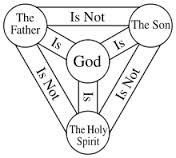
God is One God

  1. The Father is God.
  2. The Son is God.
  3. The Holy Spirit is God.
  4. The Father, Son, and Holy Spirit are Uncreated, Co-Eternal, Inseparable, and Perfectly Equal in Essence.

God is Three Persons

  1. God is Father, Son, and Holy Spirit.
  2. The Father Sends the Son and the Spirit.
  3. The Son is Sent by the Father, and Sends the Spirit.
  4. The Spirit is One Sent by Father and Son.
  5. Father, Son, and Holy Spirit works together to create the cosmos, sustain life, and redeem the church.
  6. God’s visible actions in history reveals his invisible triune nature.

Because of the difference in classification (God and persons) there is no logical inconsistency between saying God is ‘one’ and God is ‘three.’ Still, there is natural difficulty (not too mention the effect of sin on our thinking) in trying to understand how God is one and three. On the one hand, natural man cannot grasp an infinite God—even with God’s inspired word. On the other hand, God’s revelation under the guidance of the Holy Spirit guides Christians to a true but incomplete knowledge of him.

Keeping our creatureliness and Godward-dependence in mind as we approach this doctrine, this outline aims to help us put some of the pieces together.  Since, I’ve already laid out a defense of God as one God, the  next step is to pick up the second proposition—God is three persons—and  consider the first four points. Continue reading

The Doctrine of the Trinity: God is One God

TrinityThere is nothing bare-bones about the Trinity. But sometimes when introducing this doctrine it helps to give a brief, ‘bare-bones’ outline to help young believers or novice theologians understand the parameters of orthodox belief about Scripture’s deepest mystery.

With such an intention, let me lay out a bare-bones doctrine of the Trinity. In its shortest and most incomplete delineation, the Christians doctrine affirms two things: (1) God is One God and (2) God is Three Persons. This denies modalism (one god in three forms) and tritheism (three gods), and gets on the way to a right view of the doctrine. Continue reading

Getting a Handle on Carl F. H. Henry

Last week, I attended the Carl F. H. Henry Centennial Celebration at Southern Seminary. While there, I was reminded (or better: learned for the first time) how important Henry was. His pupils have been my teachers; his name has been mentiond with reverence; and his massive, six-volume set has overlooked my office for a year now, but I have not cracked it. Until now.

But how do you get a handle on Henry?

He is a massive figure. In evangelical history, in this theological output, and in the density of his scholarship, he is a force to be reckoned with. So, how do you begin? Continue reading

The Bible: Literature’s Gold Standard

The Bible is inspired, inerrant, sufficient, necessary, and authoritative, just to name a few of its divine qualities. It is also different than every other book ever written. Not just by degrees, either. It is categorically different.

In his insightful book about reading, Lit!: A Christian Guide to Reading BooksTony Reinke makes that case. In one category are the myriads of books written by human authors, and in the other category—with only one book checking in—is the Bible.

Concluding his chapter on the Bible’s uniqueness, he cites the ‘Prince of Preachers,’ Charles H. Spurgeon, who said of the Bible,

All other books might be heaped together in one pile and burned with less loss to the world than would be occasioned by the obliteration of a single page of the sacred volume [Scripture]. At their best, all other books are but as gold leaf, requiring acres to find one ounce of the precious metal. But the Bible is solid gold. It contains blocks of gold, mines, and whole caverns of priceless treasure. In the mental wealth of the wisest men there are no jewels like the truths of revelation. The thoughts of men are vanity, low, and groveling at their best. But he who has given us this book has said, “For my thoughts are not your thoughts, neither are your ways my ways, declares the LORD. For as the heavens are higher than the earth, so are my ways higher than your ways and my thoughts than your thoughts” (Isa. 55:8-9). Let it be to you and to me a settled matter that the word of the Lord shall be honored in our minds and enshrined in our hearts. Let others speak as they may. We could sooner part with all that is sublime and beautiful, or cheering and profitable, in human literature than lose a single syllable from the mouth of God (1881; repr., Metropolitan Tabernacle Pulpit, vol. 27 [Pasadena, TX: Pilgrims, 1984], 124; citation from Reinke, Lit!, 27-28).

Amen!

As we read, may we remember that Scripture is in a class by itself. May that reality press us to put it at the top of our reading list, and to judge all other books by the gold standard of God’s Word.

Soli Deo Gloria, dss

George Smeaton on Christ’s Own System of Hermeneutics

Ever wonder how the apostle’s developed their particular brand of Christ-centered hermeneutics?  This has been a frequently-discussed and hotly-debated subject over the last few years.  Numerous books have addressed the subject.  For instance, Greg Beale, ed. The Wrong Doctrine from the Right Texts?; Richard Longenecker, Biblical Exegesis in the Apostolic Period; Dennis Johnson, Him We Proclaim; Sidney Greidnaus, Preaching Christ from the Old Testament are a handful of them.

Yet, perhaps the best answer I have found goes back nearly 150 years.  In the opening pages of his book, The Apostles’ Doctrines of the Atonementnineteenth century New Testament theologian, George Smeaton, answers this question: How did the apostles develop their hermeneutics.

Without batting an eye, he turns to the forty days that Jesus spent with his disciples between his resurrection and ascension.  He posits that the “Lord’s system of hermeneutics” was passed on to these inspired authors and that in every instance where the disciples spoke of the terms, concepts, and types found in the Old Testament, they did so as learned pupils of their master teacher–Jesus Christ.

Smeaton’s quotation is lengthy, but well worth pondering.

But the fresh instruction which they received from personal interviews with the Redeemer subsequently to the resurrection must next be noticed.  This oral instruction received from the lips of the risen Lord is certain as to the matter of fact, and on many grounds was indispensably necessary.  Nor was it limited to the eleven alone.  Paul, too, received it at a later day, when he took rank among the apostles as one born out of due time.  How far the oral instruction of the risen Redeemer extended, it may be difficult for us to say.  Whether or not it comprehended all the great articles of divine truth, it certainly extended to the atonement (Luke xxiv. 25).  This was to be the substance and foundation of all their preaching [1 Cor 2:2], and it was indispensably necessary for them to possess the most accurate knowledge of it.  One object, therefore, which the Lord had in view during those forty days’ sojourn with the disciples after His resurrection, was to open their understandings in the course of these personal interviews, to apprehend with all possible precision the nature of His death–its necessity, consituent elements, and efficacy; against which, in every form, they had long entertained the most invincible prejudice.  He now made all things plain, showing that the Christ must have suffered these things.

How they were introduced into the theology of the Old Testament is specially worthy of notice.  A due consideration of this point serves to bring out one most important fact, viz. that Christ’s oral expositions are to be taken as THE MIDDLE TERM, or as the connecting link between Old Testament records on the one hand, and the apostolic commentary on the other.  In a word, He was Himself the interpreter of Scripture, and of His own history, in the course of those oral communications.  In the book of Acts, and in the epistles, we find numerous interpretations of the prophecies, as well as of the types and sacrifices which owe their origin to this source.  The evangelist Luke relates, that on the first resurrection-day, upon the Emmaus road, in order to instruct the two disciples with whom He entered into conversation, the Lord, beginning at Moses and all the prophets, expounded in all the Scriptures the things concerning Himself (Luke 24:27); that is, He led them to a full survey of the typology and of the prophetical system of the Old Testament Scriptures.  The same evening He reviewed the whole subject not less fully in presence of the eleven and other disciples, expounding them how the Old Testament Scriptures received their fulfillment in Himself, and  opening all that related to His death and resurrection. . . . The evangelist [Luke] mentions that His exposition extended to the Law of Moses, to the Prophets, and to the Psalms.  The allusion to the Law of Moses recalls the whole range of typical theology–the sacrifices, the priestly institute, and the temple services.  The allusion to the prophets reminds us of the wide field of Messianic prophecy, form the first promise in the garden of Eden to the last of the prophets.  The allusion to the Psalms recalls those utterances which were put beforehand into the mouth of the suffering Messiah in a series of psalms in which the Lord Jesus found Himself.  He thus, in all these three divisions of Scripture, supplied them with the key which served to unlock what had never been so fully understood before in reference to His atoning death.

These invaluable expositions, which may be called in the modern phrase the Lord’s own system of hermeneutics, formed the apostles to be interpreters of the Old Testament, directing them where and how to find allusions to the suffering Messiah.  Hence the certainty and precision with which they ever afterwards preceded to expound those holy oracles in all their discourses.  Although these comments from the lips of the Messiah, have not been preserved to us in a separate form, they are doubtless to a large extent wrought into the texture of Scripture; and under the apostle’s allusions to the Old Testament we may read the Lord’s own commentary.  These expositions, whereby He opened their understandings to understand the Scriptures, introduced the apostles into the true significance of the Old Testament (Luke 24:44), throwing light on the two economies [Old and New], and thus bringing in the authority of Christ to direct them in all their future career.  His sanction is thus given to the apostolic interpretation of the Jewish rites; and we are warranted to say that we see the Lord’s own commentary underlying that of the apostles, whether we find allusion to the types, or to the prophecies, or to the Psalms, in their sermons and epistles.  These expositions made the apostles acquainted with the doctrine of the atonement, in its necessity and scope, in its constituent elements and saving results.  The apostles received the fullest instruction from the lips of their risen Lord; and on this theme it appears that the instruction was subject to none of the reserves which checked their curiousity upon another occasion, when they would make inquiries as to points bearing on the future of His kingdom (Acts 1:7).  (George Smeaton, The Apostle’s Doctrine of the Atonement, 4-7)

If you are not familiar with Smeaton, you should be.  He is a model exegete and a learned theologian.  In his day, he was the foremost New Testament scholar in Scotland and maybe beyond.  His two volumes on the atonement of Jesus Christ are excellent as is his reading of the gospels and the epistles.

May we continue to see Christ in all Scripture and faithfully show others how the Old and New Testaments are united in him.

Sola Deo Gloria, dss

Gospel Logic: Taking God at His Word

Over the last week, I put up a handful of posts on how the Old Testament saints reasoned from the promises of God in order to follow God in amazing ways.  That is, they did not simply do what they were supposed to do, because they were unswervingly obedient.  Rather, the promises of the gospel took up residence in their heart and they were compelled to act by the faith they had in God’s word.

Today, I list them in one place/one post.  I hope they can be helpful.  There are more places where this gospel logic is seen in Scripture too.  Perhaps, we can come back to it another week.

Gospel Logic: Learning To Take God At His Word

Abraham’s Gospel Logic

Moses Gospel Logic

The Gospel Logic of Psalm 42-43

The Gospel Logic of Psalm 103

What God Commands, He Gives: A Reflection on 2 Peter 1:3-11

Soli Deo Gloria, dss