Via Emmaus on the Road: Hebrews 13

Further Resources


Hebrews 13 (ESV)

Sacrifices Pleasing to God

13 Let brotherly love continue. Do not neglect to show hospitality to strangers, for thereby some have entertained angels unawares. Remember those who are in prison, as though in prison with them, and those who are mistreated, since you also are in the body. Let marriage be held in honor among all, and let the marriage bed be undefiled, for God will judge the sexually immoral and adulterous. Keep your life free from love of money, and be content with what you have, for he has said, “I will never leave you nor forsake you.” So we can confidently say,

“The Lord is my helper;

I will not fear;

what can man do to me?”

Remember your leaders, those who spoke to you the word of God. Consider the outcome of their way of life, and imitate their faith. Jesus Christ is the same yesterday and today and forever. Do not be led away by diverse and strange teachings, for it is good for the heart to be strengthened by grace, not by foods, which have not benefited those devoted to them. 10 We have an altar from which those who serve the tent have no right to eat. 11 For the bodies of those animals whose blood is brought into the holy places by the high priest as a sacrifice for sin are burned outside the camp. 12 So Jesus also suffered outside the gate in order to sanctify the people through his own blood. 13 Therefore let us go to him outside the camp and bear the reproach he endured. 14 For here we have no lasting city, but we seek the city that is to come. 15 Through him then let us continually offer up a sacrifice of praise to God, that is, the fruit of lips that acknowledge his name. 16 Do not neglect to do good and to share what you have, for such sacrifices are pleasing to God.

17 Obey your leaders and submit to them, for they are keeping watch over your souls, as those who will have to give an account. Let them do this with joy and not with groaning, for that would be of no advantage to you.

18 Pray for us, for we are sure that we have a clear conscience, desiring to act honorably in all things. 19 I urge you the more earnestly to do this in order that I may be restored to you the sooner.

Benediction

20 Now may the God of peace who brought again from the dead our Lord Jesus, the great shepherd of the sheep, by the blood of the eternal covenant, 21 equip you with everything good that you may do his will, working in us that which is pleasing in his sight, through Jesus Christ, to whom be glory forever and ever. Amen.

Final Greetings

22 I appeal to you, brothers, bear with my word of exhortation, for I have written to you briefly. 23 You should know that our brother Timothy has been released, with whom I shall see you if he comes soon. 24 Greet all your leaders and all the saints. Those who come from Italy send you greetings. 25 Grace be with all of you.

Soli Deo Gloria!

Via Emmaus on the Road: Hebrews 8

Further Resources


Hebrews 8 (ESV)

Jesus, High Priest of a Better Covenant

Now the point in what we are saying is this: we have such a high priest, one who is seated at the right hand of the throne of the Majesty in heaven, a minister in the holy places, in the true tent that the Lord set up, not man. For every high priest is appointed to offer gifts and sacrifices; thus it is necessary for this priest also to have something to offer. Now if he were on earth, he would not be a priest at all, since there are priests who offer gifts according to the law. They serve a copy and shadow of the heavenly things. For when Moses was about to erect the tent, he was instructed by God, saying, “See that you make everything according to the pattern that was shown you on the mountain.” But as it is, Christ has obtained a ministry that is as much more excellent than the old as the covenant he mediates is better, since it is enacted on better promises. For if that first covenant had been faultless, there would have been no occasion to look for a second.

For he finds fault with them when he says:

“Behold, the days are coming, declares the Lord,

when I will establish a new covenant with the house of Israel

and with the house of Judah,

not like the covenant that I made with their fathers

on the day when I took them by the hand to bring them out of the land of Egypt.

For they did not continue in my covenant,

and so I showed no concern for them, declares the Lord.

10  For this is the covenant that I will make with the house of Israel

after those days, declares the Lord:

I will put my laws into their minds,

and write them on their hearts,

and I will be their God,

and they shall be my people.

11  And they shall not teach, each one his neighbor

and each one his brother, saying, ‘Know the Lord,’

for they shall all know me,

from the least of them to the greatest.

12  For I will be merciful toward their iniquities,

and I will remember their sins no more.”

13 In speaking of a new covenant, he makes the first one obsolete. And what is becoming obsolete and growing old is ready to vanish away.

Soli Deo Gloria!

Via Emmaus on the Road: Hebrews 7

Further Resources


Hebrews 7 (ESV)

The Priestly Order of Melchizedek

For this Melchizedek, king of Salem, priest of the Most High God, met Abraham returning from the slaughter of the kings and blessed him, and to him Abraham apportioned a tenth part of everything. He is first, by translation of his name, king of righteousness, and then he is also king of Salem, that is, king of peace. He is without father or mother or genealogy, having neither beginning of days nor end of life, but resembling the Son of God he continues a priest forever.

See how great this man was to whom Abraham the patriarch gave a tenth of the spoils! And those descendants of Levi who receive the priestly office have a commandment in the law to take tithes from the people, that is, from their brothers, though these also are descended from Abraham. But this man who does not have his descent from them received tithes from Abraham and blessed him who had the promises. It is beyond dispute that the inferior is blessed by the superior. In the one case tithes are received by mortal men, but in the other case, by one of whom it is testified that he lives. One might even say that Levi himself, who receives tithes, paid tithes through Abraham, 10 for he was still in the loins of his ancestor when Melchizedek met him.

Jesus Compared to Melchizedek

11 Now if perfection had been attainable through the Levitical priesthood (for under it the people received the law), what further need would there have been for another priest to arise after the order of Melchizedek, rather than one named after the order of Aaron? 12 For when there is a change in the priesthood, there is necessarily a change in the law as well. 13 For the one of whom these things are spoken belonged to another tribe, from which no one has ever served at the altar. 14 For it is evident that our Lord was descended from Judah, and in connection with that tribe Moses said nothing about priests.

15 This becomes even more evident when another priest arises in the likeness of Melchizedek, 16 who has become a priest, not on the basis of a legal requirement concerning bodily descent, but by the power of an indestructible life. 17 For it is witnessed of him,

“You are a priest forever,

after the order of Melchizedek.”

18 For on the one hand, a former commandment is set aside because of its weakness and uselessness 19 (for the law made nothing perfect); but on the other hand, a better hope is introduced, through which we draw near to God.

20 And it was not without an oath. For those who formerly became priests were made such without an oath, 21 but this one was made a priest with an oath by the one who said to him:

“The Lord has sworn

and will not change his mind,

‘You are a priest forever.’ ”

22 This makes Jesus the guarantor of a better covenant.

23 The former priests were many in number, because they were prevented by death from continuing in office, 24 but he holds his priesthood permanently, because he continues forever. 25 Consequently, he is able to save to the uttermost those who draw near to God through him, since he always lives to make intercession for them.

26 For it was indeed fitting that we should have such a high priest, holy, innocent, unstained, separated from sinners, and exalted above the heavens. 27 He has no need, like those high priests, to offer sacrifices daily, first for his own sins and then for those of the people, since he did this once for all when he offered up himself. 28 For the law appoints men in their weakness as high priests, but the word of the oath, which came later than the law, appoints a Son who has been made perfect forever.

Soli Deo Gloria!

Via Emmaus on the Road: Hebrews 5

Further Resources


Hebrews 5 (ESV)

For every high priest chosen from among men is appointed to act on behalf of men in relation to God, to offer gifts and sacrifices for sins. He can deal gently with the ignorant and wayward, since he himself is beset with weakness. Because of this he is obligated to offer sacrifice for his own sins just as he does for those of the people. And no one takes this honor for himself, but only when called by God, just as Aaron was.

So also Christ did not exalt himself to be made a high priest, but was appointed by him who said to him,

“You are my Son,

today I have begotten you”;

as he says also in another place,

“You are a priest forever,

after the order of Melchizedek.”

In the days of his flesh, Jesus offered up prayers and supplications, with loud cries and tears, to him who was able to save him from death, and he was heard because of his reverence. Although he was a son, he learned obedience through what he suffered. And being made perfect, he became the source of eternal salvation to all who obey him, 10 being designated by God a high priest after the order of Melchizedek.

Warning Against Apostasy

11 About this we have much to say, and it is hard to explain, since you have become dull of hearing. 12 For though by this time you ought to be teachers, you need someone to teach you again the basic principles of the oracles of God. You need milk, not solid food, 13 for everyone who lives on milk is unskilled in the word of righteousness, since he is a child. 14 But solid food is for the mature, for those who have their powers of discernment trained by constant practice to distinguish good from evil.

Soli Deo Gloria!

Via Emmaus on the Road: Hebrews 2

Further Resources


Hebrews 2 (ESV)

Hebrews 2 (ESV)

Warning Against Neglecting Salvation

Therefore we must pay much closer attention to what we have heard, lest we drift away from it. For since the message declared by angels proved to be reliable, and every transgression or disobedience received a just retribution, how shall we escape if we neglect such a great salvation? It was declared at first by the Lord, and it was attested to us by those who heard, while God also bore witness by signs and wonders and various miracles and by gifts of the Holy Spirit distributed according to his will.

The Founder of Salvation

For it was not to angels that God subjected the world to come, of which we are speaking. It has been testified somewhere,

“What is man, that you are mindful of him,

or the son of man, that you care for him?

You made him for a little while lower than the angels;

you have crowned him with glory and honor,

putting everything in subjection under his feet.”

Now in putting everything in subjection to him, he left nothing outside his control. At present, we do not yet see everything in subjection to him. But we see him who for a little while was made lower than the angels, namely Jesus, crowned with glory and honor because of the suffering of death, so that by the grace of God he might taste death for everyone.

10 For it was fitting that he, for whom and by whom all things exist, in bringing many sons to glory, should make the founder of their salvation perfect through suffering. 11 For he who sanctifies and those who are sanctified all have one source. That is why he is not ashamed to call them brothers, 12 saying,

“I will tell of your name to my brothers;

in the midst of the congregation I will sing your praise.”

13 And again,

“I will put my trust in him.”

And again,

“Behold, I and the children God has given me.”

14 Since therefore the children share in flesh and blood, he himself likewise partook of the same things, that through death he might destroy the one who has the power of death, that is, the devil, 15 and deliver all those who through fear of death were subject to lifelong slavery. 16 For surely it is not angels that he helps, but he helps the offspring of Abraham. 17 Therefore he had to be made like his brothers in every respect, so that he might become a merciful and faithful high priest in the service of God, to make propitiation for the sins of the people. 18 For because he himself has suffered when tempted, he is able to help those who are being tempted.

Soli Deo Gloria!

Rejoicing in Christ’s Royal Priesthood: The 2024 Bauman Lectures (Toronto Baptist Seminary)

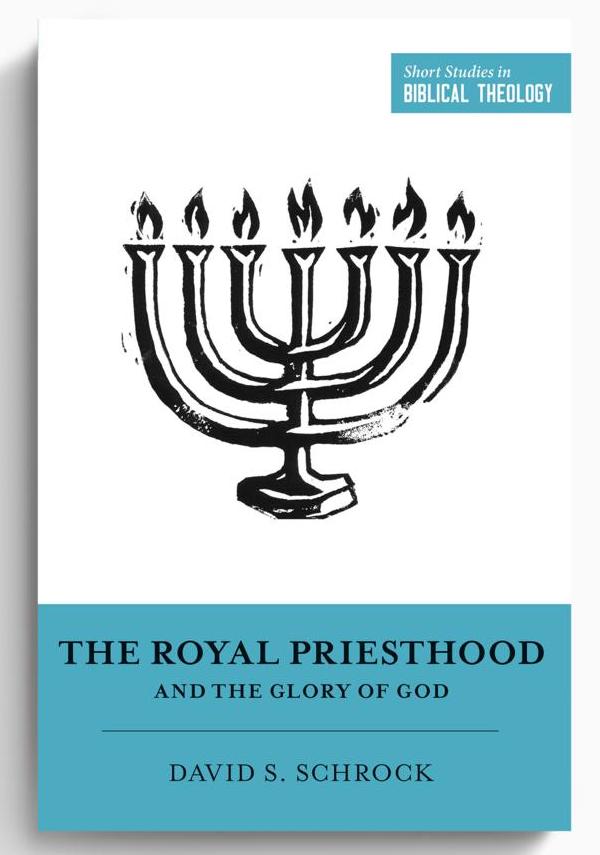
In 2022, I wrote a book entitled The Royal Priesthood and the Glory of GodThis book clarified, synthesized, and streamlined my doctoral dissertation. In 2013, I finished a biblical theology of the priesthood which sought to answer the question: For whom did Christ die? Looking at the priesthood from Genesis to Revelation I argued for a definite atonement. In that large volume I came to love the theme of priesthood in the Bible and what that means for knowing Christ and for imitating Christ.

Since 2013, I have written a handful of articles on the priesthood, and in the last few weeks I have spoken twice on the subject. The first series of lectures took place at Eden Baptist Church in Burnsville, Minnesota, and the second lecture series is taking place this weekend at Toronto Baptist Seminary and Jarvis Street Baptist Church in Toronto, Canada.

To assist students, faculty, church members, and guests of the Bauman Lectures, I am posting notes here. I will add to them as the weekend goes on, and in the end, I hope this post will link to all the priestly things I have written to date.

The Bauman Lectures (2024)

  • Lecture 1: Building a Kingdom of Priests — In this lecture, I survey the way in which the institution of the Levitical Priesthood came into being. This lecture simplifies my larger SBJT article and puts into lecture form the second chapter of my book, The Royal Priesthood and the Glory of God.
  • Lecture 2: In Search of a Priest-King Like Melchizedek (Genesis 14, Psalm 110, Hebrews 5–7) –In this lecture, I examine the context, content, and concepts found in three places where Melchizedek is named. Together, this helps us understand who Jesus is, as a royal priest.
  • Lecture 3: Seeing Melchizedek in the Book of 1–2 Samuel: An Exploration in Typology — In this lecture, I have written a working manuscript (with limited annotation) to show how Melchizedek is a figure found in the book of 1–2 Samuel. This reading depends upon a careful comparison between Bera, king of Sodom, and Melchizedek, king of Salem. It also explains how David saw his own son as a priest after the order of Melchizedek.
  • Sunday Morning Sermon: Getting to Know Our Great High Priest (Exodus 28–30; Hebrews)
  • Sunday Evening Sermon: A Kingdom of Priests: Washed, Worshiping, Working, Witnessing (Exodus 19:5–6; 1 Peter 1:22–2:10)

More to come . . .

Soli Deo Gloria, ds

10 Things You Should Know About the Priesthood

priestcolorCrossway has a helpful series of blog articles called “10 Things You Should Know . . .” These articles summarize key ideas from some of Crossway’s recent books. And this week, they posted my contribution about the priesthood.

Here are the first three things you should know. The rest you can find here. The book you can find here. And a sermon series on the priesthood can also be found here.

1. The Edenic origin of the priesthood.

In Eden, God created mankind in his image to reflect his glory. In this setting, God crowned man with glory and honor (Ps. 8:5), authorized him to subdue and rule (Gen. 1:28), and gave him priestly instructions for serving in his garden-temple (Gen. 2:15; cf. Num. 3:8). This is the prototype of royal priesthood from which all other priests will be molded. In other words, when the priesthood is legislated in Israel, it will pick up language and imagery from Eden. At the same time, the Law of Moses divided the royal and priestly roles originally united in Adam. Thus, only a second Adam can unite priesthood and kingdom in a manner similar to Eden.

2. The cosmic fall of the priesthood.

When Adam sinned and fell short of God’s glory (cf. Rom. 1:21–23; 3:23; 5:12, 18–19), God expelled him from God’s garden-sanctuary (see Ezek. 28:11–19), destroying any chance of Adam serving God as priest-king. In the fall, Adam’s sin made sacrifice necessary, as indicated by the events of Genesis 4. Because death was the punishment for sin, blood must be shed. To be certain, the full consequence of sin and the need for a priest would require later revelation to explain (see Leviticus), but it is worth noting the original intent and downfall of the priesthood. For the rest of the Bible, we find a search for someone who could stand before God and serve as a mediator (cf. Job 9:33–35).

The Royal Priesthood and the Glory of God

The Royal Priesthood and the Glory of God

David S. Schrock

David Schrock traces the theme of priesthood throughout the Bible and displays how Jesus, the great high priest, informs the worship, discipleship, and evangelism of the church.

3. The fraternal development of the priesthood.

From Eden to Sinai, priestly ministration continued, but in a very ‘itinerant’ fashion. In the days of the Patriarchs, firstborn sons grew up to be mediators for their families. Job is a good example of this (Job 1:5), as is Abraham. In the Abraham narrative (Gen. 11:27–25:18), we find Abraham building altars (Gen. 12:7, 8; 13:4, 18), interceding for others (Gen. 18:22–33), and obeying God by offering a sacrifice (Gen. 22:1–18). While Abraham and his sons lacked the title of priest, these “priests” play an important role in understanding the earthly “priesthood” of Jesus—a priest in function, but without legal title. At the same time, the priestly service of firstborn sons helps explain Israel’s role as a royal priesthood (Ex. 19:6).

For the last seven points, see Crossway’s 10 Things You Should Know About the Priesthood in the Bible.

Soli Deo Gloria, ds

Good News for Blemished Priests: A Resurrection Meditation on Leviticus 21

kelly-sikkema-mY6cga4GgOI-unsplash

16 And the Lord spoke to Moses, saying,
17 “Speak to Aaron, saying,None of your offspring
throughout their generations who has a blemish
may approach to offer the bread of his God.
— Leviticus 21:16–17 —

In Leviticus 21, we come across a passage that is easily misunderstood. From a first reading of Leviticus 21:16–24, it appears that God does not associate with the disabled, the deformed, or the dismembered. And by extension, this seems to imply that God is cruel to those who deserve compassion. Or at least, as Old Testament scholar, Katherine Smith, has observed this passage is difficult for Westerners who would find themselves in trouble with the law if they mistreated those with a physical disability.

So what is going on in Leviticus 21? And how can the Law of God be holy, righteous, and good (Rom. 7:12), if it teaches Israel to withhold blemished priests from the offering sacrifices to God? Can we honestly say these laws are good and should be followed today? Or, do we need to make apology for Leviticus 21 and unhitch the Old Testament from the gospel of Jesus Christ?

Affirming the unity of Scripture and the goodness of everything contained therein (see Rom. 15:4 and 2 Tim. 3:16–17), I will argue that verses not only bear witness to God’s unswerving holiness but in the fullness of time, and with finished work of Christ in view, we have in Leviticus 21 a glorious declaration of what the resurrection of Christ accomplishes—namely, the good news that blemished priests will be brought into the presence of God, but only after they have been raised from the dead. But praise be to God, that is the good news of the resurrection! Continue reading

Jesus is the True Priest Who Offers a Better Sacrifice

goodfriday04In his modern classic, The Cross of Christ, John Stott begins his consideration of Christ’s crucifixion by outlining all the times Jesus speaks of his impending death. For Christ, his earthly mission focused not on his teaching, his healing, nor his ruling; his singular focus was on his sacrifice and his atonement for sin. He knew this and as we remember Christ’s death and resurrection this week, it is good for us to know the same.

In the Synoptic Gospels (Matthew, Mark, and Luke) we find at least nine places where Jesus speaks about his death. In John’s Gospel, we find seven more statements that describe the hour of his death. In all, these passages tell us a great deal about what Jesus’s death accomplished and how our Savior understand the purposes of his crucifixion. Following Stott’s outline (see pp. 25–32), let’s consider what Christ says about his death in the Synoptic Gospels. Perhaps, if time permits, we will return to John’s Gospel. Continue reading

Our Glorious High Priest: 24 Audio Lessons on Hebrews

priestcolor

Over the course of 2018–19 I taught through the book of Hebrews at our church on Tuesday Nights. You can find the audio and notes below.

My approach: With an interest in Christ’s priesthood as the fulfillment of the whole Bible, and with a conviction that Hebrews models for us how to interpret the Old Testament, I attempted to show how Jesus is the Son of God and Our Glorious High Priest. At the same time, as the title of my previous series on the priesthood suggests, I believe the book also shows how new covenant believers become a family of priests in the kingdom Christ is bringing.

For those who read the whole book of Hebrews, you will notice that what is said of Christ (sonship, priesthood, and kingship) in Hebrews 1 is applied to all those in Christ in Hebrews 12–13. In short, Hebrews teaches us how God makes his people a family of royal priests. Often this emphasis on union in Christ with respect to the priesthood is not appreciated, but I believe a faithful reading of the book demonstrates how Christ is the great hight priest and how all those in him become new covenant Levites, so to speak.

One last note, I also attempted to show throughout much of the book how the literary structure is seen in chiastic structures. I am sure I haven’t been right in every case and that I’ve missed plenty, but in the notes you can at least see my attempt at putting the book together. If you have time, and especially if you disagree with a literary structure, let me know. I’d love to see how you put the book together.

All in all, few books in the Bible—maybe no book in the Bible—is more resplendent in its glory of Christ and his royal priesthood. Our class delighted in this truth throughout the year and found much personal encouragement in Hebrews. May you do the same. And may these notes help you in that journey.

Soli Deo Gloria, ds

Our Glorious High Priest: 24 Audio Lessons on Hebrews

Fall 2018

  1. Hebrews Overview [audionotes]
  2. Hebrews 1:1–4 [audionotes ]
  3. Hebrews 1:5–2:4 [audionotes ]
  4. Hebrews 2:5–18 [audionotes]
  5. Hebrews 3:1–6 [audionotes ]
  6. Hebrews 3:7–19 [audionotes]
  7. Hebrews 4:1–13 [audionotes]
  8. Hebrews 4:14–5:10 [audionotes]
  9. Hebrews 5:11–6:12 [audionotes]
  10. Hebrews 6:13–20 [audionotes]
  11. Hebrews 7:1–10 [audionotes] – Guest Teacher (Jonathan Matías)
  12. Hebrews 7:11-28 [audio]

Spring 2019

  1. Hebrews 8:1-13 [audionotes]
  2. Hebrews 8:7–13 [audionotes]
  3. Hebrews 9:1–10 [audio, notes]
  4. Hebrews 9:11–22 [audio, notes]
  5. Hebrews 9:23–28 [audio, notes]
  6. Hebrews 10:1–18 [audionotes]
  7. Hebrews 10:19–25 [audionotes]
  8. Hebrews 10:26–39 [audionotes]
  9. Hebrews 11:1–40 [audio, notes]
  10. Hebrews 12:1–17 [audionotes]
  11. Hebrews 12:18–29 [audio] – Guest Teacher (Ron Comoglio)
  12. Hebrews 13:1–21 [audionotes]