The Sons of God: Three Interpretations of Genesis 6:1–4

luigi-boccardo-OGSbrFW_dos-unsplashFigment. Absurd. Gross.

These are but three of the names John Calvin calls the position I hold on Genesis 6. And while, he doesn’t employ his most common insult (stupid!), I am sure he would have little trouble applying that label to the view that angels had sexual relations with women, such that the Nephilim (or giants) were the resultant offspring.

For indeed, when considering who the sons of God were in Genesis 6, he excoriates the ancient view that believed the sons of God (=angels) came from heaven to consort with the daughters of man. He writes in his commentary on Genesis 6, “That ancient figment, concerning the intercourse of angels with women, is abundantly refuted by its own absurdity; and it is surprising that learned men should formerly have been fascinated by ravings so gross and prodigious [strange or unusual].” [1]

Following this view, he adds another, namely, the idea that the sons of God were royal sons and the daughters of men were commoners. The problem in this case was the way that the nobility chased the commoners, resulting in offspring of mixed hereditary stock.[2] On this second view, whom he assigns to the “Chaldean paraphrast” (i.e., the Babylonian Talmud), we can agree that this interpretation fails to follow the terms of Scripture. (Yet, it is not far from another view that will be referenced below.)

In contrast to both views, Calvin then offers his—the idea that has become popular among so many evangelicals today. He sees the sons of God as the male heirs of Seth and the daughters of man as the female offspring of Cain. While Calvin frames this division in theological terms (i.e., the sons being chosen by grace and the daughters being left in their common condition), his reading is purely human, and wreaks nothing of gross absurdity.[3] Or, so he believes.

Historically, his view, which goes back to Augustine and before that to Julius Africanus (c. 160–240), can be summarized under the title of the Sethite position, while my position, which goes back to the Jewish interpreters of the Second Temple period might be titled the Fallen Angel position. Additionally, there is the view that understands the sons of God in royal terms, but not like that described by Calvin, what I’ll label the Kings of the Earth position.

In what follows, I want to lay out these three positions and begin to explain why I believe Calvin’s mockery of this position is wrong. As always, it is not a light thing to disagree with such an eminent theologian, but as a Baptist, Calvin’s insults don’t bother me. I’ve disagreed with him before, and here I will do so again. I will argue that his Sethite view is reasonable, but not ultimately persuasive. Better, we should read Genesis 6 in the context of the whole Bible, and when we do we will discover the fact that the angels of heaven left their proper abode, consorted with human women, and thus invited the judgment of God which led to the cosmic flood. Continue reading
Noah as a Second Adam: Eight Evidences

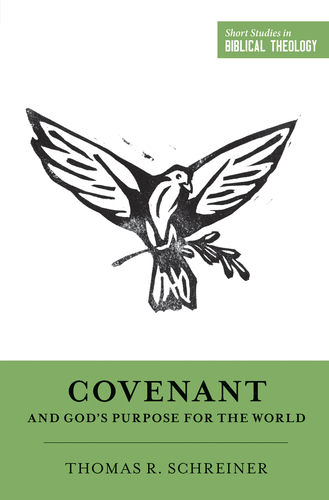
covenantIn his short study on biblical covenants, Covenant and God’s Purpose for the World, Tom Schreiner provides a helpful comparison between Adam and Noah. As our men’s Bible study looks at this section of Scripture today, I share Schreiner’s eight evidences for seeing textual connections between Adam and Noah. Clearly, Moses wrote Genesis 1–11 to show how Noah is a Second Adam.

Here are his eight observations. I’ve added the italicizes to highlight the observations.

First, God’s work of ordering and shaping the creation occurred when the earth was covered with water and chaos (Gen. 1: 2). So too, after the flood the earth was inundated with water, and a new beginning took place when the water receded.

Second, God created the birds, creeping things, and animals to flourish and multiply on earth (Gen. 1: 20–21, 24–25). After the flood, the birds, creeping things, and animals again began to propagate on the earth (8:17–19). Continue reading

From Noah’s Baptism to Jesus’ Crucifixion: A Study in Typological Escalation

fishJesus is the goal of redemptive history. In Ephesians 1:10 Paul observes that God has “[made] known to us the mystery of his will, according to his purpose, which he set forth in Christ, as a plan for the fullness of time, to unite all things in him.” In Galatians 4:4, Paul has the same eschatological view in mind: “When the fullness of time had come, God sent forth his Son . . .” And Hebrews too observes the climactic arrival of the Son of God: “In these last days he has spoken to us by his Son . . .” (1:1). In short, the apostles, as model interpreters, understand all redemptive history to be leading to Jesus.

Consequently, it is not surprising to find that the typological structures of the Old Testament escalate until they find their telos in Jesus. In other words, Scripture begins with glimpses of the pre-incarnate Christ and gradually adds contour and color to the biblical portrait of the coming Messiah.

Over time, such glimpses of grace are developed and made more concrete as the types (i.e., events, offices, and institutions of the Old Testament) repeat and escalate. One prominent event that is repeated in the Old Testament is that of “baptism.” As Peter observes in his first epistle, baptism corresponds (lit., is the antitype, or fulfillment) to Noah and his life-saving (make that humanity-saving) ark (1 Pet 3:20). It is this typological thread that I want to consider here. It is my aim to show that not only do Old Testament “types” prefigure Christ and his work of salvation, but they also grow in intensity and efficacy as the Incarnation of Christ nears. Continue reading

What Does the Flood Teach Us About God?

floodAs it so often happens in preaching, to make one point from the text of Scripture, requires glossing over another. This is especially true when working with large chunks of Scripture.

Yesterday, I did that as I preached the Flood narrative (Gen 5:28–9:17). In that section, Moses records that God was ‘sorry’ that he had created man (6:6), which raises a whole host of questions related to God and his relationship to the world: Can God suffer? What does it mean that he is sorry? Does God change his mind? Does God know the future? Etc.

As I mentioned those things in the message, my mind was thinking: “I am not spending enough time explaining this.” But since the goal was not verse-by-verse exposition but the exposition of the whole narrative, I pressed on.

Still important questions remain about what Moses meant in Genesis 6:6. Whole revisionist theologies have been created on the basis of those questions. Open Theism, a view that denies God’s absolute knowledge of the future along with his foreordination of contingent events, arises from the emotional problem with evil and passages like Genesis 6:6 which on the surface insinuates that God changes his mind or grieves over mistakes in history.

In yesterdays sermon, I did not get a chance to answer some of those questions, but here are a few places where I or others have addressed the subject of God’s impassibility and his relations with the world.

Can God Suffer?

Immutability and Impassibility: Essential Truths in an Uncertain World

God Does Not Repent Like a Man (John Piper)

Here’s the sermon audio from yesterday:

This message kicked off a series on the holiness of God in the Old Testament. Admittedly, the message focuses more on God’s justice and mercy than his holiness per se. Nevertheless, as the first major display of God’s action in redemptive history (post-fall), it displays a vital reality: In his holiness, God is dreadfully severe towards sin and awesomely gracious towards his covenant people (cf. Rom 11:22).

Soli Deo Gloria, dss

Noah and Moses: Priestly Prototypes

noahIn his commentary on the Noah story, Gordon Wenham observes a number of ways that Noah and Moses are typologically related to one another. In a section that asks how God’s mind was changed towards mankind after the Flood, he rightly suggests that the sacrifice of Noah had a propitiatory effect on God’s anger (Gen 8:20–22).

In developing this point theologically, Wenham posits two things: (1) the acceptance of every sacrifice requires the antecedent grace of God and (2) the sacrifice of Noah serves as a “prototype of the work of later priests.” (Genesis 1–15190). In other words, Wenham deals with both the character of God that is both holy and gracious; and he contends that in order for sinful man to enjoy God’s mercy and avoid his wrath, a priestly sacrifice is necessary.

Assigning to Noah a priestly role, he then relates Noah’s function to that of Moses another priest of God (cf. Ps 99:6). He cites R. W. L. Moberly with approval.

The striking similarity between the flood and Sinai, between Noah and Moses, is of great theological significance for the interpretation of each story. . . . The world, while still in its infancy, has sinned and brought upon itself Yahweh’s wrath and judgment. Israel has only just been constituted a people, God’s chosen people, yet directly it has sinned and incurred Yahweh’s wrath and judgment. Each time the same question is raised. How, before God, can a sinful world (in general) or a sinful people, even God’s chosen people (in particular), exist without being destroyed? Each time the answer is given that if the sin is answered solely by the judgment it deserves, then there is no hope. But in addition to the judgment there is also mercy, a mercy which depends entirely on the character of God and is given to an unchangingly sinful people. (At the Mountain of God92; cited by Wenham, Genesis 1–15, 191)

Moberly is exactly right on at least two accounts. Continue reading

Nine Things You Should Know About Noah . . . and Two More

noahI love it when the Bible meets theology meets culture. Today Joe Carter triangulates those three in his illuminating “Nine Things You Should Know about Noah.”

Highlighting the facts about, Joe Carter reminds us of who Noah really is and not just who Hollywood would make him out to be. Beginning with the literary construction of the Noah narrative in Genesis 6-9, he writes,

The story of Noah is told is chiastic parallelism (or chiasmus), a figure of speech in which the order of the terms in the first of two parallel clauses is reversed in the second. If you assign the letters A and B to the first appearance of the key words or phrases and A’ and B’ to their subsequent appearance, they follow what is commonly referred to as an A-B-B-A pattern.

A chiasm in the story of Noah and the flood (Genesis 6.10-9.19):

A   Noah (10a)
B      Shem, Ham, and Japheth (10b)
C         Ark to be built (14-16)
D            Flood announced (17)
E               Covenant with Noah (18-20)
F                  Food in the Ark (21)
G                   Command to enter the Ark (7.1-3)
H                      7 days waiting for flood (4-5)
I                         7 days waiting for flood (7-10)
J                            Entry to ark (11-15)
K                             Yahweh shuts Noah in (16)
L                                40 days flood (17a)
M                                 Waters increase (17b-18)
N                                     Mountains covered (18-20)
O                                        150 days waters prevail (21-24)
P                                       GOD REMEMBERS NOAH (8.1)
O’                                       150 days waters abate (3)
N’                                    Mountain tops become visible (4-5)
M’                                Waters abate (6)
L’                             40 days (end of) (6a)
K’                            Noah opens window of ark (6b)
J’                           Raven and dove leave ark (7-9)
I’                        7 days waiting for waters to subside (10-11)
H’                    7 days waiting for waters to subside (12-13)
G’                 Command to leave the ark (15-17)
F’                Food outside the ark (9.1-4)
E’             Covenant with all flesh (8-10)
D’          No flood in future (11-17)
C’        Ark (18a)
B’      Shem, Ham, Japheth (18b)
A’   Noah (19)

After this literary point, Carter lists eight other facts about Noah, the Ark, the animals, and the Bible. To his nine, let me add two more theological considerations. Continue reading