Via Emmaus on the Road: John 3

Further Resources


2:1–11

2:12

2:13–3:21

3:22–36

4:1–42

4:43–45

4:46–54

Cana in

Galilee

Capernaum

(in Galilee)

Jerusalem Courts

Judea

Samaria

The Well

Galilee

Cana in

Galilee

Jerusalem House

Samaritan Homes

Wedding with family + disciples

Levitical city (?) – purification jars

Mother

Brothers

Disciples

Pharisees and the Ds (2:13–25)

Nicodemus (3:1–21)

John the Baptist

Samaritan Woman
(4:1–24)

Samaritans & Disciples (4:25–42)

Hometown

Raised son Gentile (?) Official


Night (3:2)

Day

Midday (4:6)


Passover (2:23)


Passover (4:45)


John 3 (ESV)

You Must Be Born Again

Now there was a man of the Pharisees named Nicodemus, a ruler of the Jews. This man came to Jesus by night and said to him, “Rabbi, we know that you are a teacher come from God, for no one can do these signs that you do unless God is with him.” Jesus answered him, “Truly, truly, I say to you, unless one is born again he cannot see the kingdom of God.” Nicodemus said to him, “How can a man be born when he is old? Can he enter a second time into his mother’s womb and be born?” Jesus answered, “Truly, truly, I say to you, unless one is born of water and the Spirit, he cannot enter the kingdom of God. That which is born of the flesh is flesh, and that which is born of the Spirit is spirit. Do not marvel that I said to you, ‘You must be born again.’ The wind blows where it wishes, and you hear its sound, but you do not know where it comes from or where it goes. So it is with everyone who is born of the Spirit.”

Nicodemus said to him, “How can these things be?” 10 Jesus answered him, “Are you the teacher of Israel and yet you do not understand these things? 11 Truly, truly, I say to you, we speak of what we know, and bear witness to what we have seen, but you do not receive our testimony. 12 If I have told you earthly things and you do not believe, how can you believe if I tell you heavenly things? 13 No one has ascended into heaven except he who descended from heaven, the Son of Man. 14 And as Moses lifted up the serpent in the wilderness, so must the Son of Man be lifted up, 15 that whoever believes in him may have eternal life.

For God So Loved the World

16 “For God so loved the world, that he gave his only Son, that whoever believes in him should not perish but have eternal life. 17 For God did not send his Son into the world to condemn the world, but in order that the world might be saved through him. 18 Whoever believes in him is not condemned, but whoever does not believe is condemned already, because he has not believed in the name of the only Son of God. 19 And this is the judgment: the light has come into the world, and people loved the darkness rather than the light because their works were evil. 20 For everyone who does wicked things hates the light and does not come to the light, lest his works should be exposed. 21 But whoever does what is true comes to the light, so that it may be clearly seen that his works have been carried out in God.”

John the Baptist Exalts Christ

22 After this Jesus and his disciples went into the Judean countryside, and he remained there with them and was baptizing. 23 John also was baptizing at Aenon near Salim, because water was plentiful there, and people were coming and being baptized 24 (for John had not yet been put in prison).

25 Now a discussion arose between some of John’s disciples and a Jew over purification. 26 And they came to John and said to him, “Rabbi, he who was with you across the Jordan, to whom you bore witness—look, he is baptizing, and all are going to him.” 27 John answered, “A person cannot receive even one thing unless it is given him from heaven. 28 You yourselves bear me witness, that I said, ‘I am not the Christ, but I have been sent before him.’ 29 The one who has the bride is the bridegroom. The friend of the bridegroom, who stands and hears him, rejoices greatly at the bridegroom’s voice. Therefore this joy of mine is now complete. 30 He must increase, but I must decrease.”

31 He who comes from above is above all. He who is of the earth belongs to the earth and speaks in an earthly way. He who comes from heaven is above all. 32 He bears witness to what he has seen and heard, yet no one receives his testimony. 33 Whoever receives his testimony sets his seal to this, that God is true. 34 For he whom God has sent utters the words of God, for he gives the Spirit without measure. 35 The Father loves the Son and has given all things into his hand. 36 Whoever believes in the Son has eternal life; whoever does not obey the Son shall not see life, but the wrath of God remains on him.

Soli Deo Gloria!
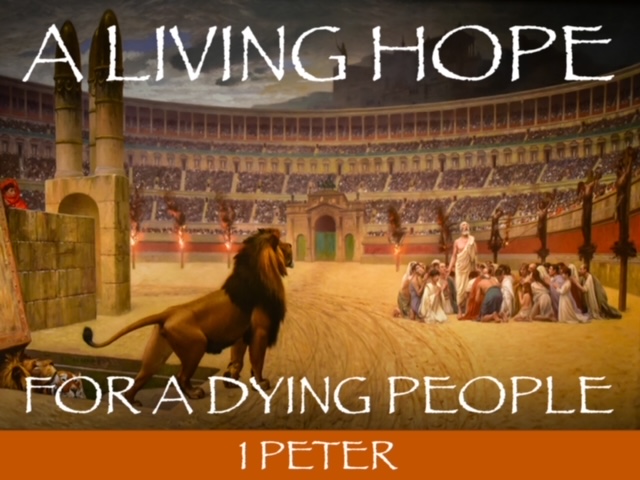
The New Birth: The Source of Our Living Hope (1 Peter 1:3–5)

image001

In a dying world we need a living hope. Thankfully, those who have been born again through the resurrection of Jesus Christ have such a hope. As I preached on Sunday, this hope cannot be thwarted by death, neither ours nor those whom we love. In fact, when we are confronted and crushed by death, the life God gives us in Christ guards and actually enlarges our faith. As a result, outward circumstances cannot destroy the one who has been raised to life in Christ, such perilous conditions only prove the strength of God’s resurrection life.

With that truth in mind, let me encourage to find help and hope in 1 Peter 1:3–5. You can listen to the sermon or watch the sermon below. You will also find below a few helpful articles to encourage your faith.

Soli Deo Gloria, ds

A Genuine Convert: The Fourth Mark of a Healthy Church Member

When I was in high school, my family moved into a new home, and lets just say, “It was a fixer-upper.”  I’ll never forget waking up the first morning in that ranch-style house and laying for what seemed like hours, hiding under the blankets as flies landed on my head.  Gross!  The floors were torn up with nails jutting out and the kitchen walls were covered with years of baked on grease, tobacco smoke, and other browning agents.  While my parents owned the home and the property had been transferred to them, it was evident that they had only just begun in their cleanup process.

With our relationship with God, we find something similar.  When the Triune God ransoms a sinner from the throws of hell and saves him or her from a life enslaved to sin, the condition of that sinner’s “house” is in a word: Wretched!!  Much worse than my high school abode.  Nevertheless, the transfer of property is certani, and the conversion process is permanent.  Powerful changes will be forthcoming.

Over time, just as my family cleared out and cleaned up that dirty house, so the Holy Spirit comes into the life of a believer and gives us him or her a new priority for God’s word, a new appetite for holiness, a new love for others, and a new power to walk with God–just to name a few of the changes.  All in all, the life-changing effects of conversion are visibly evident, and as the Bible teaches this is part of God’s design.  The one-time purchase is necessarily followed by a life-time of Christian growth and sanctification.  The moment of conversion results in a myriad of Spirit-filled changes.

In this weeks chapter, Pastor Thabiti touches on this important but often neglected truth — Genuine Conversion.  As the fourth mark of a healthy church member, he sets a course to consider the reality of our conversion and to challenge us to know for sure that God has in fact moved in.  From his helpful admonitions, let me give you five ways to meditate on genuine conversion and ways you can encourage others who are clinging to Christ by faith.

1. Read 1 John and consider your own conversion experience.  On page 55, Thabiti provides a helpful set of diagnostic questions.  Take time to read the Scriptures and consider them.

  1. Do you walk in the light or in the darkness (1 John 1:6-7)?
  2. Do you love God the Father or do we appear to love the world (1 John 2:15)?
  3. Do you love other Christians (1 John 3:14-15; 18-19; 5:1)?
  4. Do you have the testimony of the Holy Spirit that we are children of God (Rom. 8:15-16; Gal. 4:6; 1 John 3:24b)?
  5. Are you persevering in the faith (1 John 5:4-5)?

2. Invite another mature member to point out blindspots in our Christian walk.   God’s word instructs us that fellow Christians should spur one another on to love and good deeds (Heb. 10:24), likewise that we should speak the truth to one another in love (Eph. 4:15).  Yet, we should not only do this, we should also invite a trusted friend and church member to do this, by asking them to point out areas of weakness and growth.  Of course, this requires humility and a willing spirit, but the fruits of this discipline are invaluable.  

3. Make a habit of recognizing the grace of God in others.  From a great distance, I have been challenged to do this by C.J. Mahaney.  C.J.’s radical commitment to humble himself by laboring to build up others is a model for us all– see his Humility: True Greatness.  His “others-first” mentality is only sustained by the Holy Spirit, and results in a genuine humility and gratefulness that reflects the Son of God himself.  This however, is not an exceptional kind of Christian behavior evidenced in rare Christians, it rather available to anyone who is indwelt and empowered by the Spirit.

4. With another member, set a goal to read a book about genuine conversion.  There are so many good books on conversion, salvation, and how to know the spiritual condition of one’s relationships with God.  Let me commend three:  John Piper’s Finally Alive is a basic and powerful look at conversion and the doctrine of the new birth; Stephen Smallman’s What is True Conversion? is recommended by Pastor Thabiti and looks to be a helpful, 32-page introduction to the realities of conversion; and Donald Whitney’s Ten Questions to Diagnose Your Spiritual Health is another reliable tool to discern the condition of your heart. 

5. With humility, patience, and love, pray for and pursue a member of your church who is walking away from Christ.   James 5:19-20 reads, “My brothers, if anyone among you wanders from the truth and someone brings him back, 20 let him know that whoever brings back a sinner from his wandering will save his soul from death and will cover a multitude of sins.”  There is nothing more loving you could do than to pray for and gently pursue a fellow church member who is drifting from the Lord.  Perhaps they have been offended and need encouragement or exhortation to make amends and be reconciled; perhaps they have been deceived and ensnared by Satan and need a word of truth to free them; perhaps they have simply grown tired and discouraged and need the loving reminder that God loves carried to them by a compassionate friend.  Whatever it is, we will not know until we go.  And Scripture is clear: We are to be our brother’s (or sister’s) keeper.  We are not to be like Cain who shed his brother’s blood, but rather like our Master Jesus Christ, we are to shed our blood for the sake of others (cf. Col. 1:24ff).

This weeks action points are the most challenging thus far– not because of their intellectual difficulty, they are pretty simple to understand– but because they demand so much from us!  In truth, it is only the genuinely converted person who would even want to attempt these things, and who in fact has the humility and power to do them.  Yet, if these action points confront you as hard, do not be discouraged.  Simply turn to the Lord who has sufficient power to make his calling and election sure in your life and to add good deeds to your faith (cf. 2 Peter 1:5-11).  

Soli Deo Gloria, dss

Intimate Allies (pt. 2): Marriage and Evangelism

Evangelism: Marriage Depicts the Mystery of Christ and the Church

In Intimate Allies, Dan Allender and Tremper Longman show how marriage reflects to the watching a world a picture of the gospel, while at the same time for those Christian couples committed to growing in Christ-like conformity, it provides powerful opportunities for discipleship and sanctification.  Consider first their observation on marriage’s gospel-depicting purpose(s):

Marriage must be a picture of or testimony to new birth.  Marriage must reflect the fruits of new birth and the creative, Trinitarian God who is he author of life.  In that sense, a marriage is the foundation of evangelism and the declaration of the possiblity of being a son and a daughter–being a member of the family of God.  The central task of a marriage is first to create and offer life and then to take new life and shape it in the direction of maturity (79-80).

What an incredible vision of marriage!  By participating in and continuing the work of creation in the world through child-bearing, marriage is a picture of new birth.  Likewise, as life is cultivated within the marriage, and as the fruits of marital love are seen with runny noses and dirty feet, God’s program of filling the earth is accomplished.  Consequently, marriage does not stand at odds with God’s plan of salvation, as some might assume from passages of Scripture like 1 Corinthians 7; rather, marriage is a primary means by which the Great Commission is accomplished.  Consequently, marriages that seek to reflect the overflowing love of Christ and the church, provide a powerful lead in to gospel conversations and testimony to the greater, more perfect marriage–one that married and singles alike, can look forward to.

Paul in writing to the Colossians asked for prayer, that God would open a door for more effective service.  He writes, “Pray for us also, that God may open a door for the word, to declare the mystery of Christ, on account of which I am in prison” (4:3).  This petition is a model prayer for all missions-minded believers, and for the married couple who long to see their marriage be a means of evangelistic witness, it should fill their hearts with hope.  For the very being of their marriage witnesses to the mystery now revealed–Christ and the church (Eph. 5:32).  So married couples can and should pray with boldness that God would open doors of for the word of God, pried open by unbelievers witnessing the effect of Christ on their marriage.

Sola Deo Gloria, dss