Via Emmaus on the Road: Hebrews 7

Further Resources


Hebrews 7 (ESV)

The Priestly Order of Melchizedek

For this Melchizedek, king of Salem, priest of the Most High God, met Abraham returning from the slaughter of the kings and blessed him, and to him Abraham apportioned a tenth part of everything. He is first, by translation of his name, king of righteousness, and then he is also king of Salem, that is, king of peace. He is without father or mother or genealogy, having neither beginning of days nor end of life, but resembling the Son of God he continues a priest forever.

See how great this man was to whom Abraham the patriarch gave a tenth of the spoils! And those descendants of Levi who receive the priestly office have a commandment in the law to take tithes from the people, that is, from their brothers, though these also are descended from Abraham. But this man who does not have his descent from them received tithes from Abraham and blessed him who had the promises. It is beyond dispute that the inferior is blessed by the superior. In the one case tithes are received by mortal men, but in the other case, by one of whom it is testified that he lives. One might even say that Levi himself, who receives tithes, paid tithes through Abraham, 10 for he was still in the loins of his ancestor when Melchizedek met him.

Jesus Compared to Melchizedek

11 Now if perfection had been attainable through the Levitical priesthood (for under it the people received the law), what further need would there have been for another priest to arise after the order of Melchizedek, rather than one named after the order of Aaron? 12 For when there is a change in the priesthood, there is necessarily a change in the law as well. 13 For the one of whom these things are spoken belonged to another tribe, from which no one has ever served at the altar. 14 For it is evident that our Lord was descended from Judah, and in connection with that tribe Moses said nothing about priests.

15 This becomes even more evident when another priest arises in the likeness of Melchizedek, 16 who has become a priest, not on the basis of a legal requirement concerning bodily descent, but by the power of an indestructible life. 17 For it is witnessed of him,

“You are a priest forever,

after the order of Melchizedek.”

18 For on the one hand, a former commandment is set aside because of its weakness and uselessness 19 (for the law made nothing perfect); but on the other hand, a better hope is introduced, through which we draw near to God.

20 And it was not without an oath. For those who formerly became priests were made such without an oath, 21 but this one was made a priest with an oath by the one who said to him:

“The Lord has sworn

and will not change his mind,

‘You are a priest forever.’ ”

22 This makes Jesus the guarantor of a better covenant.

23 The former priests were many in number, because they were prevented by death from continuing in office, 24 but he holds his priesthood permanently, because he continues forever. 25 Consequently, he is able to save to the uttermost those who draw near to God through him, since he always lives to make intercession for them.

26 For it was indeed fitting that we should have such a high priest, holy, innocent, unstained, separated from sinners, and exalted above the heavens. 27 He has no need, like those high priests, to offer sacrifices daily, first for his own sins and then for those of the people, since he did this once for all when he offered up himself. 28 For the law appoints men in their weakness as high priests, but the word of the oath, which came later than the law, appoints a Son who has been made perfect forever.

Soli Deo Gloria!
Via Emmaus on the Road: Hebrews 5

Further Resources


Hebrews 5 (ESV)

For every high priest chosen from among men is appointed to act on behalf of men in relation to God, to offer gifts and sacrifices for sins. He can deal gently with the ignorant and wayward, since he himself is beset with weakness. Because of this he is obligated to offer sacrifice for his own sins just as he does for those of the people. And no one takes this honor for himself, but only when called by God, just as Aaron was.

So also Christ did not exalt himself to be made a high priest, but was appointed by him who said to him,

“You are my Son,

today I have begotten you”;

as he says also in another place,

“You are a priest forever,

after the order of Melchizedek.”

In the days of his flesh, Jesus offered up prayers and supplications, with loud cries and tears, to him who was able to save him from death, and he was heard because of his reverence. Although he was a son, he learned obedience through what he suffered. And being made perfect, he became the source of eternal salvation to all who obey him, 10 being designated by God a high priest after the order of Melchizedek.

Warning Against Apostasy

11 About this we have much to say, and it is hard to explain, since you have become dull of hearing. 12 For though by this time you ought to be teachers, you need someone to teach you again the basic principles of the oracles of God. You need milk, not solid food, 13 for everyone who lives on milk is unskilled in the word of righteousness, since he is a child. 14 But solid food is for the mature, for those who have their powers of discernment trained by constant practice to distinguish good from evil.

Soli Deo Gloria!

Rejoicing in Christ’s Royal Priesthood: The 2024 Bauman Lectures (Toronto Baptist Seminary)

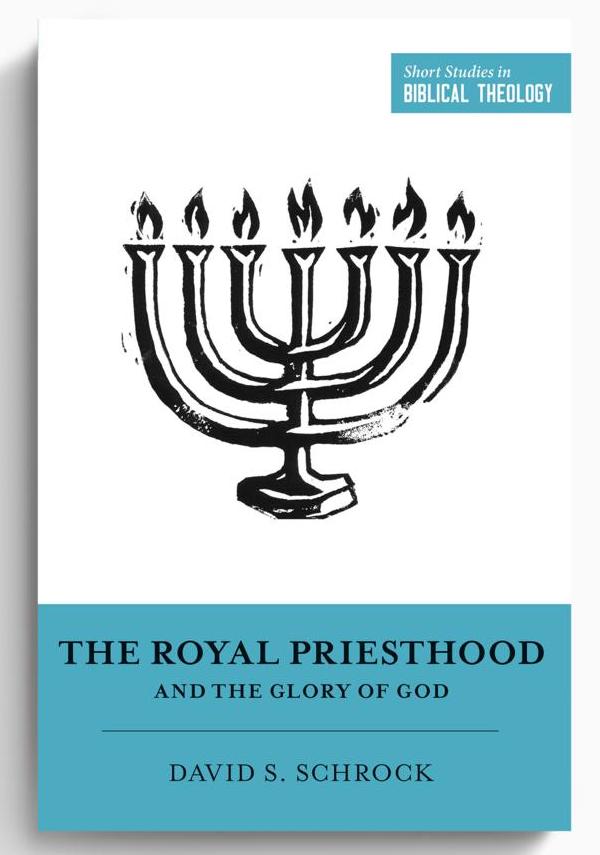
In 2022, I wrote a book entitled The Royal Priesthood and the Glory of GodThis book clarified, synthesized, and streamlined my doctoral dissertation. In 2013, I finished a biblical theology of the priesthood which sought to answer the question: For whom did Christ die? Looking at the priesthood from Genesis to Revelation I argued for a definite atonement. In that large volume I came to love the theme of priesthood in the Bible and what that means for knowing Christ and for imitating Christ.

Since 2013, I have written a handful of articles on the priesthood, and in the last few weeks I have spoken twice on the subject. The first series of lectures took place at Eden Baptist Church in Burnsville, Minnesota, and the second lecture series is taking place this weekend at Toronto Baptist Seminary and Jarvis Street Baptist Church in Toronto, Canada.

To assist students, faculty, church members, and guests of the Bauman Lectures, I am posting notes here. I will add to them as the weekend goes on, and in the end, I hope this post will link to all the priestly things I have written to date.

The Bauman Lectures (2024)

  • Lecture 1: Building a Kingdom of Priests — In this lecture, I survey the way in which the institution of the Levitical Priesthood came into being. This lecture simplifies my larger SBJT article and puts into lecture form the second chapter of my book, The Royal Priesthood and the Glory of God.
  • Lecture 2: In Search of a Priest-King Like Melchizedek (Genesis 14, Psalm 110, Hebrews 5–7) –In this lecture, I examine the context, content, and concepts found in three places where Melchizedek is named. Together, this helps us understand who Jesus is, as a royal priest.
  • Lecture 3: Seeing Melchizedek in the Book of 1–2 Samuel: An Exploration in Typology — In this lecture, I have written a working manuscript (with limited annotation) to show how Melchizedek is a figure found in the book of 1–2 Samuel. This reading depends upon a careful comparison between Bera, king of Sodom, and Melchizedek, king of Salem. It also explains how David saw his own son as a priest after the order of Melchizedek.
  • Sunday Morning Sermon: Getting to Know Our Great High Priest (Exodus 28–30; Hebrews)
  • Sunday Evening Sermon: A Kingdom of Priests: Washed, Worshiping, Working, Witnessing (Exodus 19:5–6; 1 Peter 1:22–2:10)

More to come . . .

Soli Deo Gloria, ds

Bread and Wine at the Table of a Righteous King (A Meditation on the Lord’s Supper)

MelchizedekDear Church,

You have been invited to covenant meal—a table set in the midst of hostile enemies. Bread and wine are the food and drink of choice. The host is a righteous king who is lives in the holy city Jerusalem, and serves God Most High as a faithful priest.

When you look at your invitation, the RSVP calls you to renounce your idols and acknowledge the greatness of your host. This table, offered freely to you, is set for those who believe God’s promises and refuse to partner with the kings of this world. Indeed, this table does not communicate righteousness. Rather, it is for those who have been justified by faith in the promises of God Most High.

What is this invitation describing?

If you said, the Lord’s Supper, you’d be correct. And if you said Abram’s meal with Mechizedek, you’d also be right. But how can this be?  How can one description point to two events? The answer is that God ordained the Old Testament events of Genesis 14 to prepare the way for Jesus Christ and the covenant he sealed with his blood and celebrated on the night before his crucifixion.

Therefore, just as learning the history of Passover helps us appreciate and apply the Lords’ Supper today, so does learning the story of Melchizedek and his covenant meal. Continue reading

In Search of a Priest Like Melchizedek (Genesis 14; Psalm 110; Hebrews 7)

priestcolor

In Search of a Priest Like Melchizedek (Genesis 14; Psalm 110; Hebrews 7)

Who is Melchizedek? And why is Jesus called a high priest like Melchizedek? And what does Mel—can we abbreviate his strange name?—have to do with the church and the world today?

On Sunday, I tried to answer those questions with an animated tour of the Bible. Incorporating the artistic gifts of Jeff Dionise, our elder for outreach, I preached a three part message that started with Melchizedek in history (Genesis 14), moved to Melchizedek in poetry and prophecy (Psalm 110), and finished with Jesus Christ, or Melchizedek in fulfillment (Hebrews 7).

In what follows you can listen to the message or trace the story with the graphics displayed below. Additional resources are also found below. Response questions will return next week as our church finishes up its series on the priesthood.

Happy Thanksgiving!
ds Continue reading