A Meditation on the Cross (Matthew 27): How Penal Substitution, Christus Victor, and Christ’s Moral Example Lead Us to Preach the Cross, Resist the Devil, and Imitate the Lord

crossWhen the Spirit led Jesus into the Wilderness, Satan tempted him three times. He questioned the authenticity of Jesus’ Sonship, tempting him to prove his power and his place as God’s Son. In perfect obedience to God and his Word, Jesus did not assert himself, but trusted that his earthly mission was one of absolute humiliation leading to honor, not a powerplay to gain honor for himself.

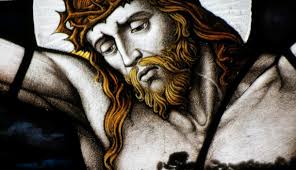
On the cross, the fury of Satan’s accusations returned, only it came not in the voice of the Serpent but in a salvo of accusations launched at Jesus while nailed to a tree. Physically speaking, no form of punishment has ever been more de-humanizing. Still, for all the physical a pain delivered in crucifixion, it was the Spiritual abandonment that was the greatest punishment. “My God, my God, why have you forsaken me?” was the cry of a man who had never known sin or the judgment of God’s abandonment. Moreover, in identifying himself with his sinful people, Jesus assumed in his flesh the fullness of their sin, which in turn invited the fullness of God’s wrath. He drank the cup, until the fury of God was extinguished.

And this is not all, the crucifixion, as Matthew describes it, is neither a testimony to the pain of crucifixion, as Mel Gibson sought to frame it in his movie The Passion of the Christ. Nor does Matthew ponder the horrible realities of God’s spiritual judgment. Rather, he records a bevy of Satanic accusations offered by Roman soldiers, Jewish leaders, nameless spectators, and the convicted criminals bleeding next to Jesus. After describing the mockery of Herod’s soliders (27:27–31), Matthew recounts the acts (vv. 32–37) and speeches (vv. 37–44) which Satan hurled at Jesus as died on the tree.

For us who find life in Jesus’ death, seeing Jesus’ humiliation teaches us what our sin deserves and what great lengths Jesus went to save us. At the same time, because Christ’s cross is exemplary for those who trust in his penal substitution, there is profit in seeing Satan’s accusations, that we might recognize the tempters accusations and continue to carry with faith the cross God gives to us. With this in mind, let’s consider Christ’s example of humiliation, that we might follow in his steps, by trusting in his substitutionary death, and his victory over Satan. Continue reading

What is the Kingdom of God Like?

kingdomIf there is one chapter in the Bible which best describes the kingdom of heaven (in other places, the “kingdom of God”), Matthew 13 is it.

Through seven parables, Jesus spoke to the crowds who came to see him (v. 1). In these parables, he laid out aspects of the kingdom that were both hidden and revealed, spiritual and physical, contested and certain, already and not yet. In short, by looking briefly at each parable we can get a list of the kingdom’s characteristics. Then, as we look at all the parables together, we are positioned to answer the question: What is the kingdom of God like?

What follows are five observations from individual parables (some are taken together), and two larger observations taken from the whole of Matthew 13.

The Kingdom of God Is . . .

. . . Mysterious

Perhaps it would be better to say the kingdom is hidden and revealed. For this is what mysterion means in the Bible. Beginning with Daniel 2, the word “mystery” speaks of a kingdom reality that was once hidden but now revealed. Continue reading

My ETS Presentation: “You Can Make Me Clean,” The Matthean Jesus as Priest and the Biblical-Theological Results

ets

Update: This paper has been accepted for publication in a future edition of the Criswell Theological Review.

Tomorrow, my good friend Nicholas Piotrowski and I will present our paper (“You Can Make Me Clean”: The Jesus as Priest and the Biblical-Theological Results). Our argument in brief is the Gospel writers, and Matthew in particular, presented Jesus in priestly actions, even as they  withhold the title “priest” from him. Our test case is the healing of the leper in Matthew 8:1–4, where Jesus proves to be a greater priest than the sons of Levi who were supposed to adjudicated cases of leprosy (Leviticus 13–14).

We’ve been working on this paper, a mashup from our two dissertations, for the last two years—yes, that’s how academic writing goes. We’re convinced that this minority view shines light on the way the Gospels are written and even more on the work that Christ did in his earthly life and sacrificial death.

Here’s the introduction. Let us know what you think.

The munus triplex [Jesus’ triple office of prophet, priest, and king] is an important biblical-theological and systematic category. While it is common to observe in the Gospels Jesus’ role as “the prophet who is to come into the world” (John 6:14; cf. also Matt 17:5 and parallels with Deut 18:15) and the royal “Son of David” (cf. esp. Matt 1:1; 21:9), theologians often turn to Hebrews for Christ’ priestly office.  Lately, however, scholars are increasingly appreciating the historical Jesus’ self-consciousness as a priest.[1] The result is to bring more attention to the Gospels for understanding Jesus’ munus sacerdotal. This paper singles out Matthew specifically where Jesus is put forward as Israel’s eschatological priest.­[2] From this flow several biblical-theological considerations.[3]

The reason scholars dismiss Christ’s earthly priesthood is manifold.  Linguistically, in all four Gospels, Jesus is not once called a priest.[4] Covenantally, Christ does not qualify as a priest. Born under the old covenant, Jesus’ Judean lineage would disallow him from serving in the temple.­[5] Theologically, there is strong reason for denying Christ’s earthly priesthood: his priestly service would come to depend upon his resurrection and his appointment as a better priest.[6] This is the argument in Hebrews, and many scholars reason that it is anachronistic to read Christ’s priesthood back into the Gospels. Philosophically, since the Enlightenment an academic aversion has existed towards any notion of “priest-craft.”[7] Proportionately, due to the extensive attention given to other aspects of his person and work, it is understandable how Christ’s priesthood can be overlooked. For these reasons and more, the idea that Christ is a priest in the Gospels is underrepresented.[8]

It is our contention, however, joining the growing chorus, that the Gospels are filled with evidence for Christ’s earthly priesthood. . . .

Looking forward to make our case tomorrow. If you’re at ETS, we’d love for you to come join us in Room 402 at 8:30AM. If you’re not, I will (probably) post a PDF tomorrow for the seven people in the room and anyone else interested in considering this argument.

Soli Deo Gloria, ds

_________________

[1] Citing a handful of exceptions, Brant Pitre rightly observes, “If there is any single subject which modern historical scholarship on Jesus has almost completely neglected, it is the subject of Jesus and the Jewish priesthood” (“Jesus, the New Temple, and the New Priesthood,” in Letter and Spirit, vol 4., Temple and Contemplation: God’s Presence in the Cosmos, Church, and Human Heart, ed. Scott Hahn and David Scott [Steubenville, OH: Emmaus Road Publishing, 2008], 71). Crispin H. T. Fletcher-Louis has outlined several reasons for the prior neglect of this subject, and contributed greatly to redressing it (“Jesus as the High Priestly Messiah: Part 1,” JSHJ 4 [2006]: 155–75; idem, “Jesus as the High Priestly Messiah: Part 2,” JSHJ 5 [2007]: 57–79).

[2] Jesus is not “presented” exclusively as a priest in Matthew, but as prophet, priest, and king. The onus of this paper is to show the ways he functions as a priest.

[3] To be sure, however, this is not a “redaction-critical” study.  The final form of Matthew, nonetheless, is the result of redacting forces; either of Mark, Q, the oral tradition, or some inexorable web of all of them.  We do not attempt to ferret out how the redaction occurred, but to explore to rhetorical results once it was done.

[4]A word study of the Gospels and Acts finds 122 occurrences of “priestly terminology” (priest, high priest, priesthood, etc.). However, the number of times that such language refers to Christ or Christians is zero, which would understandably lead anyone dependent on that method of research to abandon the effort (Vanhoye, Old Testament Priests and the New Priest, 63–66).

[5]Technically, if Karl Deenick (“Priest and King or Priest-King in 1 Samuel 2:35,” WTJ 73 [2011]: 325-39) is correct that 1 Samuel 2:35 points to a Davidic priest, Jesus’ Davidic lineage would not disqualify him from priesthood. It would do the opposite. But it is still necessary to show, as Hebrews 5 does, how a son of David could supersede the Levitical priesthood.

[6]See David Schrock, “Resurrection and Priesthood: Christological Soundings from the Book of Hebrews,” SBJT 18.4 (2014): 89–114.

[7]Peter J. Leithart, “Attendants of Yahweh’s House: Priesthood in the Old Testament,” JSOT 85 (1999): 3–4.

[8]For a survey of how scholars understand Christ’s priesthood in the gospels, see Crispin H. T. Fletcher-Louis, “Jesus as the High Priestly Messiah: Part 1,” Journal for the Study of the Historical Jesus 4 (2006): 155–75; idem, “Jesus as the High Priestly Messiah: Part 2,” JSHJ 5 (2007): 57–79.

A Decade in the Making: Rightly Understanding Matthew 5:8

pureNo verse of Scripture has been more effective in keeping me sexually pure than Matthew 5:8.

When I first became a believer, I went to a weekend retreat called Purity & Holiness. It was a two-day seminar designed to teach young people about dating, sex, and marriage.  I bless God for its impact on my life. And—not surprisingly—one of the key verses impressed upon us that weekend was Matthew 5:8.

The impact of this singular verse has been massive in my life. But not because I rightly understood its meaning at the time. In fact, I would say, that I misunderstood much of its true meaning because I took Jesus’ words as a command ordering me to purify myself . . . or else I wouldn’t see God.

Yet, that’s not exactly how the beatitudes work. Matthew 5:8, like all the beatitudes, has imperatival force, but the beatitudes are not commands. They are (speaking of their genre here) blessings that Jesus pronounces on his disciples. They are qualities that his followers must have to enter the kingdom, but they are also qualities that he gives to his followers.

When I first heard this verse, without understanding how Jesus used these words in his Sermon on the Mount, I took it as a command to stop being impure, and to begin pursuing purity. By reading it that way, Jesus’ words though emphasizing purity, did not give me any power to be pure.

Continue reading

Immanuel: A Devotional Reflection on Matthew 1:18–25

Matthew 1–2 is a rich passage for discerning who Jesus is and how the apostles understood Jesus to be the Christ.  As to the former, Matthew introduces his Jewish audience to Jesus as Immanuel, “God with us” (1:18–25), the King of the Jews (2:1–10), the Son of God (2:13–15), the covenant Lord (2:16–18), and the Suffering Servant (2:19–23).  As to the latter, Matthew employs a variety of quotations, allusions, and metaphors to paint the picture of Jesus fulfilling the messianic prophecies of old.

In this post we will focus on the first aspect of Jesus’ identity—he is the fulfillment of Isaiah 7:14, the Immanuel. Continue reading

Matthew’s Gospel: A King and His Kingdom

There has been much recent debate on the nature of the gospel.  Did Paul get it right?  Or should we look to Jesus to know the gospel?  See the panel discussion at the recent TGC Conference: Did Jesus Preach the Gospel?

Taking a biblical-theological approach, the gospel is best understood when we look at all that the Bible has to say about the subject.  This includes the proto-gospel preached to Adam (Gen 3:15), the gospel preached beforehand to Abraham (Gal 3:8), the good news which David celebrated in the Psalms (esp. 40:9; 68:11; 96:2), and the good news announced by Isaiah (40:9; 41:27; 52:7; 60:6; 61:1) and the other prophets (Nahum 1:15; Joel 2:32).  Likewise, to rightly discern the meaning of the gospel to the early church we must look at its multiple uses in the gospels, letters, and John’s singular use in Revelation 14:6.

In this fabric of gospel theology, it is important to remember that God has given us four inspired accounts of the gospel. These don’t stand out as different gospels; nor do they reclaim the true gospel—as some infer.  They are rather four accounts of the one true gospel that all the apostles preached.  In conversation with the OT gospel promises and the epistolary explanations of the gospel, the four gospels give us a message of the person and work of Jesus Christ, the one who stands at the center of the gospel.

Starting yesterday, I began to consider the gospel in the gospels, or better the gospel according to the ‘gospelists’–Matthew, Mark, Luke, and John. Continue reading

UPDATED: Identifying the Son: A Chiasmus for Christ (Matthew 3:1-4:17)

UPDATE: On the basis of a few comments and further reflection, here is an updated outline of the chiasmus in Matthew 3-4.  What do you think?

In preparation for Sunday’s message, I came across some themes in Matthew 3:1-4:17 that seemed to present themselves as a conceptual chiasmus in Matthew’s gospel.  The issue revolves around the identity of Jesus, which the whole point of Matthew’s writing and the point he is trying to make early on in his gospel.

What I noticed is that in chapters 3-4 is that Matthew seems to pit John’s testimony about Jesus against Satan’s questions to Jesus. The former affirms the sonship of Christ and prepares the way (3:3) for the Father to declare his unconditional approval of the son (3:17).  By contrast, Satan takes the word of God and twists it back against Jesus so that, he questions Jesus identity with it (4:1-11).

In the end, John’s testimony proves true as Jesus abides in God’s word (4:4, 7, 10) and resists the temptation of the devil.  In the end, John’s proclamation of the kingdom’s nearness (3:2) is confirmed by Jesus’ devotion to the Father.  Therefore, Matthew records Jesus’ announcement of the kingdom, which nicely concludes this section of his gospel (4:17).

Here is my conceptual outline below.  Would love to hear your thoughts. Continue reading

Gathercole’s The Preexistent Son: Excellent Exegesis, Transcendent Theology, and a Methodological Model

Gathercole, Simon. The Pre-Existent Son: Recovering the Christologies of Matthew, Mark, and Luke. Grand Rapids: Eerdmans, 2006.

In The Pre-Existent Son, British New Testament scholar, Simon Gathercole, makes a convincing exegetical argument for Christ’s pre-existence as the eternal Son of God in the synoptic gospels. As he puts it, “The really controversial point to be made in this book is that the preexistence of Christ—which he defines as ‘the life of the Son prior to his birth’—can be found in the Synoptic Gospels” (1, emphasis his). The significance of his research is that Matthew, Mark, and Luke have been regarded by scholars as possessing a lower Christology than John, Hebrews, or Revelation. His aim is to argue against this notion and prove exegetically that the Synoptics possess a high Christology. His method is four-fold: 1) historically, he argues that Paul’s influence promoted pre-existence; 2) textually, the “I have come” + purpose statements indicate a heavenly preexistence; 3) theologically, he surveys the terrain of wisdom Christology; and 4) lexically, he examines four Christological titles (messiah, Lord, Son of man, Son of God) searching for evidence for pre-existence.

In Chapter 1, Gathercole aims to prove that preexistence was commonplace in early Christianity and should be “expected” in the writings of Matthew, Mark, and Luke. He appeals to Paul, the letter to the Hebrews, and Jude to make a simple background argument that the notion of preexistence was already extant. Continuing his background work in chapter 2, Gathercole “[offers] evidence that the Synoptic Gospels present Jesus as a transcendent, heavenly divine figure” (46). Appealing to the heaven-earth and Creator-creation distinctions found in these three books (47), Gathercole overwhelms the reader with evidence for Jesus transcendence and primes the pump for his next section.

Chapters 3-7 unfold the centerpiece of Gathercole’s argument. Chapter 3 introduces his thesis that the “I have come” + purpose statements are the primary evidence for pre-existence in the synoptic gospels. In chapters 4-6, Gathercole defends his thesis against potential defeaters. He summarizes on page 87:

  • None of the other scholarly options [i.e. the idiom of a prophet; merely an aramaic idiom, locative reference to Nazareth; simply the words of a leader] can be considered plausible (chapter 4).
  • The ‘I have come’ + purpose formula of the Gospels is most clearly, and most abundantly, paralleled in the announcement of angels of their comings from heaven (chapter 5)
  • The preexistence interpretation is confirmed by the content and literary context—in particular, the heavenly and dynamic features (chapter 6)

Gathercole denotes the similarities and differences between angelic visitations and Christ’s coming to earth in chapter 5.[1] Then in chapter 6, he posits a “new reading” of the “I have come” + purpose formula, basically asserting that the ‘cosmic scope’ (i.e. heaven to earth) and the ‘dynamic movement’ (i.e. the salvific intention to save, to ransom, to preach, etc) find their best understanding in the pre-existence of the Son (149ff). Gathercole adds support to his findings in Chapter 7 as he surveys those references which speak of Divine ‘sending.’ On their own, Gathercole does not think they constitute a belief in pre-existence, but taken together with the “I have come” + purpose statements, they add weight to the claim.

In section three (chapters 8-9), Gathercole critiques the prevalent notion today of wisdom Christology and argues from Matthew 23:37, a text with allusions to wisdom literature, that the Son of God is preexistent. Against wisdom Christology, he explains that the feminine, created, and anti-personal attributions of wisdom do not comport with the eternal, person of Jesus Christ. Therefore, wisdom cannot advocate pre-existence on its own, while doing justice to the New Testament vision of Jesus. Instead, Gathercole quotes Jesus words in Matthew, “Jerusalem, Jerusalem…how long I have desired to gather your children” (23:37), and shows how this quotation with its wisdom parallels attests to Jesus as “a trans-historical figure” (211-14).

Finally, in chapters 10-13, Gathercole considers whether the four titles—Messiah, Lord, Son of Man, Son of God—connote preexistence. Drawing particular attention to Luke 1:78, he asserts that “Messiah” in the Synoptics is more than simply royal, Davidic language; rather, like Melchizedek, the anointed one does not find his origin on earth—Jesus comes from heaven. Similarly, like YHWH in the OT, Jesus comes down to visit the earth.

Concerning the language of “Lordship,” he shows convincingly that OT references to YHWH are applied to Jesus and that instances of Father-Son conversation are heavenly court conversation. He concludes by asking if these evidences do not point to preexistence. From each gospel, Gathercole shows how the “Son of Man” is linked into the eternal purposes of redemption (Mark 10:45; Matt. 20:28; Luke 19:10). Moreover, in Matthew the predominate kingdom motif shows the son of man as an eternal king in conjunction with an eternal kingdom (6:10; 25:34). Finally, concerning “Son of God,” Gathercole shows how the age-old spiritual beings, Satan and his demons, and God himself address Jesus with knowledge that extends to the heavenly places. The former do this at the temptation and in direct confrontation; the latter does this at Jesus’ baptism and the transfiguration.

Overall, The Pre-existent Son presents the historic Christian position that Jesus of Nazareth existed eternally before he was born of the flesh. In this, it will find a sympathetic reading from Bible-believing Christians and will hopefully give academic skeptics something to chew on. The lasting value Gathercole’s work is not in anything novel or innovative, but in its painstaking and precise exegetical detail. It bolsters confidence in God’s word and shows attention to nuanced details of Scripture result in powerful presentations of doctrine. Likewise, his attention to the early Synoptics helps convince readers that the Christological doctrine of preexistence did not materialize later; it was always a part of the faith. In this way, Gathercole destroys any notion that preexistence is reserved for John and his gospel, while at the same time, he illustrates how high Matthew, Mark, and Luke’s Christology really is. Moreover, Gathercole’s method of argumentation is exemplary. In his thorough treatment of the subject, our trans-Atlantic brother has shown us how to craft an argument and how exegetical-theological research ought to be done.

Selah.

After writing the book review, it hit me that as important as it is to consider arguments about pre-existence, it is more edifying and soul-enriching to consider the Pre-Existent One Himself. 

Dwelling on the One in whom the fullness of God dwelled bodily (Col. 2:9) enlarges the mind and quickens the heart.  It is far more spiritually salubrious that simply assessing theological polemics and regurgitating the thoughts of others.  For Christ’s Pre-existence means is truly unfathomable.  It is a truth that we can believe, but one we will never fully grasp.  He had no beginning.  God the Son is autotheos.  Thus, his incarnation is all the more majestic. 

So, as much as I am thankful for Gathercole’s treatment of the subject of Pre-Existence of the Incarnate Word, I am even more thankful for the almighty, omnipotent, indomitable truth that Jesus Christ (God in the flesh) existed from all eternity and coming into time, he has promised to be our eternal mediator to approach God the Father.  We can trust that because, he is eternally God, full of grace and truth, eternally powerful and able to save.

Sola Deo Gloria, dss


[1] For the record, Gathercole does not promote an angel-Christology. Rather, he cites their origin and their sender to demonstrate that like angels, Jesus Christ the Pre-existent Son of God is coming from heaven at the sending of the Father.