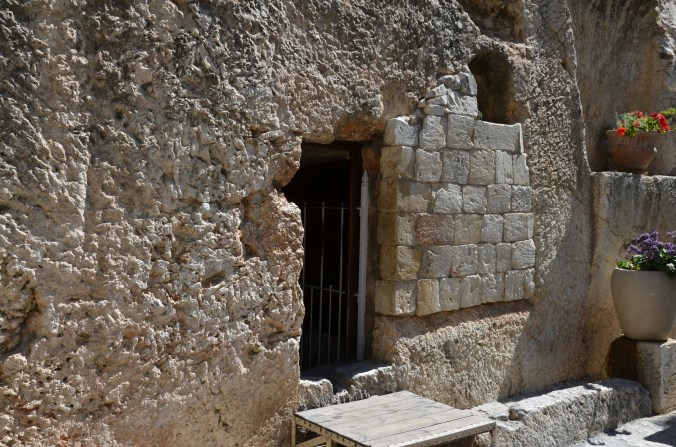
The tombs also were opened. And many bodies of the saints who had fallen asleep were raised,
and coming out of the tombs after his resurrection they went into the holy city and appeared to many.
— Matthew 27:52–53 —
What happened on Holy Saturday, the day situated between Good Friday and Resurrection Sunday? That is a good question that my fellow elder, Jared Bridges, has answered at the Washington Stand. And in his article, he takes a “topside” view—what was happening in Jerusalem on the day between Jesus’s cross and resurrection.
But there is another answer that needs to be considered, an answer that takes us below the surface, if you will. On Holy Saturday, while Jesus’s body rested in the grave, Jesus’s soul pronounced his victory over the spirits in prison (1 Pet. 3:19). That is to say, that when Jesus died, his body and soul were torn asunder, just like the temple veil (see Luke 23:44–46). As his body hung lifeless on the cross, soon to be buried, his soul, like all human souls, departed and went to realm of the dead, the place known as sheol in Hebrew or hades in Greek.
Importantly, sheol (or hades in Greek) is not the same thing as Hell (Gehenna), the place of eternal torment for the damned. Indicating their difference, hades gave up the dead to the lake of fire (i.e., hell) in Revelation 20:14. This means, Jesus did not go to “hell” after he died. But he did go to sheol, the realm of the dead. Often, we miss this fact, and missing what Jesus did in sheol, we miss the impact of Christ’s cross on the cosmos. Continue reading

 Via Emmaus