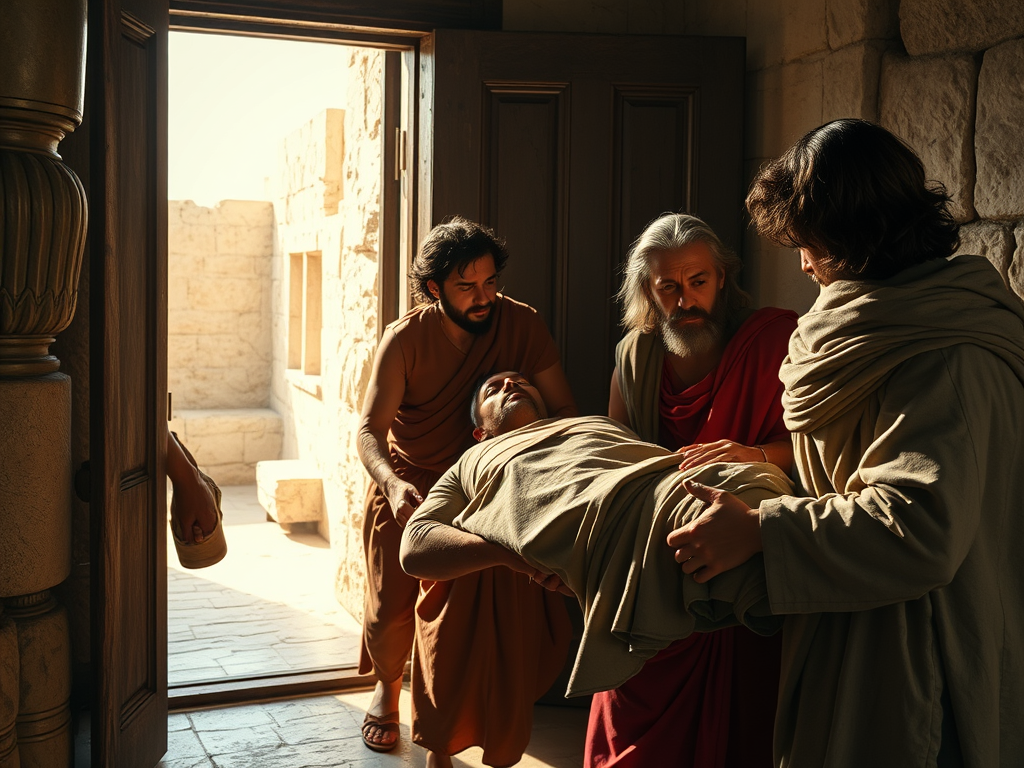
Sermon Notes: How to Avoid Getting Lost on the Way from Leviticus 15 to Luke 15

On Monday, I suggested a five-fold system, a Gospel-Positioning System (GPS), to get you from obscure passages in the Law through the Prophets to Christ and the Gospel.  These five-steps are listed again.

1. Law
2A. Prophets: Judgment
2B: Prophets: Salvation
3: Christ
4: Gospel Response
5: Spirit-Empowered Action 

Today, I want to suggest four common errors that plague evangelicals today. Four ways we misread the Scriptures.

1. We skip from 1 to 5.  In pursuit of application and life-change, we read a command, a law, even a story, and we immediately move to application. Instead, of asking how the said pericope fits into the flow the Bible (i.e. textual, epochal, and canonical horizons), many of us move straight to activity.  This is wrong.  It misses the power of the law, the promise of the gospel, and the person of Jesus.  In effect, it makes the Bible about us, and no longer about Jesus.  The solution?  We must move from law through the prophets to Jesus Christ and then to us.  Personal application is vitally important but only after we encounter Christ.

2. We are afraid of 2A & 2B.  The prophets frighten us.  They are strange.  They don’t talk normal. They are hard to understand.  I get this!  I remember reading Isaiah 13-20 one time.  As I read the pronouncements against Babylon, Damascus, and Moab, I got upset.  Not because God was punishing these sinning nations, but because, “I needed a word from God, and this was not it”–so I thought.  I closed the Bible (for that day) upset, because I hadn’t seen how those words related to the rest of the Bible or my life.

If you have had an experience like that with the Prophets, it makes it hard to be a regular reader of that challenging genre.  Yet, to neglect the prophets is to neglect the greatest section of the Bible for fueling Christ-centered hope.

Maybe this will help: The prophets get a lot easier if we remember two things. First, they are speaking a word of judgment, based on the law against sinners like us.  Their words condemn covenant-breakers, social injustice, and unfaithful worship.  They speak to us about our sin.

Second, they are speaking a word of Messianic hope, based on the gospel. They give us glorious images of the Christ who is to come.  They offer salvation to sinful people, and the reality that God is going to bring recreate the world.  If we remember these two things and tie a rope from the law to the gospel, we can learn to walk thru these strange books.

3. We minimize 3.  This may sound strange, to minimize Jesus, but I have heard countless evangelical, Baptist preachers (and you have too) who preach and never mention Him.  Instead they list moral instructions from the life of Joseph or Caleb, and at the end say, “Unless you are Christian you cannot do what I just said.  So become a Christian.”

Friends, this is Christ-less preaching.  It has no power and I can hardly believe that a message without the content of Christ, will bring anyone nearer to our Lord and Savior.  In fact, it is disingenuous, to tell anyone to become a Christian after you have spent 40 minutes preaching moral lessons and not telling them about Christ.  Yet, this happens all too often.

4. We divorce 1-4 from 5.  If we are tempted to skip Jesus, we are more culpable of divorcing the gospel from application. In other words, we read the Bible for application, and we find all kinds of commands that say—Make disciples.  Love one another.  Be unified.  Forgive your enemies.  Turn the other cheek.

Yet, those commands have ZERO POWER, in and of themselves. These biblical commands are good, but in Scripture they are always set in relation to gospel promises.  To say it another way, imperatives are always grounded in gospel infinitives.  Why?  Because laws never produce godliness!  Grace produces godliness (Titus 2:11-13).

Jesus commands his disciples to be witnesses to all the nations, but he commands them to stay in Jerusalem until the Spirit comes so they will have power to do what he commands.  Paul tells us to forgive one another as Christ has forgiven you.  The power is in the gospel.  Failure to couple commands with Christ’s antecedent work, will lead earnest Christians to live the Christian life in the power of their own strength.

Instead, we must move to application and action, but as we do so, we must continue to walk in faith, loving others out of the love that has been poured into our hearts.

This is my prayer and hope!  That as we read Scripture, our minds are not just informed.  Rather, our eyes are opened to behold Christ and to become like him. Indeed, Jesus prayed that we would be sanctified by his word (John 17:17), and that comes to fruition when in his word, we see Jesus (2 Cor 3:18).

Open our eyes, Lord to see the wonder of Christ in the pages of Scripture, dss

Gathercole’s The Preexistent Son: Excellent Exegesis, Transcendent Theology, and a Methodological Model

Gathercole, Simon. The Pre-Existent Son: Recovering the Christologies of Matthew, Mark, and Luke. Grand Rapids: Eerdmans, 2006.

In The Pre-Existent Son, British New Testament scholar, Simon Gathercole, makes a convincing exegetical argument for Christ’s pre-existence as the eternal Son of God in the synoptic gospels. As he puts it, “The really controversial point to be made in this book is that the preexistence of Christ—which he defines as ‘the life of the Son prior to his birth’—can be found in the Synoptic Gospels” (1, emphasis his). The significance of his research is that Matthew, Mark, and Luke have been regarded by scholars as possessing a lower Christology than John, Hebrews, or Revelation. His aim is to argue against this notion and prove exegetically that the Synoptics possess a high Christology. His method is four-fold: 1) historically, he argues that Paul’s influence promoted pre-existence; 2) textually, the “I have come” + purpose statements indicate a heavenly preexistence; 3) theologically, he surveys the terrain of wisdom Christology; and 4) lexically, he examines four Christological titles (messiah, Lord, Son of man, Son of God) searching for evidence for pre-existence.

In Chapter 1, Gathercole aims to prove that preexistence was commonplace in early Christianity and should be “expected” in the writings of Matthew, Mark, and Luke. He appeals to Paul, the letter to the Hebrews, and Jude to make a simple background argument that the notion of preexistence was already extant. Continuing his background work in chapter 2, Gathercole “[offers] evidence that the Synoptic Gospels present Jesus as a transcendent, heavenly divine figure” (46). Appealing to the heaven-earth and Creator-creation distinctions found in these three books (47), Gathercole overwhelms the reader with evidence for Jesus transcendence and primes the pump for his next section.

Chapters 3-7 unfold the centerpiece of Gathercole’s argument. Chapter 3 introduces his thesis that the “I have come” + purpose statements are the primary evidence for pre-existence in the synoptic gospels. In chapters 4-6, Gathercole defends his thesis against potential defeaters. He summarizes on page 87:

  • None of the other scholarly options [i.e. the idiom of a prophet; merely an aramaic idiom, locative reference to Nazareth; simply the words of a leader] can be considered plausible (chapter 4).
  • The ‘I have come’ + purpose formula of the Gospels is most clearly, and most abundantly, paralleled in the announcement of angels of their comings from heaven (chapter 5)
  • The preexistence interpretation is confirmed by the content and literary context—in particular, the heavenly and dynamic features (chapter 6)

Gathercole denotes the similarities and differences between angelic visitations and Christ’s coming to earth in chapter 5.[1] Then in chapter 6, he posits a “new reading” of the “I have come” + purpose formula, basically asserting that the ‘cosmic scope’ (i.e. heaven to earth) and the ‘dynamic movement’ (i.e. the salvific intention to save, to ransom, to preach, etc) find their best understanding in the pre-existence of the Son (149ff). Gathercole adds support to his findings in Chapter 7 as he surveys those references which speak of Divine ‘sending.’ On their own, Gathercole does not think they constitute a belief in pre-existence, but taken together with the “I have come” + purpose statements, they add weight to the claim.

In section three (chapters 8-9), Gathercole critiques the prevalent notion today of wisdom Christology and argues from Matthew 23:37, a text with allusions to wisdom literature, that the Son of God is preexistent. Against wisdom Christology, he explains that the feminine, created, and anti-personal attributions of wisdom do not comport with the eternal, person of Jesus Christ. Therefore, wisdom cannot advocate pre-existence on its own, while doing justice to the New Testament vision of Jesus. Instead, Gathercole quotes Jesus words in Matthew, “Jerusalem, Jerusalem…how long I have desired to gather your children” (23:37), and shows how this quotation with its wisdom parallels attests to Jesus as “a trans-historical figure” (211-14).

Finally, in chapters 10-13, Gathercole considers whether the four titles—Messiah, Lord, Son of Man, Son of God—connote preexistence. Drawing particular attention to Luke 1:78, he asserts that “Messiah” in the Synoptics is more than simply royal, Davidic language; rather, like Melchizedek, the anointed one does not find his origin on earth—Jesus comes from heaven. Similarly, like YHWH in the OT, Jesus comes down to visit the earth.

Concerning the language of “Lordship,” he shows convincingly that OT references to YHWH are applied to Jesus and that instances of Father-Son conversation are heavenly court conversation. He concludes by asking if these evidences do not point to preexistence. From each gospel, Gathercole shows how the “Son of Man” is linked into the eternal purposes of redemption (Mark 10:45; Matt. 20:28; Luke 19:10). Moreover, in Matthew the predominate kingdom motif shows the son of man as an eternal king in conjunction with an eternal kingdom (6:10; 25:34). Finally, concerning “Son of God,” Gathercole shows how the age-old spiritual beings, Satan and his demons, and God himself address Jesus with knowledge that extends to the heavenly places. The former do this at the temptation and in direct confrontation; the latter does this at Jesus’ baptism and the transfiguration.

Overall, The Pre-existent Son presents the historic Christian position that Jesus of Nazareth existed eternally before he was born of the flesh. In this, it will find a sympathetic reading from Bible-believing Christians and will hopefully give academic skeptics something to chew on. The lasting value Gathercole’s work is not in anything novel or innovative, but in its painstaking and precise exegetical detail. It bolsters confidence in God’s word and shows attention to nuanced details of Scripture result in powerful presentations of doctrine. Likewise, his attention to the early Synoptics helps convince readers that the Christological doctrine of preexistence did not materialize later; it was always a part of the faith. In this way, Gathercole destroys any notion that preexistence is reserved for John and his gospel, while at the same time, he illustrates how high Matthew, Mark, and Luke’s Christology really is. Moreover, Gathercole’s method of argumentation is exemplary. In his thorough treatment of the subject, our trans-Atlantic brother has shown us how to craft an argument and how exegetical-theological research ought to be done.

Selah.

After writing the book review, it hit me that as important as it is to consider arguments about pre-existence, it is more edifying and soul-enriching to consider the Pre-Existent One Himself. 

Dwelling on the One in whom the fullness of God dwelled bodily (Col. 2:9) enlarges the mind and quickens the heart.  It is far more spiritually salubrious that simply assessing theological polemics and regurgitating the thoughts of others.  For Christ’s Pre-existence means is truly unfathomable.  It is a truth that we can believe, but one we will never fully grasp.  He had no beginning.  God the Son is autotheos.  Thus, his incarnation is all the more majestic. 

So, as much as I am thankful for Gathercole’s treatment of the subject of Pre-Existence of the Incarnate Word, I am even more thankful for the almighty, omnipotent, indomitable truth that Jesus Christ (God in the flesh) existed from all eternity and coming into time, he has promised to be our eternal mediator to approach God the Father.  We can trust that because, he is eternally God, full of grace and truth, eternally powerful and able to save.

Sola Deo Gloria, dss


[1] For the record, Gathercole does not promote an angel-Christology. Rather, he cites their origin and their sender to demonstrate that like angels, Jesus Christ the Pre-existent Son of God is coming from heaven at the sending of the Father.

Acts 13:13-41 (pt. 3, OT Fulfillment and Response)

Today is the third part of a message I taught from the book of Acts on the biblical-theological nature of Paul’s sermon in Antioch of Pisidia.  There is much to be gleaned from Paul’s method of preaching and much to be believed from the content of his message. 

Following this canonical explanation, Paul goes back to the Scriptures and explains Jesus kingship, covenantal obedience, and resurrection in light of three OT passages (13:33-39). He assigns the subject matter in each passage to Jesus and says what was promised before has come to life in the son of the carpenter. From the second Psalm, Paul affirms Jesus as the son who God has chosen and set as king in Zion. Implicitly, this exhorts his audience to repent of their raging and to kiss the Son (Ps. 2:12).

From Isaiah 55:3, Paul says that Jesus has received all the blessings of David. In context, Isaiah 55 is the blessed result of the suffering servant’s substitutionary atonement in Isaiah 53. Through sacrifice, payment for sin has been accomplished; the servant has made blessing again possible for those estranged by sin. Moreover, the servant now lifted up in glory has received the blessings of God for his perfect work and he shares these things with all those who trust in his work.

Finally, from Psalm 16, Paul describes the way in which Jesus’ resurrection points towards an eschatological resurrection for all those who are found in him (cf. 2 Tim. 2:11-12). Unlike David who died and was buried, Jesus never saw corruption; rather in his death, he defeated death because the grave could have no mastery over him. In the end, Jesus was himself vindicated and raised from the dead as the first-fruits of a great harvest to come, where all those who are united to him in baptism (cf. Rom. 6:4-7), will also be reunited to him in his life and resurrection.

Thus Paul, using three key OT texts shows how Jesus fulfilled all the OT promises of kingship, covenant, and resurrection. Turning from explanation to exhortation, Paul concludes his message by calling his hearers to believe in the Christ, to place faith in him and “be freed from everything from which you could not be freed by the law of Moses” (13:40). He offers them a gospel of grace–justification by faith, not by works! Simultaneously, he quotes Habakkuk 1:5 and warns them not to reject the offer of God. Whereas in the original context of Habbakuk, YHWH was bringing judgment on the people of Israel because of their sin, now he is offering hope, life, and salvation because the judgment was inflicted on the royal son thus extinguishing once and for all the wrath of God for those who are in the Son. God is still at work, but the righteousness of God is not in the punishment of sin (yet), it is in the offer of free grace purchased at the cost of Jesus blood. In other words, no judgment remains for those in Christ.

For Paul’s audience, this message produced great excitement. The hearers longed to hear more. So much so, that the next week the whole city came out to hear this message (13:44). They came out not to just hear a great preacher, but to hear a great message of salvation. And the result was that many believed. In fact, in accordance with the sovereign will of God, “all those appointed for eternal life believed” (13:48). So great was the effect of this gospel that “the word of the Lord [spread] throughout the whole region” (13:49). The powerful gospel message begun in the Old Testament, manifested in the life of Jesus Christ, and preached by the apostle Paul in Antioch had incredible life-saving results. The same is true today. The gospel of Jesus still saves those who have ears to hear.  Will you believe?

To tell the rest of the story, not all those who heard believed.  Sadly, as quickly as the crowd formed to hear Paul, a band of high standing women and leading men forced the apostle out of the city (13:50). Their ears were not open to hear, their lives were not appointed unto eternal life, and the message of Christ seemed like foolishness to them. Instead of humbly receiving the message of Jesus Christ, they cursed Paul and heaped upon themselves the judgment of God.

Nevertheless, Paul’s message stands! It brought salvation to those who first heard his preaching and it still brings deliverance to those who read Luke’s account.  It remains available to all those who are willing to believe the testimony that Jesus Christ came and fulfilled all the OT promises; he came to die a criminals death on a Roman cross even though he himself never sinned; more miraculously, he rose again from the grave on the third day according to the Scriptures and he has ascended to the right hand of the father where he awaits the culmination of his kingdom. And what does he do in the meantime? He intercedes on behalf of those who trust in his name, and he sends out emissaries who will carry the good news to all the nations. Such is the biblical-theological message of the gospel.  The choice, by God’s grace, is now yours:  Will you hear his voice? Will you believe his good news? Will you go tell the nations? Tell them what?

From the beginning of creation, to the end of the age and beyond, Jesus Reigns! Go in his peace!

Sola Deo Gloria, dss