10 For I do not want you to be unaware, brothers, that our fathers were all under the cloud, and all passed through the sea, 2 and all were baptized into Moses in the cloud and in the sea, 3 and all ate the same spiritual food, 4 and all drank the same spiritual drink. For they drank from the spiritual Rock that followed them, and the Rock was Christ. 5 Nevertheless, with most of them God was not pleased, for they were overthrown in the wilderness.
6 Now these things took place as examples for us, that we might not desire evil as they did. 7 Do not be idolaters as some of them were; as it is written, “The people sat down to eat and drink and rose up to play.” 8 We must not indulge in sexual immorality as some of them did, and twenty-three thousand fell in a single day. 9 We must not put Christ to the test, as some of them did and were destroyed by serpents, 10 nor grumble, as some of them did and were destroyed by the Destroyer. 11 Now these things happened to them as an example, but they were written down for our instruction, on whom the end of the ages has come. 12 Therefore let anyone who thinks that he stands take heed lest he fall. 13 No temptation has overtaken you that is not common to man. God is faithful, and he will not let you be tempted beyond your ability, but with the temptation he will also provide the way of escape, that you may be able to endure it.
14 Therefore, my beloved, flee from idolatry. 15 I speak as to sensible people; judge for yourselves what I say. 16 The cup of blessing that we bless, is it not a participation in the blood of Christ? The bread that we break, is it not a participation in the body of Christ? 17 Because there is one bread, we who are many are one body, for we all partake of the one bread. 18 Consider the people of Israel: are not those who eat the sacrifices participants in the altar? 19 What do I imply then? That food offered to idols is anything, or that an idol is anything? 20 No, I imply that what pagans sacrifice they offer to demons and not to God. I do not want you to be participants with demons. 21 You cannot drink the cup of the Lord and the cup of demons. You cannot partake of the table of the Lord and the table of demons. 22 Shall we provoke the Lord to jealousy? Are we stronger than he?
Do All to the Glory of God
23 “All things are lawful,” but not all things are helpful. “All things are lawful,” but not all things build up. 24 Let no one seek his own good, but the good of his neighbor. 25 Eat whatever is sold in the meat market without raising any question on the ground of conscience. 26 For “the earth is the Lord’s, and the fullness thereof.” 27 If one of the unbelievers invites you to dinner and you are disposed to go, eat whatever is set before you without raising any question on the ground of conscience. 28 But if someone says to you, “This has been offered in sacrifice,” then do not eat it, for the sake of the one who informed you, and for the sake of conscience— 29 I do not mean your conscience, but his. For why should my liberty be determined by someone else’s conscience? 30 If I partake with thankfulness, why am I denounced because of that for which I give thanks?
31 So, whether you eat or drink, or whatever you do, do all to the glory of God. 32 Give no offense to Jews or to Greeks or to the church of God, 33 just as I try to please everyone in everything I do, not seeking my own advantage, but that of many, that they may be saved.
An Outline of Luke 22: A Chiastic Structure Centered on the Lord’s Prayer
A Plot to Kill Jesus (vv. 1–6)
B Disciples Eat Passover Lamb (vv. 7–30)**
C Peter’s Denial (vv. 31–34)
D Two Swords (vv. 35–38)
X Prayer in the Garden (vv. 39–46)
D’ Two Swords (vv. 47–53)
C’ Peter’s Denial (vv. 54–62)
B’ Officers Beat Passover Lamb (vv. 63–65)**
A’ Chief Priests Condemn Jesus (vv. 66–71)
** At present, the length of B and brevity of B’ make me question this line of the outline. Typically, chiastic structures mirror one another with respect to words and proportions.
Luke 22 (ESV)
The Plot to Kill Jesus
22 Now the Feast of Unleavened Bread drew near, which is called the Passover. 2 And the chief priests and the scribes were seeking how to put him to death, for they feared the people.
Judas to Betray Jesus
3 Then Satan entered into Judas called Iscariot, who was of the number of the twelve. 4 He went away and conferred with the chief priests and officers how he might betray him to them. 5 And they were glad, and agreed to give him money. 6 So he consented and sought an opportunity to betray him to them in the absence of a crowd.
The Passover with the Disciples
7 Then came the day of Unleavened Bread, on which the Passover lamb had to be sacrificed. 8 So Jesus sent Peter and John, saying, “Go and prepare the Passover for us, that we may eat it.” 9 They said to him, “Where will you have us prepare it?” 10 He said to them, “Behold, when you have entered the city, a man carrying a jar of water will meet you. Follow him into the house that he enters 11 and tell the master of the house, ‘The Teacher says to you, Where is the guest room, where I may eat the Passover with my disciples?’ 12 And he will show you a large upper room furnished; prepare it there.” 13 And they went and found it just as he had told them, and they prepared the Passover.
Institution of the Lord’s Supper
14 And when the hour came, he reclined at table, and the apostles with him. 15 And he said to them, “I have earnestly desired to eat this Passover with you before I suffer. 16 For I tell you I will not eat it until it is fulfilled in the kingdom of God.” 17 And he took a cup, and when he had given thanks he said, “Take this, and divide it among yourselves. 18 For I tell you that from now on I will not drink of the fruit of the vine until the kingdom of God comes.” 19 And he took bread, and when he had given thanks, he broke it and gave it to them, saying, “This is my body, which is given for you. Do this in remembrance of me.” 20 And likewise the cup after they had eaten, saying, “This cup that is poured out for you is the new covenant in my blood. 21 But behold, the hand of him who betrays me is with me on the table. 22 For the Son of Man goes as it has been determined, but woe to that man by whom he is betrayed!” 23 And they began to question one another, which of them it could be who was going to do this.
Who Is the Greatest?
24 A dispute also arose among them, as to which of them was to be regarded as the greatest. 25 And he said to them, “The kings of the Gentiles exercise lordship over them, and those in authority over them are called benefactors. 26 But not so with you. Rather, let the greatest among you become as the youngest, and the leader as one who serves. 27 For who is the greater, one who reclines at table or one who serves? Is it not the one who reclines at table? But I am among you as the one who serves.
28 “You are those who have stayed with me in my trials, 29 and I assign to you, as my Father assigned to me, a kingdom, 30 that you may eat and drink at my table in my kingdom and sit on thrones judging the twelve tribes of Israel.
Jesus Foretells Peter’s Denial
31 “Simon, Simon, behold, Satan demanded to have you, that he might sift you like wheat, 32 but I have prayed for you that your faith may not fail. And when you have turned again, strengthen your brothers.” 33 Peter said to him, “Lord, I am ready to go with you both to prison and to death.” 34 Jesus said, “I tell you, Peter, the rooster will not crow this day, until you deny three times that you know me.”
Scripture Must Be Fulfilled in Jesus
35 And he said to them, “When I sent you out with no moneybag or knapsack or sandals, did you lack anything?” They said, “Nothing.” 36 He said to them, “But now let the one who has a moneybag take it, and likewise a knapsack. And let the one who has no sword sell his cloak and buy one. 37 For I tell you that this Scripture must be fulfilled in me: ‘And he was numbered with the transgressors.’ For what is written about me has its fulfillment.” 38 And they said, “Look, Lord, here are two swords.” And he said to them, “It is enough.”
Jesus Prays on the Mount of Olives
39 And he came out and went, as was his custom, to the Mount of Olives, and the disciples followed him. 40 And when he came to the place, he said to them, “Pray that you may not enter into temptation.” 41 And he withdrew from them about a stone’s throw, and knelt down and prayed, 42 saying, “Father, if you are willing, remove this cup from me. Nevertheless, not my will, but yours, be done.” 43 And there appeared to him an angel from heaven, strengthening him. 44 And being in agony he prayed more earnestly; and his sweat became like great drops of blood falling down to the ground. 45 And when he rose from prayer, he came to the disciples and found them sleeping for sorrow, 46 and he said to them, “Why are you sleeping? Rise and pray that you may not enter into temptation.”
Betrayal and Arrest of Jesus
47 While he was still speaking, there came a crowd, and the man called Judas, one of the twelve, was leading them. He drew near to Jesus to kiss him, 48 but Jesus said to him, “Judas, would you betray the Son of Man with a kiss?” 49 And when those who were around him saw what would follow, they said, “Lord, shall we strike with the sword?” 50 And one of them struck the servant of the high priest and cut off his right ear. 51 But Jesus said, “No more of this!” And he touched his ear and healed him. 52 Then Jesus said to the chief priests and officers of the temple and elders, who had come out against him, “Have you come out as against a robber, with swords and clubs? 53 When I was with you day after day in the temple, you did not lay hands on me. But this is your hour, and the power of darkness.”
Peter Denies Jesus
54 Then they seized him and led him away, bringing him into the high priest’s house, and Peter was following at a distance. 55 And when they had kindled a fire in the middle of the courtyard and sat down together, Peter sat down among them. 56 Then a servant girl, seeing him as he sat in the light and looking closely at him, said, “This man also was with him.” 57 But he denied it, saying, “Woman, I do not know him.” 58 And a little later someone else saw him and said, “You also are one of them.” But Peter said, “Man, I am not.” 59 And after an interval of about an hour still another insisted, saying, “Certainly this man also was with him, for he too is a Galilean.” 60 But Peter said, “Man, I do not know what you are talking about.” And immediately, while he was still speaking, the rooster crowed. 61 And the Lord turned and looked at Peter. And Peter remembered the saying of the Lord, how he had said to him, “Before the rooster crows today, you will deny me three times.” 62 And he went out and wept bitterly.
Jesus Is Mocked
63 Now the men who were holding Jesus in custody were mocking him as they beat him. 64 They also blindfolded him and kept asking him, “Prophesy! Who is it that struck you?” 65 And they said many other things against him, blaspheming him.
Jesus Before the Council
66 When day came, the assembly of the elders of the people gathered together, both chief priests and scribes. And they led him away to their council, and they said, 67 “If you are the Christ, tell us.” But he said to them, “If I tell you, you will not believe, 68 and if I ask you, you will not answer. 69 But from now on the Son of Man shall be seated at the right hand of the power of God.” 70 So they all said, “Are you the Son of God, then?” And he said to them, “You say that I am.” 71 Then they said, “What further testimony do we need? We have heard it ourselves from his own lips.”
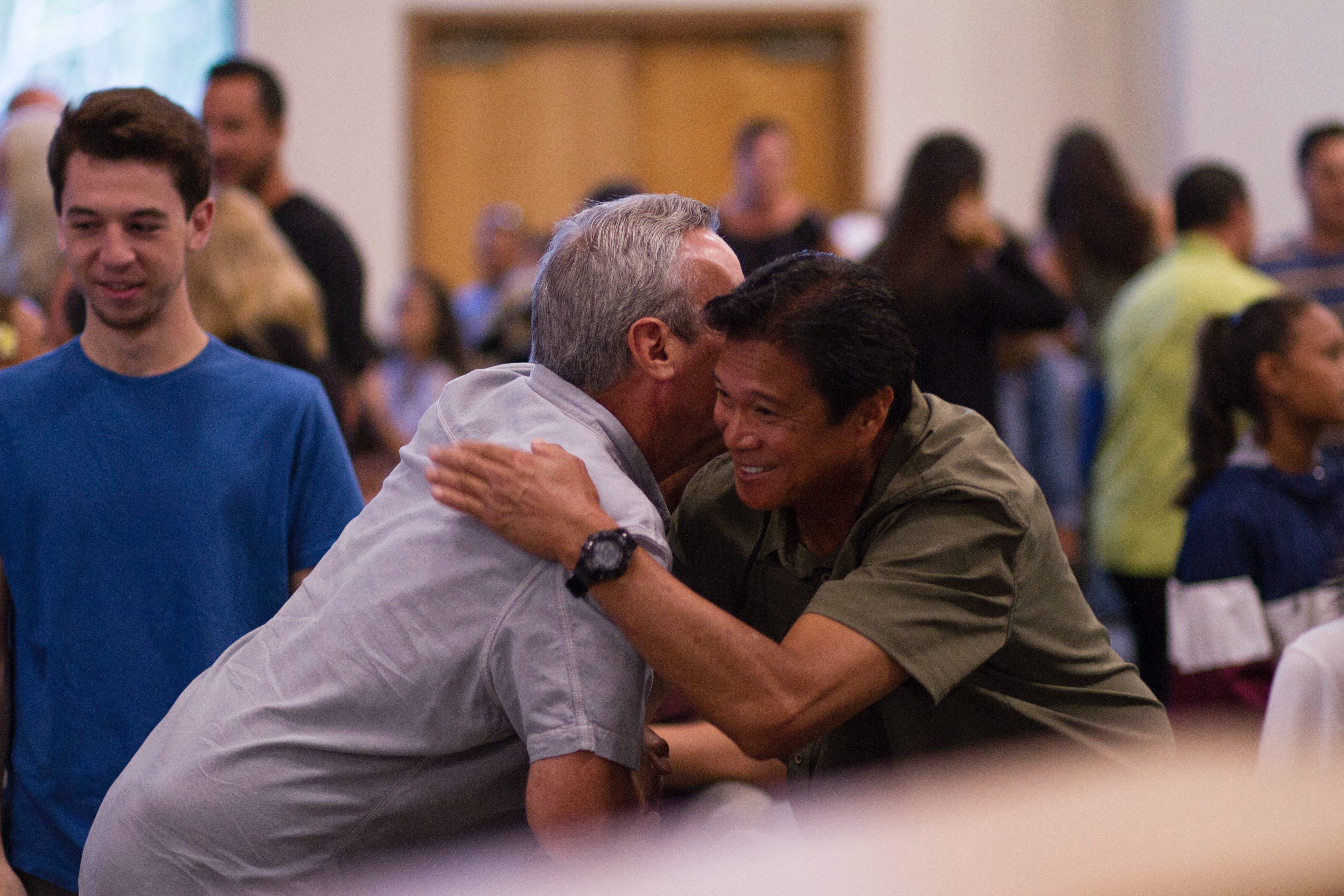
In Christian circles the word fellowship, and its Greek equivalent (koinōnia), is used for all kinds of things. There are fellowship meals, fellowship events, fellowship coordinators, fellowship halls, and even internship experiences called fellowships. Additionally, you have a ministry called Bible Study Fellowship, which labors to distinguish themselves from being a church, even as some individuals treat that ministry as their church. At the same time, there are churches who go by the name Bedrock Baptist Fellowship, or something like that. And you can find all sorts of resources aimed to improve fellowship.
With all its various uses, “fellowship” is the equivalent to Bubba’s endless array of Shrimp Dishes. Indeed, like shrimp kabobs, shrimp creole, shrimp gumbo, etc., fellowship goes with everything. Yet, by going with everything, its utility has permitted Christians to do many things with fellowship that go beyond the bounds of the Bible.
Again, what does fellowship mean?
If we open our concordances, we find the word koinōnia(fellowship, partnership) 19 times in the New Testament: Acts 2:42; Romans 15:26; 1 Corinthians 1:9; 10:16 [2x]; 2 Corinthians 6:14; 8:4; 9:13; 13:14; Galatians 2:9; Philippians 1:5; 2:1; 3:10; Philemon 6; Hebrews 13:16; and 1 John 1:3, 6, 7. From these uses, we might begin to see what God says about fellowship.
Clearly, any time we restrict ourselves to a word to form a doctrine or a practice we miss related concepts, metaphors, stories, and more. Yet, because this word is used so often to justify so many types of Christian activities, we would do well to examine the word. Do we have a faithful understanding of the word? And do we abide by it? Continue reading →
Last Sunday marked our fourth Sunday back after the COVID-induced hiatus of three months. And for the fourth week in a row, we took the Lord’s Supper and remembered the death and resurrection of Christ with elements resembling his body and blood.
In preparation for the Lord’s Table, two of my sons asked at different times, “Why are we taking the Lord’s Supper again.” To be clear, they have never taken the Lord’s Supper, because as unbaptized members of our family, they have not yet identified themselves through baptism with God’s household of faith. That said, their question arose from a personal knowledge of what we do at church and when we do it.
For all of their young lives, they have followed us to church. And since they began joining us in the gathered assembly of worship, they have always and only seen communion taken on the first Sunday of every month. This has been our practice at OBC and at our last church too. Indeed, it is a practice that is commonplace among many Bible-believing churches.
So why the change to communion every Sunday? Let me give four reasons, as we prepare for the Lord’s Table again this Sunday. Continue reading →
But you were washed, you were sanctified, you were justified in the name of the Lord Jesus Christ and by the Spirit of our God. – 1 Corinthians 6:11 –
Few gospel truths are more essential than this one: there are only two kinds of people in the world—those in Christ and those in Adam, those who have believed the gospel and those who have rejected it, those who have been born from above and those who have only been born from below. Though Scripture has many ways to speak of sheep and goats, wheat and chaff, good fig and bad, the uniform testimony is that there are only two kinds of people.
For those committed to the truth of Scripture, this division leads to one of two eternal destinies—heaven or hell. There is no third way, no middle ground. And thankfully, every time a gospel preacher heralds this sifting truth, he makes clear the call of the gospel—to repent and believe and enter the kingdom.
Yet, for every clear proclamation of the gospel, there can be an unintended confusion when it comes to baptism and the Lord’s Supper. In other words, when the church took up the gospel, it called believers to be baptized. Whereas Jesus proclaimed “Repent and believe in the gospel” (Mark 1:15), Peter proclaimed “Repent and be baptized . . . in the name of Jesus Christ for the forgiveness of sins” (Acts 2:38).
Did Peter change Jesus’s message? Absolutely not! Rather, Peter’s invitation to baptism is a call to join God’s people—i.e. to repent of your sin, believe on Christ, and join the community of faith identified with Christ by baptism. In Acts, the pattern of baptism is always believe first then receive baptism by immersion in water (see Acts 8:12). In this way, the gospel which divided believers from unbelievers was confirmed by a community of faith set apart from the world. Continue reading →
So Jacob swore by the Fear of his father Isaac,and Jacob offered a sacrifice in the hill country and called his kinsmen to eat bread. They ate bread and spent the night in the hill country.
— Genesis 31:53–54 —
In the Old Testament covenants were often begun or accompanied by a covenant meal. In Genesis 31 Jacob and Laban made a covenant to not do harm to one another. And importantly, this covenant was concluded with a meal. While these neighbors entered the covenant with animosity between them, they ended the meal reconciled with one another.
Again, when Israel made a covenant with God at Sinai, Moses, Aaron and his sons, as well as the elders of Israel, ate in the presence of God (Exodus 24:9–11). In this covenant-making chapter, these meal highlights the fellowship that God intended to have with his holy people. Accordingly, the people of Israel, throughout their history, were called to attend yearly festivals that included sacrifices for sin and meals to celebrate the renewal of the covenant (see Lev 23).
Even in Jesus day, the nation of Israel gathered to Jerusalem to celebrate the Passover. Early in his life, Jesus’s whole family attended the Passover (Luke 2). And later, John recorded the events of Jesus’s ministry by reference to the various festivals Jesus celebrated (2:23; 4:45; 5:1; 6:4; etc.) Continue reading →
You have been invited to covenant meal—a table set in the midst of hostile enemies. Bread and wine are the food and drink of choice. The host is a righteous king who is lives in the holy city Jerusalem, and serves God Most High as a faithful priest.
When you look at your invitation, the RSVP calls you to renounce your idols and acknowledge the greatness of your host. This table, offered freely to you, is set for those who believe God’s promises and refuse to partner with the kings of this world. Indeed, this table does not communicate righteousness. Rather, it is for those who have been justified by faith in the promises of God Most High.
What is this invitation describing?
If you said, the Lord’s Supper, you’d be correct. And if you said Abram’s meal with Mechizedek, you’d also be right. But how can this be? How can one description point to two events? The answer is that God ordained the Old Testament events of Genesis 14 to prepare the way for Jesus Christ and the covenant he sealed with his blood and celebrated on the night before his crucifixion.
Therefore, just as learning the history of Passover helps us appreciate and apply the Lords’ Supper today, so does learning the story of Melchizedek and his covenant meal. Continue reading →
For our sake he made him to be sin who knew no sin, so that in him we might become the righteousness of God.
— 2 Corinthians 5:21 —
For Christ also suffered once for sins, the righteous for the unrighteous, that he might bring us to God, being put to death in the flesh but made alive in the spirit.
— 1 Peter 3:18 —
In and around the church, there has always been a group of theologians and pastors willing to question or deny penal substitution—the evangelical doctrine that affirms Christ’s death as a payment of penalty for sinners who trust in Jesus. Like Peter objecting to Christ’s prediction of suffering and death (Matthew 16:21–23), liberal theologians like Friedrich Schleiermacher, Albert Schweitzer, and Adolph Von Harnack, along with modern authors like Brian McLaren, Rob Bell, and William Paul Young (author of The Shack) have maligned the blood of the cross.
Unfortunately, such denial of penal substitution depends upon a denial of Scripture, a defamation of biblical authors, and twisting of biblical words. At the same time, making Christ a mere model, teacher, or prophet, follows the lie of Satan (Matthew 16:23); it effectively denies the deity of Christ and God’s plan of salvation, foretold in the Old Testament and fulfilled in the New. But aside from the theological considerations—which are considerable—denying penal substitution steals glory from God’s work and praise from the believer’s heart. Continue reading →
It is a precious gift the Lord gives his people. As 1 John 5:13 says, “I write these things to you who believe in the name of the Son of God, that you may know that you have eternal life.”
Yet, despite God’s promise of assurance, sometimes experientially our personal assurance wanes. There are many reasons for this—some caused by God’s sovereign and mysterious providence; others caused by spiritual neglect or worldly indulgence. Fortunately, salvation depends on God not our personal assurance. Nonetheless, assurance is a gift we should desire to possess and retain. Therefore, in seasons of doubt, it is worth asking:
How can I grow in assurance?
Why have I lost assurance of salvation?
What means has God given to assure me of my salvation?
Typically, when we turn these questions over in our minds, they remain . . . in our minds. Trained in a culture of individualism and equipped with so much therapeutic self-help, we are primed to look within ourselves and ask:
What sin or pattern of sins have I committed that are robbing me of assurance?
What habits of holiness do I need to improve to increase my assurance?
When did I last have assurance, and what can I do to get it back?
To be sure, self-examination is a healthy part of a Christian’s growth. Paul says we are to examine ourselves (2 Corinthians 13:4), and part of preparation for the Lord’s Supper includes personal reflection and confession (1 Corinthians 11:28–32). But is assurance, if it is a gift from God, meant to be wholly preserved by ourselves? What if assurance is meant to be a team effort, a gift God gives you through the local assembly of believers who know and love you? Continue reading →
And can it be, that I should gain an interest in the Savior’s blood? Died he for me, who caused his pain? For me, who him to death pursued? Amazing love! How can it be that thou, my God, shouldst die for me! Amazing love! How can it be that thou, my God, shouldst die for me! — Charles Wesley, “And Can It Be That I Should Gain” —
Substitution stands at the heart of cross—the innocent dying in place of the guilty, the righteous for the unrighteous, the sinless for the sinful. English hymnody is filled with this truth, because the Bible repeats the emphasis—Jesus Christ, sinless son of God, laid down his life in the place of his beloved. But hymnody is not the only place in Christian worship where Christ’s substitution is proclaimed; when we come to the Lord’s Table we also remember his death in our place.
In recent years, there has been no little debate about this truth. More than a few books have been penned arguing against penal substitution. Negatively, some have said penal substitution posits an angry, blood-thirsty God. Others, more constructively, argue that Christ came to defeat the powers and principalities (Christus Victor) and give a moral example of love in his death. To the latter, we can whole-heartedly affirm—Jesus did come to defeat the devil (1 John 3:8) and provide an example of holy love (1 Peter 2:21). But he did so by nailing his people’s sin to the cross, disarming the devil (Colossians 2:13–15) and providing an atonement for those who would imitate him (read the context of 1 Peter 2:21, esp. v. 24).
Therefore, to pit penal substitution against any other aspect of the cross obscures the necessity and beauty of Christ’s death in our place. In fact, it is by remembering Christ’s substitution that we rightly understand God’s love (1 John 4:8–10), and how a holy, triune God reconciles sinners to himself. Therefore, when we approach the Lord’s Table, we must remember see how the meal portrays his substitution.
Today, let us consider three Old Testament passages which teach penal substitution and which prepare our hearts to worship the Son of God who gladly took our sin on his shoulders and died in our place. Continue reading →


 What does fellowship mean?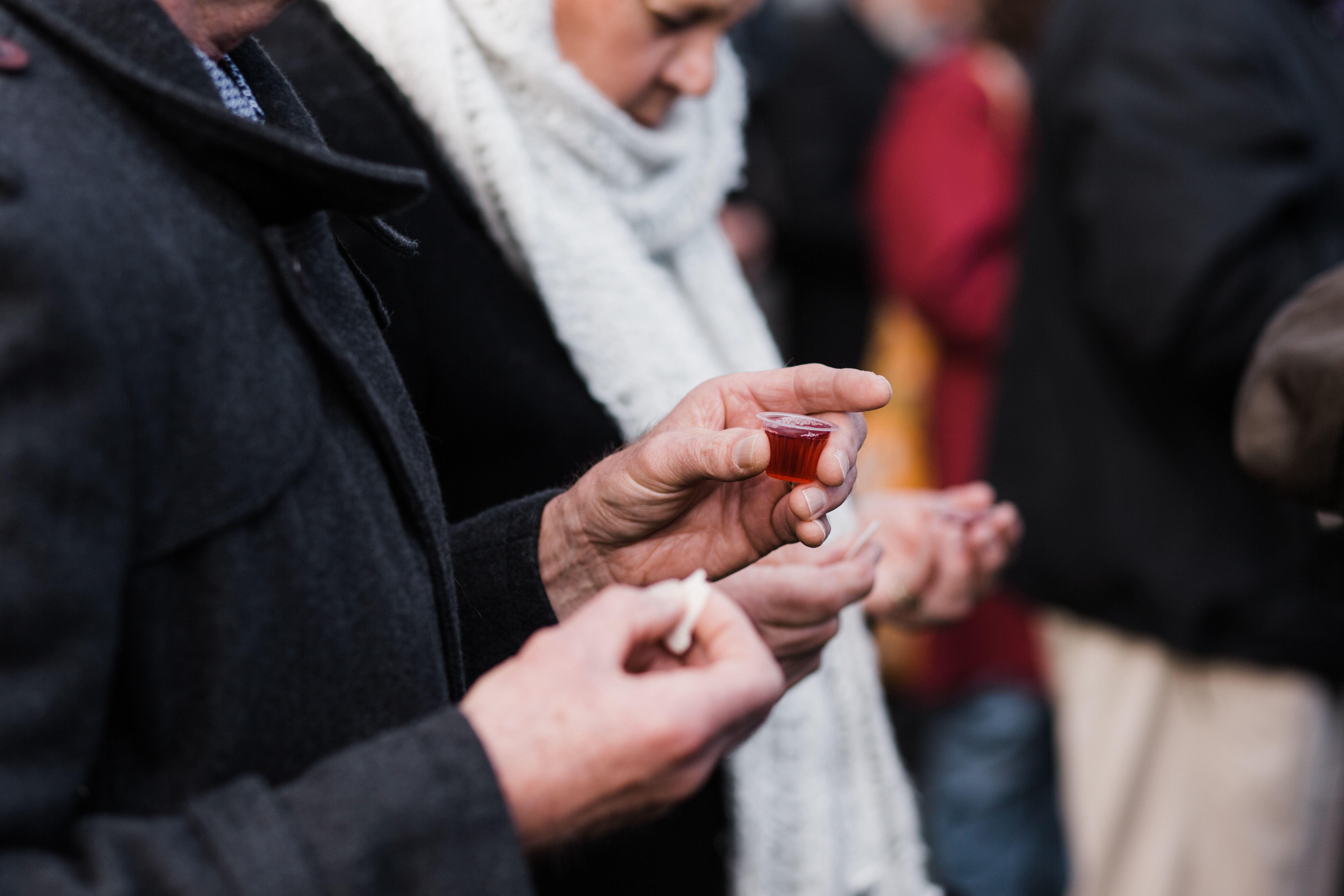
 But you were washed, you were sanctified, you were justified
 So Jacob swore by the Fear of his father Isaac,
 Dear Church,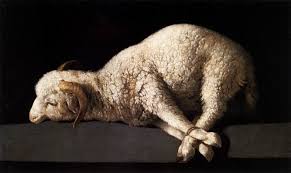
 Assurance.
 Via Emmaus