Via Emmaus on the Road: 2 Timothy 2

Further Resources


2 Timothy 2 (ESV)

A Good Soldier of Christ Jesus

You then, my child, be strengthened by the grace that is in Christ Jesus, and what you have heard from me in the presence of many witnesses entrust to faithful men, who will be able to teach others also. Share in suffering as a good soldier of Christ Jesus. No soldier gets entangled in civilian pursuits, since his aim is to please the one who enlisted him. An athlete is not crowned unless he competes according to the rules. It is the hard-working farmer who ought to have the first share of the crops. Think over what I say, for the Lord will give you understanding in everything.

Remember Jesus Christ, risen from the dead, the offspring of David, as preached in my gospel, for which I am suffering, bound with chains as a criminal. But the word of God is not bound! 10 Therefore I endure everything for the sake of the elect, that they also may obtain the salvation that is in Christ Jesus with eternal glory. 11 The saying is trustworthy, for:

If we have died with him, we will also live with him;

12  if we endure, we will also reign with him;

if we deny him, he also will deny us;

13  if we are faithless, he remains faithful—

for he cannot deny himself.

A Worker Approved by God

14 Remind them of these things, and charge them before God not to quarrel about words, which does no good, but only ruins the hearers. 15 Do your best to present yourself to God as one approved, a worker who has no need to be ashamed, rightly handling the word of truth. 16 But avoid irreverent babble, for it will lead people into more and more ungodliness, 17 and their talk will spread like gangrene. Among them are Hymenaeus and Philetus, 18 who have swerved from the truth, saying that the resurrection has already happened. They are upsetting the faith of some. 19 But God’s firm foundation stands, bearing this seal: “The Lord knows those who are his,” and, “Let everyone who names the name of the Lord depart from iniquity.”

20 Now in a great house there are not only vessels of gold and silver but also of wood and clay, some for honorable use, some for dishonorable. 21 Therefore, if anyone cleanses himself from what is dishonorable, he will be a vessel for honorable use, set apart as holy, useful to the master of the house, ready for every good work.

22 So flee youthful passions and pursue righteousness, faith, love, and peace, along with those who call on the Lord from a pure heart. 23 Have nothing to do with foolish, ignorant controversies; you know that they breed quarrels. 24 And the Lord’s servant must not be quarrelsome but kind to everyone, able to teach, patiently enduring evil, 25 correcting his opponents with gentleness. God may perhaps grant them repentance leading to a knowledge of the truth, 26 and they may come to their senses and escape from the snare of the devil, after being captured by him to do his will.

Soli Deo Gloria!
Via Emmaus on the Road: Acts 20

Further Resources

Acts 20 (ESV)

Paul in Macedonia and Greece

20 After the uproar ceased, Paul sent for the disciples, and after encouraging them, he said farewell and departed for Macedonia. When he had gone through those regions and had given them much encouragement, he came to Greece. There he spent three months, and when a plot was made against him by the Jews as he was about to set sail for Syria, he decided to return through Macedonia. Sopater the Berean, son of Pyrrhus, accompanied him; and of the Thessalonians, Aristarchus and Secundus; and Gaius of Derbe, and Timothy; and the Asians, Tychicus and Trophimus. These went on ahead and were waiting for us at Troas, but we sailed away from Philippi after the days of Unleavened Bread, and in five days we came to them at Troas, where we stayed for seven days.

Eutychus Raised from the Dead

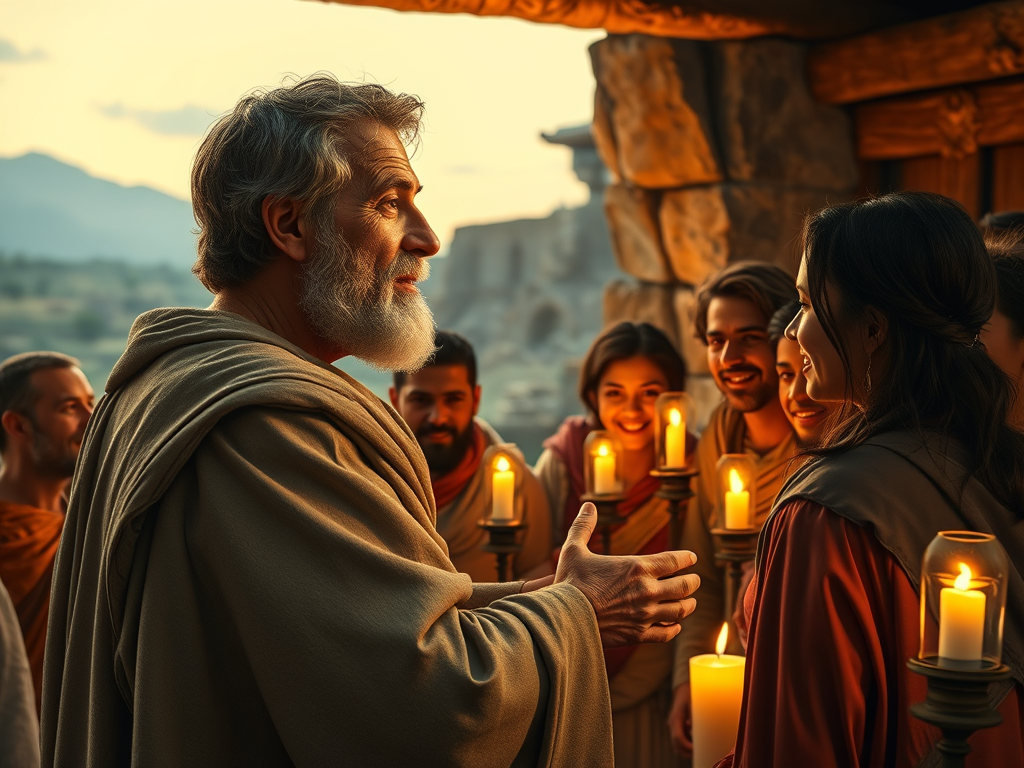
On the first day of the week, when we were gathered together to break bread, Paul talked with them, intending to depart on the next day, and he prolonged his speech until midnight. There were many lamps in the upper room where we were gathered. And a young man named Eutychus, sitting at the window, sank into a deep sleep as Paul talked still longer. And being overcome by sleep, he fell down from the third story and was taken up dead. 10 But Paul went down and bent over him, and taking him in his arms, said, “Do not be alarmed, for his life is in him.” 11 And when Paul had gone up and had broken bread and eaten, he conversed with them a long while, until daybreak, and so departed. 12 And they took the youth away alive, and were not a little comforted.

13 But going ahead to the ship, we set sail for Assos, intending to take Paul aboard there, for so he had arranged, intending himself to go by land. 14 And when he met us at Assos, we took him on board and went to Mitylene. 15 And sailing from there we came the following day opposite Chios; the next day we touched at Samos; and the day after that we went to Miletus. 16 For Paul had decided to sail past Ephesus, so that he might not have to spend time in Asia, for he was hastening to be at Jerusalem, if possible, on the day of Pentecost.

Paul Speaks to the Ephesian Elders

17 Now from Miletus he sent to Ephesus and called the elders of the church to come to him. 18 And when they came to him, he said to them:

“You yourselves know how I lived among you the whole time from the first day that I set foot in Asia, 19 serving the Lord with all humility and with tears and with trials that happened to me through the plots of the Jews; 20 how I did not shrink from declaring to you anything that was profitable, and teaching you in public and from house to house, 21 testifying both to Jews and to Greeks of repentance toward God and of faith in our Lord Jesus Christ. 22 And now, behold, I am going to Jerusalem, constrained by the Spirit, not knowing what will happen to me there, 23 except that the Holy Spirit testifies to me in every city that imprisonment and afflictions await me. 24 But I do not account my life of any value nor as precious to myself, if only I may finish my course and the ministry that I received from the Lord Jesus, to testify to the gospel of the grace of God. 25 And now, behold, I know that none of you among whom I have gone about proclaiming the kingdom will see my face again. 26 Therefore I testify to you this day that I am innocent of the blood of all, 27 for I did not shrink from declaring to you the whole counsel of God. 28 Pay careful attention to yourselves and to all the flock, in which the Holy Spirit has made you overseers, to care for the church of God, which he obtained with his own blood. 29 I know that after my departure fierce wolves will come in among you, not sparing the flock; 30 and from among your own selves will arise men speaking twisted things, to draw away the disciples after them. 31 Therefore be alert, remembering that for three years I did not cease night or day to admonish every one with tears. 32 And now I commend you to God and to the word of his grace, which is able to build you up and to give you the inheritance among all those who are sanctified. 33 I coveted no one’s silver or gold or apparel. 34 You yourselves know that these hands ministered to my necessities and to those who were with me. 35 In all things I have shown you that by working hard in this way we must help the weak and remember the words of the Lord Jesus, how he himself said, ‘It is more blessed to give than to receive.’ ”

36 And when he had said these things, he knelt down and prayed with them all. 37 And there was much weeping on the part of all; they embraced Paul and kissed him, 38 being sorrowful most of all because of the word he had spoken, that they would not see his face again. And they accompanied him to the ship.

Soli Deo Gloria!

Tearing Off the Masks: Celebrating Oceania’s Freedom . . . When Nothing Has Changed

kissOceania was at war with Eastasia: Oceania had always been at war with Eastasia.

George Orwell, 1984

But test everything; hold fast what is good
1 Thessalonians 5:21

In preparation for the upcoming removal of masks, the self-congratulations of politicians, and the ticker tape parades of liberated citizens kissing in the streets, I offer this selective reading of 1984. Let the reader the understand: Nothing has changed.

What Covid-19 Has Wrought

As the State of the Union address is presented mask-optional tonight, it is important to remember what has  changed and what has not. Today, the air is the same; immune systems are the same; and threat of Covid is the same. Covid-19 and its various variants are still deadly for those with underlying conditions and it is still innocuous for those with healthy bodies, especially children.

At the same time, masks still do not work. Fauci said as much privately before the pandemic, then he changed his mind publicly during the pandemic, and now he, and the CDC, and others have waffled back to some compromised position. Very presidentially, he was for same-sex marriage, before he was against it, and now he has returned his original position. Just replace Obama’s subject matter (so called same sex marriage) with Fauci’s (masks, mandates, etc.) and you will understand the convoluted logic of a career politician.

Yes, Covid-19 was political before it wasn’t. And how do we know? Because “end” of Covid has come by political fiat, not by a substantial change in the conditions. As the Washington Post reported in early February, governors are changing mask mandates for political reasons. Similarly, Saturday Night Live, that bastion of liberal catechesis, has performed a skit that is not funny but is informative. Watch it here. (This the first and I hope the last time I share something from SNL).


For those who have ears to hear and eyes to see, it is not science, nor the man who declared himself to represent Science, that has made the final determination about masks—it is politics. Under threat of losing control, politicians are moving to a position that appears to give freedom to the people. And SNL is helping prepare the masses for the stunning realization that the last two years of draconian mandates were more fiction than fact. And what are Christians do? Should we celebrate with the masses? Or should we realize how farcical this whole pandemic has been.

Continue reading

Seven Pastoral Practices for Bringing Biblical Theology to Church

woman holding book

Yesterday, I gave seven pastoral cautions for bringing biblical theology to the church. And as advertised, here is the rest of the story: seven pastoral practices for bringing biblical theology to church.

This is list primarily for pastors and the role their preaching can play in helping their congregation value a unified reading Scripture that leads to Christ—for this is what the best biblical theology does. However, these encouragements may also serve any member of the church, as healthy congregational have more than biblical pulpits. They must also have members who long for and pray for the Word of God to grow in their midst.

Continue reading

Be Slow to Judge and Quick to Make Peace: What Pastors Can Learn from Doubting Thomas

erik-nielsen-QdcaEK4B1xw-unsplash

19 Know this, my beloved brothers: let every person be quick to hear, slow to speak, slow to anger; 20 for the anger of man does not produce the righteousness of God.
— James 1:19–20 —

In the Bible Thomas gets a bad rap. In the face of seeing Christ’s death on the cross and not seeing Christ’s resurrection, the apostle, who previously volunteered to die with Christ (John 11:16), is unable to believe. For a whole week this beloved follower of Christ is kept in the dark, and not until Jesus returns to the Upper Room does he believe. But when Thomas does believe—he offers one of the most illuminating testimonies of Christ’s identity: “My Lord and my God” (John 20:28).

There are many lessons we can draw from Thomas’s delayed faith, but one of the most important is that faith is based on evidence. The Christian faith is not a leap in the dark; it is based on the evidential history that Jesus rose from the grave, walked on the earth for forty days, so that he could teach his disciples about the kingdom of God (1 Cor. 15:1–8; Acts 1:1–8). In that time, Jesus revealed himself to 500 disciples at one time, before his ascended to heaven in the presence of his followers (Acts 1:9–11). In short, God granted to those who saw the resurrected Christ.

With respect to Thomas’s doubt, his request for the physical body does not deny his faith; it ensures his faith is placed rightly in the resurrected Christ. Even today, faith is dependent on the eye-witness account of Christ’s physical resurrection (1 John 1:1–3). Thomas did not have that yet, and thus his delayed faith testifies to the need for eye-witness testimony.

At the same time, there’s second lesson to be learned from Thomas and his doubt. It relates to faith and evidence too, but it is not about believing the gospel but believing other believers. Until Jesus showed himself to Thomas, there was a division in the household of faith. Ironically, this is a division caused by Christ himself, as he revealed himself to his disciples at different times. But it is a division nonetheless, and one Jesus remedied when he returned to the Upper Room a week later.

Truth Takes Time to Perceive

Today, believers do not find themselves in the same position as the original disciples. For us, the gospel has come fully formed. Christ is exalted to God’s right hand of God, the Spirit has been poured out, and the New Testament has been finished. Hence, the transitional nature (which led to the temporary division between Thomas and the disciples) is not repeated today.

What is repeated are events in the life of the church where one member or one group come to see or understand something that others have not (yet) understood. This knowledge and belief may be a theological truth, a decision for ministry, or a situation of church discipline.

In such cases, believers may come to understand a doctrine or a situation at different times. Like runners traversing the same course, they may have different opinions on the race—not because they are on different paths but because they are looking at different sections of the course. In such instances, painful divisions can occur and tear apart the body of Christ. But unlike the division which Christ intended in the days following his resurrection, this division is not intended by Christ. Or is it?

Could it be that God plans temporary divisions in the church that cause his people to learn how to listen to one another? Could it be that various churches or individuals have different degrees of theological understanding or practical wisdom on various issues? And could it be that God wants his people not only to be at peace, but to learn how to make peace with one another?

Indeed, if we listen to the Bible, we see that God’s children are not just at peace with God (Rom. 5:1) and one another (Eph. 4:1–3), we are to be peacemakers (Matt. 5:9). And pastors are to be the ones who lead in making peace in the church. Continue reading

From the Gospel to Good Works: A Church’s How-To Manual for Elders (1 Timothy 5:17–25)

livingchurch

From the Gospel to Good Works: A Church’s How-To Manual for Elders (1 Timothy 5:17–25)

What are you supposed to do in church? What are elders supposed to do in church?
And how do elders and members work together in the church?

On Sunday I answered these questions with six “how-to’s” from 1 Timothy 5:17–25. In this section to Timothy about elders, Paul gives inspired counsel for providing for how to honor elders, protect elders, rebuke (sinning) elders, and appoint elders—to name a few things Paul says.

You can hear the whole sermon online. Response questions and additional resources about elders and churches are below. Continue reading

Where Do Elders Come From?

churchFrom the beginning of the church, there were designated leaders. And though given various names (e.g., elders, pastors, overseers) they served the same function. As God-given leaders of God’s flock (Acts 20:28) and under-shepherds to the Chief Shepherd (1 Peter 5:1–4), these men were called to model the faith before God’s people and to teach the word of God, protecting God’s children from error and bolstering their faith in Christ.

A cursory reading of the New Testament shows how important these men were. In Acts we find elders in Jerusalem (11:30; 14:23; 15:2, 4, 6; 21:18) and Ephesus (20:17). When Paul planted churches in Galatia, he appointed elders in each church (Acts 14:23). In correspondence with Titus, he told him to appoint qualified overseers in the churches on Crete (Titus 1:5–9). Similarly, Timothy received instruction on the qualification of overseers (1 Timothy 3:1–7) and instructions for removing unqualified elders (5:17–23).

Even before Paul wrote his Pastoral Epistles, he had called churches to care for those who taught them (Galatians 6:6–9) and to honor those who led them (1 Thessalonians 5:12–13). Similarly, James, Peter, John, and the author of Hebrews all spoke in various ways about the office of the overseer/elder/pastor (see James 5:14; 1 Peter 5:1–4; 2 John 1; 3 John 1; Hebrews 13:7, 17). In short, the New Testament says a great deal about this important role, and it does so because the health of the church depends on those who lead them with God’s Word.

Yet, for all that it says about the office, we should ask another important question: Where do elders come from? Thankfully, the New Testament is not silent on this question. Just as it describes how to recognize an elder, it also describes where they come from. And faithful churches (and the elders who lead them), will be aware of how God raises up elders.

Where Do Elders Come From?

Continue reading

Be a Table Host, Not a Dinner Party Speaker: Ten Ways to Create Meaningful Discussion in Your Next Bible Study

priscilla-du-preez-697322-unsplash.jpgIn the Bible we learn that preaching is not the only way God’s Word is communicated. In the Old Testament, the Levites are seen explaining the Law to the people of Israel (Nehemiah 8:7–8). And in the New Testament, Paul says of his ministry, “I did not shrink from declaring to you anything that was profitable, and teaching you in public and from house to house” (Acts 20:20).
In both of these contexts, teaching occurred in small groups, where God’s teachers could answers questions, give the sense of the word (Nehemiah 8:8), and lead discussions about applying the Law to life (see Ezra’s approach in Nehemiah 8:10). Today, teachers of the Word are called to do the same, and experienced teachers will master the art and science of leading discussion that is fundamentally different than just declaring what Scripture says.

To lead this kind of dialogue profitably is challenging and takes time—a lifetime even—to master, but it is invaluable for helping disciples of Christ learn to read Scripture, ask questions, think with others, and apply truth to life. And in what follows, I want to suggest ten principles for leading a good discussion. Four of them simply relate to question-asking; the other have to do with developing a conviction for the value of discussion and the need to change your preparation habits for leading discussion, as opposed to preaching.

I pray these principles may be helpful. If there are other ways you have learned to facilitate discussion, please share in the comments. Continue reading

What Servant Leadership Looks Like: Seven Lessons from Theodore Roosevelt

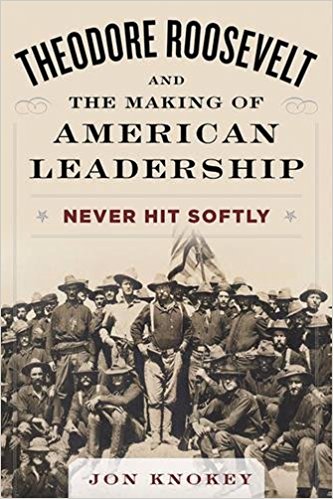
bookFor the last few weeks I have been listening to the audiobook by John Knokey, Theodore Roosevelt and the Making of American LeadershipThis has probably been one of the most enjoyable and fascinating biographies I’ve ever read. Knokey traces the development of Theodore Roosevelt’s leadership from his developmental years at Harvard to his two terms as president of the United States.

Most of his time—or at least, the most memorable time—is spent with Roosevelt as a frontiersman in the Dakotas and a military colonel on the way to Cuba. In these anecdote-filled chapters, the reader is given a firsthand introduction to how Roosevelt became a leader and how his leadership forged the spirit of America for the next century.

For anyone interested in American history or presidential leadership this book is excellent. In fact there are many lessons about leadership in the book and countless stories to illustrate them. To summarize, I will distill seven lessons from Roosevelt’s larger-than-life leadership, and make a few applications to Christian leadership in particular. Continue reading

Teddy Roosevelt and His Rough Riders: An Illustration of Diversity’s Glory

teddy

There is a peculiar kind of glory that comes to a man
who unifies and empowers genuine diversity for a common good.

In history, we celebrate stories of heroic leaders who take disconnected misfits and make them a strong army. If you are familiar with the Bible, you might think of David and his mighty men—a diverse group of malcontents who became champions under David’s command. If you are more familiar with popular movies, you might think of Remember the Titans, where Coach Herman Boone led a newly-integrated T.C. William high school to a state football championship.

Indeed, we love to hear stories of leaders who take natural-born opponents and unite them together for the same cause. And even more, in our ultra-divided world, we need to hear these stories. And thankfully, there are many such stories that can be told.

Recently, I came across such a story in Jon Knokey’s book, Theodore Roosevelt and the Making of American LeadershipIn this fascinating book, Knokey tells the colorful tale of what happened when 1000 radically-different men from all over America were formed into a single fighting unit under the leadership genius of Colonel Roosevelt.

Here’s what he says. It’s long but entertaining and worth the read as it gives a fresh illustration of what we find in Ephesians 2—something I sought to bring out in yesterday’s sermon on Christ and his Church. Continue reading