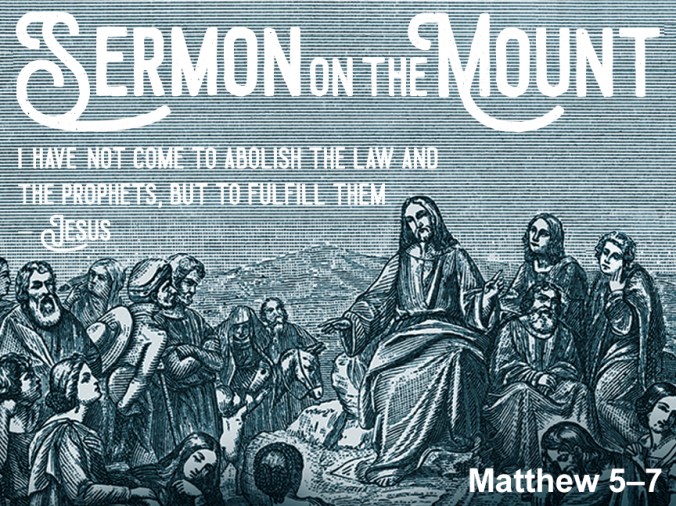
Seven Evidences the Sermon on the Mount is an Exposition of the New Covenant

joel-filipe-241154-unsplashWhat is the Sermon on the Mount about? And more basically, what is the Sermon on the Mount? Is it a newer, more stringent law for Christ’s disciples? Is it an ideal which drives disciples to seek mercy? How should we understand it?

Many answers have been given, but I believe the best understanding of Jesus’s Sermon in Matthew 5–7 is that it is an exposition of the new covenant. Rather than a new law that exceeds that of the old covenant, I would propose that it is the eschatological word of Christ which fulfills the Law and the Prophets. And in what follows I want to outline seven reasons for that view.

Seven Evidences the Sermon on the Mount is an Exposition of the New Covenant

For sake of space, I am not going to expound every point with exhaustive detail. Rather, I will trust that the points are somewhat familiar and that stringing them together has the cumulative effect of proving the Jesus’s Sermon on the Mount is an exposition of the way Jesus expects his kingdom disciples to walk according to the new covenant he is bringing. Continue reading

From Cain to Covenantal Continuity: Three Quotes on Matthew 5:21–26

kiwihug-284614-unsplash.jpgWhen reading Matthew 5:21–26, the first of six illustrations from Jesus on how to read and apply the Law of Moses, there are a number of interpretive factors to consider. In fact, we need to consider the meaning of the “anger,” the relationship of the Law-covenant to the Jesus’s fulfillment, and the way Jesus employs imagery from the first recorded murder.

In these three quotations from Charles Quarles, Jonathan Pennington, and Dale Allison we get a grasp on how the lexical, epochal, and canonical contexts should contribute to our understanding Jesus’s teaching. Continue reading

The Good News of the Law: “Getting” the Law, So That the Law Gets Into You (Matthew 5:17–20)

sermon05

The Good News of the Law: “Getting” the Law, So That the Law Gets Into You

What is the purpose of the Law? How are we supposed to apply Moses’ commands to our lives? How does Jesus read the Old Testament? Is there any good news for Christians in Law of Moses?

These questions and more have been raised by Christians for centuries. And one of the most challenging passages on the relationship of the Old Testament to the New is Matthew 5:17–20. This Sunday we considered these words of Jesus and how he helps us to read the Bible and apply the Law to our lives.

You can find the sermon audio online. Discussion questions and additional resources are also available below. Continue reading

The Significance of the Sermon on the Mount: 10 Reflections from Herman Ridderbos

sermon05What is the Sermon on the Mount about?

That question has puzzled pastors, theologians, and Bible scholars for centuries. While large volumes have been written on the subject, sometimes a slimmer response is helpful. On that note, one finds great help from the late Dutch New Testament scholar Herman Ridderbos.

Writing a chapter on the Sermon on the Mount (“The Significance of the Sermon on the Mount,” in When the Time Had Fully Come: Studies in New Testament Theology26–43), Ridderbos explains the eschatological nature of Christ’s kingdom and how the arrival of Christ’s kingdom as a fulfillment of the Law and Prophets helps us understand and apply Jesus’ famous words.  Continue reading

Living Long in the Land: Reading Ephesians 6:1–3 through the Lens of the New Covenant

stephen-arnold-64276

Children, obey your parents in the Lord, for this is right. “Honor your father and mother” (this is the first commandment with a promise), “that it may go well with you and that you may live long in the land.”
— Ephesians 6:1–3 —

In preparation for this Sunday’s sermon on Ephesians 6:1–3, I have spent considerable time thinking about the way Paul is quoting the fifth commandment (Exodus 20:12 LXX). And in my week of study, I have not found a satisfactory answer to the question of how he’s applying the law to the new covenant people of God. Many believe Paul is directly applying the law without change; others suggest he is altering it as he leaves off God’s specific promise of land to Israel; still others, just develop principles from Ephesians 6 without consideration of the covenantal structure of the Bible.

In all, no one I found wrestled with the way in which the commandment to honor father and mother was and is changed by the finished work of Christ. Therefore, in what follows I want to consider Ephesians 6:1–3 in light of the shift from the old covenant to the new.

But to do that, it is important to see how Paul’s words build upon the matrix of wisdom, righteousness, and reward (i.e., inheritance) that are outlined in the law and especially in the Proverbs. In the context of Paul’s letter, he gives instructions to wives and husbands (5:22–33), children and fathers (6:1–4), and slaves and masters (6:5–9); these are all application of Spirit-filled wisdom (see Ephesians 5:15–21). Likewise, his instructions continue to apply the righteous standards of God’s people outlined in Ephesians 4:17–5:14. And finally, he seeks to motivate children by the promise of inheritance, a long and well-pleasing life in the land. In short, like the Proverbs wisdom, righteousness, and blessing are found together in Ephesians.

From these contextual observations, then, it makes sense to turn to Proverbs.In Proverbs, “sons” are called to walk in the way of wisdom and righteousness, such that they might enjoy the blessings of the covenant. That is, inheritance promised in the law is conditioned on wise and righteous living. Therefore, to grasp the fullness of what Paul is saying in Ephesians 6, I believe we should spend ample time considering what Proverbs says (with a little help from Psalm 119) about wisdom, righteousness, and reward.   Continue reading

Finding Life in Leviticus 19: Ten Gospel Notes for Social Justice Warriors

commandments-311202__480The Ten Commandments are listed twice in the Old Testament—once in Exodus 20; once in Deuteronomy 5. They are also explicated at least twice. After each list (Exodus 21–23 and Deuteronomy 12–25), Moses specifies and applies the Lord’s “ten words.” This means that we do not need to wait for Jesus’ Sermon on the Mount (Matthew 5–7) to get an inspired interpretation and application of these commands. There is, within the Torah itself, explanation and application.

In fact, there is one other passage on the Ten Commandments which stands between Exodus and Deuteronomy. In Leviticus 19 Moses records the holy standards of God and makes personal application to the people of Israel. In reading this chapter recently, I took note of ten observations related to the content and context of these laws. I share them here to help us to better understand the good purposes of God’s Law, and specifically to show how many modern desires are best fulfilled by God’s all-sufficient Word.

In short, Leviticus 19 is not an archaic list of do’s and don’ts; it is actually a personal application of the Law which deals with so many of the issues Social Justice Warriors seek out. Only because these “laws” are grounded in the personal, holy love of Israel’s God, they retain their life-giving shape—something that no human set of ordinances can ever do.

Take time to read Leviticus 19 and consider how these laws give life by leading members of God’s covenant to trust in him. Continue reading

The Law and the Gospel: What God Has Joined Together, Let No Man Separate

john

In an effort to emphasize grace, many gospel preachers have fallen into the trap of denying the law. Formally, this is called antinomianism, a condition that has often plagued Reformed preachers of grace. While popularly, antinomianism often arises as preachers or believers eschew the shackles of legalism, it is more fundamentally a case where grace itself is misunderstood.

Recently, in reading Sinclair Ferguson’s historical, theological, and pastoral book, The Whole Christ: Legalism, Antinomianism, and Gospel Assurance—Why the Marrow Controversy Still Matters, I have been reminded of the importance of making this point. Antinomianism is not so much the opposite of legalism (nor the reverse). Rather, legalism and antinomianism are both fundamental misunderstandings the gospel, the way the law leads to the gospel (see Romans 3:21; 1 Timothy 1:8–11), and the way in which the gospel fulfills the need created by the law—namely, a righteousness that comes by faith (not works of the law), but which also esteems the law as it is written on the heart of those who believe the gospel.

I hope you can see that the relationship between law and gospel is more complex than simple supersession or discontinuity. In what follows, I will draw from The Whole Christ to help show how law leads to gospel and gospel pardons from legal guilt and empowers to obey the law. Continue reading

Lawful Love: How the Law Preserves and Propels Our Love

law loveFor the one who loves another has fulfilled the law.
 – Romans 13:8 –

What is love?

Often it is defined as some sentimental feeling. Some emotional experience. Some pitter-patter in your chest. Rarely, is love associated with law-keeping, rules, or righteousness.

In our “if it feels right, do it” sort of society, love does not shack up with legal requirements. But in the Bible where love is defined by God (1 John 4:8) and demonstrated on the cross (1 John 3:16), love is regularly related to the law. In fact, Romans 13 says, “Love is the keeping of the law” (v. 8) and “Love is the fulfilling of the law.” Likewise, Galatians 5:14 reads, “For the whole law is fulfilled in one word: “You shall love your neighbor as yourself.”

Following the teaching of Jesus, Paul reiterates his Lord’s view of the law. In the Sermon on the Mount Jesus said, “Do not think that I have come to abolish the Law or the Prophets; I have not come to abolish them but to fulfill them” (Matt 5:17). And later in the same Gospel (22:36–40), Jesus explained that the Law and the Prophets hang on these two commandments: to love God (Deut 6:4) and to love neighbor (Lev 19:18). Indeed, against popular opinion, the Law was not given to merely enforce rules. It was given so that the people of Israel might love one another with absolute righteousness. To say it differently, God’s love is defined and delimited by covenantal laws. Continue reading

Gospel-Motivated Generosity is a Mark of True Obedience

Some of the largest philanthropists in the world are non-Christians.  Agnostics love to give to their Alma Maters as much as Christians; and the generosity of many believers does not always spring from gospel-centered reflection on Jesus Christ.  Accordingly, we need to think more carefully about the relationship between believing the gospel and obeying God’s commands to give generously.

Among many places in the Bible that address this subject, Exodus teaches us that obedience, in general, and giving, in particular, are motivated by grace. Yesterday, we saw how obedience was a result of the Spirit’s work.  Now today, I want to reflect on how God brought about obedience in the people of Israel, and how he does something similar in our lives.

He does not accomplish obedience in us through demand (alone), threat (alone), or reward (alone).  Each of these speech-acts are important in their own right, but ultimately God does something more powerful to effect change in us.  Something we should take note of, in order to live lives according to the gospel.

The Cause of Israel’s Obedience

In Exodus 35, Moses called for Israel to give gold, silver, precious wood and fabrics for the construction of the tabernacle.  If you read carefully, you will notice that he doesn’t badger, manipulate, or threaten.  He asked plainly, and the people gave generously.  In fact, the giving was so abundant that Moses had to tell Israel to stop giving (Exod 36:5-7).  This should immediately cause us to ask: How?  Why did Israel who days earlier made a false God, now give with such generosity?  Was this a guilt offering?  Or was something else going on?

To begin with, lets read Exodus 35:20-29 and then lets make a few observations.  Moses records,

Then all the congregation of the people of Israel departed from the presence of Moses. And they came, everyone whose heart stirred him, and everyone whose spirit moved him, and brought the LORD’s contribution to be used for the tent of meeting, and for all its service, and for the holy garments. So they came, both men and women. All who were of a willing heart brought brooches and earrings and signet rings and armlets, all sorts of gold objects, every man dedicating an offering of gold to the LORD. And every one who possessed blue or purple or scarlet yarns or fine linen or goats’ hair or tanned rams’ skins or goatskins brought them. Everyone who could make a contribution of silver or bronze brought it as the LORD’s contribution. And every one who possessed acacia wood of any use in the work brought it. And every skillful woman spun with her hands, and they all brought what they had spun in blue and purple and scarlet yarns and fine twined linen. All the women whose hearts stirred them to use their skill spun the goats’ hair. And the leaders brought onyx stones and stones to be set, for the ephod and for the breastpiece, and spices and oil for the light, and for the anointing oil, and for the fragrant incense. All the men and women, the people of Israel, whose heart moved them to bring anything for the work that the LORD had commanded by Moses to be done brought it as a freewill offering to the LORD.

Observations on Gospel-Centered Giving and Obedience

In these ten verses, we see a wonderful model of grace-inspired giving.  If what Moses describes speaks of the totality of Israel, it is likely that all of Israel gave from hearts that were stirred up in affection for God.  Thus, the giving was great because of God’s earlier grace in not only saving them from Egypt but in sparing them from the wrath they deserved because of the Golden Calf debacle.

There are a number of things to notice in these verses that pertain to obedience and giving.

First, the generosity was not motivated by guilt.  Moses did not badger, demand, or manipulate.  He called and Israel responded.  Apparently, something had happened between Aaron’s call for gold and Moses’ call.  The only text standing in between is God’s gracious revelation which presumably accounts for the change.  Moses records that Israel’s hearts/spirits moved them.  Here is the lesson: true obedience, true giving, true Christianity (in the OT and the NT) is a matter of a changed heart, not just a winsome sales pitch.

Second, if you want to produce giving people, you don’t use outward means of solicitation.  Sure, pep talks, testimonies, and logical reasons for giving can be produced.  But in the long run, Christians will give in direct proportion to their heart-felt understanding of the gospel.  If someone is born again and their mind is taken captive to the gospel, they will be quick to give to the work of the gospel.  Now of course this is according to their means—and it was in Israel, as well.  But those committed to seeing the gospel go forward should be asking themselves, what can I do financially to further the ministry of my church or the ministry of gospel-preaching missionaries.

Third, grace is what motivated Israel.  It is not coincidental that such generous obedience follows from God’s revelation to Moses and the renewal of the covenant in Exodus 34.  God’s character was revealed and pronounced with grace and goodness, this in spite of Israel’s wrath-inviting sin.  Thus, grace seems to be the reason why Israel had such a change of heart. Just the same, grace should motivate you and I in our obedience, giving, and in everything else.

What We Are Missing

I think this is something that is often missed.  And it is missed by pastors as much as it is missed by anyone.  Such gospel ministers who “save” people with the gospel and then try to produce growth and discipleship through the law. But it is not just pastors, parents are just as culpable, as they  focus on rules and making their children submit, instead of winning their hearts by the grace of God.

Somehow in efforts to produce good Christians and good children, we have missed the way God motivates through his inspired servants.  Moses was overwhelmed by God’s glorious grace in Exodus 34, and he spoke about YHWH’s abundant grace for the rest of his life–just read Deuteronomy.

Likewise, Paul when writing to the Corinthian church urged them to give, not with appeals to conscience or legal demands.  Rather, he called them to give out of glad hearts, hearts overflowing with thanksgiving in the gospel. Notice what he says in 2 Corinthians 9:6-15.

The point is this: whoever sows sparingly will also reap sparingly, and whoever sows bountifully will also reap bountifully. Each one must give as he has decided in his heart, not reluctantly or under compulsion, for God loves a cheerful giver. And God is able to make all grace abound to you, so that having all sufficiency in all things at all times, you may abound in every good work. As it is written, “He has distributed freely, he has given to the poor; his righteousness endures forever.” He who supplies seed to the sower and bread for food will supply and multiply your seed for sowing and increase the harvest of your righteousness. You will be enriched in every way to be generous in every way, which through us will produce thanksgiving to God. For the ministry of this service is not only supplying the needs of the saints but is also overflowing in many thanksgivings to God. By their approval of this service, they will glorify God because of your submission flowing from your confession of the gospel of Christ, and the generosity of your contribution for them and for all others, while they long for you and pray for you, because of the surpassing grace of God upon you. Thanks be to God for his inexpressible gift!

In these words, the great gospel missionary reminds the Corinthians of God’s abundant grace, total sufficiency, and he spurs them on to give so that they might see greater gospel fruit—the lost being won to Christ, the gospel reaching new peoples, etc.  He motivates with the gracious gospel.  So should we.

The Deeper Problem

Still, the deeper problem is not that we motivate others with the law and calls to do better.  We do the same with ourselves.  A number of years ago, I asked a prominent Bible teacher how he has remained faithful in the work of the Lord.  His answer surprised me.  Instead of appealing to God’s word, or the Spirit, he simply said that every day, he simply made the choice to keep following God.

I guess for him, it had worked, but I know too many people who have failed at the “pull yourself up by the bootstraps” kind of Christianity.  Indeed, I think God wants us to fail at self-sufficient sanctification.  I would even say, that the man who said his obedience to the Lord came from simply doing it everyday was radically dependent on the promises of God and the power of the Spirit.

But therein lies the problem: The way he walked by faith in God’s gospel was assumed, not articulated.  Sure, he depended much on the word of God.  In another conversation, he said, he studied a different book of the Bible every month and that over decades he had been through the Bible countless times.  Thus, he was radically dependent on God’s word and captivated by its vision of Christ.  Still, he did not communicate that when asked about how to remain faithful.

Thus, we need again and again to point out from God’s Word how and where we find motivation for holy living.  Such obedience is motivated by the gospel and nothing else, and here in Exodus we find an excellent example of a people who gave richly because they had received richly.

May we do the same.  May we risk, give, and live for Christ not out of the goodness of our hearts, but rather because of the goodness of God proclaimed and promised in the person and work of Jesus Christ. Until he comes, may we live in radical dependence on God’s grace, and may we trust that his grace will be sufficient for all that he calls us to do.

Soli Deo Gloria, dss

 

Sermon Notes: How to Avoid Getting Lost on the Way from Leviticus 15 to Luke 15

On Monday, I suggested a five-fold system, a Gospel-Positioning System (GPS), to get you from obscure passages in the Law through the Prophets to Christ and the Gospel.  These five-steps are listed again.

1. Law
2A. Prophets: Judgment
2B: Prophets: Salvation
3: Christ
4: Gospel Response
5: Spirit-Empowered Action 

Today, I want to suggest four common errors that plague evangelicals today. Four ways we misread the Scriptures.

1. We skip from 1 to 5.  In pursuit of application and life-change, we read a command, a law, even a story, and we immediately move to application. Instead, of asking how the said pericope fits into the flow the Bible (i.e. textual, epochal, and canonical horizons), many of us move straight to activity.  This is wrong.  It misses the power of the law, the promise of the gospel, and the person of Jesus.  In effect, it makes the Bible about us, and no longer about Jesus.  The solution?  We must move from law through the prophets to Jesus Christ and then to us.  Personal application is vitally important but only after we encounter Christ.

2. We are afraid of 2A & 2B.  The prophets frighten us.  They are strange.  They don’t talk normal. They are hard to understand.  I get this!  I remember reading Isaiah 13-20 one time.  As I read the pronouncements against Babylon, Damascus, and Moab, I got upset.  Not because God was punishing these sinning nations, but because, “I needed a word from God, and this was not it”–so I thought.  I closed the Bible (for that day) upset, because I hadn’t seen how those words related to the rest of the Bible or my life.

If you have had an experience like that with the Prophets, it makes it hard to be a regular reader of that challenging genre.  Yet, to neglect the prophets is to neglect the greatest section of the Bible for fueling Christ-centered hope.

Maybe this will help: The prophets get a lot easier if we remember two things. First, they are speaking a word of judgment, based on the law against sinners like us.  Their words condemn covenant-breakers, social injustice, and unfaithful worship.  They speak to us about our sin.

Second, they are speaking a word of Messianic hope, based on the gospel. They give us glorious images of the Christ who is to come.  They offer salvation to sinful people, and the reality that God is going to bring recreate the world.  If we remember these two things and tie a rope from the law to the gospel, we can learn to walk thru these strange books.

3. We minimize 3.  This may sound strange, to minimize Jesus, but I have heard countless evangelical, Baptist preachers (and you have too) who preach and never mention Him.  Instead they list moral instructions from the life of Joseph or Caleb, and at the end say, “Unless you are Christian you cannot do what I just said.  So become a Christian.”

Friends, this is Christ-less preaching.  It has no power and I can hardly believe that a message without the content of Christ, will bring anyone nearer to our Lord and Savior.  In fact, it is disingenuous, to tell anyone to become a Christian after you have spent 40 minutes preaching moral lessons and not telling them about Christ.  Yet, this happens all too often.

4. We divorce 1-4 from 5.  If we are tempted to skip Jesus, we are more culpable of divorcing the gospel from application. In other words, we read the Bible for application, and we find all kinds of commands that say—Make disciples.  Love one another.  Be unified.  Forgive your enemies.  Turn the other cheek.

Yet, those commands have ZERO POWER, in and of themselves. These biblical commands are good, but in Scripture they are always set in relation to gospel promises.  To say it another way, imperatives are always grounded in gospel infinitives.  Why?  Because laws never produce godliness!  Grace produces godliness (Titus 2:11-13).

Jesus commands his disciples to be witnesses to all the nations, but he commands them to stay in Jerusalem until the Spirit comes so they will have power to do what he commands.  Paul tells us to forgive one another as Christ has forgiven you.  The power is in the gospel.  Failure to couple commands with Christ’s antecedent work, will lead earnest Christians to live the Christian life in the power of their own strength.

Instead, we must move to application and action, but as we do so, we must continue to walk in faith, loving others out of the love that has been poured into our hearts.

This is my prayer and hope!  That as we read Scripture, our minds are not just informed.  Rather, our eyes are opened to behold Christ and to become like him. Indeed, Jesus prayed that we would be sanctified by his word (John 17:17), and that comes to fruition when in his word, we see Jesus (2 Cor 3:18).

Open our eyes, Lord to see the wonder of Christ in the pages of Scripture, dss