Via Emmaus on the Road: James 5

Further Resources


James 5 (ESV)

Warning to the Rich

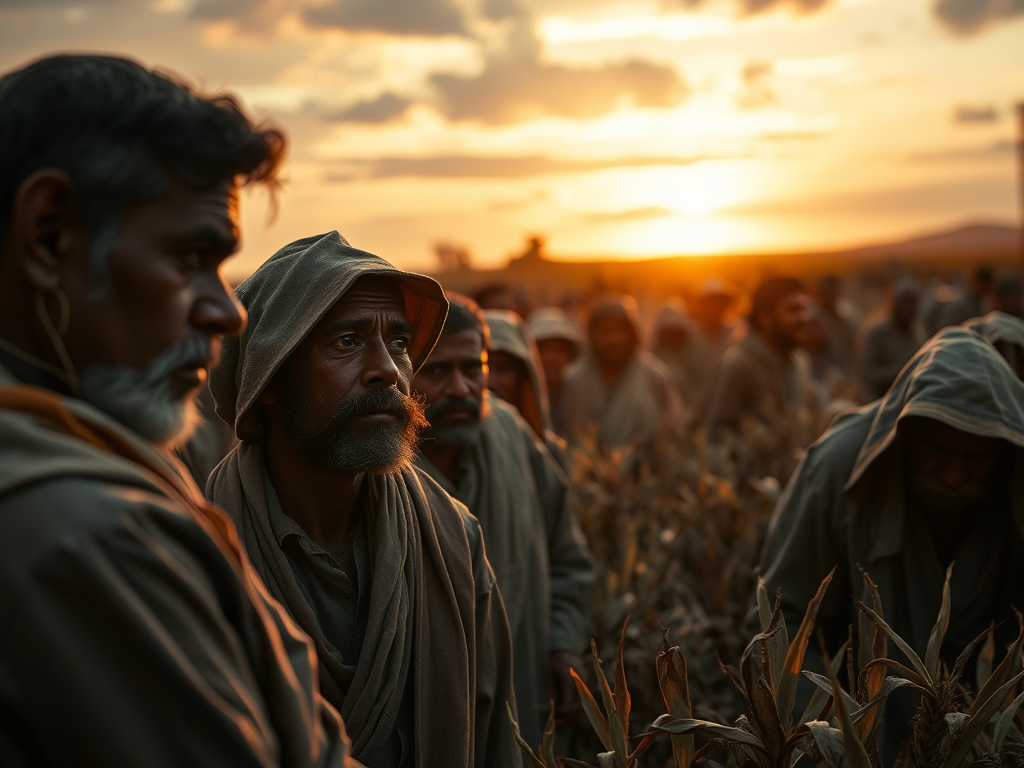
Come now, you rich, weep and howl for the miseries that are coming upon you. Your riches have rotted and your garments are moth-eaten. Your gold and silver have corroded, and their corrosion will be evidence against you and will eat your flesh like fire. You have laid up treasure in the last days. Behold, the wages of the laborers who mowed your fields, which you kept back by fraud, are crying out against you, and the cries of the harvesters have reached the ears of the Lord of hosts. You have lived on the earth in luxury and in self-indulgence. You have fattened your hearts in a day of slaughter. You have condemned and murdered the righteous person. He does not resist you.

Patience in Suffering

Be patient, therefore, brothers, until the coming of the Lord. See how the farmer waits for the precious fruit of the earth, being patient about it, until it receives the early and the late rains. You also, be patient. Establish your hearts, for the coming of the Lord is at hand. Do not grumble against one another, brothers, so that you may not be judged; behold, the Judge is standing at the door. 10 As an example of suffering and patience, brothers, take the prophets who spoke in the name of the Lord. 11 Behold, we consider those blessed who remained steadfast. You have heard of the steadfastness of Job, and you have seen the purpose of the Lord, how the Lord is compassionate and merciful.

12 But above all, my brothers, do not swear, either by heaven or by earth or by any other oath, but let your “yes” be yes and your “no” be no, so that you may not fall under condemnation.

The Prayer of Faith

13 Is anyone among you suffering? Let him pray. Is anyone cheerful? Let him sing praise. 14 Is anyone among you sick? Let him call for the elders of the church, and let them pray over him, anointing him with oil in the name of the Lord. 15 And the prayer of faith will save the one who is sick, and the Lord will raise him up. And if he has committed sins, he will be forgiven. 16 Therefore, confess your sins to one another and pray for one another, that you may be healed. The prayer of a righteous person has great power as it is working. 17 Elijah was a man with a nature like ours, and he prayed fervently that it might not rain, and for three years and six months it did not rain on the earth. 18 Then he prayed again, and heaven gave rain, and the earth bore its fruit.

19 My brothers, if anyone among you wanders from the truth and someone brings him back, 20 let him know that whoever brings back a sinner from his wandering will save his soul from death and will cover a multitude of sins.

Soli Deo Gloria!

“But Now”—Learning to Live in the Newness of Christ

photo-1416958672086-951aa7064010 2It has often been observed that the “last days” are not just some future event of tribulation and doom but are instead the days of Christ’s church, inaugurated by his resurrection. Thus, as Acts 2:17 and Hebrews 1:2 teach us, the last days have begun with the finished work of Christ and will culminate when he comes again to consummate what his resurrection began.

Such an observation stands behind the notion of an inaugurated eschatology, the belief that the kingdom of God is already and not yet. Indeed, coming out of the debates with George Eldon Ladd in the mid-twentieth century, evangelical theology has found a large consensus on this fact—the kingdom is not only present and it is not only future; rather the kingdom of God has been inaugurated but awaits its culmination.

Certainly, this view of the kingdom is different than the way the Old Testament Prophets foresaw the coming kingdom. To them the coming of the messiah meant the restoration of Israel’s kingdom, the outpouring of the Spirit, and a new age marked by resurrection and life. What we find in the New Testament, however, is that this new age would come in the midst of the old, and that the last days of the old age would coincide with the era of the church, whereby the people of God would bear witness to Christ’s future return.

Biblical evidence for this two-phased kingdom is found in the Gospels where Jesus speaks of the kingdom as already (Matthew 12:28) and not yet (Matthew 24:35). It is also found in the arrival of the Holy Spirit which has made born again believers new creations in Christ (2 Corinthians 5:17), but without restoring the whole cosmos yet—what Isaiah 65 describes as a new heavens and new earth. Likewise, the resurrection of Christ—the first-fruits of the new creation—indicates a redemptive-historical shift from the old age to the new. And its this resurrection shift that is picked up by certain language in the New Testament.

Beginning with Paul’s speech to in Athens (Acts 17), there are two words that mark the change brought about by Christ’s resurrection. These words are nuni de, “but now.” As Fleming Rutledge observes in her provocative book on Christ’s crucifixion (and resurrection), “this radical newness, this transformation, is epitomized by the very frequent appearance in Paul’s letters and the epistles of Peter of the phrase “but now” (nuni de)” (The Crucifixion60).

Her observation reflects the apocalyptic nature of the New Testament, that the future has invaded the present (to borrow Ladd’s language), the kingdom of heaven has come to earth, and the resurrection of Jesus has marked a new stage in redemptive history. Indeed, the kingdom is not consummated yet, but neither is it absent. And importantly, the presence of the kingdom and the resurrection power of Christ is witnessed through the apocalyptic phrasing “but now.” Continue reading