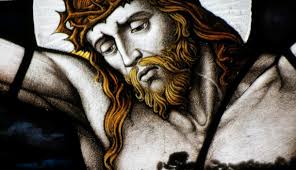
A Meditation on the Cross (Matthew 27): How Penal Substitution, Christus Victor, and Christ’s Moral Example Lead Us to Preach the Cross, Resist the Devil, and Imitate the Lord

crossWhen the Spirit led Jesus into the Wilderness, Satan tempted him three times. He questioned the authenticity of Jesus’ Sonship, tempting him to prove his power and his place as God’s Son. In perfect obedience to God and his Word, Jesus did not assert himself, but trusted that his earthly mission was one of absolute humiliation leading to honor, not a powerplay to gain honor for himself.

On the cross, the fury of Satan’s accusations returned, only it came not in the voice of the Serpent but in a salvo of accusations launched at Jesus while nailed to a tree. Physically speaking, no form of punishment has ever been more de-humanizing. Still, for all the physical a pain delivered in crucifixion, it was the Spiritual abandonment that was the greatest punishment. “My God, my God, why have you forsaken me?” was the cry of a man who had never known sin or the judgment of God’s abandonment. Moreover, in identifying himself with his sinful people, Jesus assumed in his flesh the fullness of their sin, which in turn invited the fullness of God’s wrath. He drank the cup, until the fury of God was extinguished.

And this is not all, the crucifixion, as Matthew describes it, is neither a testimony to the pain of crucifixion, as Mel Gibson sought to frame it in his movie The Passion of the Christ. Nor does Matthew ponder the horrible realities of God’s spiritual judgment. Rather, he records a bevy of Satanic accusations offered by Roman soldiers, Jewish leaders, nameless spectators, and the convicted criminals bleeding next to Jesus. After describing the mockery of Herod’s soliders (27:27–31), Matthew recounts the acts (vv. 32–37) and speeches (vv. 37–44) which Satan hurled at Jesus as died on the tree.

For us who find life in Jesus’ death, seeing Jesus’ humiliation teaches us what our sin deserves and what great lengths Jesus went to save us. At the same time, because Christ’s cross is exemplary for those who trust in his penal substitution, there is profit in seeing Satan’s accusations, that we might recognize the tempters accusations and continue to carry with faith the cross God gives to us. With this in mind, let’s consider Christ’s example of humiliation, that we might follow in his steps, by trusting in his substitutionary death, and his victory over Satan. Continue reading

Gospel-Motivated Giving

givingThe Lord said to Moses,  “Speak to the people of Israel, that they take for me a contribution. From every man whose heart moves him you shall receive the contribution for me.
— Exodus 25:1–2 —

But who am I, and what is my people, that we should be able thus to offer willingly? For all things come from you, and of your own have we given you.
— 1 Chronicles 29:14 —

Old Covenant Giving: A Legal Requirement in the Land

From the opening pages of Scripture God has called his saints to give. Providing the first sacrifice when he made skins to clothe Adam and Eve (Genesis 3:21), God modeled for his children the kind of animal sacrifice that would please him. Abel followed in faith (Genesis 4:4; Hebrews 11:4), as did Noah (Genesis 8:20–22), Abraham (22:16–18), Moses (24:4–5; 40:29), and the priests of Levi (when they kept the Law). Throughout the Old Testament, God’s people were called to give.

Echoed in every other world religion, giving is a necessary part of worship. In Israel, tithes, offerings, and sacrifices—atoning and festive—were a normal part of worship. Likewise, the Old Testament testifies that every demon-inspired deity demanded gifts and every culture offered sacrifices—sometimes even giving up their children to the flames of Molech (Leviticus 18:21; Jeremiah 32:35). In short, from a cursory reading of Scripture or a survey of the world, mankind is people who worship, and giving is a necessary part of that worship. Still, in that worship there are right and wrong ways to worship, which means there are right ways and wrong ways to give.

Continue reading

Like the Breaking of the Dawn: How Faith, Prayer, and the Holy Spirit Bring Spiritual Illumination

morningIn the Gospels, the disciples of Christ often appear as experts in missing the point. While seeing, they don’t yet see. Like an untrained miner, they do not yet possess and appreciation for the jewel that stands before them. Christ is the pearl of great price, the treasure of incomparable value. Yet, it took time for the disciples to perceive who Christ was and how he was bringing the kingdom of God.

The same might be true today. Although, we do not physically see Jesus Christ, we inhabit a world where the Spirit of Christ has been sent. While Christ’s absence may constitute some disadvantage to our understanding, the gift of the Spirit is a far greater advantage. As Jesus says of the Holy Spirit, “I tell you the truth: it is to your advantage that I go away, for if I do not go away, the Helper will not come to you. But if I go, I will send him to you” (John 16:7).

Thus, contrary to what we might think, to have the Spirit of Christ in this age is better than having the physical Christ. For to have the Spirit is to have Christ and the Father—for he is the Spirit of the Father and the Son. And more, in having the Spirit of Truth, we have One who opens our blinded eyes, convicts our dull souls, and enables us to see and believe in the Lord. Indeed, by the Spirit-inspired Word of God we have access to knowing in ways the disciples struggled to grasp. Continue reading

Will the Real Elijah Please Stand Up? Learning from Jesus How to Read the Bible Literally

elijah“Behold, I will send you Elijah the prophet before the great and awesome day of the Lord comes. And he will turn the hearts of fathers to their children and the hearts of children to their fathers, lest I come and strike the land with a decree of utter destruction.” (Malachi 4:5–6)

And the disciples asked him, “Then why do the scribes say that first Elijah must come?” 11 He answered, “Elijah does come, and he will restore all things. 12 But I tell you that Elijah has already come, and they did not recognize him, but did to him whatever they pleased. So also the Son of Man will certainly suffer at their hands.” 13 Then the disciples understood that he was speaking to them of John the Baptist. (Matthew 17:10–13)

Every self-respecting, Bible-believing evangelical wants to read the Bible “literally.” No one wants to be called a “spiritualizer” or accused of (un)intentionally “allegorizing” the “plain meaning of Scripture.” But what does it mean to read the Bible “literally”?

On one hand, it is mistaken to read a passage text differently than the author intended. A well-formed grammatical-historical  approach to interpretation affirms authorial intent and the possibility of discerning meaning in a text. On the other hand, it is mistaken to read the biblical text so rigidly (read: literalistically) that in the name of seeking the literal meaning of the text we miss the meaning of the Bible’s divine author. But how do we discern the difference?

The best way I know is to watch and learn from Jesus himself. Continue reading

What is the Kingdom of God Like?

kingdomIf there is one chapter in the Bible which best describes the kingdom of heaven (in other places, the “kingdom of God”), Matthew 13 is it.

Through seven parables, Jesus spoke to the crowds who came to see him (v. 1). In these parables, he laid out aspects of the kingdom that were both hidden and revealed, spiritual and physical, contested and certain, already and not yet. In short, by looking briefly at each parable we can get a list of the kingdom’s characteristics. Then, as we look at all the parables together, we are positioned to answer the question: What is the kingdom of God like?

What follows are five observations from individual parables (some are taken together), and two larger observations taken from the whole of Matthew 13.

The Kingdom of God Is . . .

. . . Mysterious

Perhaps it would be better to say the kingdom is hidden and revealed. For this is what mysterion means in the Bible. Beginning with Daniel 2, the word “mystery” speaks of a kingdom reality that was once hidden but now revealed. Continue reading

The God of Comfort Who Grants Tailor-Made Mercy

peterThe last two chapters of John’s Gospel are full of personal revelations and tailor-made mercy. John records Jesus’ revelation to Mary in the Garden (20:11–18), to the disciples in the Upper Room (20:19–23), to Thomas eight days later (20:24–31), and finally to seven disciples on the Sea of Tiberias (21:1–23). Each of these “revelations” bring faith in the risen Lord (see Thomas’ response, 20:28), because each of them reveal to doubting eyes the truth of Christ’s resurrection.

At the same time, each of these revelations are intensely personal—meaning, they cater to the weaknesses and experiences of each individual. For instance, with Thomas Jesus answers his need to see the wounds in Jesus flesh (20:24–25) with an invitation to “put your finger here, and see my hands; and put out your hand, and place it in my side” (20:27). Jesus command (“Do not disbelieve, but believe”)—an instance of the effectual call?—is undergirded by giving Thomas the personal revelation he needed to trust in Jesus.

The same is true with Peter. After Jesus had appeared, Peter went back to fishing—not knowing Jesus’ plans for him. John makes a clear connection between Jesus words around the “charcoal fire” (21:9) and Peter’s denial, which also took place around a “charcoal fire” (18:18). In this personal visitation, Jesus restores Peter with his three-fold question: “Do you love me more than these” (21:15–19)? If it is to the fish he is speaking, Jesus is very personally addressing Peter. He is bringing up his painful past and using it against him—rather for him! Continue reading

Approaching Good Friday and Resurrection Sunday: A Few Video Resources

But when the fullness of time had come, God sent forth his Son, born of woman, born under the law, to redeem those who were under the law, so that we might receive adoption as sons. And because you are sons, God has sent the Spirit of his Son into our hearts, crying, “Abba! Father!” So you are no longer a slave, but a son, and if a son, then an heir through God.
— Galatians 4:4–7 —

Looking for ways to prepare for Good Friday and Resurrection Sunday?

A few years ago Justin Taylor and Andreas Köstenberger teamed up to write a book called The Final Days of JesusIn it they produced a harmony of the Gospels, a “play-by-play” of everything that happened from the day Jesus entered Jerusalem on Palm Sunday to the day of his crucifixion (Good Friday) to the day of his vindication (Resurrection Sunday). This is a great resource, but maybe one to schedule for next year.

In the meantime, consider a shorter series of videos based on the book. In what follows Justin Taylor has teamed up with Köstenberger and a number of other biblical scholars (e.g., Douglas Moo, Grant Osbourne, Nicholas Perrin, and Paul Maier) to lay out the historical background and theological significance of Christ’s final week in eight 4-minute videos. And explanation for the dates and the content of these videos can be found in their book.

As you prepare this Holy Weekend, these videos would be a great encouragement. To watch them all would take less than an hour (approx. 40 min.). In that time you would be greatly encouraged and instructed with how and why Jesus did what he did as he approached his cross, the reason for which he came to earth.

Psalm Sunday, March 29, AD 33.

Monday, March 30, AD 33.

Tuesday, March 31, AD 33.

Wednesday, April 1, AD 33.

Maundy Thursday, April 2, AD 33.

Good Friday, April 3, AD 33.

Saturday, April 4, AD 33.

Resurrection Sunday, April 5, AD 33.

For those in the Woodbridge, Virginia area looking for a Good Friday service, please join us at Occoquan Bible Church at 7:00pm. And if you are looking for a church home, we’d love to have you join us on Sunday (at 9:30am or 11:00am).

Soli Deo Gloria, ds

The Wisdom of the Cross: Paul’s Use of Isaiah in 1 Corinthians 1

crossFor it is written, “I will destroy the wisdom of the wise,
and the discernment of the discerning I will thwart.”
— 1 Corinthians 1:19 —

In 1 Corinthians 1:19 Paul quotes from Isaiah 29:14 to make a case that the cross has destroyed and is destroying the wisdom of the wise. This verse sets the trajectory of this pericope (vv. 18–25), and with a second quotation from Jeremiah 9:23 in 1 Corinthians 1:31 (“Let the one who boasts, boast in the Lord”), it frames Paul’s double argument: the cross of Christ humbles the wise (vv. 18–25) and the call of God is for those who see how humble they are (vv. 26–31).

In the context of 1 Corinthians, this is the first of “at least fourteen clear quotations from the Old Testament.”[1]  And as is typical with New Testament quotations of the Old Testament, the verses supply conceptual and linguistic material for the apostles. In Paul’s case,

The backbone of the discussion in 1:18–3:23 is a series of six OT quotations (1:19; 1:31; 2:9; 2:16; 3:19; 3:20), all taken from passages that depict God as one who acts to judge and save his people in ways that defy human imagination. Paul thus links his gospel of the cross to the older message of judgment and grace proclaimed in Israel’s Scripture, and he challenges the boastful pretensions of his readers.[2]

Therefore, to understand the full import of 1 Corinthians 1:19, we must return to Isaiah 29 (and Isaiah 25) to see how that ancient prophet anticipates what Paul says to the Corinthians. In the process, we will learn a few things about how Paul reads the Bible, with an eye to the cross. Continue reading

Waters That Unite: Five Truths About Water Baptism

 baptism1Too often baptism is seen as waters that divide. In the New Testament, however, baptism publicly identifies Christians with their Lord and one another. Especially in Paul, baptism is appealed to as a means of unity in the church. Those who have died and risen again with Christ are known by their common baptism (Romans 6:3–6). As Paul says in Galatians 3:25–29, all those who are “one in Christ Jesus” have been “baptized into Christ.” Baptism, therefore, is a means of identifying those who are one in Christ.

This unifying purpose of baptism explains why Paul is emphatic about baptism in 1 Corinthians 1. Instead of unifying the church in Corinth, it was dividing it. In response to the news that the church was fractured by personality cults (“I am of Paul, I am of Apollos, I am of Cephas, I am of Christ,” v. 12), Paul reminds the Corinthians of their unity in the gospel (see 1:17–2:16). He reproves them for they way baptism was playing a part in dividing them, and in the process gives us five truths about baptism. Continue reading

How Jesus’ Poverty Enriches Us to Give Sacrificially (2 Corinthians 8:9)


graceIn the middle of his instruction about giving to the Jerusalem church, Paul drops this theological gem:

For you know the grace of our Lord Jesus Christ, that though he was rich, yet for your sake he became poor, so that you by his poverty might become rich” (2 Corinthians 8:9).

In context, Paul is encouraging the Corinthians to fulfill (“finish doing” and “completing,” 8:11) what they started. Apparently, a year before Paul penned 2 Corinthians, the church in that city promised to give generously to the poor in Jerusalem (8:10; cf. Romans 15:25–26). In chapters 8–9, Paul recalls their promise and prepares them for the forthcoming delegation to collect the offering (see 9:3–5). His words are not threatening but motivating, as he  speaks repeatedly of their “readiness” (8:11, 12; 9:2), “zeal” (9:2), and genuine, generous love (8:7, 8, 24).

In fact, it is because of his confidence in their generosity that Paul encourages them in their giving. And one of the principle means of motivation is Jesus’ substitionary death. In leaving heaven to suffer and die on earth, Paul likens Jesus’ experience to that of losing his riches and becoming poor. And by speaking of Christ’s death in terms of “rich” and “poor,” Paul teaches the Corinthians and us how to give. To understand how Jesus humiliation motivates our giving, consider four points.

  1. Jesus’ Poverty Was Self-Appointed
  2. Jesus’ Poverty Was For the Sake of Others
  3. Jesus’ Giving Motivates Our Giving
  4. Our Giving Manifests and Amplifies Jesus’ Grace

Continue reading