Three Wrong Ways to Read the Sermon on the Mount

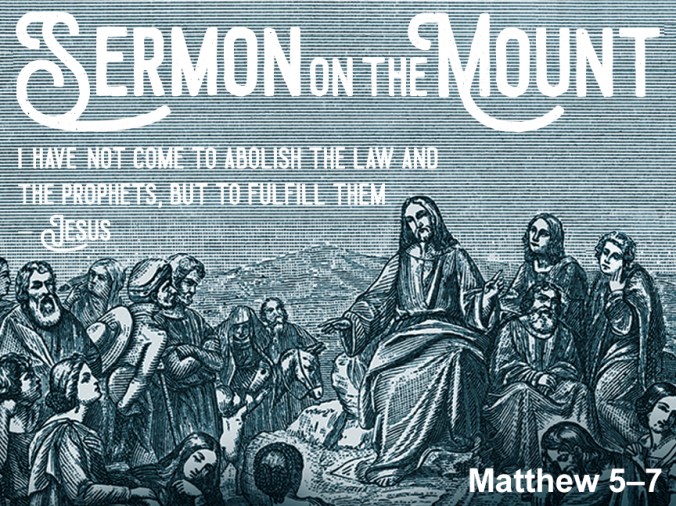
jazmin-quaynor-36221-unsplash.jpgThe Sermon on the Mount is probably the most famous sermon ever preached, and for good reason. Its speaker is the Lord Jesus Christ; its location on a hill overlooking the Sea of Galilee is unique; and its language is both beautiful and profound. Even non-believers are familiar with many of the words Jesus spoke in this sermon.

Yet, for as well-known as the Sermon is, it is often misunderstand and misused. Therefore, as we begin to study this passage of Scripture, we should look at three common, but misguided ways to approach the sermon. Continue reading

Seeing the Mountain-Like Structure of the Sermon on the Mount

jeremy-bishop-248837-unsplash.jpgEarlier this week, we considered the way Matthew organized his Gospel with careful literary structures. Today, we look more closely at one part of his work, the Sermon on the Mount. And in that section of Scripture (4:23–8:1), we learn a number of things about how Matthew organized Jesus’ sermon in order to direct our attention to the main point of the sermon—namely, communion with the Father in the Lord’s Prayer.

Returning to the helpful work of Jonathan Pennington, we see in his The Sermon on the Mount and Human Flourishing, that he organizes Jesus’s Sermon on the Mount into a chiastic structure that looks something like this—this arrangement here abbreviates his original outline (see pp. 132–33). Continue reading

The Significance of the Sermon on the Mount: 10 Reflections from Herman Ridderbos

sermon05What is the Sermon on the Mount about?

That question has puzzled pastors, theologians, and Bible scholars for centuries. While large volumes have been written on the subject, sometimes a slimmer response is helpful. On that note, one finds great help from the late Dutch New Testament scholar Herman Ridderbos.

Writing a chapter on the Sermon on the Mount (“The Significance of the Sermon on the Mount,” in When the Time Had Fully Come: Studies in New Testament Theology26–43), Ridderbos explains the eschatological nature of Christ’s kingdom and how the arrival of Christ’s kingdom as a fulfillment of the Law and Prophets helps us understand and apply Jesus’ famous words.  Continue reading

A Hole in Our Holy Temple? Toward a Whole Bible Vision of God’s Dwelling Place

david-rodrigo-336783-unsplash.jpgThe MacArthur Study Bible is a treasure trove for commentary on the Bible. Many weeks in preparation for preaching I look at its notes, and profit from its historical, grammatical, and theological observations. This week, however, as I read its commentary on Haggai, I couldn’t help but notice some biblical data missing from a table on the temples in the Bible.

While not expecting comprehensive commentary in a study Bible, I was puzzled by the way the dispensational theology of the editors may have led them to excise some key biblical data. For those familiar with Simeon Trust, this is a classic example of the framework running over the text—in this case, the text is the whole Bible.

From the looks of it, this otherwise helpful table on the temples in the Bible—well, except for the dispensational stuff, again—has left some significant holes in the Holy Temple. In other words, as the following chart defines the terms, a temple must be “a place of worship, a sacred or holy space built primarily for the national worship of God” (italics mine).

Italicized are two words/ideas that encapsulate the problem. Are temples only built for national worship? What about the heavenly temple where God abides and angels and all nations worship God? Also, must a temple be built with physical materials? What about Jesus’s words in John 2, where he said that this temple would be torn down and he would raise it up in three days? Does built apply to flesh and blood?

What’s missing in this chart are key elements of a biblical theology of the temple, which touches on so many other elements of Christology, ecclesiology, and eschatology. Moreover, even within the chart the definition at bottom does not hold up for all the data given.

So, to fill in the holes, I’ve modified the chart below, explained the distortions in this table, and outlined why five additions should be included in any temple. From this modified chart, we do get a more complete sense of all the temples in the Bible, although I’m still not convinced about the two temples associated with the Millennium. But I’ll save that for another day.

For now, let’s consider all the temples in the Bible. If you can think of another one, please let me know. Continue reading

Rightly Dividing the Word of Truth: Daniel Block’s Answer to a Feminist Reading of Nahum 3

explicit

In the Bible there are many explicit images, stories, and words. Read Genesis 34, Genesis 38, Ezekiel 16, the Song of Songs, or Paul’s use of the word skubala (Philippians 3:8) and you will come in contact with holy writ that would require an ‘R’ rating if put to film. Yet, because the medium of God’s Word is not visual, but literary, it both reveals and conceals graphic content.

In the wisdom of God, he has given us Scripture that is both explicit as to sex, violence, and all manners of vice, all the while retaining its holy perfections and purity. Still, not all interpreters of God’s Word are able to “see” this. And sadly, many bring their biases to the text of Scripture, and instead of letting the pure word of God renew their minds, they distort God’s Word, even portraying God in blasphemous ways.

One such example of this comes from Judith Sanderson’s commentary on Nahum 3. Since our church is preaching through Nahum right now, I felt it might be helpful to highlight this passage, especially the way Sanderson comments on Nahum 3:5–6:

5 Behold, I am against you, declares the Lord of hosts, and will lift up your skirts over your face; and I will make nations look at your nakedness and kingdoms at your shame. 6 I will throw filth at you and treat you with contempt and make you a spectacle.

In the Women’s Bible Commentary, a commentary with an unashamed feminist perspective, Sanderson interprets the judgment oracle against Nineveh as portraying God as someone who “rap[es]women when angry.” In full context, this is what Sanderson says,  Continue reading

In What Did Old Testament Saints Believe?

daniel-mccullough-539577-unsplash.jpgIn discussions about salvation and interpretation of the Old Testament, two related questions are often asked.

  1. How were the Old Testament saints saved? Or, in whom or what did they believe?
  2. How much did the Old Testament know about the coming Christ?

marriw

Recently, in reading through The Marrow of Modern Divinity by Edward Fisher, I came across a succinct, if slightly archaic, answer to these questions. In conversation form, Fisher explains how the Old Testament saints beheld Christ through the types and shadows of the Law. In short, he answers that the salvation we possess is of a piece with those under the old covenant. There are not two ways of salvation, but one, as Hebrews 11 suggests.

The difference between Israel and the church (which is today composed of Jews and Gentiles) is less about how they are saved, but how they came to know the one savior, Jesus Christ the Son of God. The former saw Christ through a veil of old covenant shadows and types; the latter have seen him in the substance of his person and work, now proclaimed through the witnesses of his apostles.

As always, such questions require elongated consideration about the whole Bible. But for short answers, what follows helpfully explains how the Old Testament saints beheld Christ. Continue reading

The Sword of the Lord: In Nineveh and Now (Nahum 1:9–2:13)

nahum05The Sword of the Lord: In Nineveh and Now (Nahum 1:9–2:13)

What did Jesus mean when he said, “I have not come to bring peace, but a sword” (Matthew 10:34)? On Sunday, we considered that question from the book of Nahum.

The connection between Matthew and Nahum is found in the fact that Nahum presents the sword of the Lord in all of its flame and fury, while Jesus comes to first extinguish the Lord’s wrath in his own flesh. Then, after his resurrection, he now has all authority to carve out a new community and one day bring judgment on all flesh.

All of these features are considered in this week’s sermon. You can listen to this sermon online. Discussion questions are below,  as well as additional resources. Continue reading

Where Grace and Justice Meet: A Canonical Reading of Exodus 34:6–7

guido-jansen-400639-unsplash.jpgThe Lord passed before him and proclaimed, “The Lord, the Lord, a God merciful and gracious, slow to anger, and abounding in steadfast love and faithfulness, keeping steadfast love for thousands, forgiving iniquity and transgression and sin, but who will by no means clear the guilty, visiting the iniquity of the fathers on the children and the children’s children, to the third and the fourth generation.”
— Exodus 34:6–7 —

Exodus 34:6–7 is one of the most important passages in the Bible. It’s also one of the more problematic. For how can God be gracious and compassionate, slow to anger and quick to forgive but also unwilling to forgive the guilty (“who will by no means clear the guilty, visiting the iniquity of the fathers on the children and the children’s children . . .”)? Doesn’t God’s self-revelation contain, at its heart, a significant contradiction?

Some have thought so, even solving the dilemma by debating the compositional history of Exodus 34, or denying its literary unity (see Ross Blackburn, The God Who Makes Himself Known155). But for those who read Exodus as God’s inspired Word, such critical workarounds don’t work. Thus, we must consider how God’s mercy and justice are not two opposing attributes that bring conflict into God’s character. Instead, they are two aspects of God’s undivided holy nature, which reveal themselves perfectly in God’s relationship with his creation.

On this subject Ross Blackburn has been helpful as he reads Exodus 34 in light of the whole canon, with special attention to Exodus 20:5–6. Following Blackburn’s canonical exegesis, we can press deeper into the nature of God’s holy character and then work forward in redemptive history to see how Exodus 34:6–7 informs God’s mercy and justice in places like Jonah 3–4 and Nahum 1, where Exodus 34 is in both books but in different ways towards the people of Nineveh.  Continue reading

The Sign of Jonah: Swallowed in Death, Raised in Life (Jonah 1:17; Matthew 12:38–41)

jonah04The Sign of Jonah: Swallowed in Death, Raised in Life (Jonah 1:17; Matthew 12:38–41)

While the world went looking for Easter Eggs and basketball games this weekend, the church of Jesus Christ remembered the resurrection of our Lord. More valuable than anything an egg can offer, and more reliable than any team we cheer; the resurrected Christ offers us forgiveness of sins and eternal life for all who turn from sin to trust him.

This is what we celebrated on Sunday (and every Sunday). And at our church the focus was on the sign of Jesus, as found in Jonah 1:17.  Amazingly, some eight centuries before Christ’s death and resurrection, we learn that the God of Israel took the rebellious actions of Jonah and turned them in “sign” pointing forward to Jesus. As Jesus himself says in Matthew 12:38–41, Jonah’s three days and three nights in the belly of the fish foreshadowed his own death and resurrection.

You can listen to the sermon online. You can find discussion questions and further resources below.   Continue reading

Seven Good Words: The Work Jesus Did on the Cross

goodfriday04.jpg. . . they crucified him . . .
— Luke 23:33 —

For six hours Jesus body hung on the cross. Nailed to the tree, another crucified enemy of the state, Jesus labored to breathe as pain racked his body and mockers filled the air with vitriol. Tempted by Satan one last time to save himself (see the words in Luke 23:35, 37, 39), Jesus remained, inching closer death. Still, the end of Jesus’ life was not a passive surrender to the inevitable. Just the opposite, it was the climax of his earthly labor.

Indeed, Luke only uses three words to speak of his crucifixion. He revels not in the physical agony Jesus experienced. Rather, the good doctor focuses on what the cross meant. His testimony is a work of theology, not autopsy. For him, the importance of Jesus’s death was not found in the physical pain, but in the message it sent to the world. Like the other Evangelists, he tells us that Jesus came to seek and save the lost (19:10), and on the cross we find the climax of Jesus’ work of salvation.

And thus, to understand the cross we must ponder what his cross means and what the final work of Christ meant to accomplish. And to do that we can and must follow the lead of Luke and the other Gospels, who capture the final moments of Jesus’ life with seven different sayings on the cross. Continue reading