6Go to the ant, O sluggard; consider her ways, and be wise. 7Without having any chief, officer, or ruler, 8she prepares her bread in summer and gathers her food in harvest.
In Proverbs 6, the Word of God tells us to go to the ant and find wisdom. In the ant, we learn principles of initiative, preparation, and hard work. Indeed, by looking at this little creature, an insect found everywhere and anywhere, we are told to look and learn her ways.
In fact, Proverbs 6 is one of many places where we find wisdom from the animals. In Proverbs 30, we find four animals in direct order: there is the ant, the rock badger, the locust, and the lizard. And from each we can gain insight into the way we ought to live.[1]
If we go further, the whole Bible teaches us to gain wisdom from nature. From the sparrows who fall from the sky, to the sheep who follow their shepherd, and from the lions who prowl the hills, to the Leviathan who roams the sea, all of these animals were created by God to give us wisdom.
And in Genesis, we have already seen the way that animals are used to teach Adam. For in Genesis 2:19 we find this report, “Now out of the ground the Lord God had formed every beast of the field and every bird of the heavens and brought them to the man to see what he would call them. And whatever the man called every living creature, that was its name.”
God tasked the man with naming the animals, but he also tasked these animals to teach the man that no suitable helper would be found for him among their ranks, as verse 20 indicates. Indeed, the man would need God to make a helper suitable for him, and that is what the rest of Genesis 2 reveals—the glorious formation of the woman and the establishment of the first marriage.
As Genesis 2:24–25 concludes the chapter, “Therefore a man shall leave his father and his mother and hold fast to his wife, and they shall become one flesh. And the man and his wife were both naked and were not ashamed.” Continue reading →
For even if I made you grieve with my letter, I do not regret it—though I did regret it, for I see that that letter grieved you, though only for a while.As it is, I rejoice, not because you were grieved, but because you were grieved into repenting. For you felt a godly grief, so that you suffered no loss through us.
– 2 Corinthians 7:8–9 –
In a world without sin, sermons on marriage would not be needed.
In fact, without sin, pastors might not be needed either. Or at least, they would not be needed to condemn sin, preach repentance, or offer grace. They might be needed to organize the worship of God in Christ—for God, the almighty, good, and glorious Creator would still be praised. Or, they might be needed to study the history of God’s world and to report their findings.
But, in a world without sin, heralds of the gospel would not be called to preach Christ crucified for wicked sinners, for there would be no sin. Nor would such pastors have the task of identifying idols and destroying every false idea that stands against Christ. Instead, they could just be unswervingly cheerful.
Tragically, in a world overrun with sin, many preachers have taken this path. Famously, when Larry King asked Joel Osteen about the eternal condition of Jews, Muslims, and other unbelievers, Osteen said he didn’t like to talk about sin, only about love and what the Bible says about Jesus.
Yet, what does the Bible say about Jesus? And what does Jesus say about sin? Quite a bit, actually.
The whole reason the Son of God became man was to climb the hill of Calvary and put an end to sin and death. Jesus’s whole ministry consisted of preaching about the kingdom of God and calling sinners to repent (Mark 1:14–15). Thus, it is a misnomer to speak of Christ’s love without addressing man’s sin (cf. 1 John 4:10). Unless we address the wrath of God, we cannot understand his grace or preach his gospel. Continue reading →
Those three words are easy to say; less easy to understand; and sometimes nearly impossible to practice. Truly, for as simple as forgiveness should be, seeking and receiving forgiveness is often the things that brings us to our knees.
Who knew that sins forgiven in heaven could be so difficult to forgive on earth?
Yet, that is often the case. Forgiveness is often a misunderstood doctrine, as well as a misapplied practice. Therefore, Christians who seek forgiveness, demand forgiveness, or seek to help others forgive, often find that the Christian practice of peace-making is more difficult than they might first imagine.
In response, genuine believers may grow frustrated—with themselves, with others, with God, or with the church. How can the cross of Christ not have its full effect? It seems so simple.
Throughout the Bible we find a divide between wisdom and folly, righteousness and sin, givers and takers, children of God and children of the devil. As Jesus said, he did not come to bring peace, but a sword (Matt. 10:34–35). And that sword not only divides humanity, which provides the context of his words in Matthew’s Gospel, it is also a sword that judges the thoughts and intentions of men. Indeed, God’s Word does more than declare behavior right and wrong; it does surgery on the heart, exposing why we do what we do.
In the Bible, and in the church, few things are more difficult to discern than motivations for ministry. For truly, as many good motivations as there are, there are also bad motivations. There is ambition that is godly and ambition that is anything but godly. And in every child of God who serves faithfully, there will be both impulses.
Just consider the Apostle Peter, who could confess Jesus as the Christ at the same time that he would deny him his cross (see Matt. 16:13–23). Indeed, at one time or another, all the disciples had a mixture of true and false ambitions, which is why Jesus had to correct their views on greatness (Mark 10:42–45). Truly, we are fickle creatures. And the best of men is both taught by God and tempted by the devil. Again, read Matthew 16.
So, knowing that, we should always be open to examining our motivations for ministries, and that is what this series is about. It aims to address false ambitions and to set a course towards true ambitions for ministry.
In Part 1, I offered two lessons from the life of Adonijah.
We should not seek positions in ministry; we should seek the righteousness to receive such a place of service.
We should abide by the word, and wait for an invitation to serve.
And now, in Part 2, I will suggest a third lesson from Adonijah’s life:
When kingdom-seekers exalt themselves, their ambition follows a discernible pattern.
This pattern consists of five actions that Adonijah pursued in his attempt to be king in Israel. And, as the story goes, he nearly succeeded. What ultimately prevented him from claiming the throne illicitly is that genuine servants of God stood to oppose him. His false ambitions were thwarted because the ambitions of others were rooted in God’s Word.
Sadly, this sort of conflict continues today.
In truth, only when righteous men and women stand against falsehood will truth prevail. Yet, this is exactly why it is vital to learn the pattern of those who exalt themselves. For in ministry, when good works are pursued with bad motives, it can be very difficult to discern. Often, the falsehood of good works takes years, even decades, to discern. Yet, Scripture does give us light, if we are willing to look. And that is what we find in Adonijah’s play for David’s throne. Continue reading →
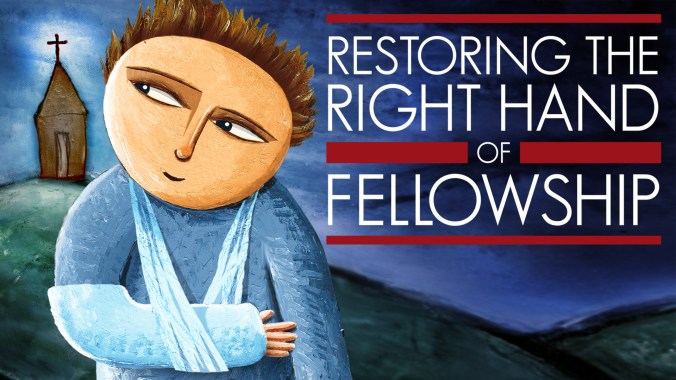
Love. One. Another. If you type those three words into your search engine, you’ll find a dozen references.
The first two are found in John 13:34–35, when Jesus tells his disciples to love one another, just as he has loved them. Next, “love one another” repeats in John 15:12 and 17, as Jesus connects the love of God with the love of God’s children.
Paul uses these same three words, when he says in Romans 12:10, “Love one another with brotherly affection.” And Peter echoes Paul’s brotherly instruction in 1 Peter 1:22, when he says, “Having purified your souls by your obedience to the truth for a sincere brotherly love, love one another earnestly from a pure heart.”
Those are the first six uses of “love one another.” Then the last six are found in John’s Epistles. One is found in 2 John 5 and five in 1 John 3–4 (1 John 3:11, 23; 4:7, 8, 12).
From this basic survey, then, we can conclude two things. First, the command to love one another is always a command to members of one body (Rom. 12:5) to love one another with brotherly affection. This command is not an abstract instruction for individuals to do loving things. It is a mutual command for the body of Christ to love those in Christ.
That’s the first thing. The second thing is that the passage that most fully details how to love one another is 1 John 3–4. And yesterday, as I preached again on the theme of fellowship, I looked at three things.
The Command to Love One Another is a command fulfilled in the body of Christ.
The Command to Love One Another is a command that rejects the violent competition of Cain.
The Command to Love One Another is a command that finds life in the cross of Christ.
In short, to love another as God commands we must reject the spirit of Cain’s violent competition and embrace Christ and his willingness to put others ahead of himself. This is the key to abiding fellowship with God and one another. And yesterday, this is what I tried to show from 1 John 3:11–18. You can find that sermon here.
As we know all too well, sin always separates. And thus, when fellowship breaks, there is, lurking somewhere, sin unconfessed. In those times, it is tempting to fix the problem(s) with our own wisdom and to work overtime to recreate the fellowship that was had before. Yet, in times when fellowship is lost, we must remember that God alone can “fix” it. And accordingly we should seek him first and all his righteousness.
To put it seasonally, before the Lord gives his church spring rains, he often makes us feel the bitterness of winter’s cold. This coldness may have known sources, or its chilling drafts may strike us without ever revealing the source of their cold. Yet, whatever the source of winter, we should remember that God is working, and that spring is coming. As Hosea 6:1–3 tells us, we must remember that the Lord is the one who breaks us, so that he can bind us; he hurts us (or permits us to feel pain), so that he can heal us (see Psalm 105). Then, from this place of weakened condition, we are invited to return to know the Lord.
This is the promise: God will sanctify his people, and he will bring them to confess their sins. And until sin is confessed, joy will be withheld. Yet, when we seek his light and see our darkness, it will prompt true confession, repentance, forgiveness, and grace. And this grace will bring a new season of fellowship, all provided by the Lord. Continue reading →
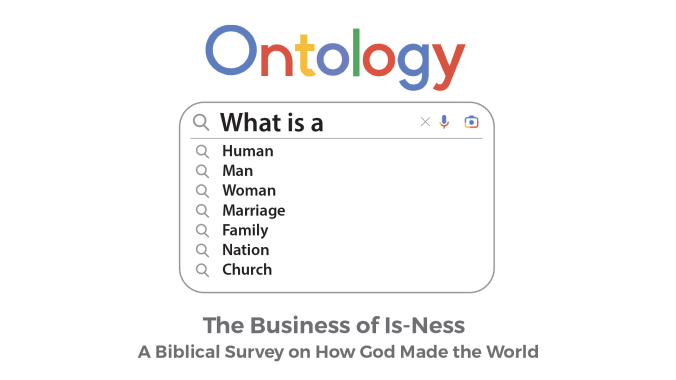
Since 2013, I have taught the doctrine of humanity a half a dozen times. And in each class, I have put this question on the final exam: What is the most important doctrine for the twenty-first century?
I ask the question because in every era of the church there are unique theological challenges. For instance,
In the second and third centuries, the church had to grapple with the relationship between the Old and New Testaments, as well as the errors of Gnosticism.
In the fourth and fifth centuries, the church had to defend the deity and humanity of Christ, the proper understanding of the Trinity, and the divinity of Holy Spirit.
During the Reformation, the church recovered the doctrine of justification by grace alone through faith alone in the person and work of Christ alone.
And nineteenth and twentieth centuries, the doctrine of Scripture had to be clarified, because scientific claims and critical methods of interpretation sought to make the Bible a book like any other.
These are but a few doctrinal disputes that have arisen in church history. By identifying doctrines with decades (or centuries), I am not denying the perpetual need to declare and defend all doctrines, but there are certain pressures in culture that cause the church to reassert or reinforce biblical doctrines. And when it comes to the twenty-first century, there is no more important doctrine than the doctrine of humanity.
That’s why I ask that question on my theology exam, and here is the reason. Continue reading →
Truly, truly, I say to you, you will weep and lament, but the world will rejoice. You will be sorrowful, but your sorrow will turn into joy. When a woman is giving birth, she has sorrow because her hour has come, but when she has delivered the baby, she no longer remembers the anguish, for joy that a human being has been born into the world. So also you have sorrow now, but I will see you again, and your hearts will rejoice, and no one will take your joy from you. — John 16:21–23 —
Few things in life are more terrifying or exhilarating than the final moments before a baby is born. When a wife turns to her husband and says, “It’s time,” that husband knows—or he better know—that everything he’s doing needs to stop. Now!
A few weeks ago, this scenario played itself out on national television, as Robert Griffin took a phone call and immediately ran from the field during the middle of the Fiesta Bowl. While at first his co-hosts questioned him for taking a call during the live broadcast, as soon as the reason was given, everyone understood and everyone cheered. Such is the celebration that comes when the long-awaited child is here and about to enter the world. (I share the clip with great pain for my Michigan Wolverines.)
Indeed, there is something wonderful about birth, even as it comes through immense pain for the mother and an immense sense of helplessness (not to mention adoration) for the father. Even more, childbirth is meant to picture something of God’s plans for salvation.
Like marriage, childbirth is a picture of the gospel, or at least the new birth, which comes when God grants life to his children. Explaining regeneration in John 3, Jesus indicates that this new birth—a birth from above—is much more than a metaphor. It is the very means by which God is going to save the world.
Likewise, as Jesus nears the cross, he returns to the imagery of childbirth, when in John 16:21–23, he says that the birth of pangs of salvation are here. As the bridegroom, Jesus says that “It’s time!” And importantly, he is not only saying that it is time for his cross, but he is also saying it is time for the bride (the church) to experience the pain of receiving her children.
In the Old Testament, especially in Isaiah, we discover that Mount Zion is a mother who will receive the children of God (cf. Psalm 87). And now that Jesus is going to be lifted up (on Calvary but also in glory), it is time for Mother Zion to receive her offspring. This is a key point in John 16 and one that we need to understand, if we are going to rightly relate childbirth to salvation and salvation to rearing children in the Lord.
On Sunday, I preached on this point and you can find the sermon here. Along the way, this sermon touched on appropriate and inappropriate ways to relate home and heaven, child birth and salvation—subjects that are on the forefront of Christian’s minds today.
As the moral fiber of our country continues to crumble, in large part because the family has been eviscerated, Christian Nationalism seems to offer a suitable solution. Yet, advocates of Christian Nationalism, especially those who are Baptist, should know that the foundations offered by the likes of Stephen Wolfe—see p. 217 in his The Case for Christian Nationalism—depend upon a view of the covenant that Baptists cannot affirm. For this reason and others, Baptists should be cautious of trying to reform America with his brand of postmillennialism. Instead, we should go back to Scripture to see how the new covenant informs the mission of the church, the way Christians can impact culture, and the way the law applies to the state today.
Long story short, more needs to be said on how child birth relates to salvation and how churches should foster Christian homes and influence nations with Christian truth. In the months ahead, Christ Over All will be addressing just this in two issues on the Christian Home (May) and Christian Nationalism (October). In our day, all of us need to think more carefully about how God is bringing light into the world and how the church plays a part in influencing the state. Stay tuned. Until then, however, I offer this sermon as entrée to the subject.
A number of years ago, a church I know purchased something like 100,000 copies of the Gospel of John. Why? So that they could share the message of salvation with everyone in their Chicago suburb. That is to say, by putting a copy of John’s Gospel in everyone’s mailbox, they hoped to share the good news of salvation with all their neighbors.
I don’t know the fruit of that endeavor, but I know it was motivated by a commitment to the Word, a passion to sow the seeds of the gospel, and a prayerful desire to see their neighbors know God and find salvation in the Son. And the use of John makes sense. As John tells us, the Evangelist wrote his book so that his audience would believe in Christ. As John 20:30–31 reads,
Now Jesus did many other signs in the presence of the disciples, which are not written in this book; but these are written so that you may believe that Jesus is the Christ, the Son of God, and that by believing you may have life in his name.
“Life in his name” is another way of saying salvation (John 3:16) or entrance into the kingdom of God (John 3:3–5). And so, John’s Gospel is rightly associated with the theme of salvation. And more, it is usually not associated with judgment. Jesus even says as much. “For I did not come to judge the world but to save the world” (John 12:47).
Case closed. Jesus has come to save, not to judge, and so let’s print up the Gospel of John and send it to everyone who needs salvation. So good, so far. Except, we haven’t answered the question: Saved from what? Saved from death? From sorrow? From sin? From what? Well, that’s what brings us back to judgment—a theme ignored or despised by many who offer Christ today.
The answer to the question about salvation in John’s Gospel is inextricably related to Jesus’s testimony regarding his judgment and the role of the Spirit who brings to completion the judgment of Christ reigning in glory (cf. Psalm 110). To show this, and to better appreciate what salvation is, I will show from John’s Gospel how the theme of judgment develops. And in its development, it may be surprising how prominent judgment is and how important it is for John’s message of salvation. Continue reading →
Those two words are a simple command found in the book of Hebrews. More completely they read.
Therefore, holy brothers, you who share in a heavenly calling, consider Jesus, the apostle and high priest of our confession, who was faithful to him who appointed him, just as Moses also was faithful in all God’s house. (Heb. 3:1–2)
In Hebrews, Jesus is the main subject. And his person and work are compared and contrasted to everything in the Old Testament. Jesus is like Moses, only better. Jesus is like Abraham, only better. Jesus is like Adam, Aaron, Joshua, Melchizedek—only better.
Jesus is the true and lasting high priest, the king whose throne will never end, the Son who speaks a better word than all the prophets, and the sacrifice who ended all sacrifices. Indeed, Jesus is better. And therefore, we who possess a holy calling must consider Jesus.
But importantly, when we consider Jesus, we must do so in the way Scripture speaks and not just in the way the world speaks or we thinks.
He Gets Us Remakes Jesus in Our Own Image
Right now there is an evangelistic campaign called He Gets Us, and if you watch the Super Bowl, you may see some of their commercials. Even if you don’t watch that game, you should know about this movement that plans to spend one billion dollars marketing Jesus and has made connections with Southern Baptists, until Kevin Ezell reversed course. Long story short, this is not a small movement, which makes their truncated gospel not a small problem. Continue reading →
 6 Go to the ant, O sluggard; consider her ways, and be wise.


 Four Truths About Fellowship: A Sermon on 1 John 1:1–2:6
 Since 2013, I have taught the doctrine of humanity a half a dozen times. And in each class, I have put this question on the final exam: What is the most important doctrine for the twenty-first century?
 A number of years ago, a church I know purchased something like 100,000 copies of the Gospel of John. Why? So that they could share the message of salvation with everyone in their Chicago suburb. That is to say, by putting a copy of John’s Gospel in everyone’s mailbox, they hoped to share the good news of salvation with all their neighbors.
 Consider Jesus.
 Via Emmaus