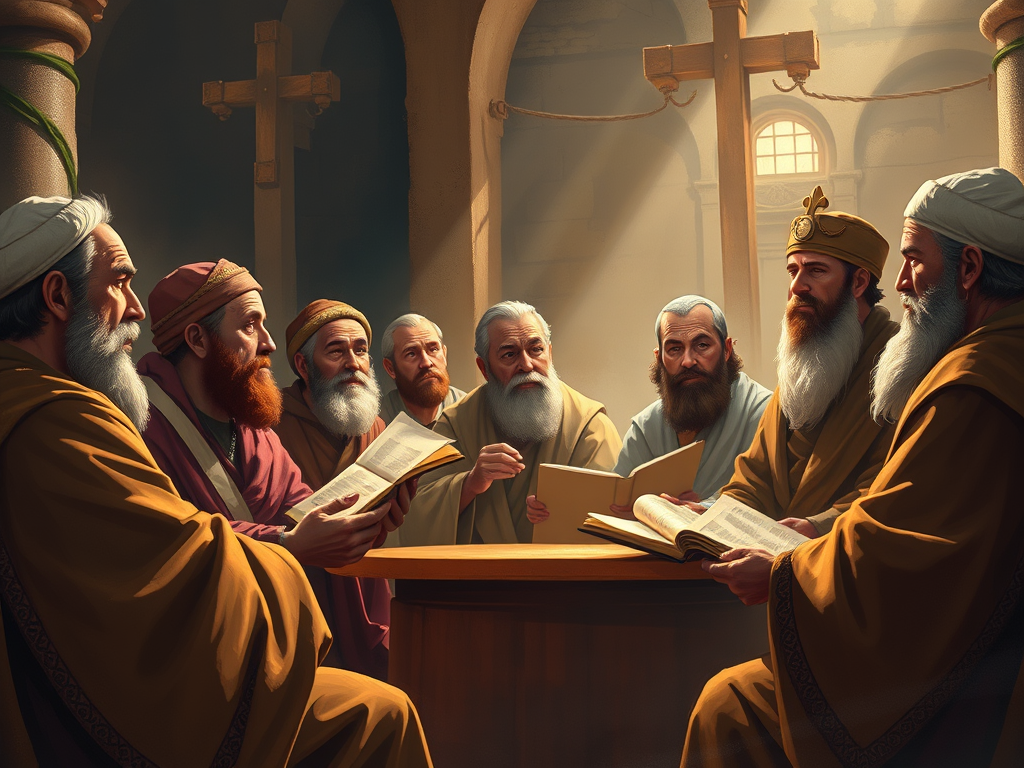
Twelve Ways to Order Your Week by the Son (Part 2)

Last week, in application of a recent sermon, I outlined six ways to set your watch by the Son. In order, these included.

  1. Start your day with God.
  2. Consume God’s Word on the way and make plans to feed on his faithfulness.
  3. Pray without ceasing.
  4. Make a midweek gathering a priority.
  5. Preserve and protect the altar.
  6. Make space in your calendar to meet with other Christians.

By and large, these six orientations were given as guides for making the most of the time between the time you gather for worship on the Lord’s Day. Today, I am adding six more ‘Helio’-centric orientations. Here they are.

  1. Enter the darkness of the city with the light of Christ.
  2. Lead others (family, friends, peers, strangers) to the altar of God on the Lord’s Day.
  3. When home (on Sundays), look for ways to bless the people who gather at your altar.
  4. When traveling (on Sundays), look for other faithful altars to visit and encourage.
  5. When sick (on Sundays), lament your absence.
  6. In each season, solidify your schedule and guard your time with God.

As you can tell, four of these orientations are directly related to the Lord’s Day (8–11). And three of them are directed to ways to make the best use of the Lord’s Day (9–11). In all, I hope these 12 orientations help you reflect on the best ways to order your week in a way that is centered on Christ. For a further reflection on these twelve points, you can listen to my Sunday School lesson.

Continue reading

Leaving ‘Left Behind’ Behind: Sixteen Ways to Read Matthew 24 with the Grain of Scripture

6 And you will hear of wars and rumors of wars. See that you are not alarmed, for this must take place, but the end is not yet. 7 For nation will rise against nation, and kingdom against kingdom, and there will be famines and earthquakes in various places. 8 All these are but the beginning of the birth pains.
— Matthew 24:6–8 —

A few years ago I read a book about Mark’s Gospel, The Cross at a Distance. In it, Peter Bolt argued that Mark 13 was not an eschatological vision of the future, despite its world-shaking imagery. Rather, he showed that in the context of Mark’s Gospel, the Olivet Discourse was an apocalyptic explanation of the cross. That is to say, that when the Olivet Discourse is read in the context of Mark’s Gospel it functions as explanatory of what was going to happen on the cross.

In another blogpost on Mark 13 I have captured his arguments in 16 points. (Until this blogpost is completed, you can see why I think the Olivet Discourse should be read historically and not futuristically). In this blogpost I want to offer a similar reflection on Matthew 24.

From the start it should be clear that if Mark uses Jesus’s Olivet Discourse in Mark 13 to prepare the way for the cross, then Matthew 24 is most likely to do the same. The same could be said for Luke 21, but we will leave Luke be for now. Certainly, these three “synoptic” Gospels rely on one another, and while each has its own focus and particular details, it would be highly unlikely for Jesus’s message to his disciples about the destruction of the temple to have a different interpretations in each Gospel.

Rather, if Bolt is correct about the way Mark 13 functions in his Gospel, then it follows that Matthew 24 is more than likely related to events forthcoming in the life of Jesus and not just events that remain to be set in the future—as these passages are often read. Thus, in what follows I will make the case from Matthew 24 for a partial preterist reading of this passage that highlights the reality of Christ’s ascension.[1]

This reading stands against the popular Dispensational interpretation that puts all of these events in the future. It is different than the view of someone like D. A. Carson who takes an eclectic approach to the passage—some of these things are fulfilled in the first century and some are future. It is similar to that of R. C. Sproul, who argues that Matthew 24 is all about the destruction of the temple. Yet, for all the ways that Matthew 24 does find fulfillment in the events of A.D. 70, I believe the treatment of the Son of Man coming on the clouds is an explicit reference to his ascension (see Matt. 24:29–31).

So, in the remainder of this blogpost, I offer a partial preterist reading of Matthew 24 in 16 points. My interpretation will highlight the events of the cross, the ascension, and the coming destruction of Jerusalem. This reading does not deny the forthcoming return of Christ and his judgment on the last day. In fact, unlike Mark 13, I believe Matthew does include a description of this final judgment in Matthew 25. But like Mark 13 and Luke 21, the primary focus of the Olivet Discourse is related to events that will occur during the generation that lives between Christ’s crucifixion and the destruction of the temple in A.D. 70.

Perhaps, this will be a fresh way of reading Matthew 24 for you. But I assure you that it is not novel. Rather, it has many advocates in church history, including most recently men like Sproul, Kenneth Gentry, Brian Orr, and others. Take time to consider, therefore, the exegetical points made below and then draw your conclusions from the best reading of Matthew 24, even if it stands against the popular versions of Left Behind theology that sees this chapter as one that speaks about some yet-future cataclysmic event.[2] Continue reading

Twelve Ways to Order Your Week by the Son (Part 1)

Last Sunday I preached a sermon entitled, “Keeping Time at the Altar By Setting Your Watch by the Son.” That sermon was part two of series of sermons explicating Genesis 8:20–9:7. You can find the introduction here. In all, my aim is to help members of my church, who are new creations in Christ (2 Cor. 5:17), order their lives by the pattern that comes in the New Creation. And, because Genesis 8:20–9:7, offers a glimpse of the new creation and that pattern, we are looking at each part. (For an overview of the whole pattern see this sermon on Genesis 8–9).

In the first sermon in this series, I argued that Christians should arrange their lives around the altar, which today occurs when the saints gather on the Lord’s Day to worship Christ. Yet, what do those saints do for the other six days of the week? That is what I attempted to answer in the second sermon. And in that sermon, I took three steps to move from (1) Israel’s calendar in Leviticus 23, to (2) Christ’s fulfillment of that calendar, to (3) our lives that should center themselves on Christ. If you want to see how this biblical theology moves to Christ, listen to the sermon. Yet, in that sermon I left out what I am writing here (in two parts)—12 ways to order your week by the Son.

Truly, if Christ has purchased us (1 Cor. 6:20), we are not free to do with our time whatever we want. Instead, as Paul puts it in Galatians 5:13, “you were called to freedom, brothers. Only do not use your freedom as an opportunity for the flesh, but through love serve one another.” Paul’s focus in this verse relates to the law, but part of that law relates to time—i.e., the Sabbatical Calendar (see Exod. 23:10–19; Lev. 23:1–44; Deut. 15:1–16:17).

Israel, as God’s son, was too immature to rightly define their own time. Rather, as Galatians 4:1–2 tells us, God’s children were treated as slaves and put under a guardian (the law) until the proper time. Jesus himself was born under the Law (Gal. 4:4) and had to keep the entire law, including all the commands related to the Sabbath. Yet, in keeping the Sabbath, he not only became the Sabbath-giver (cf. Matt. 11:28–30) but also reordered the calendar, such that annual feasts (like Passover) and mid-year rituals (like Yom Kippur) were all fulfilled in him.

In the New Testament, the consequence of this eschatological change was that the people of God now worshiped on the Lord’s Day, as found in 1 Corinthians 16:1–2; Acts 20:7; and Revelation 1:10. Indeed, as Jesus fulfilled and transmogrified the Passover into the Lord’s Supper, this became a weekly feast to be enjoyed everywhere God’s people gathered (1 Cor. 1:3; cf. Mal. 1:11), not just an annual feast celebrated in Jerusalem. To that end, the New Testament, as I understand it, defines Sunday (the Lord’s Day) as one day in seven to gather and worship. And this should be both the high point of the week and the central point of the Christian calendar.

Historically, liturgically, and confessionally this “Christian Sabbath” has been defined, specified, and applied in all sorts of ways. And at some point in the near future, I hope to say more about that. For now, I want to talk about the other days of the week and what Christians should do to orient themselves from and toward worship on the Lord’s Day.

Admittedly, these twelve orientations have to be general principles, not specific commands. And, if I am honest, these principles will need qualification that this article won’t have time to specify. Also, there are other principles that could be added to. So, don’t take this list as exhaustive or overly prescriptive. I am not trying to over-regulate what a Christian life looks like. Clearly, seasons in life, differing vocations, divergent interests, and various family dynamics will force these principles to form in asymmetrical ways. Over time, they will change in our lives, as well. That said, I am trying to offer wise counsel for those who are moving from the altar of God’s of worship to the city of their work.

In that way, take what is helpful. Retrofit what is partially helpful. And reject anything that stands in the way of walking faithfully with the Lord. Hopefully, however, there will be little rejection and much reflection. And so, to that end, here are twelve ways to order your week by the Son. Continue reading

On Earth, As It Is in Heaven: Making Plans That Please the Lord

Welcome to Quitter’s Day.

Until this week, I didn’t even know that such a day existed. Sure, I was familiar with the fact that the gym seems a lot less crowded by the end of January. But I didn’t know that we coronated the breaking of New Year’s resolution with an unofficial holiday. But some do, and today USA Today even ran a brief article on it.

Apparently, the Second Friday of the new year is dubbed Quitter’s Day because of the way that so many plans have been broken in the new year. To speak personally, my own Bible reading plans were thrown off yesterday because an early morning meeting took the place of my typical morning devotion. Yet, today I picked up the plan again, read yesterday’s Psalm (and todays), and continued in my reading in Matthew. Such is life.

If we are going to make progress in the world, we must make plans and keep them. And I suspect that everyone who makes and breaks a new year’s resolution to eat better, work out more, or spend less money—these are the Big 3, apparently—still maintains other plans. It’s not possible to finish a degree, order a home, build a career, or lead a team without making and keeping plans. Yes, some of us are better than others at making plans and keeping them, but part of being human is to order our steps for the purpose of accomplishing a goal.

In Proverbs, there are many such passages that describe this way of planning. Consider a few. In Proverbs 15:22, we learn that “without counsel plans fail, but with many advisers they succeed.” More positively, Proverbs 20:18 says, “Plans are established by counsel; by wise guidance wage war.” Later in Luke 14:31–33, Jesus will say something similar. When discussing what it takes to follow him, our Lord compared discipleship to kingship and the need to count the cost before engaging in war. Truly, planning is what kings do. And because humanity is given the task of ruling over the world, planning is part of what it means to be human.

Think about it. Before God made the world, he made a plan. And that plan included the “foundation of the world” (John 17), the storyline of history (Eph. 1:11; Rev. 13:8; 17:8), the cross of Christ (1 Pet. 1:20; cf. Acts 2:23; 4:27–28), and the election of every of sinner who would come to faith in Christ (Acts 13:48; Rom. 9:22–23). Indeed, the kingdom of God was not an after-thought in God’s mind; it was the reason why God created the world in the first place (Matt. 25:34). Though in time redemption came after creation, in the mind of God redemption in Christ came first. And thus, the world God made is filled with order, and if we are going to be like our Creator, we must order our days too. But how? Continue reading

Via Emmaus On the Road: A Brief Introduction

Via Emmaus 01

** Yes, this first episode only comes out one speaker. The next one will be better. And the one after that even more so. Or at least, that’s the plan. 

Introduction

In 2025, I am putting together a Bible reading plan for my family and a few others in my church. I am hosting that reading plan here and will start posting next Monday (January 6). Along the way, I hope to offer a short reflection (less than ten minutes) on each chapter of the New Testament (Monday-Friday). So, follow along, as we journey through the New Testament this year. And don’t stray too far from this website as I will point to other resources that might help reading the New Testament this year.

For now, here’s a quick list of navigation tools to acquire.

Navigation Tools to Acquire

Think Oregon Trail, the video game. Before starting reading through the New Testament, you will need to pick up a few resources. And below is a list of essential and premium supplies and/or strategies for reading the New Testament.

Essential

  • A Bible — You can’t read the Bible without a Bible, so find a Bible that you can read in 2025. And better than a Bible App, find a Bible you can hold in your hands.
  • A Notebook — In addition to prayer, Bible Study goes best with deliberate reflection. And reflection goes best with a place to write your thoughts down. So grab a notebook or a journaling Bible (see below).
  • A Weekly Questionnaire (see Week 1 ) — Each week, I will put up a set of questions to help you engage with the Bible. Print these out and use them as a guide, not a homework assignment. They are intended to help you see what is in the Bible, not to just get the right answer to the test.
  • Community — While we can read the Bible on our own, it is better to read the Bible and discuss it with others. That’s a point I made in this sermon, and it is something this Bible reading plan is intended to foster. Just as walking down the road goes better with others, so does reading Scripture.
  • A Place and Time — Finally, you will succeed in your Bible reading most if you commit to a place and time to read Scripture. For me, this is first thing in the morning. But for you, it could be at lunch, in your car, on a break, or before bed. Most importantly, find a fixed time and place and make it happen. And don’t be ashamed to ask God to help you or for friends / family to hold you accountable.

Premium

  • The ESV Bible Journal — This was a Christmas present to each of our kids, and it is a great way to read and reflect all in the same place. Right now, Amazon still has the whole New Testament half off.
  • A Study Bible — There are countless study Bibles to choose from, but you might find help by having one or two to answer questions as you go. The ESV Study Bible is still my favorite.
  • A Commentary — Going one step further, a commentary can help answer questions of history, culture, or language as you read. The New Bible Commentary is a good one-volume commentary.

The Basic Description of Via Emmaus On the Road

  • A 10 Minute Reflection on 1 Chapter of the Bible
  • 5 Days out of the Week, 52 Weeks out of the Year
  • Equals the Whole New Testament in a Year

May the Lord help us read his Word with understanding this year, and may his Word produce in us faith, hope, and love.

Soli Deo Gloria, ds

5 x 52: A New Testament Bible Reading Plan for 2025

How sweet are your words to my taste, sweeter than honey to my mouth!
— Psalm 119:103 —

But he answered, “It is written, ‘Man shall not live by bread alone,
but by every word that comes from the mouth of God.”
— Matthew 4:4 —

Did you know that there are 260 chapters in the New Testament? I am sure I had learned this number before, but I forgot about until the other day. Yet, with this numerological epiphany in view, my mind began to race and to consider what a fifty-two week Bible reading plan would look like for those just getting started.

Indeed, if you read five chapters of the New Testament, every week for 52 weeks, you would finish the whole New Testament in a year. Certainly, this feat can be accomplished in a much shorter period of time, and for those who have already adopted a pattern of reading the Bible, there is no reason to skip the Old Testament, or to take a whole year to read twenty-five percent of Scripture. For those with larger appetites for Scripture, this Bible reading plan may be too scant. Or, for reasons I’ll explain below, it might be a portion of your Bible reading to be joined with others.

Indeed, for those who have never read the Bible in a systematic way, I have rarely encourage reading through the whole thing to start. Just as newborn babes have small stomachs and need assistance in their eating, so do newborn babes in Christ. Certainly, there might be counter examples to this counsel, but as Scripture so regularly compares itself to bread (Matt. 4:4) and honey (Ps. 19:10), milk (1 Pet. 2:2) and meat (Heb. 6:12), I do believe it is wise to start out slow and build an appetite over time.

To that end, I’ve encouraged new Christians and newborn Bible readers to make use of the E-100 Scripture Reading Plan. In twenty weeks, this plan leads readers through the whole Bible. From Genesis to Revelation, it picks up some of the most important parts and helps show how the whole Bible fits together. Equally, Christianity Explored is a tremendous resource that introduces Christ through the Gospel of Mark.

To have a full-formed faith, one does need to read the whole Bible. But reading the whole Bible (by oneself) is—if we are honest—a mark of maturity, not a necessary prerequisite to faith or salvation. Even more, giving someone a Bible and the imperative, “Read!” might do more harm than good. Just consider how many people have burned out trying to read the whole Bible. And others, while reading the whole Bible might take up very idiosyncratic views of God and his Word, when they read Scripture without conversation or communion with others. Truly, God has given his church pastors and teachers for a reason (Eph. 4:11–16)—and that reason includes rightly interpreting God’s Word and protecting young Christians from error (Titus 1:9).

So, back to reading the New Testament.

In 2025, I am leading my family (with two teens and two pre-teens) to read five chapters a week for the whole year, with the goal of reading the whole New Testament. And to help them have a greater comprehension of what we are reading, I am putting together a few reading tools—tools that I will catalog here, if anyone else wants to jump in. Additionally, if all goes as planned (=if the Lord allows), I will record a short reflection on each chapter as we read, so that interested readers (my family and others) might have a growing interest and skill in reading God’s Word.

Continue reading

What is an Election Sermon? An Example and An Argument

On Sunday I preached an election sermon in two parts. Expounding Psalm 2, I considered four vital truths about God’s sovereignty from God’s promise to give his son the nations, and in response I outlined five practical steps to exercising our political stewardship.

In this sermon, I did not endorse a candidate or commend a singular church approved voting guide, but I did name names and identify a vote for Democrats as a sin. But more than just stressing the importance of Tuesday’s election, I attempted to show how a steadfast hope in Christ’s Lordship leads to a life of good works, even political good works such as voting.

And so, I offer that sermon here as one fallible example of an election sermon, followed by an email (now updated) I sent to our church explaining the background of election sermons and why they matter today. Indeed, as I noted in my Saturday blogpost, I have learned a lot about preaching and politics since 2016, and I offer this example and argument for an election sermon as help to any others who are taking the same path.

Sovereignty & Stewardship: An Election Sermon in Two Parts

God’s Sovereignty in Psalm 2

  1. Enrages the Nations (vv. 1–3)
  2. Rules over the Nations (vv. 4–6)
  3. Rewards the Son with the Kingdom (vv. 7–9)
  4. Requires Rulers to Kiss the Son (vv. 10–12)

Our Political Stewardship Today

  1. Think Clearly
  2. Speak Truthfully
  3. Vote Righteously
  4. Pray Earnestly
  5. Gather Faithfully

All told, in these nine marks of an election sermon, I sought to exhort our congregation to trust God and to act accordingly. Here is the sermon.

The Case for Preaching An Election Sermon

Continue reading

Rejoicing in Christ’s Royal Priesthood: The 2024 Bauman Lectures (Toronto Baptist Seminary)

In 2022, I wrote a book entitled The Royal Priesthood and the Glory of GodThis book clarified, synthesized, and streamlined my doctoral dissertation. In 2013, I finished a biblical theology of the priesthood which sought to answer the question: For whom did Christ die? Looking at the priesthood from Genesis to Revelation I argued for a definite atonement. In that large volume I came to love the theme of priesthood in the Bible and what that means for knowing Christ and for imitating Christ.

Since 2013, I have written a handful of articles on the priesthood, and in the last few weeks I have spoken twice on the subject. The first series of lectures took place at Eden Baptist Church in Burnsville, Minnesota, and the second lecture series is taking place this weekend at Toronto Baptist Seminary and Jarvis Street Baptist Church in Toronto, Canada.

To assist students, faculty, church members, and guests of the Bauman Lectures, I am posting notes here. I will add to them as the weekend goes on, and in the end, I hope this post will link to all the priestly things I have written to date.

The Bauman Lectures (2024)

  • Lecture 1: Building a Kingdom of Priests — In this lecture, I survey the way in which the institution of the Levitical Priesthood came into being. This lecture simplifies my larger SBJT article and puts into lecture form the second chapter of my book, The Royal Priesthood and the Glory of God.
  • Lecture 2: In Search of a Priest-King Like Melchizedek (Genesis 14, Psalm 110, Hebrews 5–7) –In this lecture, I examine the context, content, and concepts found in three places where Melchizedek is named. Together, this helps us understand who Jesus is, as a royal priest.
  • Lecture 3: Seeing Melchizedek in the Book of 1–2 Samuel: An Exploration in Typology — In this lecture, I have written a working manuscript (with limited annotation) to show how Melchizedek is a figure found in the book of 1–2 Samuel. This reading depends upon a careful comparison between Bera, king of Sodom, and Melchizedek, king of Salem. It also explains how David saw his own son as a priest after the order of Melchizedek.
  • Sunday Morning Sermon: Getting to Know Our Great High Priest (Exodus 28–30; Hebrews)
  • Sunday Evening Sermon: A Kingdom of Priests: Washed, Worshiping, Working, Witnessing (Exodus 19:5–6; 1 Peter 1:22–2:10)

More to come . . .

Soli Deo Gloria, ds

With Genuine Repentance Comes Pardon: John Calvin on How to Seek and Grant Forgiveness

alex-shute-b7QwXDDEwv8-unsplashThen Peter came up and said to him,
“Lord, how often will my brother sin against me,
and I forgive him? As many as seven times?”
Jesus said to him, “I do not say to you seven times,
but seventy-seven times.
– Matthew 18:21–22 –

What happens when someone asks for forgiveness, but all outward signs indicate anything but a willing spirit? Is the offended party obligated to grant forgiveness the moment the offender says, “Will you forgive me,” or does it depend? If forgiveness depends on repentance, as Jesus says in Luke 17:3, just how much fruit is requisite for such repentance to be deemed genuine?

To put it into actual situations: Does the offended child whose sibling is forced to say “I’m sorry” have to mechanically say, “I forgive you”? Or to take it one step further, does the parent need to discipline the hesitating child for not offering forgiveness immediately?

What about the Christian family of a victim of violent crime, do they need to automatically grant forgiveness when the judge forces the criminal to issue an apology? Or are they permitted to consider the sincerity of the apology? Equally, should Christians forgive terrorists, who go to their deaths spewing hatred against their victims?

Or more basically, when pastors mediate conflict in the church, what is the proper response to a church member whose longstanding self-justification is suddenly reversed? Does the offended party need to issue an immediate grant of forgiveness? Or does the newfound repentance need time to settle? Equally, if the member will not forgive when repentance is genuine, what must be done then?

Fortunately, we are not the first generation to wrestle through such questions. And most recently, I came across an incredibly illuminating passage from John Calvin on Jesus’s teachings on forgiveness and repentance. Ever pastoral, Calvin provides some important qualifications for offering forgiveness, granting forgiveness, and even withholding forgiveness until repentance is deemed genuine.

Strikingly, Calvin does not suffer from our modern captivity to making others feel affirmed. Instead, he affirms the need to offer forgiveness to any and all who ask. But wisely, he also cautions Christians from mistakenly granting forgiveness prematurely. In his comments on Jesus’s teaching on forgiveness, he rightly urges Christians to extend grace in the same way they received grace. But also, he holds the line on repentance, stressing the importance of making sure repentance is genuine.

Having recently thought quite a bit about this very point, I offer six reflections on Calvin’s views on forgiveness, repentance, and reconciliation. I have added his full comment at the bottom. Continue reading

The Hill of Eden: Seeing the Topography of Genesis 2–4

mountainous valley with evergreen forest against misty sky

In recent weeks, my sermons on Genesis 3–4 have made much of the fact that the Garden of Eden is found on a mountain. In recounting the drama of Adam, Eve, the Serpent, and the Lord (Genesis 3), as well as Cain and Abel (Genesis 4), I have argued that the topography of Eden plays an important role. For example, when Cain’s face was downcast (Gen. 4:5), I have argued that he is looking down the mountain and away from God. Equally, when God told Cain to look for the sin offering, lying at the door of the Garden, he was calling him to look up the mountain from where his help would come (cf. Psalm 121).

Long story short, the theme of mountains in the Bible cannot be underestimated. Just this morning, I was pondering the way mountains play a role in Matthew (cp. Matt. 4:8; 17:1; 28:16). Maybe I’ll write something on that soon. For now, however I want to help studious Bible readers to see how Genesis 2–4 should be read with topography in mind.

So, in nine strokes, I will attempt to demonstrate why I believe Scripture presents Eden as a mountain sanctuary, and also why this matters for understanding the events of Genesis 2–4 and beyond.

First, the Bible explicitly calls Eden the Mountain of God.

In Ezekiel 28, the Lord addresses the King of Tyre, and in his oracle of judgment, the Lord identifies the wicked king with Adam in priestly garments. In vv. 13–14 he writes,

You were in Eden, the garden of God; every precious stone was your covering, sardius, topaz, and diamond, beryl, onyx, and jasper, sapphire, emerald, and carbuncle; and crafted in gold were your settings and your engravings. On the day that you were created they were prepared. 14 You were an anointed guardian cherub. I placed you; you were on the holy mountain of God; in the midst of the stones of fire you walked. . . .

He continues in verse 16, saying, “so I cast you as a profane thing from the mountain of God, and I destroyed you, O guardian cherub, from the midst of the stones of fire.”

Now, there is debate about who this figure is. Who did God cast down from the mountain? Is it a reference to Adam or to one of the guardian cherubs? That’s a good question, and I generally follow the line of thinking offered by the NET translation.[1] But for now, that question is not the point.

The point at issue is that Ezekiel makes it unmistakable: the Garden of Eden resides on a mountain. And the Prophet of Israel understood it this way because Genesis 2 makes it evident that the Garden stands below the spring of living water (at the top of the mountain) and above the fields, which enjoy the water of four rivers. Continue reading