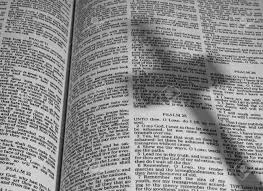
The Wisdom of the Cross: Paul’s Use of Isaiah in 1 Corinthians 1

crossFor it is written, “I will destroy the wisdom of the wise,
and the discernment of the discerning I will thwart.”
— 1 Corinthians 1:19 —

In 1 Corinthians 1:19 Paul quotes from Isaiah 29:14 to make a case that the cross has destroyed and is destroying the wisdom of the wise. This verse sets the trajectory of this pericope (vv. 18–25), and with a second quotation from Jeremiah 9:23 in 1 Corinthians 1:31 (“Let the one who boasts, boast in the Lord”), it frames Paul’s double argument: the cross of Christ humbles the wise (vv. 18–25) and the call of God is for those who see how humble they are (vv. 26–31).

In the context of 1 Corinthians, this is the first of “at least fourteen clear quotations from the Old Testament.”[1]  And as is typical with New Testament quotations of the Old Testament, the verses supply conceptual and linguistic material for the apostles. In Paul’s case,

The backbone of the discussion in 1:18–3:23 is a series of six OT quotations (1:19; 1:31; 2:9; 2:16; 3:19; 3:20), all taken from passages that depict God as one who acts to judge and save his people in ways that defy human imagination. Paul thus links his gospel of the cross to the older message of judgment and grace proclaimed in Israel’s Scripture, and he challenges the boastful pretensions of his readers.[2]

Therefore, to understand the full import of 1 Corinthians 1:19, we must return to Isaiah 29 (and Isaiah 25) to see how that ancient prophet anticipates what Paul says to the Corinthians. In the process, we will learn a few things about how Paul reads the Bible, with an eye to the cross. Continue reading

‘I Will Give You as a Covenant’ (Isaiah 42:6; 49:8): The Suffering Servant as Covenant Mediator

As I worked on my dissertation, one of the things that struck me was the importance of the covenant mediator for any covenant. Structurally, every covenant needs a mediator; and with regard to effectiveness, every covenant depends on the personal integrity of the covenant mediator (alternately called a federal head). Continue reading

Immanuel: A Devotional Reflection on Matthew 1:18–25

Matthew 1–2 is a rich passage for discerning who Jesus is and how the apostles understood Jesus to be the Christ.  As to the former, Matthew introduces his Jewish audience to Jesus as Immanuel, “God with us” (1:18–25), the King of the Jews (2:1–10), the Son of God (2:13–15), the covenant Lord (2:16–18), and the Suffering Servant (2:19–23).  As to the latter, Matthew employs a variety of quotations, allusions, and metaphors to paint the picture of Jesus fulfilling the messianic prophecies of old.

In this post we will focus on the first aspect of Jesus’ identity—he is the fulfillment of Isaiah 7:14, the Immanuel. Continue reading

A Covenant with Creation: Isaiah’s Reading of Genesis 1 and 2

Yesterday, I cited Willem Van Gemeren’s reading of Jeremiah 31 and 33 to argue for a covenantal reading of Genesis 1-2.  Today, I will cite his observations on Isaiah.  Van Gemeren writes,

Isaiah’s language of God’s covenantal commitment is a most important commentary on Genesis 1 and 2.  he uses words for creation (‘form,’ ‘make,’ ‘create’) not only to refer to God’s creative activities in forming the world but also to signify God’s election, grace, love, and loyalty to Israel.  The words for creation are, therefore, also covenantal terms” (Van Gemeren, The Progress of Redemption63).

Van Gemeren seems to be picking up in the prophets (Jeremiah and Isaiah) the sense in which these biblical writers are understanding God’s role in creation as initiating a covenantal relationship.  In fact, in the same paragraph as the previous quotation, Van Gemeren observes, “An individual’s life in the presence of God is an expression of covenant (the technical term defining relationship between two or more parties)” (63).

For me, Jeremiah and Isaiah are two lines of evidence that I had not previously considered about reading a covenant in creation.  I think they are helpful, and show how Genesis 1-2 does include a covenant, something that the OT prophets (Hos 6:7) and NT apostles (cf. Rom 5:12ff) developed to help explain God’s relationship with the world.

Soli Deo Gloria, dss