
** Yes, this first episode only comes out one speaker. The next one will be better. And the one after that even more so. Or at least, that’s the plan.
Introduction
In 2025, I am putting together a Bible reading plan for my family and a few others in my church. I am hosting that reading plan here and will start posting next Monday (January 6). Along the way, I hope to offer a short reflection (less than ten minutes) on each chapter of the New Testament (Monday-Friday). So, follow along, as we journey through the New Testament this year. And don’t stray too far from this website as I will point to other resources that might help reading the New Testament this year.
For now, here’s a quick list of navigation tools to acquire.
Navigation Tools to Acquire
Think Oregon Trail, the video game. Before starting reading through the New Testament, you will need to pick up a few resources. And below is a list of essential and premium supplies and/or strategies for reading the New Testament.
Essential
- A Bible — You can’t read the Bible without a Bible, so find a Bible that you can read in 2025. And better than a Bible App, find a Bible you can hold in your hands.
- A Notebook — In addition to prayer, Bible Study goes best with deliberate reflection. And reflection goes best with a place to write your thoughts down. So grab a notebook or a journaling Bible (see below).
- A Weekly Questionnaire (see Week 1 ) — Each week, I will put up a set of questions to help you engage with the Bible. Print these out and use them as a guide, not a homework assignment. They are intended to help you see what is in the Bible, not to just get the right answer to the test.
- Community — While we can read the Bible on our own, it is better to read the Bible and discuss it with others. That’s a point I made in this sermon, and it is something this Bible reading plan is intended to foster. Just as walking down the road goes better with others, so does reading Scripture.
- A Place and Time — Finally, you will succeed in your Bible reading most if you commit to a place and time to read Scripture. For me, this is first thing in the morning. But for you, it could be at lunch, in your car, on a break, or before bed. Most importantly, find a fixed time and place and make it happen. And don’t be ashamed to ask God to help you or for friends / family to hold you accountable.
Premium
- The ESV Bible Journal — This was a Christmas present to each of our kids, and it is a great way to read and reflect all in the same place. Right now, Amazon still has the whole New Testament half off.
- A Study Bible — There are countless study Bibles to choose from, but you might find help by having one or two to answer questions as you go. The ESV Study Bible is still my favorite.
- A Commentary — Going one step further, a commentary can help answer questions of history, culture, or language as you read. The New Bible Commentary is a good one-volume commentary.
The Basic Description of Via Emmaus On the Road
- A 10 Minute Reflection on 1 Chapter of the Bible
- 5 Days out of the Week, 52 Weeks out of the Year
- Equals the Whole New Testament in a Year
May the Lord help us read his Word with understanding this year, and may his Word produce in us faith, hope, and love.
Soli Deo Gloria, ds
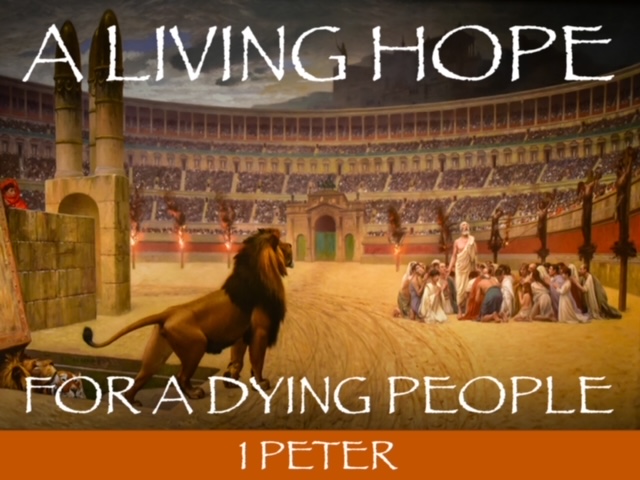 This Sunday we begin a new sermon series in the book of 1 Peter. And I want share three reasons, even four, for why we are looking at this letter and why this book is so timely. These three reasons come from the outline of the book itself, and will both introduce us to what we will find in Peter’s first letter and how its contents equip us as Christians to live in our day.
 Via Emmaus