Ontology 101: What is Humanity?

ontology1920x1080-1Since 2013, I have taught the doctrine of humanity a half a dozen times. And in each class, I have put this question on the final exam: What is the most important doctrine for the twenty-first century?

I ask the question because in every era of the church there are unique theological challenges. For instance,

  • In the second and third centuries, the church had to grapple with the relationship between the Old and New Testaments, as well as the errors of Gnosticism.
  • In the fourth and fifth centuries, the church had to defend the deity and humanity of Christ, the proper understanding of the Trinity, and the divinity of Holy Spirit.
  • During the Reformation, the church recovered the doctrine of justification by grace alone through faith alone in the person and work of Christ alone.
  • And nineteenth and twentieth centuries, the doctrine of Scripture had to be clarified, because scientific claims and critical methods of interpretation sought to make the Bible a book like any other.

These are but a few doctrinal disputes that have arisen in church history. By identifying doctrines with decades (or centuries), I am not denying the perpetual need to declare and defend all doctrines, but there are certain pressures in culture that cause the church to reassert or reinforce biblical doctrines. And when it comes to the twenty-first century, there is no more important doctrine than the doctrine of humanity.

That’s why I ask that question on my theology exam, and here is the reason. Continue reading

Ontology 101: A New Sermon Series

ontology1920x1080-1“It depends on what the meaning of ‘is’ is.” Those infamous words, uttered by Bill Clinton under oath in 1998, should have told us that the world and everything in it was already succumbing to the deconstructive forces of postmodernism. Postmodernism claims that meaning is no longer found in what a human author intends or what the Author of life declares. Rather, meaning is decided by individuals or groups interpreting, or in most cases reinterpreting, the words others.

In college after college, postmodern ideas have sprung to life since the 1960s, and by 1998 such epistemic redefinitions and verbal deconstructions were emerging in the public square. Bill Clinton’s elusive response to a question about his relations with Monica Lewinsky was not abnormal for a culture celebrating transgression (think: the Hippies of the 1960s), raised on MTV (think: the teens of the 1980s), or enslaved to self-expression instead of submission to the truth (every generation since WWII).

Fast forward 25 years, add two decades of social media, a handful of contested elections, one global pandemic, and endless woke crusades in public schools and city streets, and it is not just language that has come under assault, it is everything that God upholds by the word of his power. To be certain, Christ the Lord reigns in heaven. But on earth, all is not well. And in our day, our cultural elites can’t even figure out what a man is, why women’s sports should only include women, or why children should not be exposed to drag queens at the public library.

In a word, the world has gone mad. And its insanity began when words could mean anything, or nothing, or something at one time and not another. Continue reading

From Boston with Love: 70 Truths about the Doctrine of Regeneration

jon-tyson-OX67A7bfMzE-unsplashBlessed be the God and Father of our Lord Jesus Christ! According to his great mercy, he has caused us to be born again to a living hope through the resurrection of Jesus Christ from the dead, . . . 23 since you have been born again, not of perishable seed but of imperishable, through the living and abiding word of God.
— 1 Peter 1:3, 23 —

In his book Human Nature In Its Fourfold State, Thomas Boston (1676–1732) spends 50 pages on the biblical doctrine of regeneration. And across these Scripture-saturated reflections, he makes over seventy propositions about the new birth. In what follows, I have taken the lead sentence from each proposition and listed them. The enumerated points, except where bracketed, are his words. I have organized his sections under six headings, and I have kept Boston’s multi-layered organization of his argument, adding some commentary for clarification and citing a few specific quotations.

In general, if you are looking for a fulsome outline of the doctrine of regeneration, you will find it in the following propositions. Even more, you will be well repaid if you read Boston’s entire chapter (or book). He spares no expense in declaring what Scripture says about the glorious biblical doctrine which teaches us that God in his grace raises the dead to life. At the end, I’ve included Boston’s final pastoral plea. Instead of leaving the doctrine of regeneration in the hands of professors, he calls those outside of Christ to come hear God’s Word and find life in it. Indeed, while eternal is not something man can take from God; it is something sinners can seek by means of God’s Word. As 1 Peter 1:3, 23 teaches us, the new life found that God grants freely, is found in the Word of God.

So, seek God and his Word. And may what follows be a guide along the path to life. Continue reading

Behold *the Man*: B.B. Warfield on the Perfection of Christ

raphael-nogueira-519766-unsplashWhat a straightedge is to a carpenter’s board, Jesus is to the human soul.
— Fred Zaspel —

In his summary of B.B. Warfield’s theology, Fred Zaspel observes the unique way Warfield presents the humanity of Jesus Christ. Instead of just showing the weaknesses and limitations of Christ, he portrayed our Lord as fully and wonderfully human. In other words, while defending the full deity of Christ, he also insisted on capturing the full and glorious humanity of Christ. Jesus came to identify himself with fallen humanity, yet in himself he was humanity par excellence. Jesus was the perfect man and an image of what mankind was supposed to be and, amazingly, what humanity will be once again, when we see our resurrected Lord.

To get a sense of what Warfield’s view of Christ’s humanity consider these three truths, accompanied by Warfield quotations. Continue reading

I Believe in Free(d) Will: Humanity In Its Fourfold State

simeon-muller-3505Whenever the question ‘Do you believe in free will?’ comes up, I want to stop the conversation and step back about thirty yards. Too often that question is presented as if there are only two answers:

  1. Yes, I believe in free will (and therefore, righteously and obviously affirm the moral responsibility of humanity).
  2. No, I don’t believe in free will (and therefore deny the moral responsibility of humanity and foolishly make humanity to be a set of fated robots).

The trouble with this subject is the binary nature of the question. What if instead of asking, “Do you believe in free will? Yes or no?” We ask, what does the Bible say about humanity and our freedom? Though any answer that follows is still to be tainted by our own philosophical (and geo-political) prejudices, it might just get us a bit closer to a good set of questions and a more biblical answer.

But if we take time to consider this subject biblically, what kind of questions should we ask? And if Scripture doesn’t give us a philosphical treatise on the matter, what kind of passages can we find? The answer is that Scripture is filled with passages that address the inner psychology of the soul; the Bible regularly describes the mind, will, emotions, and heart—not to mention the image of God. And, in fact, it does so with regard to four different states of existence. Continue reading

What Does It Mean to Be Human? A Biblical Response to (the Spirit of) Transhumanism

rainbowWhat does it mean to be human?

This is a question with increasing complexity. And the future doesn’t look like it will make the answer any easier. For instance consider just a few challenges facing us today. Recently a baby sheep was grown in a synthetic womb, raising the specter of human hatcheries, something out of Alduous Huxley’s Brave New World. Prior to this experiment, two chimpanzees were momentarily granted human rights by a court in New York, before reversing course. Before that cloning has been a much-debated topic since the name Dolly became a household name—she was the first sheep animal cloned in 1996.

In such a world, where designer babies and decoding death are part of an increasing cultural conversation, and lawyers and policy-makers chalk up new ways to define gender, sexuality, and humanity, Christians need wisdom to think biblically about what it means to be human.

book

Thankfully, there is help. For instance, in their book Christian Bioethics: A Guide for Pastors, Health Care Professionals, and Families, C. Ben Mitchell and D. Joy Riley give us eight coversations about various topics in biomedical ethics. Organized under the taxonomy of taking, making, and faking life, they consider topics like abortion, euthanasia, infertility, cloning, and transhumanism. As the subtitle suggests, they write for more than medical professionals, and their conversational style helps the reader digest complex subjects.

On the whole, therefore, I commend this book. It should be required reading for anyone in ministry or medicine, and should probably be on the shelf in any family raising children in this complex world. But the reason I point to this book today is to consider the topic of transhumanism—a subject they report on in chapter 8 and one Christians will likely face just after the transgender movement runs its course. Continue reading

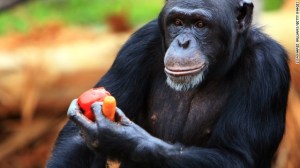
Christ Did Not Come for Chimpanzees

chimp

Photo Credit: From CNN article “Chimps should be recognized as ‘legal persons,’ lawsuits claim”

This month the New York Supreme Court is deciding on whether or not to rule on a case involving the legalization of chimpanzees as human persons. Yes, this is a real report, not one from The Onion. In the state of New York, the Nonhuman Right Organization is filing a lawsuit on behalf of four chimpanzees—Tommy, Kiko, Hercules, and Leo—to let them have the same rights as humans.

Unable to speak for themselves (because they are not human), CNN reports that the leader of NRO (Steven Wise) and the co-founder of the Animal Legal Defense Fund (Joyce Tishler) are making the case for these animals that humanity (i.e., homo sapiens) is not a necessary prerequisite for personhood.

Such is the moral insanity of our day, that men and women made in the image of God are unable to see the (biological, social, spiritual, and legal) differences between humans and apes. Albert Mohler critically reports on this subject on his daily podcast, The Briefing (Dec 4, 2013), and Graham Cole in his new book, The God Who Became Human: A Biblical Theology of the Incarnation provides a Christological reason why men and women are different than apes.

Anglican professor of theology at Beeson Divinity School, Graham Cole makes this critical observation. “The very fact that God became truly human underlines the value of human life. The Creator did not become a lion (apologies to C. S. Lewis) or a dolphin or a parrot. He became one of us” (The God Who Became Human, 150).

Cole is exactly right. Humanity is not only distinct from every other species because we alone are made in God’s image (Gen 1:26-28). Humanity is also unique because Christ only took on human flesh (Rom 8:3; Heb 2:16-17). What was once obvious to humanity—that man and beast were categorically distinct and therefore deserved different legal standings—has been lost in theory and is now requiring a court ruling to determine what personhood means.

Cole continues his Christological argument for humanity’s uniqueness and stresses that Jesus himself recognized the difference between man and beast, giving greater value to the former.  Citing Catholic and Protestant scholars alike, he writes,

As . . . the eminent twentieth-century Roman Catholic Jacques Maritain argued often, “the sanctity of human life ultimately rests in the fact that Christ became incarnate as a human creature, not some other sort of creature.” Protestant theologian Karl Barth adds to the chorus: “The respect for human life which becomes a command in the recognition of the union of God with humanity has incomparable power and width.” It is no surprise then to find in the Gospels that Jesus operated with a scale of creaturely value. Human life is more valuable . . . than that of a sparrow, even a flock of them (Matt 10:29–31). This valuing of human life over that of other creatures is criticized by some as ‘speciesism’ [e.g., Peter Singer] but is fundamental to a sound theological anthropology that factors in the reality of the incarnation. (150)

Indeed, as the court case in New York reminds us, we need to go back to the basics and reiterate that man and beast are not the same. God created man in his image to rule over creation, not to receive them as persons with equal rights. While Scripture declares that the righteous will have regard for the life of his beast (Prov 12:10), it never confuses the difference between people and pets. Even more, with the coming of Jesus Christ as a man, we see in Scripture and history that God’s incarnation is the final word on who he thinks is most valuable. Christ gave his life to redeem the human race, and we ought not confuse who that is.

Soli Deo Gloria, dss
The Image of God: A Covenantal Proposal

Yesterday, I cited Marc Cortez‘s survey of Genesis 1:26-28 and what the image of God means. In his book, Theological Anthropology: A Guide for the Perplexed he lists structural, functional, relational, and multi-faceted as four ways that the imago Dei has been explained. Yet, he also exposes the fact that there are weaknesses in each position, and thus he contributes his own proposal which is a covenantal version of the multi-faceted view. Continue reading

Pascal on the Glory and the Garbage of the Universe

Graham Cole quotes Blaise Pascal in his chapter, “The Glory and Garbage of the Universe” (God the Peacemaker).  With arresting language, Pascal bemoans of our condition:

What sort of freak then is man!  How novel, how monstruous, how chaotic, how paradoxical, how prodigious!  Judge of all things, feeble earth-worm, repository of truth, sink of doubt and error, glory and refuse of the universe… Man’s greatness and wretchedness are so evident that the true religion must necessarily teach us that there is in man some great principle of greatness and some great principle of wretchedness!  (Quoted in from Pascal’s Pensees in God the Peacemaker: How Atonement Brings Shalom [Downers Grove, IL: IVP Academic, 2009], 53).

So too, the ‘true religious’ preacher must preach on the wages of sin that lead to death and deform our lives, and the glorious possibilities of life found in Christ, led by his re-creative Spirit.  May we consider Pascals words and grow downward in humility and upward in adoration of the God who made us and makes us anew in Christ.

Soli Deo Gloria, dss

Being Human Rules!

Good friend, Chip Dean, taught the doctrine of humanity to his youth group last year and used this title, “Being Human Rules!”  Reading through Theological Interpretation of the Old Testament  I came across a quote that reminded me of that series and that encapsulates a biblical understanding of humanity.  Ernest Lucas describes the scene in Daniel 4, the narrative that describes Nebuchadnezzars bestial degeneration, writing:

Daniel 4:10-12 paints a picture of the good that can be achieved by human rulers.  When humans image God, they have the right to rule in his name.  When they try to be God, they forfeit that right and may become ‘bestial.’  Those who recognize God’s rule over them are in a position to allow God to rule through them (242).

May we, in the power of the Spirit, in humble submission to our Savior, and for the glory of our Heavenly Father, rule well.  After all, being human rules!

Sola Deo Gloria, dss

ps.  By the way, who teaches their youth group doctrine?  No one!  Youth pastors would do well to consider what Chip is doing at Capshaw Baptist in Huntsville, AL.