Via Emmaus on the Road: Hebrews 3

Further Resources


Hebrews 3 (ESV)

Jesus Greater Than Moses

Therefore, holy brothers, you who share in a heavenly calling, consider Jesus, the apostle and high priest of our confession, who was faithful to him who appointed him, just as Moses also was faithful in all God’s house. For Jesus has been counted worthy of more glory than Moses—as much more glory as the builder of a house has more honor than the house itself. (For every house is built by someone, but the builder of all things is God.) Now Moses was faithful in all God’s house as a servant, to testify to the things that were to be spoken later, but Christ is faithful over God’s house as a son. And we are his house, if indeed we hold fast our confidence and our boasting in our hope.

A Rest for the People of God

Therefore, as the Holy Spirit says,

“Today, if you hear his voice,

do not harden your hearts as in the rebellion,

on the day of testing in the wilderness,

where your fathers put me to the test

and saw my works for forty years.

10  Therefore I was provoked with that generation,

and said, ‘They always go astray in their heart;

they have not known my ways.’

11  As I swore in my wrath,

‘They shall not enter my rest.’ ”

12 Take care, brothers, lest there be in any of you an evil, unbelieving heart, leading you to fall away from the living God. 13 But exhort one another every day, as long as it is called “today,” that none of you may be hardened by the deceitfulness of sin. 14 For we have come to share in Christ, if indeed we hold our original confidence firm to the end. 15 As it is said,

“Today, if you hear his voice,

do not harden your hearts as in the rebellion.”

16 For who were those who heard and yet rebelled? Was it not all those who left Egypt led by Moses? 17 And with whom was he provoked for forty years? Was it not with those who sinned, whose bodies fell in the wilderness? 18 And to whom did he swear that they would not enter his rest, but to those who were disobedient? 19 So we see that they were unable to enter because of unbelief.

Soli Deo Gloria!

Via Emmaus on the Road: Hebrews 2

Further Resources


Hebrews 2 (ESV)

Hebrews 2 (ESV)

Warning Against Neglecting Salvation

Therefore we must pay much closer attention to what we have heard, lest we drift away from it. For since the message declared by angels proved to be reliable, and every transgression or disobedience received a just retribution, how shall we escape if we neglect such a great salvation? It was declared at first by the Lord, and it was attested to us by those who heard, while God also bore witness by signs and wonders and various miracles and by gifts of the Holy Spirit distributed according to his will.

The Founder of Salvation

For it was not to angels that God subjected the world to come, of which we are speaking. It has been testified somewhere,

“What is man, that you are mindful of him,

or the son of man, that you care for him?

You made him for a little while lower than the angels;

you have crowned him with glory and honor,

putting everything in subjection under his feet.”

Now in putting everything in subjection to him, he left nothing outside his control. At present, we do not yet see everything in subjection to him. But we see him who for a little while was made lower than the angels, namely Jesus, crowned with glory and honor because of the suffering of death, so that by the grace of God he might taste death for everyone.

10 For it was fitting that he, for whom and by whom all things exist, in bringing many sons to glory, should make the founder of their salvation perfect through suffering. 11 For he who sanctifies and those who are sanctified all have one source. That is why he is not ashamed to call them brothers, 12 saying,

“I will tell of your name to my brothers;

in the midst of the congregation I will sing your praise.”

13 And again,

“I will put my trust in him.”

And again,

“Behold, I and the children God has given me.”

14 Since therefore the children share in flesh and blood, he himself likewise partook of the same things, that through death he might destroy the one who has the power of death, that is, the devil, 15 and deliver all those who through fear of death were subject to lifelong slavery. 16 For surely it is not angels that he helps, but he helps the offspring of Abraham. 17 Therefore he had to be made like his brothers in every respect, so that he might become a merciful and faithful high priest in the service of God, to make propitiation for the sins of the people. 18 For because he himself has suffered when tempted, he is able to help those who are being tempted.

Soli Deo Gloria!

Rejoicing in Christ’s Royal Priesthood: The 2024 Bauman Lectures (Toronto Baptist Seminary)

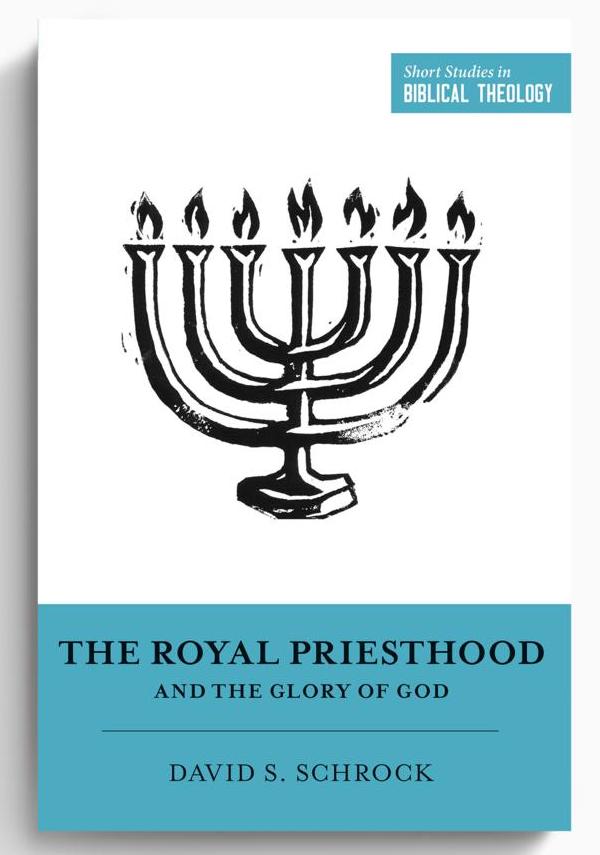
In 2022, I wrote a book entitled The Royal Priesthood and the Glory of GodThis book clarified, synthesized, and streamlined my doctoral dissertation. In 2013, I finished a biblical theology of the priesthood which sought to answer the question: For whom did Christ die? Looking at the priesthood from Genesis to Revelation I argued for a definite atonement. In that large volume I came to love the theme of priesthood in the Bible and what that means for knowing Christ and for imitating Christ.

Since 2013, I have written a handful of articles on the priesthood, and in the last few weeks I have spoken twice on the subject. The first series of lectures took place at Eden Baptist Church in Burnsville, Minnesota, and the second lecture series is taking place this weekend at Toronto Baptist Seminary and Jarvis Street Baptist Church in Toronto, Canada.

To assist students, faculty, church members, and guests of the Bauman Lectures, I am posting notes here. I will add to them as the weekend goes on, and in the end, I hope this post will link to all the priestly things I have written to date.

The Bauman Lectures (2024)

  • Lecture 1: Building a Kingdom of Priests — In this lecture, I survey the way in which the institution of the Levitical Priesthood came into being. This lecture simplifies my larger SBJT article and puts into lecture form the second chapter of my book, The Royal Priesthood and the Glory of God.
  • Lecture 2: In Search of a Priest-King Like Melchizedek (Genesis 14, Psalm 110, Hebrews 5–7) –In this lecture, I examine the context, content, and concepts found in three places where Melchizedek is named. Together, this helps us understand who Jesus is, as a royal priest.
  • Lecture 3: Seeing Melchizedek in the Book of 1–2 Samuel: An Exploration in Typology — In this lecture, I have written a working manuscript (with limited annotation) to show how Melchizedek is a figure found in the book of 1–2 Samuel. This reading depends upon a careful comparison between Bera, king of Sodom, and Melchizedek, king of Salem. It also explains how David saw his own son as a priest after the order of Melchizedek.
  • Sunday Morning Sermon: Getting to Know Our Great High Priest (Exodus 28–30; Hebrews)
  • Sunday Evening Sermon: A Kingdom of Priests: Washed, Worshiping, Working, Witnessing (Exodus 19:5–6; 1 Peter 1:22–2:10)

More to come . . .

Soli Deo Gloria, ds

Preach Hebrews the Next Time You Don’t Have a Preacher, Plus a Post-Script on Answered Prayer

dawn-mcdonald-2RADIf5oR28-unsplashWhat will you do the next time you do not have a preacher? Oh, I am not talking about planning for an upcoming Sunday when you, or your pastor, will be absent, or when multiple teaching elders are unavailable. I am talking about when it becomes apparent 10 hours or 10 minutes before Sunday morning that the man called to preach simply cannot do it.
In such a situation, you have a few options. You could call on someone to preach something already prepared. Such preparation includes having a sermon ready, but it could also mean calling on a “prepared” person who could open a text and give a faithful exposition. Elder-qualified pastors and Bible teachers would fall into this category. And one of the best Resurrection Sunday expositions I ever heard came from a seminary professor who was called to preach 10 minutes before service as the teaching pastor lay ill in his office—literally, he was writhing in pain on the floor. (He’s okay now).

Extreme moments call for extreme measures. And churches shouldn’t be surprised that in a fallen world where clay pots preach the glories of God that sometimes those vessels of dust cannot stand and speak. Yet, knowing that, we can still be caught off guard, or in need of immediate relief. And this last weekend was such a case in our church.

What We Did When the Preacher Couldn’t Preach

As many readers of this blog know, I am not a full time blogger—hence, the regular but not absolutely consistent blog schedule. Day to day, I have the joy of serving at Occoquan Bible Church, located in Northern Virginia. Since 2015, I have been pastor for preaching and theology. So, most Sundays I am the one standing up and preaching.

At the same time, we have a deep bench of gifted preachers. And if you check our website, you will find messages from Ben, Rod, Jared, Dave, Ron, and Jeff. All of our elders have preached multiple times to our church. And by conviction, we do this because we believe the pulpit is the Lord’s, not man’s. It is God’s Word that is preached, not our own. And it is the faithful preaching of God’s Word that builds his church, not the gifting of any one pastor. For that reason, we intentionally share the pulpit. And by design I preach about 40 times a year, not 52.

Continue reading

The Supremacy of Christ: Living for His Glory and Not Our Own (Hebrews 9)

1920x1080-it-is-finishedImagine that you were writing the script of your life. In your story, the place was yours to decide, as well as the people, the problems, and the pleasures. As the author of the story and the inventor of your universe, you got to decide how you would do it.

So, how would you do it?  How could you write up something so large, so complex, so weighty? And would it even be possible to write a grand story without imitating the story that God has written?

As I tell my kids all the time, all the best stories—the epic novels, the literary masterpieces, the Jeremy Bruckheimer movies—all of them plagiarize from the greatest story ever told. And in God’s story, we find a God who designed the whole universe to glorify his Son.

And knowing that, it is not too much to say that the heavens above us, and the trees around us, and the blood flowing in us, all of these elements were made by God to play a part in the story of God’s glory.

Just the same, the sacred history of Israel is filled with texts and tabernacles, priests and promises, crises and christs (i.e., anointed ones) that bring us to the cross of Christ and the new covenant that holds it all together. In fact, when we speak about the cross, it takes the entire Bible to understand its meaning. And without all the Bible, we would miss much of Christ’s glory. That said, if there was one chapter in the Bible that put all the pieces together, it might be Hebrews 9.

Hebrews 9 is a chapter rich in biblical theological intratextuality, which is a complex way of saying: Hebrews 9 is an explosion of biblical glory, which brings together all the elements of God’s story—the the covenants, the priests, sacrifices, etc. And when all of them find their fulfillment in Christ, we see that the story of the universe has a place for us, if we will draw near to God in Christ.

In other words, the Bible teaches us to stop seeking our own glory or to use God to write our stories. Instead, we are called to see and savor the supremacy of Christ in all God’s Word and God’s world. Hebrews 9 helps us to do that. And this last Sunday I preached a message on this glorious chapter, as the culminating sermon in our series on the cross. You can find the sermon here, and the rest of the series here.

May the Lord use this meager attempt to declare God’s glory to help us all delight in the supremacy of Christ and to live for his glory over and above our own.

Soli Deo Gloria, ds

Rahab’s Redemption: 10 Things About Joshua 2

michel-porro-vfaFxFltAvA-unsplash

Joshua 2 is filled with exegetical, ethical, and biblical theological challenges. Here are ten things that begin to wade into the richness of Joshua 2.

1. Joshua 2 appears to be an “unnecessary” story in the framework of the book.

Nothing is unnecessary in Scripture. Every jot and tittle is inspired by God and useful for teaching, reproof, correction, and training in righteousness (2 Tim. 3:16). However, there are facts and even chapters that may appear to be unnecessary, as in the case of Joshua 2.

In the flow of Joshua, the second chapter interrupts Israel’s entry into the land. Chapter 1 speaks of the preparation for entry; chapter 3 records the entry itself. Chapter 2 stands in the middle of this continuous story, and thus it stands out. For the sensitive reader, the placement of the story does not mean Rahab and the spies are out of place. On the contrary, they are exactly where they need to be. And they demonstrate the great importance of this chapter.

As Dale Ralph Davis observes, this “non-essential” story is necessary for showing how God saved a Gentile harlot (Joshua, 28–29). The story is not necessary for demonstrating God’s power or justice in overthrowing the wickedness of Jericho. His faithfulness would stand upon the giving the land to Israel, as he had promised. But his mercy is highlighted by this inclusion of Rahab’s redemption, and hence the main point of this whole chapter will center on God’s unexpected grace and undeserved mercy. Continue reading

The Need for Expositional Preaching (pt. 4): Apostolic Preaching is Expositional

md-duran-q3lWgt6JNjw-unsplash.jpgFrom the pattern of Moses and the Old Testament priests to the teaching ministry of Jesus, biblical exposition has a long track record in redemptive history. In the New Testament, the citation and explanation of Scripture (i.e., biblical exposition) continued. And this is most evident in Acts and Hebrews, the two books we will focus on here.
The Expositional Acts of the Apostles

In Acts, Luke gives a selection of exemplary sermons by Peter (Acts 3-4), Stephen (Acts 7), and Paul (Acts 13-14, 17). In each, the Spirit-filled preachers appeal to the Old Testament, retell the history of Israel, and explain how Jesus Christ fulfills God’s patterns, promises, and prophecies.

For instance, in Acts 13:15 Paul and Barnabas are invited to give a word of exhortation (a sermon?) “after reading from the Law and the Prophets.” It is easy to see the pattern of exposition here: read the word, preach about the same word. Paul paid attention to his audience, but he faithfully proclaimed God’s Word according to the pattern of sound words that was found in the Old Testament.

Of course, from the terse details in Acts, we cannot replicate the form of the apostle’s exposition, but we can see their commitment to explaining the Old Testament Scriptures: They showed how the Old Testament related to Jesus, and called their audiences to repent and believe. Continue reading

Our Glorious High Priest: 24 Audio Lessons on Hebrews

priestcolor

Over the course of 2018–19 I taught through the book of Hebrews at our church on Tuesday Nights. You can find the audio and notes below.

My approach: With an interest in Christ’s priesthood as the fulfillment of the whole Bible, and with a conviction that Hebrews models for us how to interpret the Old Testament, I attempted to show how Jesus is the Son of God and Our Glorious High Priest. At the same time, as the title of my previous series on the priesthood suggests, I believe the book also shows how new covenant believers become a family of priests in the kingdom Christ is bringing.

For those who read the whole book of Hebrews, you will notice that what is said of Christ (sonship, priesthood, and kingship) in Hebrews 1 is applied to all those in Christ in Hebrews 12–13. In short, Hebrews teaches us how God makes his people a family of royal priests. Often this emphasis on union in Christ with respect to the priesthood is not appreciated, but I believe a faithful reading of the book demonstrates how Christ is the great hight priest and how all those in him become new covenant Levites, so to speak.

One last note, I also attempted to show throughout much of the book how the literary structure is seen in chiastic structures. I am sure I haven’t been right in every case and that I’ve missed plenty, but in the notes you can at least see my attempt at putting the book together. If you have time, and especially if you disagree with a literary structure, let me know. I’d love to see how you put the book together.

All in all, few books in the Bible—maybe no book in the Bible—is more resplendent in its glory of Christ and his royal priesthood. Our class delighted in this truth throughout the year and found much personal encouragement in Hebrews. May you do the same. And may these notes help you in that journey.

Soli Deo Gloria, ds

Our Glorious High Priest: 24 Audio Lessons on Hebrews

Fall 2018

  1. Hebrews Overview [audionotes]
  2. Hebrews 1:1–4 [audionotes ]
  3. Hebrews 1:5–2:4 [audionotes ]
  4. Hebrews 2:5–18 [audionotes]
  5. Hebrews 3:1–6 [audionotes ]
  6. Hebrews 3:7–19 [audionotes]
  7. Hebrews 4:1–13 [audionotes]
  8. Hebrews 4:14–5:10 [audionotes]
  9. Hebrews 5:11–6:12 [audionotes]
  10. Hebrews 6:13–20 [audionotes]
  11. Hebrews 7:1–10 [audionotes] – Guest Teacher (Jonathan Matías)
  12. Hebrews 7:11-28 [audio]

Spring 2019

  1. Hebrews 8:1-13 [audionotes]
  2. Hebrews 8:7–13 [audionotes]
  3. Hebrews 9:1–10 [audio, notes]
  4. Hebrews 9:11–22 [audio, notes]
  5. Hebrews 9:23–28 [audio, notes]
  6. Hebrews 10:1–18 [audionotes]
  7. Hebrews 10:19–25 [audionotes]
  8. Hebrews 10:26–39 [audionotes]
  9. Hebrews 11:1–40 [audio, notes]
  10. Hebrews 12:1–17 [audionotes]
  11. Hebrews 12:18–29 [audio] – Guest Teacher (Ron Comoglio)
  12. Hebrews 13:1–21 [audionotes]

Christ is a Superior High Priest: Three Reasons Why Jesus Is Greater Than Aaron

jason-betz-274375-unsplashIt has been testified somewhere, “What is man, that you are mindful of him, or the son of man, that you care for him? You made him for a little while lower than the angels; you have crowned him with glory and honor, putting everything in subjection under his feet.” Now in putting everything in subjection to him, he left nothing outside his control. At present, we do not yet see everything in subjection to him. But we see him who for a little while was made lower than the angels, namely Jesus, crowned with glory and honor because of the suffering of death, so that by the grace of God he might taste death for everyone. 
— Hebrews 2:6–9 —

The key idea in Hebrews is priesthood. However, I believe sonship is equally important to understanding the flow of the book, not to mention the nature of Christ’s priesthood. In other words, Jesus is a greater priest because he is a greater son (see 4:14; 7:28).

Making a similar point, B. B. Warfield once commented on Hebrews 2:6–9:

The emphasis is upon the completeness of the identification of the Son of God with the sons of men . . . The perfection of His identification with us consisted just in this, that He did not . . .  assume merely the appearance of man or even merely that position and destiny of man, but the reality of humanity. (The Power of God Unto Salvation, 5, 10; cited in Zaspel, The Theology of B.B. Warfield, 256).

Highlighting the personal nature of Christ’s union with his people, Warfield touches on the very weakness of the priesthood of Aaron. And in so doing, he highlights three ways Christ’s priesthood is greater than that of Aaron. Continue reading

Our Great High Priest (Exodus 28–30)

priestcolorSermon Audio: Our Great High Priest (Exodus 28–30)

Last week we celebrated the Reformation Day (October 31) and the recovery of the gospel brought about by men and women like Martin Luther and Katherine von Bora. Both of these Reformers fled the monastic life in order to follow Christ. Yet, in departing the Roman Catholic system of priesthood, they did not abandon the priesthood of Christ nor the priesthood of believers.

In fact, Martin Luther was one of the most prolific exponents of the biblical teaching that all followers of Christs are saints—a priesthood by faith in Jesus Christ. Thus, in a very real sense any Protestant view of the Bible that denies the place of priesthood actually denies the very gospel which the Reformation recovered. Jesus Christ is our great high priest, one whose sacrifice for sin and priestly intercession makes faith possible.

Thinking again, therefore, about what Scripture says about priesthood, we considered in Sunday’s sermon the necessity of a high priest, and what means that Jesus is our great high priest. Going back to Exodus 28–30, we considered the original purpose of the high priest in Israel and how Jesus came to both fulfill and exceed those original expectations.

If the priesthood is something you care about, or if its something you don’t care about, this sermon is for you. You can listen to it online. Response questions are below as are a few additional resources. Continue reading