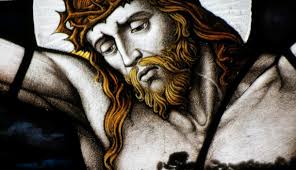
A Meditation on the Cross (Matthew 27): How Penal Substitution, Christus Victor, and Christ’s Moral Example Lead Us to Preach the Cross, Resist the Devil, and Imitate the Lord

crossWhen the Spirit led Jesus into the Wilderness, Satan tempted him three times. He questioned the authenticity of Jesus’ Sonship, tempting him to prove his power and his place as God’s Son. In perfect obedience to God and his Word, Jesus did not assert himself, but trusted that his earthly mission was one of absolute humiliation leading to honor, not a powerplay to gain honor for himself.

On the cross, the fury of Satan’s accusations returned, only it came not in the voice of the Serpent but in a salvo of accusations launched at Jesus while nailed to a tree. Physically speaking, no form of punishment has ever been more de-humanizing. Still, for all the physical a pain delivered in crucifixion, it was the Spiritual abandonment that was the greatest punishment. “My God, my God, why have you forsaken me?” was the cry of a man who had never known sin or the judgment of God’s abandonment. Moreover, in identifying himself with his sinful people, Jesus assumed in his flesh the fullness of their sin, which in turn invited the fullness of God’s wrath. He drank the cup, until the fury of God was extinguished.

And this is not all, the crucifixion, as Matthew describes it, is neither a testimony to the pain of crucifixion, as Mel Gibson sought to frame it in his movie The Passion of the Christ. Nor does Matthew ponder the horrible realities of God’s spiritual judgment. Rather, he records a bevy of Satanic accusations offered by Roman soldiers, Jewish leaders, nameless spectators, and the convicted criminals bleeding next to Jesus. After describing the mockery of Herod’s soliders (27:27–31), Matthew recounts the acts (vv. 32–37) and speeches (vv. 37–44) which Satan hurled at Jesus as died on the tree.

For us who find life in Jesus’ death, seeing Jesus’ humiliation teaches us what our sin deserves and what great lengths Jesus went to save us. At the same time, because Christ’s cross is exemplary for those who trust in his penal substitution, there is profit in seeing Satan’s accusations, that we might recognize the tempters accusations and continue to carry with faith the cross God gives to us. With this in mind, let’s consider Christ’s example of humiliation, that we might follow in his steps, by trusting in his substitutionary death, and his victory over Satan. Continue reading

Gospel-Motivated Giving

givingThe Lord said to Moses,  “Speak to the people of Israel, that they take for me a contribution. From every man whose heart moves him you shall receive the contribution for me.
— Exodus 25:1–2 —

But who am I, and what is my people, that we should be able thus to offer willingly? For all things come from you, and of your own have we given you.
— 1 Chronicles 29:14 —

Old Covenant Giving: A Legal Requirement in the Land

From the opening pages of Scripture God has called his saints to give. Providing the first sacrifice when he made skins to clothe Adam and Eve (Genesis 3:21), God modeled for his children the kind of animal sacrifice that would please him. Abel followed in faith (Genesis 4:4; Hebrews 11:4), as did Noah (Genesis 8:20–22), Abraham (22:16–18), Moses (24:4–5; 40:29), and the priests of Levi (when they kept the Law). Throughout the Old Testament, God’s people were called to give.

Echoed in every other world religion, giving is a necessary part of worship. In Israel, tithes, offerings, and sacrifices—atoning and festive—were a normal part of worship. Likewise, the Old Testament testifies that every demon-inspired deity demanded gifts and every culture offered sacrifices—sometimes even giving up their children to the flames of Molech (Leviticus 18:21; Jeremiah 32:35). In short, from a cursory reading of Scripture or a survey of the world, mankind is people who worship, and giving is a necessary part of that worship. Still, in that worship there are right and wrong ways to worship, which means there are right ways and wrong ways to give.

Continue reading

Enlarging Our Missions Footprint

feet

How beautiful upon the mountains are the feet of him who brings good news,who publishes peace, who brings good news of happiness, who publishes salvation,who says to Zion, “Your God reigns.”
– Isaiah 52:7 –

 How then will they call on him in whom they have not believed? And how are they to believe in him of whom they have never heard? And how are they to hear without someone preaching? 15 And how are they to preach unless they are sent? As it is written, “How beautiful are the feet of those who preach the good news!” 16 But they have not all obeyed the gospel.
For Isaiah says, “Lord, who has believed what he has heard from us?”
17 So faith comes from hearing, and hearing through the word of Christ.
– Romans 10:14–17–

Imagine a child who is growing into adulthood. Each year she grows taller, stronger, wiser. Only with this child, her feet never grow any larger. While her arms and legs gain length and strength, the foundation of her body, the feet, disables her from running, jumping, playing as she’d like. Because she doesn’t have adequate support for her growing body, her feet become misshapen and debilitating for a healthy life.

Speaking metaphorically, Isaiah 52:7 extols the beautiful feet of those who bring good news. In context, Isaiah 52 is a prophecy that recalls the enslavement of Israel (“You were sold for nothing,” v. 3) and the greater salvation that God is going to bring. Isaiah tells the people of Israel to rejoice in the happy news of their salvation (v. 8), for the Lord has revealed “his holy arm” and promises to lead Israel on a new exodus (vv. 10–12). In context, Isaiah 52 sets up the announcement of the Suffering Servant (Isaiah 53), who will deliver all God’s sheep—the elect from Israel and the nations—from the very sins that led them into exile. It’s in this context that the good news is brought.

In the New Testament, Paul picks up the same imagery. When speaking of the gospel going from the Jews to all the nations (Romans 10), he quotes Isaiah 52:7, explaining that the beautiful feet “preach the good news,” i.e., the gospel of Jesus Christ. In context, Paul inquires how the nations will hear the good news of salvation, unless men and women proclaim the gospel. “And how are they to preach unless they are sent?”

Romans 10 is one of the most forceful passages in the Bible for the call of Christians and especially churches to engage in missions. From Acts 13 on, the pattern of missionary activity is for churches to recognize gifted servants whom they can send out to deliver the good news to those who have not heard it. In Acts 13, Paul and Barnabas are called by the Spirit and commissioned by the church to take the gospel throughout the Mediterranean. Ever since, “New Testament churches” have followed their pattern—raising up, sending out, and supporting missionaries.

In other words, “beautiful feet” do not come by accident. They are cultivated in and sent out by local churches. Continue reading

What Demonstrates the Power of God? Miraculous Signs or Spiritual Resurrection

powerAnd I was with you in weakness and in fear and much trembling, and my speech and my message were not in plausible words of wisdom, but in demonstration of the Spirit and of power, so that your faith might not rest in the wisdom of men but in the power of God.
— 1 Corinthians 2:3–5 —

A number of years ago I visited a church where the pastor proclaimed that God would build the church “on signs and wonders.” From his statement, the pastor revealed his theology—the miraculous gifts of the early church (e.g., tongues, healings, prophecies, etc.) are still normative and should be pursued, even promoted, as the normative means by which God builds his church.

More recently, Bill Johnson, a popular-but-false teaching ‘pastor’ from Redding, California, has argued that “working miracles is closer to the normal Christian life than what the Church normally experiences.”[1] In his bestselling[2] When Heaven Invades Earth, Johnson makes apology for the place of the miraculous today. He argues that denial of miracles has to be taught to Christians, stating, “The doctrine stating signs and wonders are no longer needed because we have the Bible was created by people who hadn’t seen God’s power and needed an explanation to justify their own powerless church” (105–06).

That’s a strong claim, and one that bears examination. Is it true the church—for most of the nineteen centuries leading up to the birth of the Charismatic movement (1906)—hadn’t seen God’s power because they failed to pursue the miraculous gifts? Is it true that God’s power is, as Johnson defines it, in “working miracles”? Or might it be the case that power as emphasized by Paul in 1 Corinthians 2:3–5; 4:14–20, for instance, is something different than what these Charismatic pastors mean? Continue reading

Looking at the Old Testament on Good Friday


isaacAlthough the centerpiece of the Bible—Christ’s cross—is revealed in the New Testament, we cannot understand its meaning without the Old Testament. Indeed, Paul says Christ’s death and resurrection happened “according to the Scriptures” (1 Corinthians 15:3, 4), which means according to the Old Testament Scriptures. Similarly, Peter says the prophets were led by the Spirit of Christ to “predict the sufferings of Christ and the subsequent glories.” He writes more fully,

Concerning this salvation, the prophets who prophesied about the grace that was to be yours searched and inquired carefully, inquiring what person or time the Spirit of Christ in them was indicating when he predicted the sufferings of Christ and the subsequent glories.  It was revealed to them that they were serving not themselves but you, in the things that have now been announced to you through those who preached the good news to you by the Holy Spirit sent from heaven, things into which angels long to look. (1 Peter 1:10–12)

Peter says something even more radical about the cross of Christ a few verses later:

With the precious blood of Christ, like that of a lamb without blemish or spot. He was foreknown before the foundation of the world but was made manifest in the last times for the sake of you. (v. 20)

The cross wasn’t the tragic conclusion of a series of unexpected events. It was God’s predestined plan to put Jesus to death. Continue reading

Opening Our Eyes to Obergefell and Its Effects: A Pastoral, Cultural, and Legal Round-Up

SCOTUSOn June 26, 2015, in a 5–4 decision, the Supreme Court of the United States (SCOTUS) ruled that same-sex marriage was legal in all 50 states. In the hours that have passed, Christians have been praying and wondering aloud what comes next and how we should respond. To aid our collective understanding of the Supreme Court’s decision, I’ve listed dozens of resources under the following headings:

  • The Decision: What Did the Court Decide?
  • On the Pastoral Front: What do we say to our church?
  • On the Cultural Front: What do we say to our neighbor?
  • On the Legal Front: What about religious liberty?

I am so thankful for the men and women who have been reporting and commenting on these issues. May their wise words aid you—as they have me—to think and pray and act with grace and courage for truth in these days. Still before reading any of these posts, let me encourage you to watch this two minute exhortation from Russell Moore, president of the ERLC.

Continue reading

Eleven Questions to Facilitate Hospitality Evangelism

foodIn our post-Christian age, evangelistic Christians (a redundant statement, if ever there was one) must learn to love their neighbors through means of proactive hospitality. A few years ago I wrote about the subject of evangelism and hospitality (here and here). Today, let me list 11 questions that might help facilitate conversation that goes beyond the weather and sports. Moving from the generic to the more evangelistic, these personal questions may help us to engage others with meaningful questions that move towards the most important subjects of life. Continue reading

The Doctrine of Creation: A Necessary Part of Our Worship and Evangelism

auroraCould it be that Christ-centered Christians can all too easily forget that the God of the cross is also the God of creation?

Not long ago I was visiting with some church leaders and the topic of transgender persons came up. While a number of good strategies were mentioned about sharing the gospel with them (and all people who sinfully rejected God’s moral norms for their sex lives) there were questions about what is wrong with a man desiring to be a woman, or the reverse. “Which verse does a transgender person violate?” was the question.

The short answer (and this again goes for all persons) is “all of them.” In Adam, all of us are guilty before our maker (Rom 5:12, 18–19). By nature, we are inveterate rebels. We don’t need a verse addressing our specific manifestation of sin, although there are plenty. The whole Bible speaks to the sinful condition of mankind—transgender persons included. Just read Romans 1:18–32 or Albert Mohler’s insightful “Biblical Theology and the Sexuality Crisis.” Sexual morality is far more than keeping all the laws.

But specific answers aside, I think there is a larger need in evangelical churches—namely, the remembrance that we do not worship God as Redeemer only, but also as Creator. In fact, in biblical revelation he is first Creator first, then Redeemer. And even in redemption, the goal is new creation—personal (2 Cor 5:17) and cosmic (Matt 19:28; Revelation 21–22).

In sharing the gospel, we must not forget that sin is not just law-breaking; it is anything that opposes or deviates from God’s created design. But we will only remember this doctrine of creation, if we give ourselves to worship God as Creator.

And for that reason, I offer give you six ways God’s creation should move you to worship and evangelize. Continue reading

What is Calvinism?

Calvinism means different things to different people. Even to those who might call themselves “Calvinist,” what they mean by the term is not always the same. Typically, as a shorthand expression for what I believe about salvation, I am comfortable to call myself a Calvinist. And yet, because that label is so often misused, misunderstood, and misapplied, I am equally desirous to avoid it altogether.

Nevertheless, the question remains: What is Calvinism?

The answer to that question takes more than just two sentence, simple answer. Because it is a term that has historical, theological, and worldview meanings, it takes time to get a handle on it. Therefore, for those who have an interest and an ear to hear, let me give you a five-fold answer to that question: Calvinism is (1) a shorthand expression for the doctrines of grace, (2) a biblical-theological system, (3) an historical phenomenon, (4) a biblical worldview, and (5) an attitude of worship. As always, let me know what you think.  Continue reading

Rescuing Jabez from the Soft Prosperity Gospel

jabezYesterday I had the privilege of preaching in chapel at Columbus Christian High School. Of all the texts I could have preached I decided to preach on a little, obscure passage in the book of 1 Chronicles—story of a man by the name of “pain.”Yes, that’s right, I preached “The Prayer of Jabez.”

Despite those who have written off Jabez and his prayer because of the way it has been used to promote the soft prosperity gospel, I am increasingly convinced Jabez is a type of Christ standing between Melchizedek and Jesus. More than that, his story gives us an overwhelming testimony of God’s grace to those who are in pain. For that reason, I preached “The Pain of Jabez and the Comfort of Christ.”

What follows is part of the interpretive outline I unpacked in the sermon.  Continue reading