
From God’s Throne to His Priests by way of His Word: Three More Truths About Justice

cloud05Over the last few weeks, our church has been thinking about justice from the Psalms. In Psalm 97, we saw that God himself is the source and standard of justice. In Psalm 98, we discovered how God “does” justice in justifying the ungodly by providing a legal substitute. And in Psalm 99, we saw how priestly mediators served to bring justice from God’s temple to God’s people, and from Zion to the ends of the earth.
In what follows, I will conclude the message of Psalm 99 in three points of application about justice. Continue reading

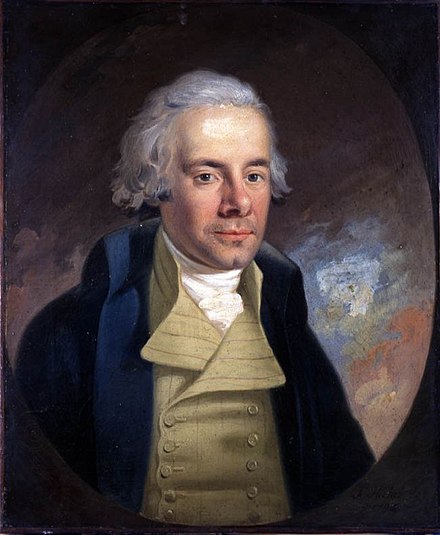
How Justification by Faith Impels Justice: The Biographical Testimony of William Wilberforce

wilberforceAt 4:00am on February 24, 1807, the British Parliament voted to end the British slave trade. With a count of 267 to 16, the House of Commons voted with loud cheers for the abolition of this abominable institution.

Though it would take another 26 years for slavery to be ended in Britain and its colonies,  this decision by the House of Commons, which followed the majority decision of the House of Lords, proved that in the span of 50 years what was unthinkable—namely, the end of the slavery—could be put to an end through a radical change in public and political opinion.

This change raises the question: What led to that remarkable act of liberation? What changed the hearts of the British governors? Was it a war? No, not unless you count the war of words in parliament. Was it a pragmatic argument based upon economics. No, it actually cost Britain a fortune to end slavery. What was it then?

The answer can be given in three words—a man, a mission, and an unusual motivation. Continue reading

Justice and Justification: Five More Truths about Justice

cloud05On Sunday, I explained from Psalm 98 how God justifies sinners and demonstrates that he is both just and justifier (Rom. 3:26). From that message, let me synthesize five more truths about justice. These build upon three truths about justice from Psalm 97, and they continue to assist our understanding of justice as the Bible presents it.

What Psalm 98 Teaches Us about Justice

Because salvation means different things to different people, it is always important to define salvation from the Bible itself. In Psalm 98, therefore, we need to see how salvation is presented. And importantly, we will see that salvation comes from God’s justifying justice.

In other words, salvation is not simply the victorious defeat of God’s enemies for his people, nor is it the dismissal of guilt from his people without a legal solution, nor is it the liberation of oppressed people regardless of their sin. Rather, as we learn from Psalm 98, salvation is grounded in the events of redemptive history which turn on the exodus. In fact, we can find at least five truths about justice in Psalm 98. Continue reading

The Theological Message of the Twelve

worms eye view of spiral stained glass decors through the roof

In his book The Unity of the TwelvePaul House argues that sin, judgment, and restoration are three themes extant in each prophet. He argues these themes also organize the Twelve (i.e., the Minor Prophets), where the first six books stress sin, the next three judgment, and the last three judgment. For him, this is the plot line that puts the Twelve together.

Complementing that vision, while not completely affirming, Richard Alan Fuhr and Gary E. Yates, in The Message of the Twelvepresent four themes that repeat through the Twelve: (1) repentance and return, (2) the Day of the Lord, (3) a new covenant, and (4) the coming messiah can be found in the Twelve. I will outline these below. Continue reading

Do You See Jesus? Does Jesus See You? 10 Things about John 1:35–51

hence-the-boom-vbQsU3kVVPI-unsplashIn John 1:35–51 we move from John the Baptist’s testimony about Jesus to Jesus’s own testimony. Here are ten things we find about Jesus in those verses.

1. John’s introduction (1:19–51) culminates in Christ’s testimony about himself.

Last week we observed that John 1:19–51 is organized around four days. Each of these days serves as a “window pane” to see Christ.

With John 2:1 speaking of the “third day,” we see how John introduces Jesus in his first week. These six or seven days (depending on how you count John 2:1), add to the creation theme of John 1 (see vv. 1–3, 32). And in chapter 1 they organize John’s introduction to the Word of God made flesh around the testimonies of John, John’s disciples, other disciples, and finally Jesus.

More specifically, John 1:35–51 brings the testimony of John and his disciples to Jesus himself. Whereas John’s testimony (v. 19) is the focus of the first two “window panes” (vv. 19–28, 29-34), now attention shifts away from John. First, John points his disciples to Jesus (vv. 35–37), so that some leave him. These disciples who follow Jesus then begin to invite others to follow Jesus (vv. 41–42, 46). Finally, Jesus himself bears testimony to himself (vv. 50–51). This is the climax of John’s four days and prepares us for all that follows. Continue reading

The First Word about the Eternal Word (John 1:1–18)

john03

The First Word about the Eternal Word

This Sunday we began a new series in the Gospel of John with a look at the first 18 verses. These verses are known as John’s Prologue, and they serve as an introduction to the whole book.

In this sermon, I showed the shape and substance of John’s Prologue. The shape of John’s introduction centers on verse 12 and leads us to consider who can believe in Christ. This is the main point of John’s whole Gospel (see 20:30–31) and it is helpful to see how the prologue captures that main point too.

The substance of the prologue is devoted to a glorious vision of Christ and all the ways John will identify him. In short order, I outlined 12 “posters” displaying who this Christ is. John’s Gospel is very visual (as it employs all manner of signs and symbols) and I tried to show that in this message.

You can listen to the sermon online. You can find response questions and an introduction to John’s Gospel in this blogpost. As with our last sermon series through Joshua, I will aim to post a weekly “ten things” blog to help identify key literary, biblical, and theological themes in each passage. Follow along if you want to learn more about John’s Gospel.

Response Questions

  1. What does the opening of John’s Gospel teach us? 
  2. How does seeing the structure of the prologue help us see the main point of the passage? How does it help read the whole Gospel?
  3. How does the beginning of the Gospel of John compare with Genesis 1? What about the other Gospels?
  4. What ought we to conclude from John’s testimony (v. 6–8, 15)?
  5. How does comparing John 1:14–18 to Exodus 33–34 help us understand who Jesus is?
  6. What should be learned from the comparison of the law with grace and truth?  Why is the NIV translation better than the ESV? And why is the KJV wrong? What difference does this make?
  7. Which truths about Jesus do you find encouraging? Why? 
  8. How ought we to respond to this text?

Soli Deo Gloria, ds

Gathered Worship: Why Your Soul Needs the Body of Christ (Deuteronomy 4:9–31)

bythebook04

Gathered Worship: Why Your Soul Needs the Body of Christ (Deuteronomy 4:9–31)

As we took another look at worship this Sunday, we focused on the covenantal history outlined by Moses in Deuteronomy 4. In these verses, Moses directed Israel to remember the covenant God made with them, to guard themselves from idolatry, and to take comfort in Yahweh’s ongoing faithfulness.

While there are many differences between Israel on the Plains of Moab and the people of God today, there are similarities too. And by learning the pattern of worship—in particular, gathered worship—we will see what the Spirit teaches us about our identity in Christ and how gathering for worship plays a crucial role in our lives.

You can listen to the sermon online. Response questions and additional resources are listed below.

Continue reading

Ten Things About Deuteronomy 4:1–14

10 thingsIn preparation for Sunday’s sermon on worship, here are ten observations from Deuteronomy 4:1–14.
1. Deuteronomy 4 is the last chapter of Deuteronomy’s covenantal introduction.

In Deuteronomy Moses follows (and reformulates) a covenant structure identifiable by anyone living in the ancient Near East. Just as covenants made between kings and their servants (i.e., Suzerains and their vassals) followed a standardized pattern, so does the book of Moses.

Ancient Near Eastern Suzerainty Treaty[1] Deuteronomy as a Covenant Document
Preamble (“These are the words . . .”) Preamble (1:1–5): “These are the words of Moses addressed to all Israel . . .”
Historical Prologue: a survey of the relational history between covenant partners Historical Prologue (1:6–4:49)
General Stipulations General Stipulations (ch. 5–11): general commands to love, serve, fear Yahweh
Specific Stipulations Specific Stipulations (ch. 12–26): an exposition of the Ten Words
Divine Witnesses: various deities called to witness the treaty Blessings and Curses (ch. 27–28)
Blessings and Curses: relating respectively to the maintenance of breach of the covenant Divine Witnesses (see 30:19; 31:19; 32:1–43)

From this outline, we see where Deuteronomy 4 is situated. It is the final word of the covenantal introduction (i.e., the historical prologue). Moreover, in a way that deviates from the classical ANE treaty formula, it adds covenantal instructions that anticipate the next sections—namely, the general and special stipulations given in chapters 5–26. Continue reading

From Law to Gospel: Seeing the Literary Structure of 1 Timothy 1

bibleIn his chapter “Cohesion and Structure in the Pastoral Epistles,” Ray Van Neste argues for literary cohesion in 1 Timothy (in Entrusted with the Gospel: Paul’s Theology in the Pastoral Epistles, 84–104). While many critical scholars have denied this unity and declared 1 Timothy is a patchwork letter (not written by Paul), Van Neste shows how the letter demonstrates internal cohesion. From a careful reading of the letter, he shows how thematic and linguistic connections unity the first and last chapter (98–104).

Most impressive in his argument is his treatment of 1 Timothy 1 and 6, where he shows multiple ways the letter shows cohesion and structure. For instance, developing a number of “hook words,” Van Neste observes,

  • The use of “teachers of the law” (v. 7), law (v. 8), and lawfully (v. 8) link verses 3–7 with verses 8–11.
  • Pisteuō (“entrusted”) ends verse 11 and serves as the keyword for verses 12–17: “faithful” (v. 12), “unbelief” (v. 13), “faith” (v. 14), “trustworthy” (v. 15), “believe” (v. 16). In each case, the Greek word has pist- as its root.
  • Faith and a good conscience also mark the beginning and end of the chapter (v. 5 and v. 19).

With these various “hook words,” we see how the chapter holds together and unfolds. This strengthens our commitment to Paul’s authorship of 1 Timothy, and it shows us how to read the chapter as a whole. Yet, the unity is more than just linguistic. There also appears to be a literary structure in 1 Timothy 1. Continue reading

The Good News of the Law (1 Timothy 1:8–11)

livingchurch

Reading the Law Lawfully (1 Timothy 1:8–11)
(Sermon Audio)

This Sunday we considered 1 Timothy 1:8–11 and the good news of God’s law. If there is anything in church history that has puzzled and divided Christians it is the relationship between the law and the gospel. Yet, in this passage we are given a clear understanding of how Paul read the Law of Moses.

With application for today, Sunday’s sermon sought to show how Paul read the Law lawfully and how we should do the same. You can listen to the sermon here. Additional resources can be found below.

Soli Deo Gloria,
Pastor David Continue reading