 Jesus said to them, “I am the bread of life; whoever comes to me shall not hunger, and whoever believes in me shall never thirst. But I said to you that you have seen me and yet do not believe. All that the Father gives me will come to me, and whoever comes to me I will never cast out.
— John 6:35–37 —
If the book of John is the most evangelistic Gospel—or at least, if it is the one most often lifted from the canon and given as an evangelistic tract—it is also the Gospel with the greatest emphasis on God’s sovereignty to open blind eyes to the person and work of Christ. For instance, the whole message of the man born blind (John 9) identifies the way God intended his blindness for his glory. That is, through his blindness, God would glorify his Son in the miracle of healing, such that the healing miracle revealed the blindness of the Pharisees and the promise sight for the blind.
In fact, throughout John’s Gospel we find instances of those in the dark coming into light, and the supposed enlightened ones (think Nicodemus) proving their darkness. These themes of light and darkness highlight the sovereignty of God who both creates light and darkness (see Isaiah 45:7). Still, the most evident examples of God’s sovereignty in John’s Gospel relate to the way he grants life and salvation to one group of people, but not another. Indeed, for all the places John invites readers to believe in Christ, he equally insists that no one can come, believe, or receive the gift of salvation unless God sovereignly enables them. Continue reading
 Omniscience is a word that describes the reality that God knows everything—everything past, present, and future; everything in heaven or on earth; everything real and everything potential. Everything. But more than just having an encyclopedic knowledge of his creation—which God does—Scripture shows how God’s universal knowledge brings particular blessing and judgment to the world, to those people whom he knows particularly as his own.
 In his excellent book on the Trinity, Fred Sanders makes a number of key observations related to seeing (and not seeing) the Trinity in the Old Testament. (This subject takes up the whole of chapter 8 in
 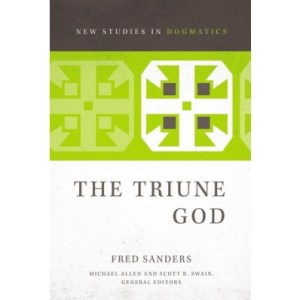 should not begin with the Old Testament. Because the doctrine is revealed in the historical events of the Incarnation and Pentecost, not the propositions of the text, we must begin with the events recorded in the New Testament, not the hints contained in the Old. Sanders rightly corrects strictly chronological approaches to the Trinity: “The root idea of revelation is not verbal announcement but the unveiling or disclosing of something that has been present, though concealed. . . . The triunity of God was revealed when the persons of the Trinity became present among us in a new way, showing up in person and becoming the object of our human observation” (40).
 In the Bible, the “arm of the Lord” is a vivid image of God’s saving power. But is it more than that? In Isaiah 59:16 and 63:5, the prophet tells how God will save his people by his own arm. In context, this builds on an important theme in Isaiah 40–66. But it also amplifies the promise of the messiah. Indeed, as we study “the arm of the Lord” across the Bible, I believe we begin to see how the “arm of the Lord” leads to the Son of God, who as Hebrews 10:5 says, citing Psalm 40, has received a body prepared by God.
 It is often argued that God’s absolute sovereignty disables or demotivates human responsibility. But I contend it is just the opposite: a biblical understanding of God’s sovereignty secures and strengthens human responsibility. In fact, the more we see how God’s sovereign actions work in human history, the more reason we have to trust God and move out in faith.
 You heard me say to you, ‘I am going away, and I will come to you.’ If you loved me, you would have rejoiced, because I am going to the Father, for the Father is greater than I.


 Via Emmaus