Via Emmaus on the Road: Philippians 4

Further Resources


Philippians 4 (ESV)

Therefore, my brothers, whom I love and long for, my joy and crown, stand firm thus in the Lord, my beloved.

Exhortation, Encouragement, and Prayer

I entreat Euodia and I entreat Syntyche to agree in the Lord. Yes, I ask you also, true companion, help these women, who have labored side by side with me in the gospel together with Clement and the rest of my fellow workers, whose names are in the book of life.

Rejoice in the Lord always; again I will say, rejoice. Let your reasonableness be known to everyone. The Lord is at hand; do not be anxious about anything, but in everything by prayer and supplication with thanksgiving let your requests be made known to God. And the peace of God, which surpasses all understanding, will guard your hearts and your minds in Christ Jesus.

Finally, brothers, whatever is true, whatever is honorable, whatever is just, whatever is pure, whatever is lovely, whatever is commendable, if there is any excellence, if there is anything worthy of praise, think about these things. What you have learned and received and heard and seen in me—practice these things, and the God of peace will be with you.

God’s Provision

10 I rejoiced in the Lord greatly that now at length you have revived your concern for me. You were indeed concerned for me, but you had no opportunity. 11 Not that I am speaking of being in need, for I have learned in whatever situation I am to be content. 12 I know how to be brought low, and I know how to abound. In any and every circumstance, I have learned the secret of facing plenty and hunger, abundance and need. 13 I can do all things through him who strengthens me.

14 Yet it was kind of you to share my trouble. 15 And you Philippians yourselves know that in the beginning of the gospel, when I left Macedonia, no church entered into partnership with me in giving and receiving, except you only. 16 Even in Thessalonica you sent me help for my needs once and again. 17 Not that I seek the gift, but I seek the fruit that increases to your credit. 18 I have received full payment, and more. I am well supplied, having received from Epaphroditus the gifts you sent, a fragrant offering, a sacrifice acceptable and pleasing to God. 19 And my God will supply every need of yours according to his riches in glory in Christ Jesus. 20 To our God and Father be glory forever and ever. Amen.

Final Greetings

21 Greet every saint in Christ Jesus. The brothers who are with me greet you. 22 All the saints greet you, especially those of Caesar’s household.

23 The grace of the Lord Jesus Christ be with your spirit.

Soli Deo Gloria!

Via Emmaus on the Road: 2 Corinthians 9

Further Resources


2 Corinthians 9 (ESV)

The Collection for Christians in Jerusalem

Now it is superfluous for me to write to you about the ministry for the saints, for I know your readiness, of which I boast about you to the people of Macedonia, saying that Achaia has been ready since last year. And your zeal has stirred up most of them. But I am sending the brothers so that our boasting about you may not prove empty in this matter, so that you may be ready, as I said you would be. Otherwise, if some Macedonians come with me and find that you are not ready, we would be humiliated—to say nothing of you—for being so confident. So I thought it necessary to urge the brothers to go on ahead to you and arrange in advance for the gift you have promised, so that it may be ready as a willing gift, not as an exaction.

The Cheerful Giver

The point is this: whoever sows sparingly will also reap sparingly, and whoever sows bountifully will also reap bountifully. Each one must give as he has decided in his heart, not reluctantly or under compulsion, for God loves a cheerful giver. And God is able to make all grace abound to you, so that having all sufficiency in all things at all times, you may abound in every good work. As it is written,

“He has distributed freely, he has given to the poor;

his righteousness endures forever.”

10 He who supplies seed to the sower and bread for food will supply and multiply your seed for sowing and increase the harvest of your righteousness. 11 You will be enriched in every way to be generous in every way, which through us will produce thanksgiving to God. 12 For the ministry of this service is not only supplying the needs of the saints but is also overflowing in many thanksgivings to God. 13 By their approval of this service, they will glorify God because of your submission that comes from your confession of the gospel of Christ, and the generosity of your contribution for them and for all others, 14 while they long for you and pray for you, because of the surpassing grace of God upon you. 15 Thanks be to God for his inexpressible gift!

Soli Deo Gloria!

Via Emmaus on the Road: 2 Corinthians 8

Further Resources


2 Corinthians 8 (ESV)

Encouragement to Give Generously

We want you to know, brothers, about the grace of God that has been given among the churches of Macedonia, for in a severe test of affliction, their abundance of joy and their extreme poverty have overflowed in a wealth of generosity on their part. For they gave according to their means, as I can testify, and beyond their means, of their own accord, begging us earnestly for the favor of taking part in the relief of the saints— and this, not as we expected, but they gave themselves first to the Lord and then by the will of God to us. Accordingly, we urged Titus that as he had started, so he should complete among you this act of grace. But as you excel in everything—in faith, in speech, in knowledge, in all earnestness, and in our love for you—see that you excel in this act of grace also.

I say this not as a command, but to prove by the earnestness of others that your love also is genuine. For you know the grace of our Lord Jesus Christ, that though he was rich, yet for your sake he became poor, so that you by his poverty might become rich. 10 And in this matter I give my judgment: this benefits you, who a year ago started not only to do this work but also to desire to do it. 11 So now finish doing it as well, so that your readiness in desiring it may be matched by your completing it out of what you have. 12 For if the readiness is there, it is acceptable according to what a person has, not according to what he does not have. 13 For I do not mean that others should be eased and you burdened, but that as a matter of fairness 14 your abundance at the present time should supply their need, so that their abundance may supply your need, that there may be fairness. 15 As it is written, “Whoever gathered much had nothing left over, and whoever gathered little had no lack.”

Commendation of Titus

16 But thanks be to God, who put into the heart of Titus the same earnest care I have for you. 17 For he not only accepted our appeal, but being himself very earnest he is going to you of his own accord. 18 With him we are sending the brother who is famous among all the churches for his preaching of the gospel. 19 And not only that, but he has been appointed by the churches to travel with us as we carry out this act of grace that is being ministered by us, for the glory of the Lord himself and to show our good will. 20 We take this course so that no one should blame us about this generous gift that is being administered by us, 21 for we aim at what is honorable not only in the Lord’s sight but also in the sight of man. 22 And with them we are sending our brother whom we have often tested and found earnest in many matters, but who is now more earnest than ever because of his great confidence in you. 23 As for Titus, he is my partner and fellow worker for your benefit. And as for our brothers, they are messengers of the churches, the glory of Christ. 24 So give proof before the churches of your love and of our boasting about you to these men.

Soli Deo Gloria!

Via Emmaus on the Road: 1 Corinthians 16


AI Generated. Not to scale . . . at all.

Further Resources

1 Corinthians 16 (ESV)

The Collection for the Saints

16 Now concerning the collection for the saints: as I directed the churches of Galatia, so you also are to do. On the first day of every week, each of you is to put something aside and store it up, as he may prosper, so that there will be no collecting when I come. And when I arrive, I will send those whom you accredit by letter to carry your gift to Jerusalem. If it seems advisable that I should go also, they will accompany me.

Plans for Travel

I will visit you after passing through Macedonia, for I intend to pass through Macedonia, and perhaps I will stay with you or even spend the winter, so that you may help me on my journey, wherever I go. For I do not want to see you now just in passing. I hope to spend some time with you, if the Lord permits. But I will stay in Ephesus until Pentecost, for a wide door for effective work has opened to me, and there are many adversaries.

10 When Timothy comes, see that you put him at ease among you, for he is doing the work of the Lord, as I am. 11 So let no one despise him. Help him on his way in peace, that he may return to me, for I am expecting him with the brothers.

Final Instructions

12 Now concerning our brother Apollos, I strongly urged him to visit you with the other brothers, but it was not at all his will to come now. He will come when he has opportunity.

13 Be watchful, stand firm in the faith, act like men, be strong. 14 Let all that you do be done in love.

15 Now I urge you, brothers—you know that the household of Stephanas were the first converts in Achaia, and that they have devoted themselves to the service of the saints— 16 be subject to such as these, and to every fellow worker and laborer. 17 I rejoice at the coming of Stephanas and Fortunatus and Achaicus, because they have made up for your absence, 18 for they refreshed my spirit as well as yours. Give recognition to such people.

Greetings

19 The churches of Asia send you greetings. Aquila and Prisca, together with the church in their house, send you hearty greetings in the Lord. 20 All the brothers send you greetings. Greet one another with a holy kiss.

21 I, Paul, write this greeting with my own hand. 22 If anyone has no love for the Lord, let him be accursed. Our Lord, come! 23 The grace of the Lord Jesus be with you. 24 My love be with you all in Christ Jesus. Amen.

Soli Deo Gloria!

Gospel-Motivated Giving

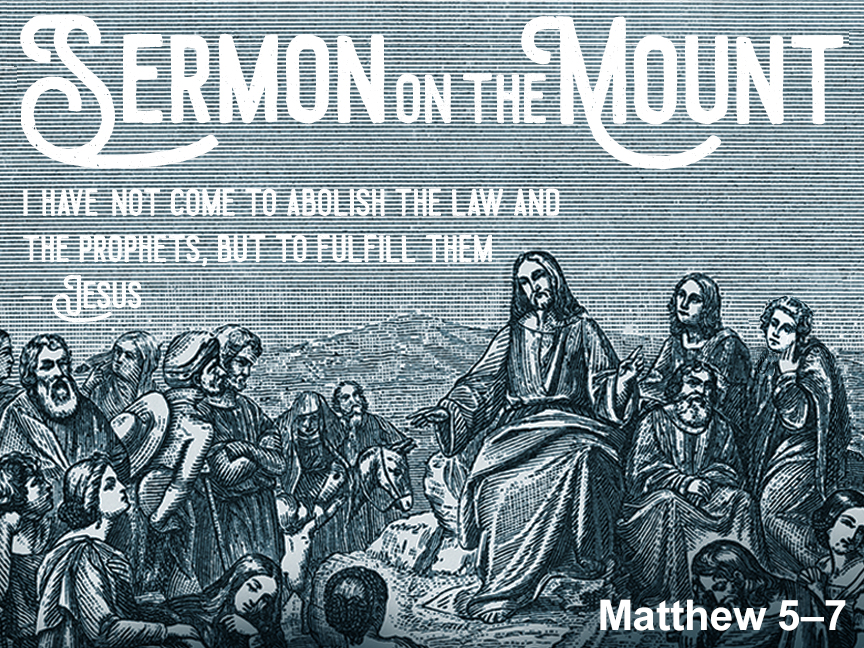
om-prakash-sethia-301978-unsplashThis summer our church looked at Jesus’s words concerning giving. In Sunday School, we studied Randy Alcorn’s helpful little book called The Treasure PrincipleYou can listen to the series here. And in our series on the Sermon on the Mount, we have looked at Jesus words about giving in Matthew 6:1–4, treasure in Matthew 6:19–24, and trusting God with our material needs in Matthew 6:25–34. You can listen to those sermons here:
Still, giving is not just something that Jesus talked about. It is something that goes back to the beginning of corporate worship. For in Exodus, when God redeemed his people from Egypt, he led them to contribute to the construction of the tabernacle. With the gifts God provided for Israel through the “plundering of the Egyptians,” God’s people gladly gave to the construction of God’s dwelling place.

Today, as the church has become the temple of the Holy Spirit, God’s people continue to give to its upbuilding, as the Lord moves our hearts. Jesus’s words about storing up treasure in heaven, and not on earth may even refer directly to this temple-directed giving (see Nicholas Perrin, Jesus the Temple), However, throughout the Bible there is a theme of God’s people giving to the upbuilding of God’s dwelling place because of the work of grace in their lives.

This is first seen in Exodus and continues until today. Accordingly, we can learn much by seeing the relationship between grace and giving, and how gospel-motivated giving is both similar and different from all other forms of philanthropy. Continue reading

The Truth about Treasure (Matthew 6:19–24)

sermon05The Truth about Treasure (Matthew 6:19–24)

What hath Athens to do with Jerusalem?

This is Tertullian’s famous question contrasting the difference between divine truth and man-made philosophy. And it highlights the challenge of living in this world with our eyes fixed upon another.

In a similar fashion, we might ask the same question about our rewards: What hath dollars to do with eternal destinies?

Indeed, in a world where money motivates, secures, comforts, and corrupts, we are painfully aware of the problems that money (and its lack) bring. Yet, as Jesus instructs us in Matthew 6:19–24, our earthly riches also provide an important avenue for discipleship and increasing our eternal joy. The question is how!

With that in mind, Sunday’s sermon considered Jesus’s teaching about earthly and heavenly reward. You can listen to that sermon online. Discussion questions and additional resources can be found below.

Continue reading

Gospel-Motivated Giving

givingThe Lord said to Moses,  “Speak to the people of Israel, that they take for me a contribution. From every man whose heart moves him you shall receive the contribution for me.
— Exodus 25:1–2 —

But who am I, and what is my people, that we should be able thus to offer willingly? For all things come from you, and of your own have we given you.
— 1 Chronicles 29:14 —

Old Covenant Giving: A Legal Requirement in the Land

From the opening pages of Scripture God has called his saints to give. Providing the first sacrifice when he made skins to clothe Adam and Eve (Genesis 3:21), God modeled for his children the kind of animal sacrifice that would please him. Abel followed in faith (Genesis 4:4; Hebrews 11:4), as did Noah (Genesis 8:20–22), Abraham (22:16–18), Moses (24:4–5; 40:29), and the priests of Levi (when they kept the Law). Throughout the Old Testament, God’s people were called to give.

Echoed in every other world religion, giving is a necessary part of worship. In Israel, tithes, offerings, and sacrifices—atoning and festive—were a normal part of worship. Likewise, the Old Testament testifies that every demon-inspired deity demanded gifts and every culture offered sacrifices—sometimes even giving up their children to the flames of Molech (Leviticus 18:21; Jeremiah 32:35). In short, from a cursory reading of Scripture or a survey of the world, mankind is people who worship, and giving is a necessary part of that worship. Still, in that worship there are right and wrong ways to worship, which means there are right ways and wrong ways to give.

Continue reading

How Jesus’ Poverty Enriches Us to Give Sacrificially (2 Corinthians 8:9)


graceIn the middle of his instruction about giving to the Jerusalem church, Paul drops this theological gem:

For you know the grace of our Lord Jesus Christ, that though he was rich, yet for your sake he became poor, so that you by his poverty might become rich” (2 Corinthians 8:9).

In context, Paul is encouraging the Corinthians to fulfill (“finish doing” and “completing,” 8:11) what they started. Apparently, a year before Paul penned 2 Corinthians, the church in that city promised to give generously to the poor in Jerusalem (8:10; cf. Romans 15:25–26). In chapters 8–9, Paul recalls their promise and prepares them for the forthcoming delegation to collect the offering (see 9:3–5). His words are not threatening but motivating, as he  speaks repeatedly of their “readiness” (8:11, 12; 9:2), “zeal” (9:2), and genuine, generous love (8:7, 8, 24).

In fact, it is because of his confidence in their generosity that Paul encourages them in their giving. And one of the principle means of motivation is Jesus’ substitionary death. In leaving heaven to suffer and die on earth, Paul likens Jesus’ experience to that of losing his riches and becoming poor. And by speaking of Christ’s death in terms of “rich” and “poor,” Paul teaches the Corinthians and us how to give. To understand how Jesus humiliation motivates our giving, consider four points.

  1. Jesus’ Poverty Was Self-Appointed
  2. Jesus’ Poverty Was For the Sake of Others
  3. Jesus’ Giving Motivates Our Giving
  4. Our Giving Manifests and Amplifies Jesus’ Grace

Continue reading

What Does Genuine Mercy Look Like?

mercyWhat does mercy look like?

In Matthew 5:7, Jesus says, “Blessed are the merciful, for they shall receive mercy.” The mercy that God will give refers in this passage to the divine favor that God will grant to his merciful children on the day of judgment. But what does it mean to be merciful now? 

In my Sunday sermon, I sought to answer that question and here is the answer I gave.

In response to the gospel and enabled by the Spirit, mercy gives to the needy, forgives the offender, in order that all might give thanks to God.

Thematically, mercy gives and forgives for the sake of thanksgiving. Let me unpack that definition. Continue reading

Blessed are the Merciful: Giving, Forgiving, and Thanksgiving

samaritan“Blessed are the merciful, for they shall receive mercy”

Matthew 5:7 was the text I preached yesterday. In my sermon, I answered three questions:

  1. Does God show mercy to everyone?
  2. Why does Jesus say “Blessed are the merciful” instead of “Blessed are the faithful?”
  3. What does mercy look like?

In answering that final question, I gave the answer: True mercy gives generously and forgives sincerely in order to increase thanksgiving to God (cf. Rom 15:8-9). In response to the mercies of God (i.e., the gospel), mercy proactively schemes, plans, and prays for the increase of thanksgiving to God by means of our giving to those in need and forgiving those who have offended us. In short, genuine mercy involves giving and thanksgiving in order to cause thanksgiving to God.

If you have struggled with understanding how we can be merciful, or if you—like me—have struggled to be merciful, consider this beatitude which calls us to cry out for mercy, so that we too might be merciful!

Here’s the audio:

Soli Deo Gloria, dss