The Sons of God: Three Interpretations of Genesis 6:1–4

luigi-boccardo-OGSbrFW_dos-unsplashFigment. Absurd. Gross.

These are but three of the names John Calvin calls the position I hold on Genesis 6. And while, he doesn’t employ his most common insult (stupid!), I am sure he would have little trouble applying that label to the view that angels had sexual relations with women, such that the Nephilim (or giants) were the resultant offspring.

For indeed, when considering who the sons of God were in Genesis 6, he excoriates the ancient view that believed the sons of God (=angels) came from heaven to consort with the daughters of man. He writes in his commentary on Genesis 6, “That ancient figment, concerning the intercourse of angels with women, is abundantly refuted by its own absurdity; and it is surprising that learned men should formerly have been fascinated by ravings so gross and prodigious [strange or unusual].” [1]

Following this view, he adds another, namely, the idea that the sons of God were royal sons and the daughters of men were commoners. The problem in this case was the way that the nobility chased the commoners, resulting in offspring of mixed hereditary stock.[2] On this second view, whom he assigns to the “Chaldean paraphrast” (i.e., the Babylonian Talmud), we can agree that this interpretation fails to follow the terms of Scripture. (Yet, it is not far from another view that will be referenced below.)

In contrast to both views, Calvin then offers his—the idea that has become popular among so many evangelicals today. He sees the sons of God as the male heirs of Seth and the daughters of man as the female offspring of Cain. While Calvin frames this division in theological terms (i.e., the sons being chosen by grace and the daughters being left in their common condition), his reading is purely human, and wreaks nothing of gross absurdity.[3] Or, so he believes.

Historically, his view, which goes back to Augustine and before that to Julius Africanus (c. 160–240), can be summarized under the title of the Sethite position, while my position, which goes back to the Jewish interpreters of the Second Temple period might be titled the Fallen Angel position. Additionally, there is the view that understands the sons of God in royal terms, but not like that described by Calvin, what I’ll label the Kings of the Earth position.

In what follows, I want to lay out these three positions and begin to explain why I believe Calvin’s mockery of this position is wrong. As always, it is not a light thing to disagree with such an eminent theologian, but as a Baptist, Calvin’s insults don’t bother me. I’ve disagreed with him before, and here I will do so again. I will argue that his Sethite view is reasonable, but not ultimately persuasive. Better, we should read Genesis 6 in the context of the whole Bible, and when we do we will discover the fact that the angels of heaven left their proper abode, consorted with human women, and thus invited the judgment of God which led to the cosmic flood. Continue reading
What Should We Do With 1 Enoch? A Biblical Approach to Extra-Biblical Literature

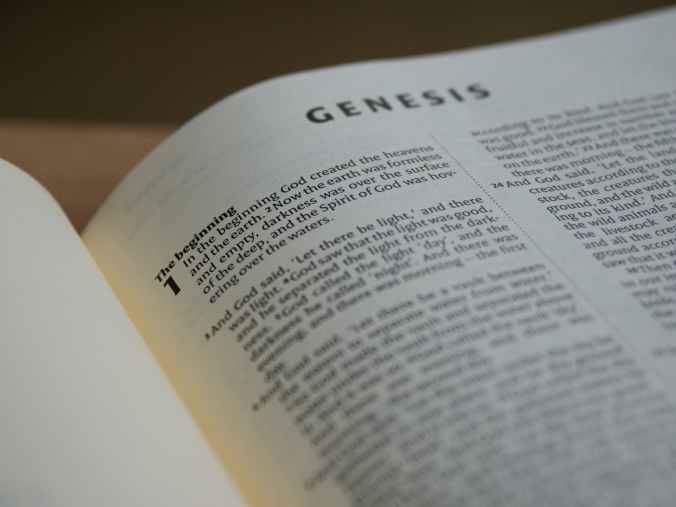
konrad-hofmann-XFEqU_bf5nA-unsplashIn Genesis 6 we find the curious introduction to a group of people (?) called the Nephilim. In verse 4, the ESV reads, “The Nephilim were on the earth in those days, and also afterward, when the sons of God came in to the daughters of man and they bore children to them. These were the mighty men who were of old, the men of renown.”


Thus concludes one of the strangest passages in all the Bible. For centuries, the four verses that begin Genesis 6 have occasioned debate on whom the Nephilim are, who the sons of God are, who the daughters of man are, who the mighty men of old were, the men of renown, and how these characters all fit together. Are these all descriptions of human beings, sons and daughters of Adam? Or, is something more nefarious afoot? Are the sons of God fallen angels? And if so, who are their offspring?

To these questions and more, I will attempt to give an answer in this post and three more to come. Below, I will consider what it means for Christians to use extra-biblical sources, and how we can properly benefit from reading 1 Enoch. In the next post, I will lay out the options for reading Genesis 6, and explain the strengths and weaknesses of various positions. Then third, I will make a canonical argument for understanding the sons of God as fallen angels and the Nephilim/mighty men as giants. Fourth, I will draw some theological conclusions related to Genesis 6 but also to Christ and his rule over the cosmos. Continue reading

The Hill of Eden: Seeing the Topography of Genesis 2–4

mountainous valley with evergreen forest against misty sky

In recent weeks, my sermons on Genesis 3–4 have made much of the fact that the Garden of Eden is found on a mountain. In recounting the drama of Adam, Eve, the Serpent, and the Lord (Genesis 3), as well as Cain and Abel (Genesis 4), I have argued that the topography of Eden plays an important role. For example, when Cain’s face was downcast (Gen. 4:5), I have argued that he is looking down the mountain and away from God. Equally, when God told Cain to look for the sin offering, lying at the door of the Garden, he was calling him to look up the mountain from where his help would come (cf. Psalm 121).

Long story short, the theme of mountains in the Bible cannot be underestimated. Just this morning, I was pondering the way mountains play a role in Matthew (cp. Matt. 4:8; 17:1; 28:16). Maybe I’ll write something on that soon. For now, however I want to help studious Bible readers to see how Genesis 2–4 should be read with topography in mind.

So, in nine strokes, I will attempt to demonstrate why I believe Scripture presents Eden as a mountain sanctuary, and also why this matters for understanding the events of Genesis 2–4 and beyond.

First, the Bible explicitly calls Eden the Mountain of God.

In Ezekiel 28, the Lord addresses the King of Tyre, and in his oracle of judgment, the Lord identifies the wicked king with Adam in priestly garments. In vv. 13–14 he writes,

You were in Eden, the garden of God; every precious stone was your covering, sardius, topaz, and diamond, beryl, onyx, and jasper, sapphire, emerald, and carbuncle; and crafted in gold were your settings and your engravings. On the day that you were created they were prepared. 14 You were an anointed guardian cherub. I placed you; you were on the holy mountain of God; in the midst of the stones of fire you walked. . . .

He continues in verse 16, saying, “so I cast you as a profane thing from the mountain of God, and I destroyed you, O guardian cherub, from the midst of the stones of fire.”

Now, there is debate about who this figure is. Who did God cast down from the mountain? Is it a reference to Adam or to one of the guardian cherubs? That’s a good question, and I generally follow the line of thinking offered by the NET translation.[1] But for now, that question is not the point.

The point at issue is that Ezekiel makes it unmistakable: the Garden of Eden resides on a mountain. And the Prophet of Israel understood it this way because Genesis 2 makes it evident that the Garden stands below the spring of living water (at the top of the mountain) and above the fields, which enjoy the water of four rivers. Continue reading

The First Day of the Lord (Genesis 3): Seven Reasons the Fall Occurred on the Seventh Day

close up photo of bible

A few weeks ago, in a sermon on Genesis 3:8–13, I made the case that the events of Genesis 3 took place on the seventh day of the creation week, not some undefined time after the creation week. Instead of seeing Adam and Eve having days or weeks of communion with God in the Garden of Eden, I argued that Adam and Eve sinned against God on their very first day.

Just as Genesis 2 expounds the events of Day 6 (Gen. 1:24–31) in the creation week, so Genesis 3 develops the events of Day 7 (Gen. 2:1–3). At the end of the seventh day, God came down from heaven onto his mountain in order to rest on his holy hill. Yet, because he found two unclean sinners hiding in the garden, and a serpent standing there triumphant, God’s response was one of covenantal judgment, with an eschatological promise of salvation.

Genesis 3:14–19 is the centerpiece of the chapter, where God issues a curse on the serpent and on creation. And as a result, the first week of creation ends with the need of a new creation. Indeed, just as the eighth day, which is the first day of the week, will become in redemptive history the day of new creation, so Genesis 3 ends looking for this new creation. Or, at least, that is the implication of reading Genesis 3 as the seventh day of the creation week.

Yet, it may take some convincing to prove that Genesis 3 is the seventh day. After all, many commentators imagine a backstory to Genesis 3, which includes a series of “daily chats” occurring in the Garden before the Serpent arrives. Yet, such a backstory cannot be found in the text of Genesis 1–3.

Instead, what is found is the immediate entrance of the Serpent in Genesis 3:1. There is no “intertestamental period” between the union of man and woman (Genesis 2:24–25) and the arrival of the Serpent (3:1). And to create such an apocryphal tale is to go beyond the text. Nevertheless, the absence of backstory doesn’t automatically prove that Genesis 3 is the seventh day, unless there are others evidences in the text. And that is what I aim to argue in the seven points below.

Today, I will argue that Genesis 3 occurs on the seventh day of the creation week. And next week, I will return for at least four more reasons related to understanding the “Spirit of the Day” for proving the same point. Continue reading

A Consolation in the Curse: Reading Genesis 3:16b as Good News

silhouette of newly wedded couple

Somewhere below the rim of the Grand Canyon, at some time during the week I spent rafting there last summer, I heard an interpretation of Genesis 3:16 that didn’t sound right. Sitting down each evening to discuss the age of the earth, the creation of all things, and the text Genesis, Bill Barrick (professor emeritus at Master’s Seminary) made the off-hand comment at some point that “The curse upon the woman in Genesis 3:16 was good, actually.”

What?!?

If you are like me, the idea of calling a curse ‘good’ is on par with calling the blessing of marriage ‘evil.’ In our modern world, defining marriage as being between one man and woman has been called evil, because it is hateful to the LGBT+ community and anyone else who doesn’t feel committed to a Christian view of sexuality. For years now, we who live in America have been in a struggle to define good and evil. Proclaiming themselves to be wise, the world has become enslaved to one folly after another. And so, as Christians, we are on guard for any interpretation that might confuse the categories of good and evil. And rightly so!

Hearing this new interpretation of a familiar passage (Genesis 3:16), therefore, was confusing and not a little shocking! And yet, the more that I have looked at this verse, the more I am convinced that Dr. Barrick is correct: Genesis 3:16b is a gracious consolation granted to the woman. Instead of reading this verse as one that enjoins opposition, competition, or even enmity at the heart of marriage, it seems better to see God’s word to the woman as a genuine kindness. Marriage is not a common curse, but a common grace.

This is what I argued in my sermon on Sunday, and in what follows, I want to show from Scripture why Genesis 3:16b is best rendered positively, not negatively. That is to say, while most interpreters offer a negative reading of the verse—either stating that God subordinated the woman to the man at this point (egalitarianism) or that he exacerbated the fallen condition of men and women (complementarianism)—I will be arguing from a generally complementarian position that this verse should be read positively as God granting protection to the woman, even after she rejected and ignored the protection of the man when she encountered the serpent (Gen. 3:1–6).[1]

My position does not deny the way that men can abuse their authority and use their strength to harm those under their charge; nor will it deny that women can refuse to submit to their husbands or embrace the all-wise autonomy offered by the serpent. Both of those realities threaten marriage today. Nevertheless, as I will attempt to show, the nature of marriage after the fall is a place of consolation, protection, and natural goodness. Instead of being a place of natural conflict, should be seen as a place of natural comfort. Yes, sin still destroys the world and every marriage it ensnares, but importantly the nature of marriage is one of common grace. And that is what is at stake in this question of interpretation.

To maintain the goodness of marriage as an institution requires seeing the woman’s desire for her husband as an intrinsic good, as well as the man’s responsibility to rule over her. Today, such a reading is difficult to accept—not only because it flies in the face of a century of feminist ideology, but also because translations like the ESV suggest a negative reading of Genesis 3:16. Put differently, if we are going to rightly understand the consolation of God’s word to the woman in this verse, we must go back to the passage and to see what is there. And in particular, we need to see how a proper reading of Genesis 3:16 depends upon a proper interpretation of Genesis 4:7.

In what follows, then, my aim is to demonstrate why a positive reading of Genesis 3:16 is the best option, based on a comparison of Genesis 3:16 and Genesis 4:7. As multiple authors have attested, how one reads Genesis 4:7 will be determinative for our reading of Genesis 3:16. Knowing that, I will spend a great deal of time addressing the latter text, showing why “desire” (tesuqah) and “rule” (mashal), the two overlapping words, are best seen positively in Genesis 4:7, not negatively. From there, we can see how the dominoes fall. If Genesis 4:7 is positive not negative, then it follows that Genesis 3:16b is also positive, which best corresponds to the literary structure of Genesis 3:14–19 and the emerging theology of marriage as an institution of common grace.

So, that’s my argument, and it will proceed in five parts.

  1. I will show three common positions related to Genesis 3:16b.[2]
  2. I will consider how Genesis 4:7 should be read as a “sin offering” provided by God not some personification of “sin” crouching at the door waiting. From this, I will show how the words “desire” and “rule” are good in Genesis 4:7.
  3. I will introduce two authors who provide a positive reading.
  4. I will outline the text itself and attempt to provide a better reading.
  5. I will explain the cash value of this reading.

Continue reading

The Test of Wisdom: Which Path Will You Take?

alex-shute-QnRDKNbKl9k-unsplash6 Go to the ant, O sluggard; consider her ways, and be wise.
7 Without having any chief, officer, or ruler,
8 she prepares her bread in summer and gathers her food in harvest. 

In Proverbs 6, the Word of God tells us to go to the ant and find wisdom. In the ant, we learn principles of initiative, preparation, and hard work. Indeed, by looking at this little creature, an insect found everywhere and anywhere, we are told to look and learn her ways.

In fact, Proverbs 6 is one of many places where we find wisdom from the animals. In Proverbs 30, we find four animals in direct order: there is the ant, the rock badger, the locust, and the lizard. And from each we can gain insight into the way we ought to live.[1]

If we go further, the whole Bible teaches us to gain wisdom from nature. From the sparrows who fall from the sky, to the sheep who follow their shepherd, and from the lions who prowl the hills, to the Leviathan who roams the sea, all of these animals were created by God to give us wisdom.

And in Genesis, we have already seen the way that animals are used to teach Adam. For in Genesis 2:19 we find this report,Now out of the ground the Lord God had formed every beast of the field and every bird of the heavens and brought them to the man to see what he would call them. And whatever the man called every living creature, that was its name.”

God tasked the man with naming the animals, but he also tasked these animals to teach the man that no suitable helper would be found for him among their ranks, as verse 20 indicates. Indeed, the man would need God to make a helper suitable for him, and that is what the rest of Genesis 2 reveals—the glorious formation of the woman and the establishment of the first marriage.

As Genesis 2:24–25 concludes the chapter, “Therefore a man shall leave his father and his mother and hold fast to his wife, and they shall become one flesh. And the man and his wife were both naked and were not ashamed.” Continue reading

From Creation to New Creation: A Seven Day Pattern in Genesis 1–3

time lapse photo of stars on night

Both James Jordan and Alistair Roberts have made a case that the literary structures of Genesis 1 and Genesis 2 mirror one another.[1] As evidenced in Genesis 1:1–2:3, creation took place over the course of seven days—six days of work, one day of rest. Equally, Genesis 2:4–25 follows a similar pattern, as observed below, as does Genesis 3, which Jordan develops in his book Trees and Thorns: Studies in the First Four Chapters of Genesis.

If this reading is correct, then the first three chapters of Genesis give us three parallel events—three weeks that speak of the same creation week. To put it in temple terms, Genesis 1 gives us the creation of the macro-temple, the cosmos; Genesis 2 gives us the formation of the micro-temple, the garden; and Genesis 3 gives us the defilement of the garden which leads to the de-creation of the cosmos, what I might call the massacred-temple.

If this approach is correct, then it not only stresses the seven day pattern of creation, with each chapter following the same basic pattern (see below). But it also situates the first three chapters as following.

  • Genesis 1 outlines the full, seven-day creation week (Gen. 1:1–2:3),
  • Genesis 2 returns to Day 6 to detail how God created man at the beginning of the day and woman at the end of the day (Gen. 2:4–22),
  • Genesis 2:23–25 develops the glory of God’s good creation, as the woman comes to the man when he awakes on Day 7. But it continues to watch that glory turn to shame, as the rest of Day 7 follows the tragic sin of humanity to believe the serpent, eat the fruit, and rebel against God. As a result, man’s first disobedience results in him being cut off from the Tree of Life (Gen. 3:1–24; cf. Rom. 5:12, 18–19).[2]

Following Jordan and Roberts, therefore, I offer the following seven day outline of Genesis 1–3. Let me know what you think and how it might be improved. At the end, I’ll share why reading these chapters in this way matters. Continue reading

The Via Emmaus Bible Reading Plan: January Resources for Genesis, Isaiah, and Matthew

Jesus washing the feet of Saint Peter on Maundy Thursday

This month the Via Emmaus Reading Plan is looking at Genesis, Isaiah, and/or Matthew. (See below for the tracks). If you are following this plan, or looking for a new reading plan, you can find helpful resources on the following pages. 

Track 1: Genesis

Track 2: Isaiah

Track 3: Matthew

If you have other resources on these books, please feel free to share.

May the Lord bless you and keep you and make his face shine upon you as you draw near to him in his Word.

The Via Emmaus Bible Reading Plan

Tracks[1] Old Testament 1

Law + Prophets

Old Testament 2

Prophets + Writings

New Testament
January Genesis Isaiah Matthew
February Exodus Jeremiah Mark
March Leviticus

Psalms

Ezekiel Luke

Psalms

April Numbers The Twelve[2] John
May Deuteronomy Psalms Acts
June John Proverbs Romans
July Joshua

Judges

Job 1–2 Corinthians
August 1–2 Samuel The Five Scrolls[3] Galatians–

2 Thessalonians

September 1–2 Kings

Proverbs

Daniel Pastorals

Proverbs

October Ezra-Nehemiah 1–2 Chronicles Hebrews
November Psalms Mark General Epistles[4]
December[5] Matthew Luke Revelation

As I have explained before

The idea of this plan is simple. Read, re-read, listen, study, memorize, and meditate on one (or two or three) books per month. If you do multiple tracks, you could read them sequentially, together, or at different times of the week (e.g., morning and evening, or week and weekend, etc.). However you plan your reading—and you should have a plan for reading that includes a place and time(s) to read—these tracks can guide you as you swim in the Bible. Then, over the course of 1, 2, or 3 years (depending on how many tracks you do), you will have read the whole Bible once, the Gospels twice, and the Psalms and Proverbs three times.

Let me know how this approach is going and if you have any feedback.

Soli Deo Gloria, ds

The Beginning of the Priesthood: Revisiting Levi in Genesis 34

41gzmdxgXRL._SX326_BO1,204,203,200_If anyone has spent anytime reading this blog, they know that I have written a fair bit about the priesthood. In January of next year, Lord willing, I will even have a book coming out on the topic. One note that I didn’t put in that manuscript, however, begins with the choice of Levi and his backstory in Genesis 34. As I have been reading Exodus this month I was reminded of this note and the textual connection between Moses and Aaron in that book with the historical figure of Levi. Here’s the note. Let me know what you think.
The Sword of Levi and Redemption of God

To understand the Levitical priesthood, we need to know Levi. In Genesis 28 we find his birth, but Genesis 34 records the defining moment of his life—the violent execution of Shechem. If you do not remember the story, go read the deceptive and deadly tale, where Dinah the daughter of Jacob is violated by Shechem a foreign prince. In response, Simeon and Levi struck down Shechem and the men of Hamor when they were “sore” from circumcision (v. 25). Feigning peace, these two brothers used their swords to avenge their sister’s defilement. Continue reading

On Reading Genesis: Four Approaches with Many Resources

close up photo of bible

January 1, 2021. 

With the new year comes the chance to begin a new Bible reading plan (or to continue your reading plan from last year). If the new year leads you to Genesis, as the Via Emmaus Bible Reading Plan does, you might be looking for some resources to aid in your reading—especially, if your plan does not give you a day-by-day, play-by-play. To that end I am sharing four reading strategies, with some helpful resources to listen and read. Be sure to read to the end, as some of the most helpful resources come at the end. Continue reading