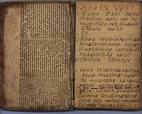
Neither the illuminating power of God in creation, nor the intervening work of God in history is sufficient to save. It must be coupled with divinely inspired interpretations that explain the saving plans of God in humanity. Thus inspiration, inscripturation, and the transmission of information are necessary to unveil the promise of redemption to every generation.
Inspiration & Inscripuration: The God who defines history (cf. Isa. 46:9-11) is the same God who also inspires his word authoritatively. Just as He has made Himself known through mighty deeds in the world (cf. Ps. 103:7), He has also inspired a deposit of writing that rightly interprets his works on the earth (2 Tim. 3:16-17; 2 Pet. 1:19-21). Without this divine revelation, God’s people and humanity at large would be blind to the intentions of His redemptive plans and purposes. Indeed, fallen sinners would be unable to know or love Jesus Christ, because our sin disallows us from seeing, let alone knowing by faith, the immortal, invisible, infinitely holy God (1 Tim 1:16). In short, man’s ability to know God is dependent entirely on his gracious revelation. Mercifully, God has at many times and in many ways disclosed Himself and his gracious offer of salvation through Jesus Christ. The Scriptures are replete with this attestation. Consider:
Concerning the content of the inspiration, Jesus explains that all the Scriptures bear witness about one thing–Himself. He says, “These are my words that I spoke to you while I was still with you, that everything written about me in the Law of Moses and the Prophets and the Psalms must be fulfilled” (Luke 24:44ff; cf. John 5:39).
Concerning the veracity of the witness, Psalm 12:6 says, “The words of the Lord are pure words, like silver refined in a furnace on the ground, purified seven times;” and Proverbs 30:5 agrees, “Every word of God proves true.” Moreover, the New Testament concurs when Jesus prays, “Sanctify them in your truth; Your Word is truth” (John 17:17); and when the writer of Hebrews says that God has sworn an oath to his covenant people and “it is impossible for God to lie” (Heb. 6:18).
Concerning the scope and the manner of the revelation, Paul writes, “All Scriptures is God-breathed and useful for teaching, reproof, correction, and training in righteousness” (2 Tim. 3:16), and Peter affirms that God’s word is more sure his experience on the Mount of Transfiguration when he says, “No prophecy of Scripture comes from someone’s own interpretation. For no prophecy was ever produced by the will of man, but men spoke from God as they were carried along by the Holy Spirit” (2 Peter 1:20-21).
Concerning the unity of the Bible, Jesus said in his sermon on the mount, “Do not think that I have come to abolish the Law or the Prophets; I have not come to abolish them but to fulfill them. For truly, I say to you, until heaven and earth pass away, not an iota, not a dot, will pass from the Law until all is accomplished” (Matt. 5:17-18); and later John records Jesus saying that “the Scriptures cannot be broken” (John 10:35).
And finally, concerning the earnestness of the message and necessity for receiving it as God’s Word: Moses exhorts, “Take to heart all the words by which I am warning you today, that you may command them to your children that they may be careful to do all the words of this law. For it is no empty word for you, but your very life, and by this word you shall live long in the land that you are going over the Jordan to possess” (Deut. 32:46-47). Likewise, John at the end of his apocalypse and at the close of the canon, reminds Christians that blessing is dependent on our adherence to the Word of Christ. “I warn everyone who hears the words of the prophecy of this book: if anyone adds to them, God will add to him the plagues described in this book, and if anyone takes away from the words of the book of this prophecy, God will take away his share in the tree of life and in the holy city, which are described in this book” (Revelation 22:18-19).
Information Transmission: The route from inspired authors and original manuscripts to twenty-first century translations and paraphrases is long and circuitous, but one that is incredibly well documented and faith-insuring. Under the sovereignty of God, contemporary Bibles contain Scripture that is confirmed by extra-biblical history, archaeological evidence, and voluminous extant documents—first century fragments, second century manuscripts totaling in the thousands. So that there is no doctrine left hanging by a paucity of textual evidence. An excellent treatment of this matter is found in Peter Wegner’s The Journey From Text to Translation.
Even with all of these informative measures in place, God’s Holy Spirit is still requisite for opening darkened minds. Man-made, human-generated understanding is not enough. A plethora of unbelieving Bible scholars throughout the centuries proves this point. So tomorrow we will conclude our brief bibliology survey by considering how God’s illuminating Spirit makes plain the wisdom of God for salvation for those dead in their trespasses and sins.
Sola Deo Gloria, dss.
 Via Emmaus