 Over the summer, our church considered many of the things Jesus said about money. In a Sunday School series following Randy Alcorn’s The Treasure Principle, we learned much about how to invest our lives in things eternal. This Sunday, in our Sermon on the Mount series, we will again look at Jesus’s words about storing up treasure in heaven and not on earth.
Reflecting on this passage, I am reminded of an article I read more than 15 years ago on the subject of money and how it can be and should be “converted.” “Transmuted,” not converted, is actually the word R.A. Torrey used in his article, “Our Lord’s Teaching about Money,” but converting earthly riches into heavenly gain is the idea.
This article is actually more than 100-years old now, included in the historic 12-volume set The Fundamentals, but the truths contained therein are just as relevant today as they were in 1909. Indeed, God’s truth is eternal and his principles about all of life, including money, are evergreen. Yet, the point about converting currency into earthly treasure is one I haven’t heard often, thus I share Torrey’s point here.
Currency Conversion: How God Funds His Gospel Mission
In Torrey’s article on money, he lists nine “laws” Jesus taught about money. Each are worth considering, but it’s his final point about converting money into eternal rewards that has always stuck with me. And so I share it here: Continue reading
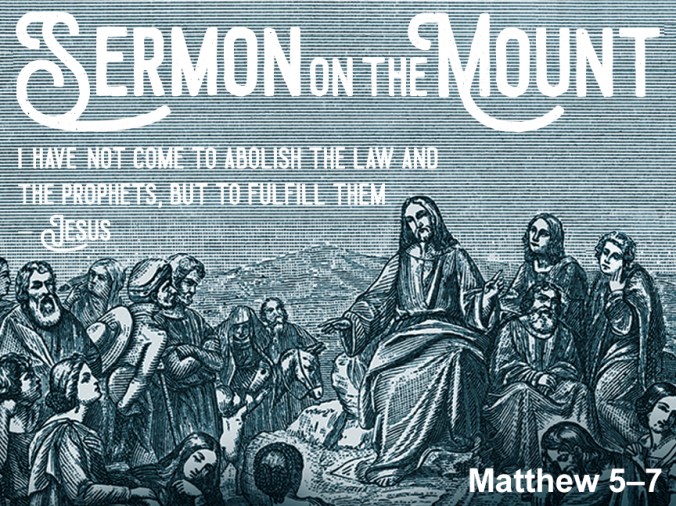

 In the middle of the Sermon on the Mount, Jesus gives instructions about giving (vv. 2–4), praying (vv. 5–15), and fasting (vv. 16–18). In our church we have taken one sermon per “spiritual discipline,” but really in the structure of Matthew’s Gospel, we should read these three disciplines together. And in fact, when we do there are some observations we discover that we might not find on our own.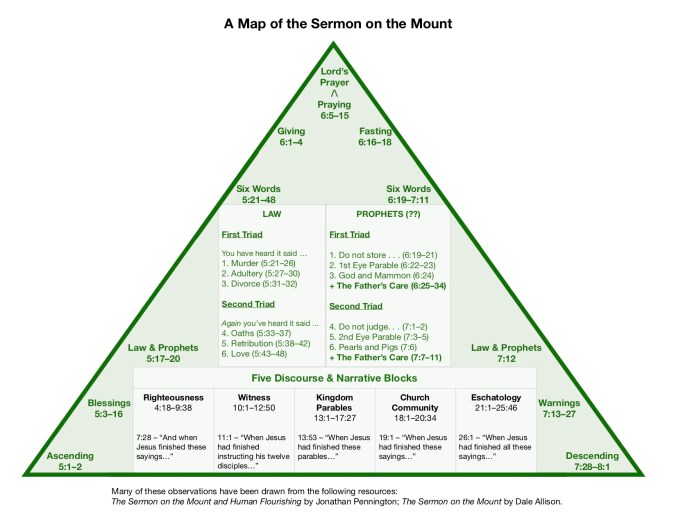

 “Disciples make disciples”
 In Ephesians 6:5–9 Paul finishes his “household codes” by addressing slaves/bondservants and masters and how they ought to work as unto the Lord. In fact, in five verses Paul makes five explicit references to Christ. Thus, as with marriage (Ephesians 5:22–33) and parenting (Ephesians 6:1–4), he gives hyper-attention to the way Christ motivates Christians in the marketplace.
 Via Emmaus