2 For I want you to know how great a struggle I have for you and for those at Laodicea and for all who have not seen me face to face, 2 that their hearts may be encouraged, being knit together in love, to reach all the riches of full assurance of understanding and the knowledge of God’s mystery, which is Christ, 3 in whom are hidden all the treasures of wisdom and knowledge. 4 I say this in order that no one may delude you with plausible arguments. 5 For though I am absent in body, yet I am with you in spirit, rejoicing to see your good order and the firmness of your faith in Christ.
Alive in Christ
6 Therefore, as you received Christ Jesus the Lord, so walk in him, 7 rooted and built up in him and established in the faith, just as you were taught, abounding in thanksgiving.
8 See to it that no one takes you captive by philosophy and empty deceit, according to human tradition, according to the elemental spirits of the world, and not according to Christ. 9 For in him the whole fullness of deity dwells bodily, 10 and you have been filled in him, who is the head of all rule and authority. 11 In him also you were circumcised with a circumcision made without hands, by putting off the body of the flesh, by the circumcision of Christ, 12 having been buried with him in baptism, in which you were also raised with him through faith in the powerful working of God, who raised him from the dead. 13 And you, who were dead in your trespasses and the uncircumcision of your flesh, God made alive together with him, having forgiven us all our trespasses, 14 by canceling the record of debt that stood against us with its legal demands. This he set aside, nailing it to the cross. 15 He disarmed the rulers and authorities and put them to open shame, by triumphing over them in him.
Let No One Disqualify You
16 Therefore let no one pass judgment on you in questions of food and drink, or with regard to a festival or a new moon or a Sabbath. 17 These are a shadow of the things to come, but the substance belongs to Christ. 18 Let no one disqualify you, insisting on asceticism and worship of angels, going on in detail about visions, puffed up without reason by his sensuous mind, 19 and not holding fast to the Head, from whom the whole body, nourished and knit together through its joints and ligaments, grows with a growth that is from God.
20 If with Christ you died to the elemental spirits of the world, why, as if you were still alive in the world, do you submit to regulations— 21 “Do not handle, Do not taste, Do not touch” 22 (referring to things that all perish as they are used)—according to human precepts and teachings? 23 These have indeed an appearance of wisdom in promoting self-made religion and asceticism and severity to the body, but they are of no value in stopping the indulgence of the flesh.
23 Then the whole company of them arose and brought him before Pilate. 2 And they began to accuse him, saying, “We found this man misleading our nation and forbidding us to give tribute to Caesar, and saying that he himself is Christ, a king.” 3 And Pilate asked him, “Are you the King of the Jews?” And he answered him, “You have said so.” 4 Then Pilate said to the chief priests and the crowds, “I find no guilt in this man.” 5 But they were urgent, saying, “He stirs up the people, teaching throughout all Judea, from Galilee even to this place.”
Jesus Before Herod
6 When Pilate heard this, he asked whether the man was a Galilean. 7 And when he learned that he belonged to Herod’s jurisdiction, he sent him over to Herod, who was himself in Jerusalem at that time. 8 When Herod saw Jesus, he was very glad, for he had long desired to see him, because he had heard about him, and he was hoping to see some sign done by him. 9 So he questioned him at some length, but he made no answer. 10 The chief priests and the scribes stood by, vehemently accusing him. 11 And Herod with his soldiers treated him with contempt and mocked him. Then, arraying him in splendid clothing, he sent him back to Pilate. 12 And Herod and Pilate became friends with each other that very day, for before this they had been at enmity with each other.
13 Pilate then called together the chief priests and the rulers and the people, 14 and said to them, “You brought me this man as one who was misleading the people. And after examining him before you, behold, I did not find this man guilty of any of your charges against him. 15 Neither did Herod, for he sent him back to us. Look, nothing deserving death has been done by him. 16 I will therefore punish and release him.”
Pilate Delivers Jesus to Be Crucified
18 But they all cried out together, “Away with this man, and release to us Barabbas”— 19 a man who had been thrown into prison for an insurrection started in the city and for murder. 20 Pilate addressed them once more, desiring to release Jesus, 21 but they kept shouting, “Crucify, crucify him!” 22 A third time he said to them, “Why? What evil has he done? I have found in him no guilt deserving death. I will therefore punish and release him.” 23 But they were urgent, demanding with loud cries that he should be crucified. And their voices prevailed. 24 So Pilate decided that their demand should be granted. 25 He released the man who had been thrown into prison for insurrection and murder, for whom they asked, but he delivered Jesus over to their will.
The Crucifixion
26 And as they led him away, they seized one Simon of Cyrene, who was coming in from the country, and laid on him the cross, to carry it behind Jesus. 27 And there followed him a great multitude of the people and of women who were mourning and lamenting for him. 28 But turning to them Jesus said, “Daughters of Jerusalem, do not weep for me, but weep for yourselves and for your children. 29 For behold, the days are coming when they will say, ‘Blessed are the barren and the wombs that never bore and the breasts that never nursed!’ 30 Then they will begin to say to the mountains, ‘Fall on us,’ and to the hills, ‘Cover us.’ 31 For if they do these things when the wood is green, what will happen when it is dry?”
32 Two others, who were criminals, were led away to be put to death with him. 33 And when they came to the place that is called The Skull, there they crucified him, and the criminals, one on his right and one on his left. 34 And Jesus said, “Father, forgive them, for they know not what they do.” And they cast lots to divide his garments. 35 And the people stood by, watching, but the rulers scoffed at him, saying, “He saved others; let him save himself, if he is the Christ of God, his Chosen One!” 36 The soldiers also mocked him, coming up and offering him sour wine 37 and saying, “If you are the King of the Jews, save yourself!” 38 There was also an inscription over him, “This is the King of the Jews.”
39 One of the criminals who were hanged railed at him, saying, “Are you not the Christ? Save yourself and us!” 40 But the other rebuked him, saying, “Do you not fear God, since you are under the same sentence of condemnation? 41 And we indeed justly, for we are receiving the due reward of our deeds; but this man has done nothing wrong.” 42 And he said, “Jesus, remember me when you come into your kingdom.” 43 And he said to him, “Truly, I say to you, today you will be with me in paradise.”
The Death of Jesus
44 It was now about the sixth hour, and there was darkness over the whole land until the ninth hour, 45 while the sun’s light failed. And the curtain of the temple was torn in two. 46 Then Jesus, calling out with a loud voice, said, “Father, into your hands I commit my spirit!” And having said this he breathed his last. 47 Now when the centurion saw what had taken place, he praised God, saying, “Certainly this man was innocent!” 48 And all the crowds that had assembled for this spectacle, when they saw what had taken place, returned home beating their breasts. 49 And all his acquaintances and the women who had followed him from Galilee stood at a distance watching these things.
Jesus Is Buried
50 Now there was a man named Joseph, from the Jewish town of Arimathea. He was a member of the council, a good and righteous man, 51 who had not consented to their decision and action; and he was looking for the kingdom of God. 52 This man went to Pilate and asked for the body of Jesus. 53 Then he took it down and wrapped it in a linen shroud and laid him in a tomb cut in stone, where no one had ever yet been laid. 54 It was the day of Preparation, and the Sabbath was beginning. 55 The women who had come with him from Galilee followed and saw the tomb and how his body was laid. 56 Then they returned and prepared spices and ointments.
On the Sabbath they rested according to the commandment.
The tombs also were opened. And many bodies of the saints who had fallen asleep were raised, and coming out of the tombs after his resurrection they went into the holy city and appeared to many.
— Matthew 27:52–53 —
What happened on Holy Saturday, the day situated between Good Friday and Resurrection Sunday? That is a good question that my fellow elder, Jared Bridges, has answered at the Washington Stand. And in his article, he takes a “topside” view—what was happening in Jerusalem on the day between Jesus’s cross and resurrection.
But there is another answer that needs to be considered, an answer that takes us below the surface, if you will. On Holy Saturday, while Jesus’s body rested in the grave, Jesus’s soul pronounced his victory over the spirits in prison (1 Pet. 3:19). That is to say, that when Jesus died, his body and soul were torn asunder, just like the temple veil (see Luke 23:44–46). As his body hung lifeless on the cross, soon to be buried, his soul, like all human souls, departed and went to realm of the dead, the place known as sheol in Hebrew or hades in Greek.
Importantly, sheol (or hades in Greek) is not the same thing as Hell (Gehenna), the place of eternal torment for the damned. Indicating their difference, hades gave up the dead to the lake of fire (i.e., hell) in Revelation 20:14. This means, Jesus did not go to “hell” after he died. But he did go to sheol, the realm of the dead. Often, we miss this fact, and missing what Jesus did in sheol, we miss the impact of Christ’s cross on the cosmos. Continue reading →
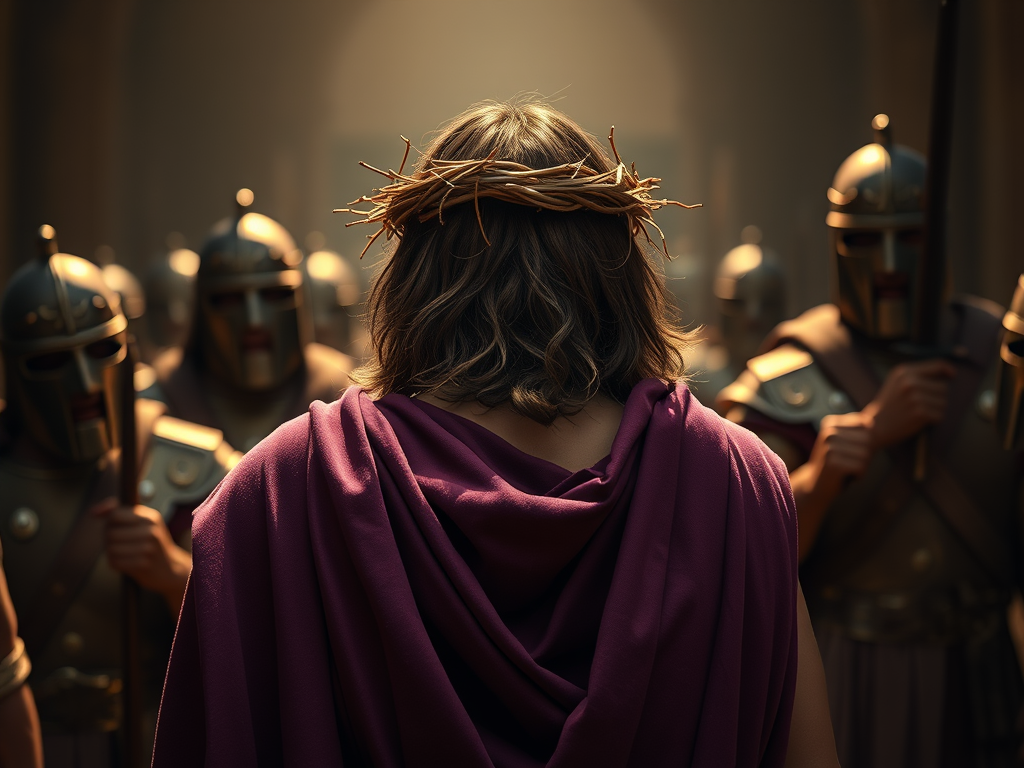
On this Good Friday, I want to share a meditation from Alexander Watson (1815?–1865) related to the cross of Christ and the way Jesus’s death brought to fulfillment his triple office of prophet, priest, and king. But first, a little background.
Seven Sayings and Seven Sermons
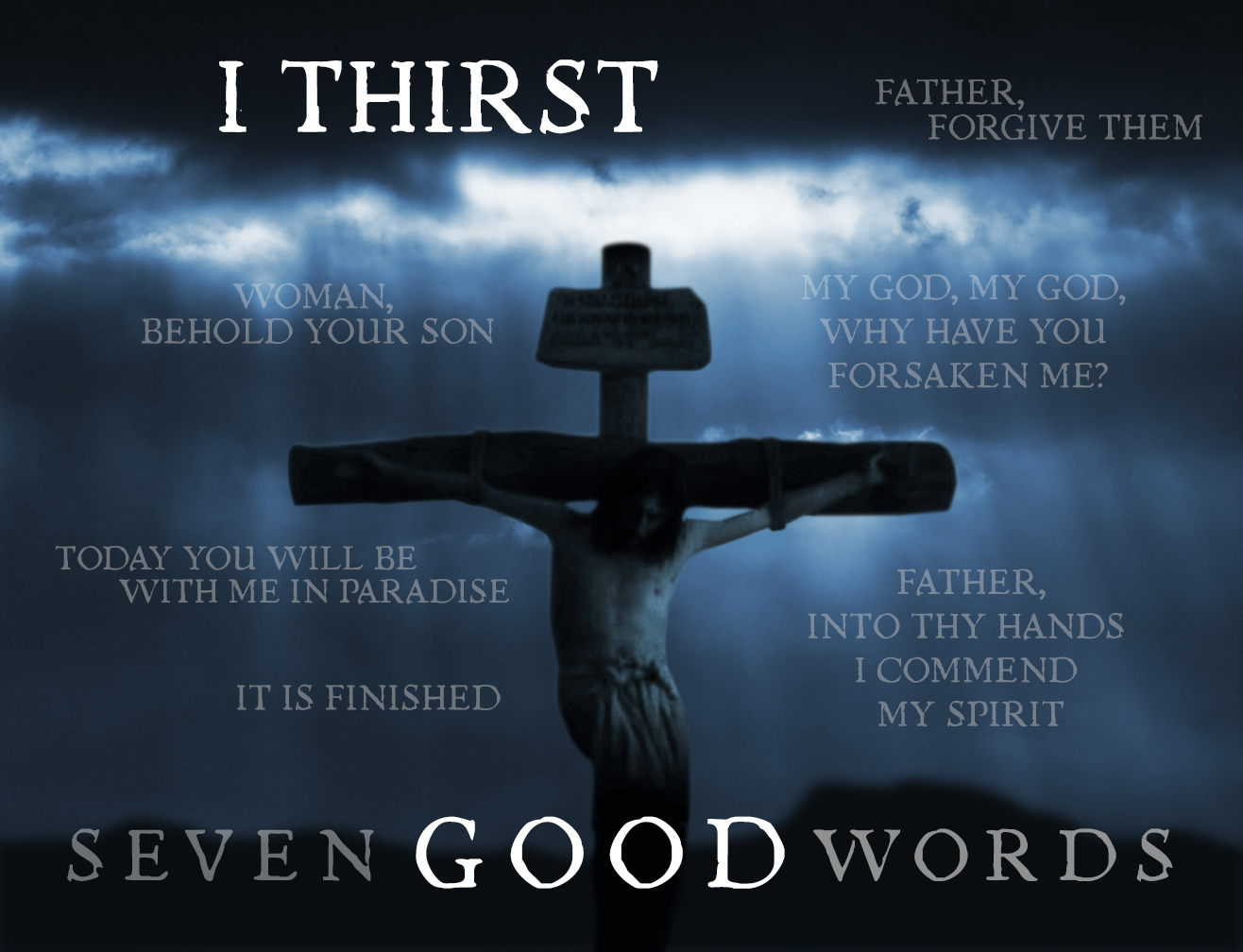
For the last six years (beginning in 2018), I have preached a Good Friday sermon that has focused on one of Jesus’s words from the cross. In all, there are seven statements found across the four gospels. Here they are in order.
Father, forgive them, for they know not what they do. (Luke 23:34)
Truly, I say to you, today you will be with me in paradise. (Luke 23:43)
Woman, behold your son . . . Son, behold your mother. (John 19:26–27)
My God, My God, why have you forsaken me? (Matthew 27:46; Mark 15:43)
I thirst. (John 19:28)
It is finished. (John 19:30)
Father, into your hands I commit my spirit (Luke 23:46)
You can also listen to these songs in Andrew Peterson’s Tenebrae.
For the last six years, I have preached six sermons. And you can find them here.
6Go to the ant, O sluggard; consider her ways, and be wise. 7Without having any chief, officer, or ruler, 8she prepares her bread in summer and gathers her food in harvest.
In Proverbs 6, the Word of God tells us to go to the ant and find wisdom. In the ant, we learn principles of initiative, preparation, and hard work. Indeed, by looking at this little creature, an insect found everywhere and anywhere, we are told to look and learn her ways.
In fact, Proverbs 6 is one of many places where we find wisdom from the animals. In Proverbs 30, we find four animals in direct order: there is the ant, the rock badger, the locust, and the lizard. And from each we can gain insight into the way we ought to live.[1]
If we go further, the whole Bible teaches us to gain wisdom from nature. From the sparrows who fall from the sky, to the sheep who follow their shepherd, and from the lions who prowl the hills, to the Leviathan who roams the sea, all of these animals were created by God to give us wisdom.
And in Genesis, we have already seen the way that animals are used to teach Adam. For in Genesis 2:19 we find this report, “Now out of the ground the Lord God had formed every beast of the field and every bird of the heavens and brought them to the man to see what he would call them. And whatever the man called every living creature, that was its name.”
God tasked the man with naming the animals, but he also tasked these animals to teach the man that no suitable helper would be found for him among their ranks, as verse 20 indicates. Indeed, the man would need God to make a helper suitable for him, and that is what the rest of Genesis 2 reveals—the glorious formation of the woman and the establishment of the first marriage.
As Genesis 2:24–25 concludes the chapter, “Therefore a man shall leave his father and his mother and hold fast to his wife, and they shall become one flesh. And the man and his wife were both naked and were not ashamed.” Continue reading →
After this, Jesus, knowing that all was now finished, said (to fulfill the Scripture), “I thirst.”
— John 19:28 —
Nothing was done by Christ which was not foretold; nothing was ever foretold by the Prophets concerning Christ, which was not done.
— Alexander Watson —
Tomorrow I will preach a Good Friday message focusing on the single word: dipsō (“I thirst”). For the last four years, our church has considered on Good Friday one of the seven words spoken on the cross. This year, we come to the fifth word, “I thirst,” a word that highlights the humanity of Jesus and the hostility of his enemies (see the context of Psalm 69). But it also shows how meticulous our Lord was in fulfilling Scripture.
In John 19:28, the Apostle notes the sharpness of Jesus’s mind, even as he bears the pain of crucifixion. And what is on Jesus’s mind as hangs on the cross? The Word of God that he must fulfill. To that point, he says, “I thirst,” a statement that may refer to Psalm 22:15, but more probably cites Psalm 69:21, which speaks of drinking sour wine, which Jesus does in John 19:29.
Tomorrow, I will consider the meaning of this fifth word, but today, I want to focus on the way Jesus perfectly fulfilled all the Old Testament, including this final statement of thirst. To help with this, I turn to Alexander Watson, a nineteenth century Anglican curate, who in 1847 preached a series of sermons called “The Seven Saying on the Cross; Or, The Dying Christ Our Prophet, Priest, and King.” For the last few years, I have read these sermons—one per year—and have profited greatly. (For those in the know, I have not preached Watson’s sermons).
I will put enmity between you and the woman, and between your offspring and her offspring; he shall bruise your head, and you shall bruise his heel. — Genesis 3:15 —
In one sentence, can you give the message of the Bible?
A few years ago, Dane Ortlund asked this question and received answers from a host of pastors and scholars, but one answer stood out from the rest and has taken on a life of its own. The answer comes from the provocateur, poet, and pastor, Douglas Wilson. He writes,
Scripture tells us the story of how a Garden is transformed into a Garden City, but only after a dragon had turned that Garden into a howling wilderness, a haunt of owls and jackals, which lasted until an appointed warrior came to slay the dragon, giving up his life in the process, but with his blood effecting the transformation of the wilderness into the Garden City.
In short: Kill the Dragon, Get the Girl. Whereby the Dragon is the Twisted Serpent of the Garden, the Girl is the Bride of Christ described as a glorious Garden City in Revelation 21–22, and the Slayer of the Dragon is the Son of God who took on flesh to come and save his damsel in distress by destroying the Dragon by means of his own death and resurrection.
In his recent book, The Serpent and the Serpent Slayer, Andy Naselli recounts the genesis of this pithy way to describe the biblical storyline, which comes from Joe Rigney’s appropriation of Wilson’s explanation of the Bible, which in turn led to the children’s book by the same title: Kill the Dragon, Get the Girl. Continue reading →
In Plato’s Republic, that ancient philosopher declared, “Let me make the songs of a nation, and I care not who makes its law.” Thankfully, in the Bible, God cares about laws and songs and he provided both.
Outside of the Bible, however, there is something to the wisdom of capturing hearts and imaginations with song. And it seems that for decades, the songs of our nation have been filled with love, love, and love me do.
From Elvis Presley to Taylor Swift, love has trained a generation to embrace love as love and love as life. If you go back to the British Invasion of the Beatles, you will find that in less than 5 years time, the Fab Four had four chart-topping singles with “love” in the title, as well as four more top forty songs with “love” in the title. And the focus on love has not abated in the decades since. Indeed, it is not too much to say that Top 40 love songs have formed the appetites and affections of our age, all the while obscuring what love really is or ought to be.
It is remarkable, then, that when love gets so much attention in our world, our streets are overrun with rage, our social media posts spew hate, and our love-seeking leaders are so loveless. In fact, while the market for love has never been greater, the supply has never been more empty.
Made in the likeness of a God who is love and fashioned to know God’s love and to share love with others, it is both ironic and tragic that a world hungry for love is so starved for the same. And most strange of all, those who are most adamant about love are often the ones coming up with laws to penalize others who don’t love the way they do.
Apparently, when individuals and societies seek love without God’s love, they will form new laws to protect and promote their idea of love. Sadly, these new laws of love jeopardize God’s holy and good law, erase true love, and secure a future for love that is nothing like what the songs of our nation promise.
In response to this loveless, law-filled pursuit of unholy love, we should ask the question: What is love? Where do we find love? And who gets to define love? These are important questions and one’s that God’s Word answers in full.
Since the start of our series on the cross, one recurring theme has been the way that judgment and salvation are paired. In the Passover, God saved his firstborn and judged Egypt’s firstborns. At the Red Sea, God saved his people and destroyed Pharaoh and his army. Just the same, as I read 2 Kings 3 last week, I found this theme again. The water that God provided to save Israel is the same water that brought the Moabites to their death.
In short, God’s judgment is never without salvation. And his salvation is never without judgment. From the flood of Noah to the end of time, we find salvation and judgment. And in this week’s sermon, we saw it in Colossians 1–2.
In Colossians 1:20, Paul says that the blood of Christ’s cross is reconciling all things in creation. And in what follows (1:21–2:23) he explains how that happens – through salvation and judgment. In these two chapters Paul identifies whom the cross saves and whom the cross judges. And for us, as we keep our eyes fixed on Christ, we learn how the cross has cosmic, as well as personal implications.
To learn more about the cosmic effects of the cross, you can watch this sermon. You can also read about it here.
For whom did Christ die? For all nations without distinction? For all persons without exception? For everyone? Or only for the elect?
In any doctrinal exposition of the cross of Christ, the question of the atonement’s extent (or intent) is necessary. And throughout church history, especially since the Protestant Reformation, a great debate has arisen in response to the question. That dispute has divided Calvinist from Arminian, Reformed from Wesleyan, and Particular Baptist from General Baptist—to name only a few. Thus, it is not possible in one blog—let alone in one book—to resolve all the difficulties, but it is possible to lay out some of the issues and a few of the exegetical debates.
To that end, I offer ten points from John Murray. His little book, Redemption Accomplished and Applied, provides a concise argument for the extent of the atonement that comes from a Reformed position. If I were writing a chapter on the extent atonement, I would do it differently, but I appreciate Murray’s commitment to biblical exegesis in his chapter. Even though he leaves many proof texts unchecked, what he does say sets his readers in the right direction. And for that reason I offer the following points from his chapter as a superb model for entering this debate.


 On this Good Friday, I want to share a meditation from Alexander Watson (1815?–1865) related to the cross of Christ and the way Jesus’s death brought to fulfillment his triple office of prophet, priest, and king. But first, a little background.
 6 Go to the ant, O sluggard; consider her ways, and be wise.
 After this, Jesus, knowing that all was now finished,

 Since the start of our series on the cross, one recurring theme has been the way that judgment and salvation are paired. In the Passover, God saved his firstborn and judged Egypt’s firstborns. At the Red Sea, God saved his people and destroyed Pharaoh and his army. Just the same, as I read 2 Kings 3 last week, I found this theme again. The water that God provided to save Israel is the same water that brought the Moabites to their death.
 Via Emmaus