Via Emmaus on the Road: James 4

Further Resources


James 4 (ESV)

Warning Against Worldliness

What causes quarrels and what causes fights among you? Is it not this, that your passions are at war within you? You desire and do not have, so you murder. You covet and cannot obtain, so you fight and quarrel. You do not have, because you do not ask. You ask and do not receive, because you ask wrongly, to spend it on your passions. You adulterous people! Do you not know that friendship with the world is enmity with God? Therefore whoever wishes to be a friend of the world makes himself an enemy of God. Or do you suppose it is to no purpose that the Scripture says, “He yearns jealously over the spirit that he has made to dwell in us”? But he gives more grace. Therefore it says, “God opposes the proud but gives grace to the humble.” Submit yourselves therefore to God. Resist the devil, and he will flee from you. Draw near to God, and he will draw near to you. Cleanse your hands, you sinners, and purify your hearts, you double-minded. Be wretched and mourn and weep. Let your laughter be turned to mourning and your joy to gloom. 10 Humble yourselves before the Lord, and he will exalt you.

11 Do not speak evil against one another, brothers. The one who speaks against a brother or judges his brother, speaks evil against the law and judges the law. But if you judge the law, you are not a doer of the law but a judge. 12 There is only one lawgiver and judge, he who is able to save and to destroy. But who are you to judge your neighbor?

Boasting About Tomorrow

13 Come now, you who say, “Today or tomorrow we will go into such and such a town and spend a year there and trade and make a profit”— 14 yet you do not know what tomorrow will bring. What is your life? For you are a mist that appears for a little time and then vanishes. 15 Instead you ought to say, “If the Lord wills, we will live and do this or that.” 16 As it is, you boast in your arrogance. All such boasting is evil. 17 So whoever knows the right thing to do and fails to do it, for him it is sin.

Soli Deo Gloria!

Applying Progressive Covenantalism to the Errant Demands for Corporate Confession: My 2023 ETS Paper

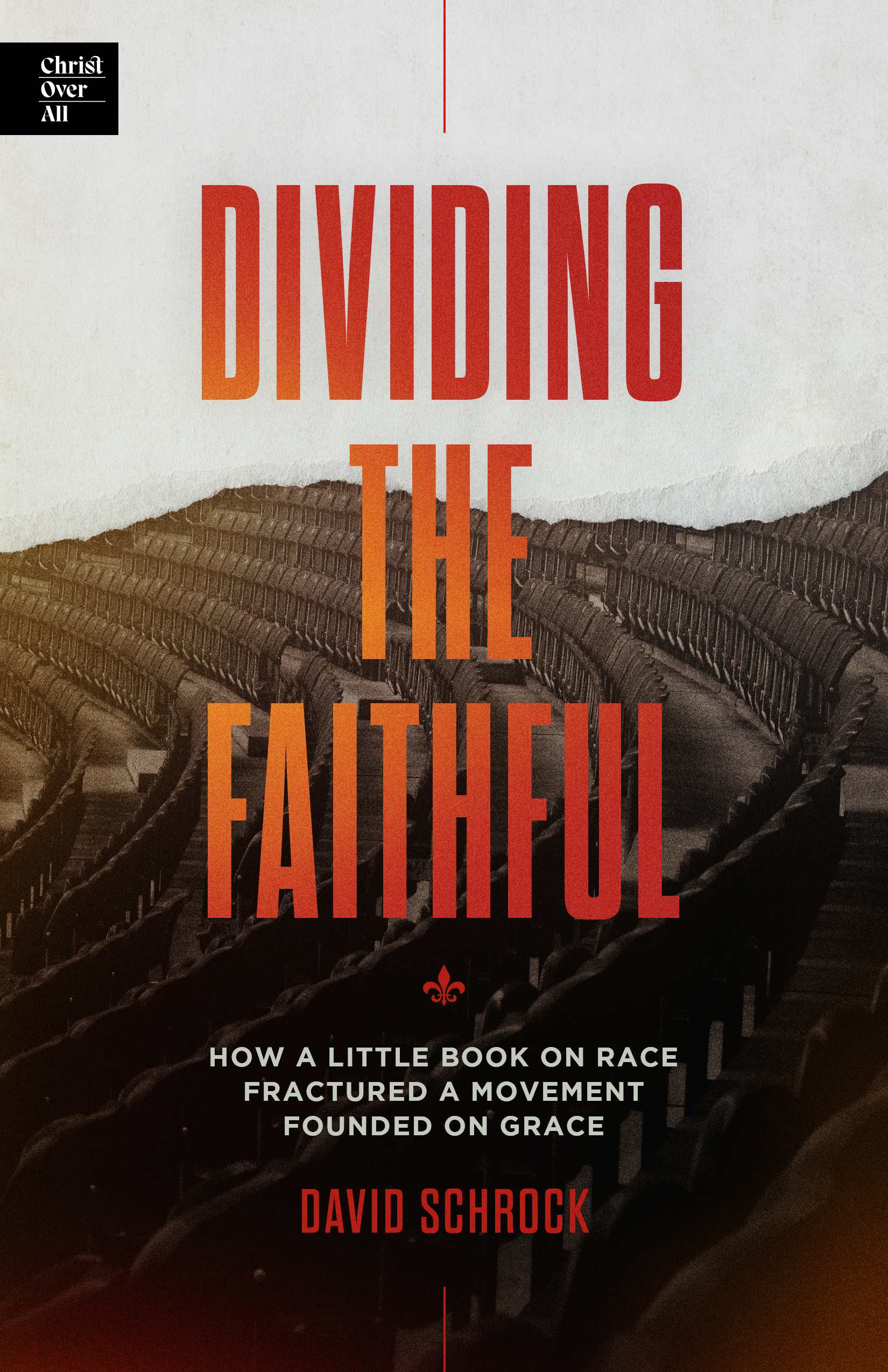
Dividing-the-Faithful-cover

ETS Paper Link:

Waking Up to Corporate Confession:
What Scripture Does and Does Not Say
About Corporate Guilt and Repentance

It has been some time since I have posted here. Actually, it has longer than I remembered (May 2023). But that does not mean writing has slowed. You can find regular content that I am writing and/or editing at Christ Over All, where for the last six months we have looked at a number of pertinent issues, including

At the same time, my new book Dividing the Faithful: How a Little Book on Race Fractured a Movement Founded on Grace released in September. This book responds to Michael Emerson and Christian Smith’s book Divided by Faith. I believe their sociological study surveying black and white relations in the American church is poison pill. Undergirded by progressive views of culture and liberal theology, it leeched Critical Race Theory into the evangelical water supply. And churches, pastors, and scholars have been trying to catch up since.

At the same time that I wrote Divided by Faith, I also wrote an article on the demand for white churches and their pastors to publicly confess their white supremacy and complicity in racism. These demands reached fever pitch in 2020, and to help our church think about these matters I wrote up the attached paper. It just so happens that my paper followed very closely to the progressive covenantalism advocated by Stephen Wellum and Peter Gentry. And so today, at the Evangelical Theological Society, I am reading this paper—or at least, a portion of it.

You can find the whole thing here. And if you read it, let me know what you think. For a teaser, here’s the opening page:

In 2020, the death of George Floyd touched off a series of questions about racism and corporate guilt, not to mention justice and the justice system. In churches across the country, decisions split as to the right public response. Similarly, academics took up the issue, albeit often in more popular platforms. For instance, Michael Rhodes asked online, “Should We Repent of Our Grandparents’ Racism?” And Kyle Dillon wrote for The Gospel Coalition, “Are We Held Accountable for the Sins of Our Forefathers?” In both articles, biblical theology was used to affirm the need for modern individuals to identify with the sins of their fathers.

What can be appreciated in these articles was the way these men applied Scripture, especially the Old Testament, to contemporary questions. What was problematic, however, was the way they made applications that did not address the covenantal differences between Israel and today. As Stephen Wellum has demonstrated in his chapter on doing ethics from the perspectives of Progressive Covenantalism, the Old Testament remains needful for instruction, correction, reproof, and training in righteousness (2 Tim. 3:16–17), but biblical ethicists must recognize covenantal differences when they apply God’s Word.

In this paper, I will pick up where Wellum left off and apply progressive covenantal categories to questions about corporate guilt and repentance. In particular, I will seek to answer some of the following questions:

    • Are new covenant believers responsible for the sins of their ancestors?
    • How should we apply Leviticus 26:40–44, which calls for the need to confess the sins of our fathers?
    • Do the corporate confessions of Daniel, Ezra, and Nehemiah call us to do the same?
    • How does the New Testament understand confession in the corporate sense?
    • And most specifically, if we were to turn the clock back to 2020, what might we say from Scripture about the practice of corporate confessions.

In what follows, I will answer these questions and show how progressive covenantalism provides a more robust biblical answer to ethical questions concerning corporate guilt, generational sin, and corporate repentance.

Again, you can keep going here.

For now, I will keep working on writing and editing at Christ Over All. But Lord willing, in the near future, I will be back on this site to add more biblical and theological reflections. Until then . . .

Soli Deo Gloria, ds

The Happiness That Godly Sorrow Brings: Ten Things About Psalm 32

10 thingsIn preparation for Sunday’s sermon on Psalm 32, here are ten things about David’s confession of sin that leads to joyful song.

1. Psalm 32 is a hybrid psalm containing elements of thanksgiving and wisdom.

Gerald Wilson calls Psalm 32 a “psalm of thanksgiving coupled with instruction encouraging the reader not to resist the guidance of Yahweh but to trust him fully” (Psalms Vol. 1544). Likewise, Peter Craigie concludes Psalm 32 is “a basic thanksgiving psalm [that] has been given literary adaptation according to the wisdom tradition” (Psalms 1–50265).

For those who read the Psalm devotionally, not academically, the classification of the Psalm does not matter as much as how the elements of thanksgiving and wisdom work together. In the flow of Psalm 32, thanksgiving leads to instruction and words of wise counsel arise from God’s forgiveness for which David is thankful. In this way, it is helpful to see how thanksgiving and instruction reinforce one another in Psalm 32 and our lives. Continue reading

True Confession: When “I’m Sorry, I Messed Up” Isn’t Enough

How often have you heard or said, “Yeah, I know I messed up. I’m sorry.  I don’t know how it happened. I’ve got issues.”

This language is typical in our day, when as a culture we have abdicated responsibility, absorbed psychology as a means of explaining sin issues, and abandoned God’s perspective on guilt and forgiveness. Sadly, this kind of thinking is just as rampant in the church as in the world.

Confession, which is an integral part of the Christian life, has become less of a transaction of offense confessed and offense forgiven.  It has instead become, or it at least it appears often, as an excuse-laiden, cross-less, appeal for acceptance.  But is this new?  Not really.  In Exodus 32, we find in Aaron the age old problem of a false confession.

Exodus 32:22-24

After the golden calf is destroyed, Moses turns his attention to Aaron and the people. Like a lawyer before the judge, Moses questions the accused. In v. 21, “What did this people do to you that you have brought such a great sin upon them?” Aaron’s answer echoes that of Adam and Eve in the Garden.

Verse 22.  Aaron blames Israel for their evil. Which is true.  But it seems that he uses their wickedness as a shield from his own law-breaking.

Verse 23.  Then he recites the demands of the Israelites.  Further adding to their guilt.  Now, notice for a moment who is saying this—it isn’t a commoner in Israel; it is the priest.  The one who is supposed to remove guilt, not add to it.  Moreover, one wonders if Aaron uses the people’s words about Moses absence from camp to insinuate his own guilt in the episode.  For, if Moses had been there, none of this would happened.

Verse 24. Then finally he gets to his part. Instead of admitting the active role he had in “making” the calf, he shows surprise in how this beast was fashioned.  Paraphrased, it sounds like this “I threw the gold into the fire, and out popped this calf.”

It is easy to point at Aaron, or even to laugh at the ridiculousness of his excuse, but we should be quick to notice how similar we are to Aaron.  Paul says we are to learn from the counter-example of Israel (1 Cor 10:1-11), and thus God uses Aaron’s ridiculous confession to show us what confession is not.

Five Attributes of False Confession and True Confession

(1) Confession does not name others first; it takes the first step to admit wrong. There is no place in confession for pointing to the faults of others as contributing factors.  It is satisfied to single our self, and to deal with the Lord and others, without pulling others into the mix.  Though Scripture models corporate confessions–one thinks of Nehemiah or Daniel–personal confession has no business finding comfort in the sins of others.

(2) Confession does not blame-shift; pointing out the sins of others.  It points to self. It is not looking for a scape-goat or an external reason for the moral failure or relational offense.  There is no need to load our sins on anyone else, because for Christians, Christ has already taken that sin on the cross.  Thus confession gives us another reason to rejoice in sin pardoned.

(3) Confession does not simply claim that wrong was done; it is admitting your part. Unlike Aaron, who passively recounts the events of the golden calf, true confession steps up and says, “I am the man. Forgive me.”

(4) Confession does not aim to save face; it is looking to see the face of Christ again. With Christ and his cross in view, it always sees the penalty of sin as a bloody cross; but it also remembers that the greatest sin has been covered by the greater grace of God in Christ (Rom 5:20).  Thus, it frees us to confess even the most miserable and atrocious sins, because in Christ they have been fully forgiven.

(5) Confession is not a lame ‘yeah, I’m sorry,’ It demands a spirit of contrition & brokenness, and willingness to do anything to bring about reconciliation. It abandons personal rights, and is willing to suffer hardship to make-peace.

(6) Confession does not simply retell the shame, it agrees with God that the act, thought, speech, motive, pattern, etc was a sin, and then it boldly claims the blood of Christ as the once for all atonement for that hell-deserving sin.  

Confession that is true reiterates our belief that we are more sinful than we ever knew, and that Christ as our mediating high priest is more sufficient than we ever imagined. It is prompted by the Spirit and leads to forgiveness and cleansing (1 John 1:9).  It comes from a heart that has seen sin the way God sees sin; it cannot be manufactured, it is a gift from God.

In short, it is part and parcel of the Christian life, one that is illumined by God’s word and directed by the convicting work of the Holy Spirit.  For truly born again Christians, it should not be an irregular activity or something initiated by a pastoral reminder.  It should be a daily, even moment-by-moment offering to the Lord.

Still, with all that said, I wonder how many Christians do confession much like Aaron. I am concerned that many “Christians” play church–that confession, repentance, and reconciliation are not part of their daily lives.  And thus, their professed Christianity is nothing like the real thing.  Instead of a genuine relationship with Jesus, programs and platitudes have sufficed.

Ask yourself: How often do I make confession to the Lord, and to others?  Is it a regular practice of my life, one stimulated by the Spirit?

Jesus is clear. Those who are forgiven will forgive; and those who are convicted will confess. This is not optional; this is the normal Christian life.  God’s love confronts us and calls us to regularly confess sin and seek restoration with God and others, and Aaron’s errant confession teaches us that “I’m sorry, I’ve got issues,” just doesn’t cut it.

Lord pour out a Spirit of grace and pleas for mercy on your church and on me.

Soli Deo Gloria, dss