Getting to Know Friedrich Schleiermacher (1): The Making of Friedrich Schleiermacher

Between the Reformation and John Calvin and the modern period of theology and Karl Barth, it is arguable that Friedrich Schleiermacher was and is the most influential Protestant theologian.  Like Newton in physics, Darwin in biology, Freud in psychology, Schleiermacher’s approach to religion and theology served to introduce a whole new system—what would in time be called ‘liberal theology.’  Though, he did not found a school, his influence has been more far-reaching, as theologians ever since have imbibed his methods or reacted to this proposals.  In what follows, we will consider the historical context from which Schleiermacher arose and the contribution of his systematic work, The Christian Faith.

I will argue that in different ways the three previous centuries of Christian and philosophical thought—conservative and liberal—had an impact on Schleiermacher.  We will take these centuries in turn.

The Protestant Reformation’s Impact on Schleiermacher

The sixteenth century was one of tumult and revolution.  In an era that was dominated by the political and intellectual influence of the church, the Protestant Reformation was cataclysmic—not to church alone, but to Western civilization at large.  Thus, when Luther, Calvin, and Zwingli sought to bring about reform in the Catholic Church, it affected everything.

Though, more than two centuries removed, Schleiermacher was a child of the Reformation. While he would become the father of liberalism, he was a Reformed preacher and professor.  From 1809-34 he preached regularly at Trinity Church. He was the son of military chaplain and both grandfathers were Reformed ministers.  By association, therefore, he was an heir of the Protestant Reformation.  The emphasis on preaching, the ‘denomination’ of which he was apart, and the place of the Bible and theology that occupied his classroom teaching all demonstrate that he was working against the backdrop of Luther, Zwingli, and Calvin.  In The Christian Faith he often used language borrowed directly from his more conservative forebears—speaking of union with Christ and justification by faith.  However, as it will be demonstrated below, any orthodox term that Schleiermacher might use is redefined by his subjective system.

In the seventeenth century, Protestant Scholastics sought to systematize the doctrines coming out of the Reformation.  These systems frequently appropriated the tools of philosophy to explain various doctrines, and while some have noted (wrongly) that theology hardened during this time, it is true that the proclamation of the sixteenth century became the analysis and systemization of the seventeenth century.  Carrying the DNA of protest in its blood, the seventeenth century church continued to think deeply about theology.  They set up many schools and sought to educate their clergy.  These ecclesial colleges would house many of the theologians and philosophers in the next century, when these churchmen began to turn away from Sola Scriptura towards more rationalistic approaches to the Bible.  Schleiermacher’s professorship and pastorate would benefit from these logistical realities.

The Enlightenment

While Schleiermacher was an offspring of the Reformation, and while he followed in the footsteps of those who aimed to systematize theology, his greatest influences come from the eighteenth century Enlightenment.  Often described as the “age of reason,” the Enlightenment saw a radical shift in Western thought.  While the Western tradition of philosophy had always been ‘rational’—in that it had always sought to think and explain the universe through the use of the mind—it had simultaneously (since the inception of the church) given authority to the Bible as the Word of God.  In the Enlightenment this all changed.

Philosophers began to question the assumptions of the Bible, and the authority given to Scripture and tradition was replaced with an authority given to man.  Man was now the standard by which to judge all things.  This was the inception of the modern era of philosophy and thought.  Whereas in the past, questions of metaphysics were primary, now questions of epistemology were of greatest import.  And in the eighteenth century, numerous voices arose to explain how we know anything.

In the United Kingdom, Berkeley, Locke, and Hume arose to argue that knowledge comes by way of empirical evidence.  Through observation of the universe, we learn what is and what is not.  Generally speaking, man cannot explain anything more than he can observe and conclusively prove.  So, Hume would deny miracles because what appears to be true is only appearance, we cannot conclusively prove that the miracles of the Bible were divine because there could be another naturalistic answer.  Likewise, by reason of analogy, since miracles do not occur today, it is untenable that they would be true in ancient days.

On the other side of the English Channel, continental rationalists (Spinoza, Leibnitz, and Descartes) argued that all knowledge is based on mental cogitation.  We cannot trust sense experience, because man’s senses have been known fail.  So for instance, Descartes sought to find an ultimately basic belief, something that could be ‘proven’ without a shadow of a doubt.  What he concluded was that he knew that he was thinking, therefore he existed: “I think therefore I am.”

These two streams of thought—the British Empiricism and Continental Rationalism—dominated the eighteenth century.  Even as Schleiermacher’s Romanticism stood against rationalism, he could not escape the a-theistic Sitz Em Leben of his day.  Thus, his methods of interpretation would be anti-supernaturalistic (a presupposition that became common place in the Enlightenment and among Deists) and regularly historical-critical (a method of studying Scripture, pioneered by Semler, which reduced the Bible to a document composed by men, whereby interpreters battered the text with questions such that the unity and theological message of the Bible was exchanged for philological studies on words and historical studies on minor sections of Scripture).  N. B. His critical interpretation of the Bible does not show itself in The Christian Faith because dogmatics is bifurcated from biblical studies.  As another effect of the Enlightenment, systematic theology was disjointed from exegetical theology.

Still, there is one other influence in the eighteenth century that stands above the rest: Immanuel Kant.  Kant sought to bridge the gap between Britain and the Continent, by espousing a view of knowledge that was essentially empirical (i. e. men learn by sense experience), but that incorporated a rational explanation for how men process, or categorize, the data they encounter.  He posited that inherent to the mind’s of men were a certain number of categories (such as time and space), which functioned as means of processing information.

One of the categories in Kant’s system is that of the noumenal realsm—a realm of existence that lay outside the bounds of human sense-perception.  As a kind of empiricist, Kant argued that men could only know or come to find out that which occurred in the world around them—that which they could experience with the senses.  He called this phenomena.  By contrast, the noumenal realm was undiscoverable.  Hence, if God existed, he existed in this spiritual-noumenal realm where men could not attain knowledge.  This divide would be the primary influence which shaped Schleiermacher.  His entire systematic theology sought to solve this problem—how does man who lives in the phenomenal world, experience God who dwells in the noumenal realm.   As we will see, Kant’s divide caused Schleiermacher to turn theology away from God towards the subject of man.

Romanticism and Pietism

Closer to home—domestically and chronologically—were two schools of thought, which directly impacted Schleiermacher.  The first was Pietism. Schleiermacher grew up the son of a Reformed military chaplain.  At the age of ten, Schleiermacher’s family experienced a great evangelistic revival when Moravian visited eastern Prussia.  Much like later Wesleyan’s, the Moravians called for a heartfelt piety that was rooted in experience.  This pietistic influence continued for the young Schleiermacher when he went to a pietistic school at the age of fourteen. In short, his home life was filled with experiential Christianity, which would shape his later theological writings.

In 1796, Schleiermacher moved to Berlin to serve as a hospital chaplain.  There in Berlin he fell in to a group of young artists, writers, and philosophers who were reacting against the cold rationalism of the eighteenth century.   This group, led by the likes of the Schlegel brothers would be the prominent voices for what became known as Romanticism.  Instead of seeking knowledge through the use of the mind, this group urged for feelings, emotions, and experience as the source of all knowledge.  This fit very neatly with Schleiermacher’s pietism, and gave philosophical credibility to his earlier ‘faith.’  Still, many of these cultured men and women were unbelievers.  Thus, through the prompting of others like Schlegel, Schleiermacher wrote On Religion: Speeches to Cultured Despisers in 1799 as an apologetic for the Christian Faith.  Of course, what for him was the Christian Faith was radically different from the doctrines of his father, or previous generations of the Reformed Faith.

With his literary work, Schleiermacher launched out into a world of explaining the Bible, theology, philosophy, ethics, and hermeneutics.  He taught New Testament exegesis, theology, and ethics for decades at the University of Berlin.  His output include commentaries on many books of the New Testament, a substantial work on hermeneutics, and a posthumous work on the life of Christ.  Schleiermacher was a theological giant, and though his Reformed theology is worlds apart from John Calvin or Michael Horton, whose work ironically carries the same title, The Christian Faith, it is without a doubt that he has had an impact on the church that continues to this day.

Tomorrow, we will begin to look at his theology.

Soli Deo Gloria, dss

Who Is Friedrich D. E. Schleiermacher?

Who is Friedrich Daniel Ernst Schleiermacher? (a) A nineteenth century German theologian?  (b) A pietistic pastor with a funny name?  (c) The father of liberal theology? (d) Or the unknown philosopher whose views on religious experience have shaped much of evangelical theology?

How about (e) All of the above?  Amazingly, Schleiermacher’s approach to theology has both influenced two hundred years of liberal theology and is still influencing evangelical thought more than two-centuries later.  While most who know his name associate him with liberalism, many who do not know him are unaware at how much his brand of Christianity is being reproduced in Christendom today. For that reason, the question “Who is Friedrich Schleiermacher?” is of vital importance today.

The influence of this nineteenth-century German theologian on contemporary theology can hardly be overestimated.  Although most Christians have never heard of Schleiermacher, his ideas about religion in general and Christianity in particular have trickled down to them through the theological education of their pastors, denomination leaders, favorite religious authors and college teachers.  His influence is subtle but persuasive in Western Christianity.  He is to Christian theology what Newton is to physics, what Freud is to psychology and what Darwin is to biology.  That is to say, he may be the absolute authority, but he was the trailblazer and trendsetter, the one thinker subsequent theologians cannot ignore (Roger Olson and Stanley Grenz, 20th-Century Theology: God & The World in a Transitional Age [Downers Grove, IL: IVP Academic, 1992], 39).

Olson and Grenz’s appraisal needs qualification but is broadly correct.  Just as Freud and Darwin have set the pace for certain kinds of (secular) psychology and biology, so Schleiermacher has blazed a trail for liberal theology–the theology usually associated with mainline denominations.  However, as in the case of psychology and biology, the conservative world has not been unaffected.  Where Christian psychologists and biologists must interact with the secular or evolutionary theories of the day, so conservative theologians must interact with the liberal views that arose from Schleiermacher.

Yet, another qualification is needed.  Schleiermacher’s theology is not just “out there.”  His feelings-based, experiential form of religion has permeated conservative evangelicalism.  Even in churches that confessionally affirm the inerrancy of the Bible and the objective work of salvation, many live by their feelings.  They look for the next word from God to them, the next experience.  Instead of walking by faith that is grounded in God’s specific promises, they walk with an ambiguous God conscience and God dependence.

Just listen to the banter of Christian radio.  What Matt Papa has recently critiqued in his thoughtful series of posts on CCM is nothing but Schleiermacherianism (I know, that is mouthful). But it is true.  On the other side of the “Battle for the Bible”– a battle that continues today–most evangelicals are uninformed about the pernicious battle for the Christian mind.

Instead of thinking diligently about matters of faith (2 Tim 2:7) and loving God with all their mind (Mark 12:29-30), too many simply imbibe a kind of Christianity that is replete with appeals for emotion, ethical living, imitations of Christ, and God-dependence.  Because ‘God,’ ‘Scripture,’ ‘Jesus,’ ‘faith,’ and other buzz words are employed, many evangelicals think they are being biblical and growing in grace.  And praise God, many are; but many more may be influenced by the spirit of Schleiermacher more than the Spirit of Christ. Over the next few days we will consider who this man is, and how an awareness of his theology may serve evangelicals by

The goal is not to commend his theology or his method, but to show how his theological method is similar to what passes as standard fare among many evangelicals today.  My hope is to introduce this man and his theology, so that we will be better able to see the way his kind rationalistic Romanticism has infected the church today.  I fear that unless we learn to see this hyper-subjective brand of Christianity, there will be many for whom the gospel will implode–theology will become anthropology.  This happened in the past with classical liberalism, and it could again happen among evangelicals–especially among those who are emphasizing the personal, subjective experience over the sovereign act of God in salvation.

Of course, we need both, but in our day, the pendulum needs to swing back toward the objective work of Christ.  I believe getting to know Friedrich Schleiermacher may be the historical figure to help us see the far-reaching dangers of experience-based Christianity.  And hopefully, it will bring us back towards the unmistakably God-centered gospel where the Triune God is the Lord of salvation (Jonah 2:9).

This week, I will be running a series of posts on Schleiermacher–his life, theology, and its impact on evangelicals today.  Hope you will tune in.

Soli Deo Gloria, dss

The Sweetness and Sacredness of Sundays

[This post is from our monthly newsletter at Calvary Baptist Church (Seymour, Indiana)].

When God created the heavens and the earth, he spoke light into existence and separated it from the darkness.  On the first day, he called the light “Day” and the darkness “Night.”  From the start, God’s world has run on a schedule.  Like a watchmaker, God spun the earth so that every revolution would take twenty-four hours, and every year would include 365 days, plus six hours.  It seems that in Genesis 1, God’s creation modeled the pattern that men would keep in all generations—six days of labor, one day of rest.

The rest of the Bible depends on this basic structure to frame all that God does with men.  In Exodus 20, God commands Israel to keep the Sabbath holy, saying “On it you shall not do any work, . . . for in the six days the LORD made heaven and earth, the sea, and all that is in them, and rested on the seventh day. Therefore the LORD blessed the Sabbath day and made it holy.”

Now, this command to rest was not a call to inactivity or sluggishness.  Rather, it was a call to make time a servant to men, a means by which men would learn to trust the Lord with their time and to know that they needed something more than they could acquire in their weekly schedules.

Since God did not rest because of fatigue, the Sabbath was not just a means of physical recovery for him, or for us.  It had a more Christ-centered purpose.  In fact, it seems that the Sabbath was a gift of joy and fellowship with God.  In other words, it was a holy day of worship, a day to set aside creation and to enjoy the creator. In a world unaffected by sin, this day off would have been needed, but how much more in a world wrought with sin and its effects?!

This was true in the Old Testament, and it is true today.  Only, since Christ’s advent, the meaning and application of the Sabbath has changed to the Lord’s Day.   Thus, as we make application, let us consider three things.

First, the Sabbath day in creation and Israel is a type of Christ. Jesus is the fulfillment of the law and he is the true rest.  Paul calls the Sabbath of Jesus’s substance (Col 2:16-17).  The meaning of this is that in Christ, we who are tempted to work in order to gain security, identity, and standing before God (and men) can now look unto Christ for all three.  In him, we have rest full and free.

Second, Sabbath Day worship has been replaced by Lord’s Day worship. After the resurrection, the New Testament church gathered on the Lord’s Day—the day of his resurrection (Sunday).  Thus, when we gather this Sunday, we announce to the world that Christ is risen and reigning. We do not gather on Sunday because it is the most convenient day for our church; we gather on Sunday because it tells the world that on this day Jesus Christ rose and is now present with us. Just the same, when someone makes a preferential choice to skip church they muffle the testimony of the Lord’s resurrection.

Third, the Lord’s Day is a gift of grace. Sadly, too many Christians obscure the grace of this gift.  The Lord’s Day is not simply a day to recuperate from work in order to return to work.  Your life is more than your vocation!   And it is more than just getting to the next vacation.  The Lord’s Day keeps this in perspective.

Instead of providing physical rest alone, the Lord’s day provides living water for the weary heart. It is a day devoted to the reading, singing, preaching, praying, and discussing of God’s Living Word. If you live on God’s word and not man’s bread, what could be a better gift to you than the promise that for hours this coming Sunday a banqueting feast of God’s word will be prepared before you.

The gift of the Lord’s Day is not merely a reprieve from the world, though it is that; it is a promise that God still speaks.  In a true church that faithfully proclaims the gospel, those who come to hear his voice will never go away disappointed.  This is the grace we need to keep our hearts strong; this is the grace for which your heart longs.  For those who desire God’s grace, gathering with God’s people on the Lord’s Day is a necessary part of life.  It is a day filled with grace for those who are willing to seek it.

Over the next few newsletters, I am going to consider a number of blessings that God gives us on the Lord’s Day and that come from attending church for the right reasons. I hope you will consider these points with me, and that you would share them with the ones who “know the Lord” but who prefer not to worship him in public Sunday by Sunday.  Perhaps together, we can encourage them to taste and see the sweetness and sacredness of Sundays.

For His Glory and your joy,

Pastor David

Five Questions on Discipleship: (5) Why Should You Make Disciples?

Thus far we have asked four questions about discipleship: (1) What Did Jesus Do?  (2)  What is a disciple? (3) Who makes disciples?  And (4) How do you make disciples?

Today we finish by simply asking the question, Why?  Why should you make disciples?  Let me give five answers that will serve as great motivation for stepping out in faith to make disciples.

First, It is disobedient to ignore this command (Matt 28:19).  The Great Commission is for every born-again believer in Jesus Christ. To ignore this command is to ignore the heart of Jesus. Making disciples is not an optional aspect of the Christian life for a select group of Christians.  It is part and parcel of every Christian’s calling.  Some may be more gifted at it than others, but all are called to be participants.

Second, the presence of God is found in it (Matthew 28:20).  The promise of God’s nearness is not found in your daily devotion or in a cabin retreat. It is found in the ministry of making disciples.  While such personal times of reflection are sweet, God’s word promises more emphatically his presence when we are laboring with him in finding, winning, and growing the sheep that Christ has purchased with his own blood.

Third, the promise of success is given in this task. (Matthew 16:18).  Disciple-making is guaranteed to work.  Sure, there will be many who you meet and minister to whom may fall away.  However, there will be others who will have their place marked out in heaven because of your willingness to serve.  You cannot save anyone, but God has chosen to use means (you and me) to build up his church.  And like the Father’s promise to the Son that his death would effect the salvation of his children, so we are given the promise that our labors will not be in vain (1 Cor 15:58).  The word of God never returns void, God has guaranteed that his church will be built, and he has shown us that this building comes through disciple-making.

Fourth, your greatest Christian joy will be had in disciple-making (1 Thess 2:19-20).  Just ask Paul.  His glory and joy were found in the men and women that he won to Christ and established in the faith.  His greatest anxiety was seeing disciples he had invested in turn from Christ.  Truly, if you are a Christian, this will be the source of your greatest joy, too.  The treasure you are to lay up in heaven is people–those whom you lead to the Lord and help along the way will be your greatest joy.

Fifth, churches grow as we make disciples.  The truth is, only disciple-making guarantees church growth.  The one “product” that the church should be producing is disciples.  Just read John 15:1-8.  When the church abides in the Word of God (i. e. the gospel) and the gospel permeates that church, disciples will be born unto the glory of God.

All other activities must be subservient to this main purpose. Therefore, block parties, special events, Power Team performances, and movies may draw a crowd, but they do not make disciples.  Children’s programming, bus ministries, friend days will get people in our building, but they will not make disciples. A cool website, newspaper ads, and yard signs will announce a church’s presence,  but none of these things guarantee disciple-making.  All of these events must be linked up with slower, more intentional process of life-on-life discipleship.

What This Means

If you commit to making disciples, you are committing to doing church in a more simple fashion.  While many programs and activities may be going on at your church, only one thing is necessary–Jesus Christ and the preaching of his gospel in the context of loving relationships that are growing disciples.

Similarly, if you commit to making disciples, you are committing yourself to slow growth.  If you want an instant helper in the home, buy a robot.  Don’t have a baby.  Children take time to rear, but in the end there is great reward in seeing a baby become a boy become a man, one who receives and lives out all the priorities you instill in him.  So it is with making disciple-making.  While it takes time and comes with seasons of pain, slow growth in pouring your life (with the gospel) into the life of another will be impact disciples in ways programs cannot.

Finally, if you commit to making disciples, people may wonder what you are doing to grow the church.  After all, the point of church growth is larger numbers, right?  It is true that numbers do provide a means of measuring the ministry, but perhaps we should find a quotient that divides the number of believers by the time that they stay and grow.  Of course, this sort of metric is impossible, but in our discussions about numbers, we should add to the conversation not only how many converts are won to Christ, but how many of those converts are grown up to be soul-winners themselves.  Or to use more biblical terminology, how many of the disciples made in your ministry are reproducing themselves?

May we continue to let the Great Commission ring in our ears and reverberated in our hearts, so that disciple-making becomes a central feature of our personal lives and church ministries.

Soli Deo Gloria, dss

Five Questions on Discipleship: (4) How Do You Make Disciples?

As a sophomore in college, I was introduced to a little book called The Master Plan of Evangelism. After an eight week study with our Campus Crusade leadership team, I was convinced that Jesus’ pattern of disciple-making and spiritual multiplication is the way to do ministry.  More than ten years later I am still convinced.

In his book, Robert Coleman outlines eight steps for making disciples: Selection, Associatin, Consecration, Impartation, Demonstration, Delegation, Supervision, and Reproduction).  If you have not read Coleman’s insightful little book, get it today.  All the hype about The Trellis and The Vine a few years ago was simply a helpful reformulation of The Master Plan of Evangelism.

And Coleman is not alone in looking to Jesus for methods of disciple-making.  More than one-hundred years ago Scottish pastor and professor A.B. Bruce wrote the lengthy treatment The Training of the Twelve, in which he scoured the pages of Scripture to see how Jesus trained his disciples and this is what he had to say,

These twelve . . . were to be something more than travelling companions or menial servants of the Lord Jesus Christ. They were to be . . . students of Christian doctrine, and occasional fellow-laborers in the work of the kingdom, and eventually Christ’s chosen trained agents for propagating the faith after He Himself had left the earth.  From the time of their being chosen . . . they were to learn, in the privacy of intimated daily fellowship with their Master, what they should be, do, believe, and teach, as His training of these men was to be a constant and prominent part of Christ’s personal work (p. 30).

Following in the footsteps of Jesus, how should we make disciples? Let me suggest three commitments that are required for being a disciple-maker.

FIRST, MAKE A DECISION

You cannot invest in everyone, so you need categories for making decisions on how you will use your precious, limited time. While you should never reject anyone in need, when it comes to making disciples, you should prioritize those who Faithful, Available, Teachable–otherwise known as FAT people.

Faithful.  Paul instructed his faithful disciple to find faithful disciples.  In 2 Tim 2:2, Paul said, “What you have heard from me in the presence of many witnesses entrust to faithful men who will be able to teach others also.”  With great wisdom, Paul did not say, “Go chase down the sheep that are running away.”  He told Timothy to invest his life in “faithful men” who are able to reproduce themselves.  As you focus on the faithful, the fleeing will be found.

So too Jesus was selective in his disciple relationships (Mark 3:13-19). While we should love everyone, we should be strategic in the way we reach out to others.  If you are making disciples, you will have closer relationships with some and not others.  Look for the faithful ones!  Be a faithful one.

Available.  There are lots of sincere people who have good intentions to know God, but when push comes to shove, there are very few who are available.  Many start off strong, but the weeds of the world enslave them.  Busyness erodes faithfulness, and their schedules limit availability.  But a good disciple is one who is not enslaved to sports, family, work, school, hobbies, or sleep.  They may be deeply invested in these things–and should be–but they are carving out time and making themselves available.

Focus on those who available more than those who are able.  Take a lesson from Jesus.  He did not choose the powerful, well-off, or important people.  He invested in those who heeded his call.  He discipled those who would follow him.  One way to test this is to call people to hard tasks.  Don’t lower the bar on discipleship.  Like Jesus, make the call challenging and see who is left.  These are the ones to disciple.

Teachable.  In Matthew 7, Jesus warns us of throwing pearls before pigs.  This strange statement is essential for understanding disciple-making.  You have a short span of life.  Use it well.  Invest your time and energy well.  Don’t throw your energy at those who are unwilling to be taught.  Focuse on those who are submissive to God’s word.  Christopher Adsit, founder of Disciple-Makers International, is helpful: “Most of us are poverty-stricken when it comes to time. It’s a foolish extravagance to squander precious time teaching a person something he will never apply or pass on! It’s pearls before swine.”

SECOND, DISCIPLE WITH TIME, TRUTH, AND TRAINING

There is no substitution for just getting out and doing the work, but as you disciple be sure to include three key elements.

Time.  Discipleship is not complicated.  It is time-consuming, but not complicated.  Do life with other, younger believers in Christ.  Invite them into your home, into your families.  And as you walk through life talk about Christ.  Ask questions about God.  Read the Bible.  Pray.  Discuss a book together.  Serve together.

Truth.   Discipleship is only Christian in as much as the gospel is present.  Christians spending time together is not discipleship.  It must have intentionality, and more than that it must be infused with biblical truth.  It can look like a regimented Bible study, a weekly time of Bible reading and discussion, or bi-monthly commitment to do evangelism.  It can also be less formal.  But whatever it is, it must center around Jesus Christ.

This is what Jesus did.  With a band of disciples, he preached, ministered, and made his way in and order Palestine all the while teaching his disciples about what he was doing.  Paul did the same thing.  Everywhere he went, he was taking Timothy, Titus, Silas, or other young men.  He gave them a model to follow and truth to learn.

Johnny Hunt is right when he says that every Christian needs a Paul, Timothy, and a Barnaba—a Paul to disciple us, a Timothy to disciple, and a Barnabas to encourage us. Personally, I consider it a failure, if I am doing ministry by myself.  I want to do everything with someone else, because I want to pass what I have learned to others.

Training.  Truth revolves around the gospel.  Training revolves around practical applications of ministry.  In church contexts, this means older men and women teaching younger men and women, respectively, the skills of ministry.  This could look like learning how to drive the bus route, preparing a funeral meal, teaching a Sunday School lesson, sharing the gospel, or planning a mission trip.

Every person in a ministry position should be looking and preparing there replacement.  Passing the baton is a necessary part of ministry.  The alternative is a latent self-centeredness that places all the weight of ministry on an individual.  When that individual leaves, dies, or moves, the work of that ministry goes with them.  By contrast, leader who trains another generation prolongs the work of the Lord for the edification of the local body of believers.

But this raises a serious question: Are you worthy of imitation? Paul constantly pointed to himself as a one who sought Christ, and he said, as he followed Christ, you could follow him.  Can you say the same thing?  Disciple-makers must first be genuine and growing disciples.  If you cannot call someone to imitate you why not?  What would it take to become a model disciple?  What is keeping you from growing in that way?

Do not be Charles Barkley Christian, who denied his role as a role model. If you are a Christian, you are a role model.  If you have taken the name of Jesus Christ, you are now one of his witnesses.  Witness him well.

Help those who come behind you by giving time, truth, and training.

THIRD, MODEL BEFORE AND MEASURE AFTERWARD

Modeled Demonstration.  When Jesus called the twelve, he called them to be with him.  Long before sending them out, he called them simply to follow, listen, learn.  They observed their Master in action, and when it was their time to lead they had years of experience to learn from.  Jesus was the model.  So too commanding others to do something, you should show them how.  And not just once–many times.

I was in conversation the other day with a family who after their conversion was immediately thrown into ministry.  Sadly, today they are having to pull back from ministry to retool their personal lives. Why?  They were too hastily thrown into ministry.  We need to be slower to commission, and quicker to model.  As church leaders we need to avoid the gap theory, where we see a gap and find a guy or gal to fill it.  Instead, we need to be people oriented, putting good people in places, instead of simply finding a warm body to fill a need.

Measured Delegation.  Following demonstration, Jesus’s disciples were called to action.  In his presence, the disciples were enlisted to baptize, they were sent out two-by-two, they were given errands.  In Jesus presence, the disciples tried and failed.  He gave them tasks and missions, that he could then use to teach and correct them.  This is wise strategy for parenting, pastoring, and for disciple-making.

It requires more than barking orders.  It requires that you know those whom you are giving spiritual leadership—their gifts, passions, abilities, and readiness.  It also means that we should be modeling for others everything we expect them to do.  Too often we move straight from instruction to delegation, without demonstration and supervised evaluation.

The result of activity without evaluation is a generation of workers who do more harm than good.  Imagine a surgical doctor given all the tools of the trade without years of residency.  The same is true with soul doctors, disciples, who are called to encourage and edify other Christians.  Just as doctors need training and correction in their surgical techniques, so disciples need the loving, hope-giving, correction of older Christians to help them grow into Sunday School teachers, small group leaders, outreach coordinators, and deacons.

All in all, the Great Commission is a vision for church ministry that never grows old.  It calls us to simply make disciples.  This is goal worthy of our entire attention, and it is a process that takes years to develop.  May we consider some of these priorities listed above, and go forward looking to find disciples who are FAT, with whom we can share life and the gospel, and who are willing to observe and receive correction as they become disciple-makers themselves.

May God give us great aid as we seek to make disciples, dss

Gossip More: Because Gossiping Less Never Works

[This article was originally featured in our hometown newspaper, The Seymour Tribune].

Gossip.  It is a common disease—easily contracted, hard to cure.  Yet, the surprising solution is not to gossip less.  Just the opposite: You need to gossip more.

Let me explain.

You were made to gossip.  God gave you speech and a heart curiously intrigued by other people.  How else could talk radio, talk shows, and talking heads be so popular?  They scratch a human itch—the desire to be in the know and to talk with Gnostic wisdom about someone or something.

There is a kind of pleasure that comes from hearing something known to a select few.  We love secrets, and gossip is the pipeline for passing them, though every carbon copy erodes the secret.  Therefore, we want more.

Now, in steps the religious professional who says: The Bible condemns idle talk and God hates gossip.  Therefore, stop!  His premises are right.  God does condemn idle talk and hates any speech that tears down another.  However, knowing the law never changed anyone.

No, pernicious gossip that plagues the human race does not need to reduced or discontinued; it needs to be converted!  It needs a new object, a new secret to keep and then divulge.

Enter the gospel of grace. Nothing is more hidden and revealing than God.  No person is more intriguing than Jesus.  No secret is more fascinating than the news that sinners condemned to death have been declared innocent, set free, and rewarded because another has volunteered to take their place on the electric chair.

Indeed, evangelism is simply gossip about Jesus.  This is what happened in Samaria (John 4).  Jesus, a man of marriageable age, conversed with the town’s loosest woman at the local watering hole.  Talk about gossip!  This conversation surely evoked a few whispers.  Even more, when the woman raced off to tell her town about the man Jesus Christ, she participated in God-ordained gossip.

The result was amazing.  The whole curious town lined up to hear Jesus.  And many were saved.

Here is the point:  If you want to stop gossiping about things that will pollute your mind and shrink your soul, start gossiping about Jesus and the scandalous grace that he offers.  This will mean that you need to know him, but that is what he loves to share with all those who come curious about his secrets.

This week, don’t gossip less.  Gossip more about the only one worthy of such gossip!

Via Emmaus: A Christ-Centered Walk Through the Bible

Yesterday, The Gospel Coalition ran an article on how to teach through the whole counsel of Scripture in a year.  It was something that I wrote based on the things I learned when our church walked through the Bible together in 2010.  For those who are interested in what those lessons looked like, here are the lessons I shared with our people each week.

Introduction: An Overview of the Bible

Pentateuch
Genesis 1-11: The Beginning of It All
Genesis 12-50: Four Families Under the Faithfulness of God
Exodus 1-15: Salvation Through Substitution & Conquest
Exodus 16-40: Moving Into the Presence of God 
Leviticus: Sinners in the Presence of a Holy God
Numbers: In the Wilderness
Deuteronomy: God’s Royal Covenant with Israel

History

Joshua: Into the Land

Judges: A People in Need of a King
Ruth: A Painful & Pleasant Providence
1 Samuel: The Good, The Bad, and the Ruddy
2 Samuel: The Rise and Fall of King David
1 Kings: Redemptive History is a Royal Mess–Part 1
2 Kings: Redemptive History is a Royal Mess–Part 2
Ezra: Return, Rebuild, Renew, Repent
Nehemiah: Rebuilding God’s City and Reforming God’s People 
Esther: Seed Warfare

Wisdom
Job: Knowing God In The Crucible Of Satanic Suffering

Psalms: Redemption in the Key of D(avid)
Proverbs: Wisdom is the Way to the Obedient Son
Ecclesiastes: To Work Wisely is Futile, To Fear Faithfully is Wise
Song of Songs: More Than Just an Old Fashioned Love Song

Prophets

The Prophets (1): Hearing the Spirit of Christ in the Days of Elijah

The Prophets (2): Putting the Prophets in their Place: Before the Exile
The Prophets (3): Putting the Prophets in their Place: During and After the Exile
Isaiah: The Servant-King Will Lead His People Into a New Creation
Jeremiah: A New Heart For An Idolatrous People
Ezekiel: That You Might Know the Lord
Daniel: Keep the Faith! The Sovereign LORD Reigns In History
The Twelve: Judgment and Salvation is a Major Theme in the Minor Prophets

Gospels-Acts
Matthew: The King and His Kingdom
Mark: Seeing the Christ of the Cross
Luke: The Messiah Must Go To Mount Zion
Acts: Taking the Gospel From Zion to Zimbabwe
John: Jesus, The Son of God, The Messiah of Israel, and The Savior of the World

The Letters and Revelation
Paul (1): The Apostle to the Gentiles
Paul (2): The Prison Epistles and Philemon
Hebrews: Believe and Draw Near, For Jesus Christ is Greater Still
General Epistles: James, 1-2 Peter, 1-3 John, and Jude
Revelation: The Revelation of Jesus Christ

Crash Helmet or Christ Helmet? Reflections on a Paragraph

I do not know who Annie Dillard is, but by her impressive CV and the list of honors she has received for her writing, I feel like I should. From her self-description, I suppose there are many things I would disagree with her about, but her singular quote is so striking that I would love to talk to her about her experience with Christianity, Christians, and Christ. One more qualification: Since I have never read her work (Teaching a Stone to Talk), I am completely in the dark as to the context of this quotation, still it is worth citing and thinking about.

On the whole I do not find Christians, outside the catacombs [Annie, might you include Chinese believers who suffer under Communist rule or Middle Eastern Christians who willingly accept beheading rather than forsake Jesus?], sufficiently sensible of the conditions.  Does anyone have even the foggiest idea of what sort of power we so blithely invoke?  Or, as I suspect, does no-one believe a word of it? . . . It is madness to wear ladies’ straw hats and velvet hats to church, we should all be wearing crash helmets.  Ushers should issue life preservers and signal flares; they should lash us to our pews.  For the sleeping god may awake some day and take offense, or the waking god may draw us out to a place from which we can never return (Quoted by Bruce Milne, The Message of Heaven and Hell, 32).

Do we Christians really have a clue as to what we are talking about, when we speak of heaven and hell?  Why do we live with such urgency in this life, and so little care about the next?  Do we really know the God of the Bible?  These are penetrating questions.  If we take the Bible seriously, we learn quickly: God is the One who created you and me and everything else; who consumes mountains with raging fire, who causes the earth to swallow men and the sea to drown the world’s strongest army, who disembowels dictators with worms, who demands perfect holiness from all men, such that without it, no man shall enter his presence.  This is the One, True, and Living God. He is the God who is full of wrath against man’s sin.  Your sin!  My sin! And thus Annie Dillard is right, we should wear helmets when we come to church.  Too often Christians make church a social club, a fellowship of the moral, instead banqueting hall for beggars, addicts, pimps and whores.

Still, God is patient!  That doesn’t mean that he has changed from the days of the Old Testament.  The most powerful images of judgment are found in the New Testament, after all.  It simply means that in this age of evangelism, God is patient with his world, in order to redeem his sons and daughters.

And yet, he is the God who also poured out his wrath on his Son, so that men and women who pay too little attention to him, might still find grace in order to stand in his judgment.  Indeed, the kingdom is not entered by religious zealots–liberal or conservative, Democrat or Republican–it is entered by those who are born again.  Those who have been born from above trust not in their religious works nor fear their spiritual lethargy; they trust in the Son and exalt in his work alone.

Heaven and hell are realities that those in church and out of church take too lightly.  But Christ has a message for both groups. If you have the Son, you have eternal life in heaven; if you don’t have the Son; then hell awaits. Annie Dillard is right that such a God demands that we wear crash helmets when we come to church or go anywhere, but indeed a crash helmet will do nothing to protect us from the blast of God’s nostrils.  We need a Christ helmet, and indeed that is exactly what God offers us in Jesus.  Ephesians 6 says, “Finally, be strong in the Lord and in the strength of his might.  Put on the whole armor of God . . . the helmet of salvation.”

Today,  may Annie Dillard’s words make us think soberly about heaven and hell, but instead of putting on a crash helmet, may we put our trust in Christ, the one whose sacrifice protects us from the wrath of God, and whose resurrection promises his imminent return.

Soli Deo Gloria, dss

Beware of False Worship (Sermon Notes)

Exodus 32 is a tremendous vision of all that God hates about false worship.  If we pay careful attention, the problem is not absence of worship, but absence of divine sanction. In other words, the problem is not rejection of religion or indifference to worship. The problem is that worship derives its origin from some place other than God himself. This is not too different from the church today.

In an age of creative ventures in worship, the Golden Calf incident is worth our attention, because it provides a powerful counter-example to false forms of Christian worship. And what is most shocking and indicting is the fact that in Exodus 32 we find that false worship looks a lot like true worship, and that only in the light of divine revelation, can we tell the difference.

False Worship Looks A Lot Like True Worship

False religion is so dangerous because of how closely it apes true religion.  It doesn’t come with a surgeon generals warning on it.  In fact, if you use Christianbook.com as a resource for getting “good, Christian resources,” beware.  There is no warning for the likes of Osteen, Boyd, Eldredge, Meyer, or Jakes.  Today, too many Christian booksellers make a killing selling false doctrine.

In Exodus 32, we see a number of ways that ancient Israel apes true religion, and how Satan deceives God’s son.

First, while the need for leadership is real, the request is wrong.  Moses has been gone for weeks, and Israel feels its need. So they come to Aaron earnestly; unfortunately, their worry is premature.  The pillar of cloud is still on Mount Sinai.  There is no evidence that it has departed.  They were told that when Moses ascended, he would return and lead Israel to dwell with YHWH.  But like in the garden, Satan plays on the emotions of Israel, and they fall for his temptation.

Second, the worship that Israel offers looks sacrificial.  Here Aaron, failing to guard Israel, like Adam failed to guard his wife, calls for gold to fashion an idol.  And the people give.  They give liberally! It is a major act of spirituality–false spirituality.  Sadly, they miss God’s mark.  Part of God’s plan is for Israel to gather gold, silver, fabrics, etc (Exod 25, 35), thus, what Aaron calls for seems very natural. Sadly, his construction will distance Israel from God, it will not bring them near.  Access to God requires God’s revelation.

We learn something very important here: Sacrifice does not equal spirituality.  Spirituality calls for sacrifice. David says of Araunah’s threshing floor in 1 Sam 2:24, “I will not offer burnt offerings to the LORD my God that cost me nothing”  True spirituality will cost you  (cf. Luke 14:25-33), but just because you offer costly service, does not mean your spirituality is pleasing to God.

Third, the materials Israel offers for worship are essentially the same. The people of God build an altar, offer burnt offerings and peace offerings, and feast with the Lord (v. 5-6).  Yet, while in name these offerings and elements of worship are the same, they are different because they are invented by men and not God.  Aaron is not responding to God’s revelation, he is building the altar and offering the sacrifices according to all that he had seen in Egypt.

At this point in the narrative, Moses alone had God’s instructions.  He is still on the Mountain.  Israel does not yet have Exodus 25-31.  We do.  They don’t.  Worse: Because of the sexual promiscuity often associated with temple worship in the ancient world, the “playing” in Exodus 32:6 is likely to have a sexually perverse element.  Overall, the offering is an abomination, because it fails to do what God’s word says; it offers worship according to the vain imagination of fallen men.

Here is the application, via negative example, for us: It is natural and easy for the worship of God’s people to reflect more of the culture than of the court of heaven.  False worship is indeed what will happen whenever God’s word is minimized.  Unless we employ a regulative principle that allows Scripture to define and delimit our worship, we run the risk of offending God with the very thing with which we intend to please him.

Worship Without the Word Invokes God’s Wrath

The reaction of God is evident to all.  YHWH was incensed.  Verse 7 describes the distance that now existed between God and Israel.  He calls Israel “Moses’ people,” and he tells Moses that he brought them up from Egypt.  YHWH wants to have nothing to do with Israel.  In verse 8, he condemns them legally for breaking the part of the law that they had.  Remember, more than once, Israel swore that they would do all the words the Lord had spoken (Exod 25:3)They knew that failure to obey meant death.  And so, God was fully within his rights, to say in 32:10, “I have seen this people, and behold, it is a stiff-necked people. Now therefore let me alone, that my wrath may burn hot against them & I may consume them, in order that I may make a great nation of you’

The people of God worshiped YHWH (v. 5), but not according to the way YHWH designed.  Thus, they invoked his wrath.  How many churches today do the same?  As they creatively invite the presence of the Spirit through smells, bells, dramas, and personal interviews, they may actually distance themselves from the Christ they name.  For churches and their leaders, it is worth asking: What biblical sanction is there for such activity in corporate worship?  Failure to think through these things, invites God not to write his name on our churches, but rather the word “Ichabod.”

May God protect us from false worship, and may we pursue true worship as we look to the Word of God and worship according to all that he has revealed and prescribed in his sufficient revelation.

Soli Deo Gloria, dss


A Temple Story: Tracing God’s Presence Through Scripture

A Temple Story

What is the best way to describe the Bible?  Is it a collection of verses that supply promises and warnings for the Christian life?  Is it a collection of books that each point to Jesus Christ?  Or is it an epic story of Paradise Created, Paradise Lost, Paradise Promised, and Paradise Made New in Christ?

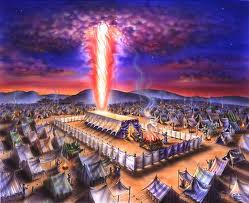
Perhaps, the best answer is all the above.  While each of these three answers are correct, I think the last is the most difficult to see in Scripture.  In the last month at our church, we have given attention on Sunday mornings to the tabernacle in Exodus and how it fits into God’s plan of redemption.  Because of that, I want to give you a biblical roadmap that traces God’s “tabernacles.”  I think by seeing this line of dwelling places, it will give you and I a greater ground for hope in God.  Call it a temple story.

Garden of Eden.  This is God’s first dwelling place on earth. In Genesis 3, it describes God walking in the Garden in the cool of the day.  This garden has many features of the later sanctuaries of God—gold, bountiful trees, flowing rivers, priestly guardians, and more.  Thus, from the beginning, God sets a pattern for the kind of place he will inhabit with his people.

Exodus 25-40. On Mount Sinai God gives Moses a vision of his throne room, which becomes the pattern for the tabernacle and all future sanctuaries.  Interestingly, as we have seen this tabernacle points back to Eden and ahead to a New Eden.  The tabernacle given in Exodus is a portable Sinai where God’s people—through the priest—can climb the rungs of Jacob’s ladder and come into God’s presence.

1 Kings 8.  After Israel is settled and resting in the land, 1 Kings records how God gives Solomon wisdom to build a temple in Jerusalem.  This temple replaced God’s nomadic tent and became a permanent fixture in Israel.  It’s size and beauty surpassed that of the first tabernacle, showing that as time goes by, God’s temple increases in glory and beauty.

Ezekiel 40-47.  During the Exile, after God’s spirit had abandoned the temple, Ezekiel describes a future temple that overflows with streams of living water.  This water will cleanse the earth, and God’s presence will once again dwell with his people.  Significantly, when Jesus comes, John uses imagery from Ezekiel to describe Christ’s cleansing ministry (see John 7:37-39).

Jesus.  Perhaps most amazing of all, Jesus Christ is described as God’s dwelling place.  He is God with us, Immanuel.  John 1:14 says that the Word became flesh and “tabernacled” among us.  In truth, Christ is the meeting place between God and man.  In him the fullness of God dwelt bodily (Col 2:9), and in him we have access into the very throne room of God (Heb 10:19-25).  Therefore, we ought to come regularly into his presence with thanksgiving and supplication.

The Church.  Today, God dwells in heaven, but by his Spirit, he also dwells in his church. Paul says, “We are the temple of living God” (2 Cor 6:16), and that our bodies are the “temple of the Holy Spirit” (1 Cor 6:19).  Likewise, 1 Peter 2:5 describes believers as living stones “being built up as a spiritual house.”  In this way, the church is the spiritual house of God (Eph 2:19-22).

Revelation.  Finally, there is the promise at the end of the age that God will dwell with his people on earth.  In fact, Revelation 21 speaks of a New Jerusalem that will come down out of heaven adorned as a bride. It says there won’t be a temple, for the lamb will be the temple of God.  This is our hope. At the end of the age, all the cosmos will experience the glory of God’s holiness, and will be as sacred as innermost chamber of the temple.

This temple theme is a source of great wonder and hope.  When the world around us seems to be crumbling, the ever-steady rise of God’s dwelling place in our world is a gospel reminder that even if our flesh and funds may fail, God is bringing us into his dwelling place.

Remember what Jesus promised.  He said, “In this world, we would have tribulation, but take heart, I have overcome the world” (John 16:33).  Such a promise is good news, but its goodness grounded in another promise: “Let not your hearts not be troubled.  Believe in God; believe also in me.  In my father’s house are many rooms.  If it were not so, would I have told you that I go to prepare a place for you?  And if I go and prepare a place for you, I will come again and will take you to myself, that where I am you may be also” (John 14:1-3).

I am praying that this month God will give you and me a greater vision of his heavenly tabernacle, and that such a vision will purify our daily desires, and motivate us to live more radically for Christ.  God’s temple story gives us hope for tomorrow, no matter what is transpiring today.

Soli Deo Gloria, dss