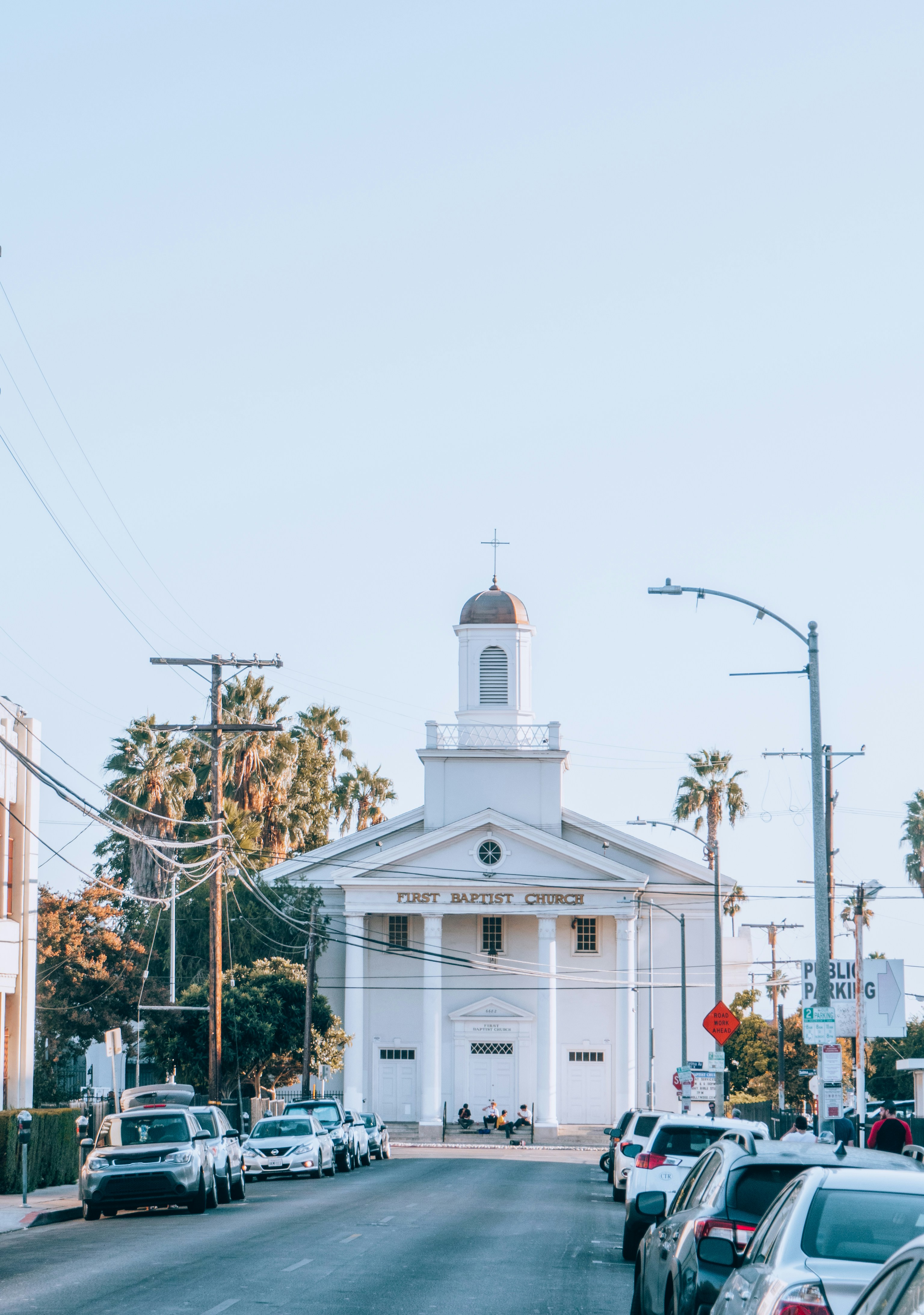
 You think of how many church plants, unfortunately, often happen today. Maybe they happen just down the street of another church that agrees with them entirely in their theology. And you think, well, maybe we should have had a conversation before you started a church just down the street. Was this going to be a conversation? What’s going on here? (Caleb Morrell)
When I moved to Chattanooga, Tennessee in 2002, I spent the first six months of my tour there in church parsonage situated in Ringgold, Georgia. Driving from the church where I worked to the home where I lived I must have passed a dozen Baptist churches. Coming from Michigan, I was astounded at the number of Baptist churches in East Tennessee. Sort of like Bubba in Forest Gump, there were Southern Baptists, Fundamental Baptists, Independent Baptists, Missionary Baptists, and Primitive Baptists—not to mention all the Baptists who were ashamed to call themselves Baptist.
Speaking with only a slight sense of hyperbole, there was a Baptist Church on every street. And sometimes right across the street. I mentioned my living quarters above because on the road to my house there two Baptists churches—Salem Baptist and New Salem Baptist. The actual name of the church has been changed to protect the (not so) innocent parties.
Driving past those churches I always wondered what the backstory was? Was this a church plant, with a new method for evangelism or a worship style? Or more likely, was it a church split? A group from Salem Baptist decided that they knew better and so they formed a committee to start a new church. Yet, instead of finding a location down the road, they took up residence right across from the church.
Now, I don’t know what actually happened and it may not be anything like what I imagined, but even if this story was entirely like something that came from the mind of Joseph Bayly, it would caricature a real problem—churches begun without any consideration for their neighbors. Indeed, for all the healthy ways churches plant churches, there are also unhealthy church plants that actually undermine the testimony of the gospel in a given area.
As I mentioned a few weeks ago, I found myself in such a situation in 2015. And I am grateful to God that he prevented our band of eager church planters from starting something that have been born with a spirit of competition. Indeed, with the perspective of hindsight and from a number of recent conversations with pastors and aspiring church planters, I am increasingly convinced that too many church plants are begun in ways that compete with other local churches.
Yes, God loves to grow his church and to plant new churches even in places filled with churches. Yet, as Ecclesiastes 8:6 has said, there is a proper time and procedure for everything under heaven, and that includes planting a church. And so, in light of a recent conversation with Caleb Morrell on the importance of Baptist associations, I want to republish some of his remarks from our podcast and then offer four brief reflections on how church plants can love their neighbors by working together with other churches. Continue reading
 Now Barnabas wanted to take with them John called Mark. But Paul thought best not to take with them one who had withdrawn from them in Pamphylia and had not gone with them to the work. And there arose a sharp disagreement, so that they separated from each other. Barnabas took Mark with him and sailed away to Cyprus, . . .
 Via Emmaus