Darkness: The World In Which Christ Was Born

The Darkness 

While we think of Christmas as a season of light, the truth is, the birth story of Jesus Christ is filled with darkness.  Anticipating the birth of the Christ child centuries before Mary was great with child, Isaiah writes that the light that was coming into the world, came to a people shrouded in darkness (9:1-7).  Gloom, anguish, and contempt were just some of the adjectives used to describe this darkness.

Thus, in order understand the full revelation of the light which came into the world when Christ was born, we need to recognize the darkness into which our Christ was born.  Today, we will consider seven aspects of the darkness, aspects not out of God’s control, but rather sovereignly ordained such that Christ’s light would radiate all the more brilliantly.

First, when Christ was born, the word of God had not been heard for four centuries.  Malachi is the last book in the Old Testament, written in the fifth century BC.  It concludes with the statement that God would send Elijah the prophet as a forerunner for the Messiah.  But since that last pregnant statement, which would eventually be fulfilled in John the Baptist, God had been silent.  And everyone knew it.  Listen to some of the Jewish writers of the day.

Babylonian Talmud, Yomah 9b:After the latter prophets Haggai, Zechariah, and Malachi had died, the Holy Spirit departed from Israel, but they still availed themselves of the voice from heaven’

Josephus, Against Apion: From Artaxerxes to our own times a complete history has been written, but has not been deemed worthy of equal credit with the earlier records, because of the failure of the exact succession of the prophets’

1 Maccabees: So they tore down the altar and stored the stones in a convenient place on the temple hill until there should come a prophet to tell what to do with them.’

Without the word of God present among them, the people walked in spiritual darkness.

Second, the people of God were under the oppressive rule of Rome.  This is evident in the birth story of Jesus.  Luke 2:1 records the census taken up by Caesar Augustus.  It was a blatant reminder that the people of Israel were owned by another.  Likewise, Herod, a descedent of Edom, ruled in Jerusalem.  Long gone were the days of a Davidic king. Much like today, soldiers walked the streets of Jerusalem.  Only they were not 19-year old Israelis with M-16’s.  They were Roman guards, called to police the city of David.

In some ways, Israel had escaped exile.  No longer did they live in Babylon.  But in many ways, they were exiles in their own country.  Even their own temple was built by a foreigner—Herod the Great was a descendent of a rival nation.  Political darkness reigned!

Third, the nation of Israel was fracturing.  Four groups in Israel sought and fought to lead the people.  (1) The Pharisees resided in Jerusalem.  They attempted to shape religious life in Israel through their traditions.  Jesus had many run-ins with these legalistic Jews, who led astray the people of God (cf. Matt 23). (2) Sadducees opposed the strict legalism of the Pharisees, and only embraced Moses law (Gen-Deut).  They rejected the resurrection, belief in angels, but still had a influential place in the temple and law courts.  (3) The Essenes, who lived in a commune near Qumran–they were the scribes who penned and preserved theDead Sea Scrolls–lived an especially pure life.  They devoted themselves to God, and prayed for God’s overthrow of Rome. (4) The Zealots were a band of brothers who did not pray for change so much as they sought violent means of overthrowing Roman rule.

The result of these four competing sects in Judaism led to constant friction, only increased by the oppressive rule of Rome.  Riots were common.  Tension was unceasing. Darkness permeated Judaism.

Fourth, the birth of Jesus came through a virgin.  Now, in our day, we celebrate Mary as an example of devotion and faith.  We send Christmas cards with creche scenes on them and sing songs praising God for this humble servant.  But it was not so then.  Matthew 1 records that Joseph, who was a righteous man, one who loved Mary, sought to divorce her quietly.  Why?  Because everyone knows how a child is conceived!  Mary’s child would grow up ridiculed as the son of an unchaste women (cf John 8:41).  A virgin birth was not a celebrated event in ancient Israel.  Darkness surrounded it!

Fifth, the census was a considerable imposition.  Living in Nazareth, Mary and Joseph lived more than 100 miles North of Bethlehem.  Yet, there was no way around it.  They were forced by legal constraint to make the arduous trip.  Without a highway, a car, a cushioned seat, or a suspension system; the teenage couple were forced to walk over hills and through streams.  While we celebrate the pilgrimmage today with illumined festivity.  This was a dark walk.

Sixth, the poverty of Mary and Joseph did not fit the royal son they had.  Not only were the conditions leading up to Christ’s birth dark, so too was his birth.  Luke 2:7 records that there was “no place for them in the inn.”  This is probably because it was filled up with travelers coming for the census; but it may also be the case that Joseph, a carpenter by trade, did not have the means to pay for or to pay extra for a room.  Money talks, right?  But it is clear, that Joseph had no bargaining power.  Mary and Joseph went to the stable, where Jesus was born and laid in a manger.  Without family or hospitality, darkness surrounded them.  

Seventh, through the hostile forces of Herod, Satan tried to kill Jesus.  Poverty was not the only source of darkness; persecution followed Jesus’ birth, so that he was constantly under threat.  Matthew 2 records the details.

Matt 2:1-8. Now after Jesus was born in Bethlehem of Judea in the days of Herod the king, behold, wise men from the east came to Jerusalem, saying, “Where is he who has been born king of the Jews? For we saw his star when it rose and have come to worship him.” When Herod the king heard this, he was troubled, and all Jerusalem with him; and assembling all the chief priests and scribes of the people, he inquired of them where the Christ was to be born. They told him, “In Bethlehem of Judea, for so it is written by the prophet: “‘And you, O Bethlehem, in the land of Judah, are by no means least among the rulers of Judah; for from you shall come a ruler who will shepherd my people Israel.'” Then Herod summoned the wise men secretly and ascertained from them what time the star had appeared. And he sent them to Bethlehem, saying, “Go and search diligently for the child, and when you have found him, bring me word, that I too may come and worship him.”

 Herod, so paranoid for his own position and power that he had multiple family members executed, attempts to use the wisemen to lead him to the Christ child—not to worship, but to exterminate. When he learns that the wisemen have not complied with his scheming, he orders the execution of all the children in and around Bethlehem.

Matt 2:16. Then Herod, when he saw that he had been tricked by the wise men, became furious, he sent and killed all the male children in Bethlehem and in all that region who were two years old or under, according to the time that he had ascertained from the wise men.

The Good News of Great Darkness

Darkness is everywhere in Christ’s birth, which should not come as a surprise when we think of the prophecies in the Old Testament and the conditions of the world that God created.  As John 1 says, “The true light, which enlightens everyone, was coming into the world, . . . yet the world did not know him.”

The reality of Christ’s darkness is not in itself comforting, but when we consider that Christ came into the darkness in order to bring light, the truth is staggering beautiful.  For we all face seasons of darkness, and God in the flesh knows exactly what that looks like and feels like.

Remembering that the light of Christ came in the darkness of night gives us hope that God can still pour light into our hearts and shine light into our lives.  No matter how dark it may be, no matter where the darkness comes from, God is the light who enlightens everyone, and has come to take up residence in the lives of those who look to Christ.

Soli Deo Gloria, dss
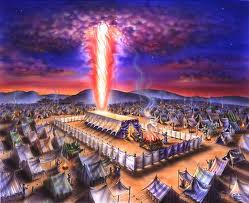
Introducing Bezalel: A Temple-Building Son of Judah

Introducing Bezalel

One of the main characters in Exodus is a man whose name only appears three other times in the whole Bible, and then only in genealogies in Chronicles and Ezra.  His name is Bezalel and he plays an enormous role in the construction of the tabernacle. Exodus 31:1–5 introduces him saying,

The LORD said to Moses, “See, I have called by name Bezalel the son of Uri, son of Hur, of the tribe of Judah, and I have filled him with the Spirit of God, with ability and intelligence, with knowledge and all craftsmanship,  to devise artistic designs, to work in gold, silver, and bronze, in cutting stones for setting, and in carving wood, to work in every craft.

Though Moses is given the vision of the tabernacle (Exod 25:40), and the people are called to furnish the materials (25:1–8; 35:4–9), it is the Spirit-endowed skill possessed by Bezalel that made it possible for the tabernacle to be constructed.  This is re-emphasized in Exodus 35:30-35, but it is Exodus 38:22 that I want to highlight.  There Moses records that “Bezalel the son of Uri, son of Hur, of the tribe of Judah, made all that the LORD commanded Moses.”

Now it is obvious why Bezalel is mentioned in Exodus.  He is the chief foreman on the tabernacle project.  He is given skill and the wisdom of the Spirit to accomplish the task.  However, the more amazing point is this: Why is it important that Bezalel’s family lineage be mentioned?  Of course, it is nice to know a little background on the guy, but is that it?  I think there is something more going on… what you might call prophetic typology.

Type, Ectype, and Archetype

Can you think of anyone else from the tribe of Judah, who obeyed God’s law to build a tabernacle?  How about David and his son Solomon.  In the history of Israel, it is recorded that God gave David a vision of the temple, and that David passed on this architectural plan to Solomon (1 Chron 28:11-19).  Moreover, like Bezalel, YHWH gave Solomon unsurpassed wisdom in order to construct the tabernacle (1 Kings 3:10ff).  Thus, in a very real way, Solomon with his Spirit-endowed wisdom was a greater Bezalel.  Bezalel was the type; Solomon the ectype, or to say it another way, a greater installment of the temple-builder par excellence who was still to come.

In the New Testament, we find that the temple-building typology of Bezalel and Solomon is picked up in Jesus Christ.  Jesus who is a son of David, and a son of Judah (Matt 1:1-17) is the one who perfectly obeys the law of Moses (Matt 5:17).  Moreover, as Matthew describes “something greater than Solomon is here” (12:42b).  Then in Matthew 16:18, Jesus himself says that he is building a church, one that will never be destroyed by death, sin, or Satan.  He alludes to the “rock” which conjures up pictures of the temple mount, and he says that he is going to found his temple/church on Peter and the other apostles. (See G. K. Beale on how Matthew 16:18 relates to the temple mount, The Temple and the Church’s Mission: A Biblical Theology of the Dwelling Place of God187–88).

Thus, in his death, Jesus becomes the cornerstone of a new temple.  Indeed, Paul uses temple imagery to describe what Jesus is doing by the Spirit.  He writes in Ephesians 2:19–22,

So then you are no longer strangers and aliens, but you are fellow citizens with the saints and members of the household of God, built on the foundation of the apostles and prophets, Christ Jesus himself being the cornerstone, in whom the whole structure, being joined together, grows into a holy temple in the Lord. In him you also are being built together into a dwelling place for God by the Spirit.

The confirmation of the Bezalel-Solomon-Jesus typological structure finds further support in Hebrews, where the author compares and contrasts Moses and Jesus (Heb 3), and says that our Christ is not simply a servant in the house, he is “the builder of the house” (v. 3).  Accordingly, he deserves greater glory—more glory that Moses (and by extension Bezalel) who constructed a tent in the desert; more glory than Solomon who constructed a superlative temple in Jerusalem.  These typological dwellings were splendid in their own time and place, but compared to what Christ is doing in his church, they are dull and decrepit.

The Gospel of Temple Building Son of Judah

What a vision!  In Bezalel and later in Solomon, the Spirit of God is preparing the way for Christ to come.  The typology is not just a retrospective analogy between Jesus and Bezalel.  Rather, set in history, God has set aside Bezalel as a son of Judah, to become a temple-builder, so that when Christ comes into the world, we would see an entire history of Spirit-filled men from Judah building a dwelling place for God with his people.

Once again, we see in Exodus the way Christ is foreshadowed.  He is the substance from which Bezalel is the historical shadow.  It is a glorious reminder that all Scripture points us to Jesus, and that on every page of God’s inspired text, we see glimpses of our savior reflected in the saints who are shaped by the Spirit of Christ.

Soli Deo Gloria, ds

Feet and Inches: Christ Rules Over All Things

Reintroducing George Smeaton and Abraham Kuyper

Writing on different subjects, in different language, but at roughly the same period of time, George Smeaton and Abraham Kuyper used synonymous language to describe Christ’s reign over the earth.  Yesterday we introduced them; today we will compare and combine their statements to give a more full-orbed understanding of Christ’s universal dominion.  But before doing that, let me supply their quotes again.

First, in 1871 in Christ’s Doctrine of the Atonement, Smeaton wrote concerning John 12:31 and Christ’s universal reign,

On the contrary, this testimony shows that every foot of ground in the world belongs to Christ, that His followers can be loyal to Him in every position, and that in every country and corner where they may placed they have to act their part for their Lord.  The world is judicially awarded to Christ as its owner and Lord (p. 300).

Ten years later, Kuyper in a speech concerning “sphere sovereignty,” Kuyper make the famous statement,

There is not a square inch in the whole domain of our human existence over which Christ, who is Sovereign over all, does not cry: “Mine!

Clearly, the resonance between Kuyper and Smeaton is unmistakable, but there are a number of differences in context and nuance that make it worthwhile to take up both statements as we consider Christ’s universal dominion.  Let’s consider three that develop this truth.

Feet and Inches: Smeaton and Kuyper on the Universal Reign of Christ

First, Christ Rules Over Satan and Scholars.  In Smeaton, Christ’s rule over the earth is contrasted with that of Satan.  While Satan stole possession of the earth from Adam and Eve, and ruled as the god of this age for generations; Jesus Christ came and dethroned the serpent of old.  Thus, while he still flails, Jesus is the one resting on the throne and delegating his Spirit and his Church to have dominion over the whole wide earth.

At the same time, one of the areas in which this dominion ought to occur is in the academy.  Kuyper, a brilliant theologian, author, educator, politician, and spokesman for a Reformed worldview, advocates the need for the disciplines of law, medicine, science and so forth to be undertaken not in disjunction from faith or from the reign of Christ, but rather in connect with him.  The reason?  Just as Christ reigns over Satan and in the church, so he is the creator, sustainer, and inventor of all life.  Thus, to rightly understand anything in creation demands that a person sees how that individual theory, molecule, or bacteria strain relates to the whole.  Only with Christ reigning on the throne can such a vision of research be conceived.

Second, Christ Rules Over Space and Studies.  In Smeaton, we find biblical proof of the fact that Christ died for people from every tongue, tribe, language, and nation.  At the same time, his death defeated the cosmic reign of Satan.  Therefore, every square foot has now been reclaimed, officially, by Christ, and in time all creation will be re-made and re-seeded as Christ brings the New Creation.  At the same time, Kuyper rightly sees Christ rightly seeds his world with thinkers and thoughts that benefit all of humanity.  These come not only from Christian scientists and philosophers, they are also developed by unbelievers.  Nevertheless, Christ rules over the nations and their various schools of thought in order to effect all of his purposes in the world.

One example of this would include the political theory that permitted Israel to dwell in the land of Palestine under the auspices of the Roman Empire.  While not apparent to the Romans or even the Jews, God permitted the toleration of the Roman Empire to provide a way of life in Israel that facilitated the coming of Christ (cf. Gal 4:4).  All the orchestrations and political machinations were at one level governed by various thinkers and philosophies, but at another level, God used them in order to effect his causes.  In this way, God is sovereign over the geographic nations and the way they run.  Smeaton points to the former, Kuyper more the latter.

Third, Christ Rules As Redeemer and Creator.  In Smeaton’s work, he is insistent on Christ’s atoning work.  Because of Christ’s death, he defeats Satan and redeems or reclaims the earth.  In this way, he is functioning as a Redeemer who has authority over all the earth.  For Kuyper, it seems that his sphere sovereignty is more connected with his role as creator and sustainer.  While not denying the special work of redemption, in any sort of way, he emphasizes Christ the Creator.

Truth be told, both of these things are truth and should not be set against one another.  Rather, they work in tandem and rightly relate Christ to all the earth.  As John 17:2 mentions, Jesus has authority over all flesh, but he only gives eternal life to the ones who have been given to him (i.e. the elect).

In the end, Smeaton’s statement balances Kuyper’s statement and gives added texture and depth to the beautiful reality that Christ reigns over all things.  Christ reigns over all the earth as Creator and Redeemer, as the one who has subdued Satan and who subverts scholars.  He rules space and time, measurement and rhyme.  He is God over all, and in the works of Smeaton and Kuyper, one can find an excellent pair who help us think through the way Christ governs his universe.

A Final Curiosity

Smeaton published his words before Kuyper proclaimed his.  While it would be natural for Smeaton to assimilate Kuyper’s well known words–at least well known today–it seems more odd that Kuyper would have borrowed his most famous utterance from another. And it probably is unlikely. The contexts in which the statements occurred and the provenances from which they were written, accompanied by the difference in languages, makes it unlikely that these two statements had any organic relationship.

It is more likely the case, that the allusive echo found in their statements are simply the product of two men studying the same Scriptures, influenced by the same Spirit–coincidentally, both men produced mathom works on the Holy Spirit (Smeaton, The Doctrine of the Holy Spirit; and Kuyper, The Work of the Holy Spirit), living under the same king whose rule is seen in Edinburgh and Amsterdam.

While Smeaton measured Christ’s reign in feet and Kupyer marked his off in inches, the reality for both of them, is that Christ rightly possess all his inheritance and is reigning over it all today.  This glorious truth bears repeating, and as often as we quote Kuyper, perhaps we should also cite Smeaton, who not only precedes the Dutch theologian and prime minister, but who also connects the universal reign to the cross of Christ.

Thoughts? If anyone does have any connections between Smeaton and Kuyper, I would love to know.  If not, it will remain an interesting coincidence, another example that there is nothing new under the Son.

Soli Deo Gloria, dss

George Smeaton and Abraham Kuyper on the Universal Reign of Christ

Solomon advises us that there is nothing new under the sun.  Indeed, in the history of Christian thought, one would expect that under the Lordship of Christ and his church, the essentials of the gospel would remain consistent over time.  Thus, while they need repeating in every generation because slippage is always a threat, there remains a kind of harmony that exists among theologians who make the Bible first order.  Likewise, as one dives into reading pastors and theologians from different eras and different places, one can expect to find echoes.  Sometimes these are organically related, sometime they are not but cause for curiosity how it is possible that two statements made by independent thinkers could be so similar.

George Smeaton on Christ’s Universal Reign

Such an occasion happened a few months ago as I read George Smeaton’s eminently helpful book, The Doctrine of the Atonement As Taught By Christ Himself (Edinburgh, 1871) now retitled and republished as Christ’s Doctrine of the Atonement.  In it, Smeaton gives his final exhortation from the text John 12:31, which reads, “Now is the judgment of this world: now shall the prince of this world be cast out.”  In his thorough exegesis, the nineteenth-century Scot shows how Satan’s overthrow means simply, that Christ is the sole possessor of all things. He has stripped the god of this age of his title to this world, and he now rightly possesses the earth (cf. Matt 28:18). Therefore he writes,

This text [John 12:31], important in many aspects, is capable of being viewed in many applications.  It throws a steady light on the great and momentous doctrine, that the world is, in consequence of the vicarious work of Christ, no more Satan’s, and that Christ’s people are now to be far from the impression that they are only captives in an enemy’s territory, and unable warrantably to occupy a place in the world, either as citizens or magistrates.

Moving from Christ’s substitutionary cross to the the universal themes of victory and dominion, Smeaton makes this final, global and glorious statement,

On the contrary, this testimony shows that every foot of ground in the world belongs to Christ, that His followers can be loyal to Him in every position, and that in every country and corner where they may placed they have to act their part for their Lord.  The world is judicially awarded to Christ as its owner and Lord (p. 300).

This is a glorious truth that deserves time for consideration and meditation.  Yet, in first hearing it, I could not help but think of Abraham Kuyper, who said something almost identical.  Yet, as it will be shown, Kuyper’s context is different than Smeaton, and Kuyper actually spoke his word’s later.

Abraham Kuyper on Christ’s Universal Reign

In his lecture on “Sphere Sovereignty” delivered on October 20, 1880, Kuyper uttered what is today his most famous quotation.  It reads:

There is not a square inch in the whole domain of our human existence over which Christ, who is Sovereign over all, does not cry: “Mine! (Abraham Kuyper, “Sphere Sovereignty,” in Abraham Kuyper: A Centennial Reader, ed. James D. Bratt [Grand Rapids: Eerdmans, 1998], 488).

In context, Kuyper’s statement comes at the end of a long list of academic sciences–medicine, law, natural science, letters– which the great educator of the Netherlands argued should be brought underneath the rule of Christ.  Since all wisdom and knowledge are found in Christ (Col 2:3), all mental disciplines should find their origin and telos in Christ. In full context, he states,

Man in his antithesis as fallen sinner or self-developing natural creature returns again as the ‘subject that thinks’ or ‘the object that prompts thought’ in every department, in every discipline, and with every investigator.  Oh, no single piece of our mental world is to be hermetically sealed off from the rest, and there is not a square inch in the whole domain of our human existence over which Christ, who is Sovereign over all, does not cry: ‘Mine!’ (488).

This concluding statement has been repeated again and again.  It is a favorite of Reformed thinkers and others too.  It is wonderful thought to realize that all things have been and should be put in submission to Christ.  But interestingly the application of Kuyper’s words (as I have used them and have heard others use them) are slightly out of context.

Often Kuyper’s turn of phrase is used in spatial, geographical ways, as if he was explaining Psalm 2 which says that all the nations have been given to the Son.  Since the Lord possesses all the earth, he has a right to put his finger on it and exlaim “Mine!”  However, in context, Kuyper’s statement is more specific.  He is speaking more exactly of the “mental world,” not the spatial world.  I doubt he would deny the broader application, but to read Kuyper closely, we find that his statement is more narrow. This point does not mean that we need to abandon the use of Kuyper’s quote, so much as perhaps we should include Smeaton’s, too.

Tomorrow, we will pick up how and why we should incorporate Smeaton’s quotation into the discussion of Christ’s universal reign.

Soli Deo Gloria, dss


Beware of False Worship (Sermon Notes)

Exodus 32 is a tremendous vision of all that God hates about false worship.  If we pay careful attention, the problem is not absence of worship, but absence of divine sanction. In other words, the problem is not rejection of religion or indifference to worship. The problem is that worship derives its origin from some place other than God himself. This is not too different from the church today.

In an age of creative ventures in worship, the Golden Calf incident is worth our attention, because it provides a powerful counter-example to false forms of Christian worship. And what is most shocking and indicting is the fact that in Exodus 32 we find that false worship looks a lot like true worship, and that only in the light of divine revelation, can we tell the difference.

False Worship Looks A Lot Like True Worship

False religion is so dangerous because of how closely it apes true religion.  It doesn’t come with a surgeon generals warning on it.  In fact, if you use Christianbook.com as a resource for getting “good, Christian resources,” beware.  There is no warning for the likes of Osteen, Boyd, Eldredge, Meyer, or Jakes.  Today, too many Christian booksellers make a killing selling false doctrine.

In Exodus 32, we see a number of ways that ancient Israel apes true religion, and how Satan deceives God’s son.

First, while the need for leadership is real, the request is wrong.  Moses has been gone for weeks, and Israel feels its need. So they come to Aaron earnestly; unfortunately, their worry is premature.  The pillar of cloud is still on Mount Sinai.  There is no evidence that it has departed.  They were told that when Moses ascended, he would return and lead Israel to dwell with YHWH.  But like in the garden, Satan plays on the emotions of Israel, and they fall for his temptation.

Second, the worship that Israel offers looks sacrificial.  Here Aaron, failing to guard Israel, like Adam failed to guard his wife, calls for gold to fashion an idol.  And the people give.  They give liberally! It is a major act of spirituality–false spirituality.  Sadly, they miss God’s mark.  Part of God’s plan is for Israel to gather gold, silver, fabrics, etc (Exod 25, 35), thus, what Aaron calls for seems very natural. Sadly, his construction will distance Israel from God, it will not bring them near.  Access to God requires God’s revelation.

We learn something very important here: Sacrifice does not equal spirituality.  Spirituality calls for sacrifice. David says of Araunah’s threshing floor in 1 Sam 2:24, “I will not offer burnt offerings to the LORD my God that cost me nothing”  True spirituality will cost you  (cf. Luke 14:25-33), but just because you offer costly service, does not mean your spirituality is pleasing to God.

Third, the materials Israel offers for worship are essentially the same. The people of God build an altar, offer burnt offerings and peace offerings, and feast with the Lord (v. 5-6).  Yet, while in name these offerings and elements of worship are the same, they are different because they are invented by men and not God.  Aaron is not responding to God’s revelation, he is building the altar and offering the sacrifices according to all that he had seen in Egypt.

At this point in the narrative, Moses alone had God’s instructions.  He is still on the Mountain.  Israel does not yet have Exodus 25-31.  We do.  They don’t.  Worse: Because of the sexual promiscuity often associated with temple worship in the ancient world, the “playing” in Exodus 32:6 is likely to have a sexually perverse element.  Overall, the offering is an abomination, because it fails to do what God’s word says; it offers worship according to the vain imagination of fallen men.

Here is the application, via negative example, for us: It is natural and easy for the worship of God’s people to reflect more of the culture than of the court of heaven.  False worship is indeed what will happen whenever God’s word is minimized.  Unless we employ a regulative principle that allows Scripture to define and delimit our worship, we run the risk of offending God with the very thing with which we intend to please him.

Worship Without the Word Invokes God’s Wrath

The reaction of God is evident to all.  YHWH was incensed.  Verse 7 describes the distance that now existed between God and Israel.  He calls Israel “Moses’ people,” and he tells Moses that he brought them up from Egypt.  YHWH wants to have nothing to do with Israel.  In verse 8, he condemns them legally for breaking the part of the law that they had.  Remember, more than once, Israel swore that they would do all the words the Lord had spoken (Exod 25:3)They knew that failure to obey meant death.  And so, God was fully within his rights, to say in 32:10, “I have seen this people, and behold, it is a stiff-necked people. Now therefore let me alone, that my wrath may burn hot against them & I may consume them, in order that I may make a great nation of you’

The people of God worshiped YHWH (v. 5), but not according to the way YHWH designed.  Thus, they invoked his wrath.  How many churches today do the same?  As they creatively invite the presence of the Spirit through smells, bells, dramas, and personal interviews, they may actually distance themselves from the Christ they name.  For churches and their leaders, it is worth asking: What biblical sanction is there for such activity in corporate worship?  Failure to think through these things, invites God not to write his name on our churches, but rather the word “Ichabod.”

May God protect us from false worship, and may we pursue true worship as we look to the Word of God and worship according to all that he has revealed and prescribed in his sufficient revelation.

Soli Deo Gloria, dss


A Temple Story: Tracing God’s Presence Through Scripture

A Temple Story

What is the best way to describe the Bible?  Is it a collection of verses that supply promises and warnings for the Christian life?  Is it a collection of books that each point to Jesus Christ?  Or is it an epic story of Paradise Created, Paradise Lost, Paradise Promised, and Paradise Made New in Christ?

Perhaps, the best answer is all the above.  While each of these three answers are correct, I think the last is the most difficult to see in Scripture.  In the last month at our church, we have given attention on Sunday mornings to the tabernacle in Exodus and how it fits into God’s plan of redemption.  Because of that, I want to give you a biblical roadmap that traces God’s “tabernacles.”  I think by seeing this line of dwelling places, it will give you and I a greater ground for hope in God.  Call it a temple story.

Garden of Eden.  This is God’s first dwelling place on earth. In Genesis 3, it describes God walking in the Garden in the cool of the day.  This garden has many features of the later sanctuaries of God—gold, bountiful trees, flowing rivers, priestly guardians, and more.  Thus, from the beginning, God sets a pattern for the kind of place he will inhabit with his people.

Exodus 25-40. On Mount Sinai God gives Moses a vision of his throne room, which becomes the pattern for the tabernacle and all future sanctuaries.  Interestingly, as we have seen this tabernacle points back to Eden and ahead to a New Eden.  The tabernacle given in Exodus is a portable Sinai where God’s people—through the priest—can climb the rungs of Jacob’s ladder and come into God’s presence.

1 Kings 8.  After Israel is settled and resting in the land, 1 Kings records how God gives Solomon wisdom to build a temple in Jerusalem.  This temple replaced God’s nomadic tent and became a permanent fixture in Israel.  It’s size and beauty surpassed that of the first tabernacle, showing that as time goes by, God’s temple increases in glory and beauty.

Ezekiel 40-47.  During the Exile, after God’s spirit had abandoned the temple, Ezekiel describes a future temple that overflows with streams of living water.  This water will cleanse the earth, and God’s presence will once again dwell with his people.  Significantly, when Jesus comes, John uses imagery from Ezekiel to describe Christ’s cleansing ministry (see John 7:37-39).

Jesus.  Perhaps most amazing of all, Jesus Christ is described as God’s dwelling place.  He is God with us, Immanuel.  John 1:14 says that the Word became flesh and “tabernacled” among us.  In truth, Christ is the meeting place between God and man.  In him the fullness of God dwelt bodily (Col 2:9), and in him we have access into the very throne room of God (Heb 10:19-25).  Therefore, we ought to come regularly into his presence with thanksgiving and supplication.

The Church.  Today, God dwells in heaven, but by his Spirit, he also dwells in his church. Paul says, “We are the temple of living God” (2 Cor 6:16), and that our bodies are the “temple of the Holy Spirit” (1 Cor 6:19).  Likewise, 1 Peter 2:5 describes believers as living stones “being built up as a spiritual house.”  In this way, the church is the spiritual house of God (Eph 2:19-22).

Revelation.  Finally, there is the promise at the end of the age that God will dwell with his people on earth.  In fact, Revelation 21 speaks of a New Jerusalem that will come down out of heaven adorned as a bride. It says there won’t be a temple, for the lamb will be the temple of God.  This is our hope. At the end of the age, all the cosmos will experience the glory of God’s holiness, and will be as sacred as innermost chamber of the temple.

This temple theme is a source of great wonder and hope.  When the world around us seems to be crumbling, the ever-steady rise of God’s dwelling place in our world is a gospel reminder that even if our flesh and funds may fail, God is bringing us into his dwelling place.

Remember what Jesus promised.  He said, “In this world, we would have tribulation, but take heart, I have overcome the world” (John 16:33).  Such a promise is good news, but its goodness grounded in another promise: “Let not your hearts not be troubled.  Believe in God; believe also in me.  In my father’s house are many rooms.  If it were not so, would I have told you that I go to prepare a place for you?  And if I go and prepare a place for you, I will come again and will take you to myself, that where I am you may be also” (John 14:1-3).

I am praying that this month God will give you and me a greater vision of his heavenly tabernacle, and that such a vision will purify our daily desires, and motivate us to live more radically for Christ.  God’s temple story gives us hope for tomorrow, no matter what is transpiring today.

Soli Deo Gloria, dss

Sermon Notes: Christ’s Consecration is Our Confidence (NT)

Picking up where we left off, the New Testament comes in looking backward, looking at God’s covenantal promises, and then it begins to show how Christ fulfills them all.  So we move from prophetic anticipation, to Christotelic (Christ in the end) fulfillment.

4. Christ fulfills Zechariah 3.  Not simply by being a perfect Levitical priest, Jesus far exceeds the old system.  Hebrews records that he is a priest not because of genealogy, but because of living a perfect life.  He is called a priest after the order of Melchizedek.

Hebrews 7:1-9. Now if perfection had been attainable through the Levitical priesthood (for under it the people received the law), what further need would there have been for another priest to arise after the order of Melchizedek, rather than one named after the order of Aaron? For when there is a change in the priesthood, there is necessarily a change in the law as well. For the one of whom these things are spoken belonged to another tribe, from which no one has ever served at the altar. For it is evident that our Lord was descended from Judah, and in connection with that tribe Moses said nothing about priests. This becomes even more evident when another priest arises in the likeness of Melchizedek, who has become a priest, not on the basis of a legal requirement concerning bodily descent, but by the power of an indestructible life. For it is witnessed of him, “You are a priest forever, after the order of Melchizedek” [Psalm 110].  For on the one hand, a former commandment is set aside because of its weakness and uselessness (for the law made nothing perfect); but on the other hand, a better hope is introduced, through which we draw near to God.

But even more to the point, in connection with the consecration of the high priest, is Hebrews 10. There, the priest it says is not acceptable to God on the basis of a sacrifice or sacrifices made for him.  He doesn’t need a sacrifice.  Christ is accepted because of his perfect obedience.

Hebrews 10:1-10. For since the law has but a shadow of the good things to come instead of the true form of these realities, it can never, by the same sacrifices that are continually offered every year, make perfect those who draw near. Otherwise, would they not have ceased to be offered, since the worshipers, having once been cleansed, would no longer have any consciousness of sins?  But in these sacrifices there is a reminder of sins every year.  For it is impossible for the blood of bulls and goats to take away sins. Consequently, when Christ came into the world, he said,

 “Sacrifices and offerings you have not desired, but a body have you prepared for me; in burnt offerings and sin offerings you have taken no pleasure. Then I said, ‘Behold, I have come to do your will, O God, as it is written of me in the scroll of the book.'”

When he said above, “You have neither desired nor taken pleasure in sacrifices and offerings and burnt offerings and sin offerings” (these are offered according to the law), then he added, “Behold, I have come to do your will.” He does away with the first in order to establish the second. And by that will we have been sanctified through the offering of the body of Jesus Christ once for all.

The beauty of Hebrews 10, in relation to Exodus 29, is that Christ does not need to be cleansed of sin.  He is clean.  Thus, his consecration does not depend on the blood of animals; his purity emits from a life that has displayed perfect obedience to the father.  God accepts Christ’s priestly sacrifice and representation, because he is His Son, in whom he is well-pleased.  This is far better than the Levitical system.

 5. The Gospel: We have a priest that is acceptable to God and sympathetic to us.  The promises and invitations to approach the Lord in Hebrews about this are astounding.  Hebrews 7:25, “He lives to intercede for us.”  What does that mean?  Consider how he prays in John 17.

(1) He prays for our protection from the world (17:15)
(2) He prays for our sanctification (17:17)
(3) He prays for the effectiveness of our evangelism (17:20)… which means
(4) He prays for the salvation of those given to him
(5) He prays for the unity of the church (17:23)
(6) He prays for his saints to know his love (17:26)

6. The Application: Draw Near With Confidence.  The New Testament calls us to draw near to God (James 4:8), but such a command would have been absolutely terrifying to the Old Testament people (and maybe even the priests).  Entering God’s presence in any unclean manner resulted in death (cf. Lev 10:1-3).  However, Christ takes away that threat.  Through his perfect consecration, he stands at God’s right hand and bids us come.  He clothes us, who trust in him, with his righteousness and makes us acceptable in God’s sight. Thus, Christian have full access and assurance that our prayers, petitions, and confessions will be heard and received.  This is great news, and one that comes at the end of the line that begins in Exodus 29 passes through the OT and finds fulfillment in Christ in the NT.

May we draw near to God in Christ today, because of his perfect consecration.

Soli Deo Gloria, dss

Sermon Notes: The Priest’s Particular Work (OT)

In typological fashion, the names of Israel engraved on the breastpiece & ephod show how the priest represents God’s people before YHWH.  In other words, in Exodus 28 we learn that the priestly duty was to represent Israel before God in the holy of holies (cf Heb 5:1).  Specifically, verses 12 and 29 say that Israel was to remember them as they were kept on Aaron’s heart as he entered the holy of holies.  In this way, he made atonement for Israel.  Notice, in the OT, he didn’t make atonement for Egypt, Assyria, or Babylon.  He only represented those who were redeemed from Egypt, who passed through the sea, who were in covenant with God at Sinai.  It tells us that the priestly service was for those who are in covenant with God.  In fact, the Exodus 28 is a very strong typological argument for definite atonement.  Let’s consider.

To start, the priestly garments are made “for glory and for beauty” (28:2), but they are not simply for aesthetics; they are highly symbolic and even instructive for discerning what the priest did behind the veil.[1]  As Carol Meyers puts it, “priestly office and priestly garb are inextricably related.”[2]  G.K. Beale has developed the connection between the priestly garments, the temple and the universe,[3] but there is also good reason to examine the relationship between the priest and the covenant people.

In this regard, the priestly attire ‘visualizes’ the particular nature of the atonement.[4]  It does so in this way: From head to foot, the priest is to wear the holy attire designed and decorated to teach Israel and later generations what the priest is doing as he enters into the holy of holies.[5]  Of greatest interest (and illumination) are the “shoulder pieces” and the “breastpiece of judgment.”   Concerning the former, YHWH instructs,

And they shall make the ephod of gold, of blue and purple and scarlet yarns, and of fine twined linen, skillfully worked. It shall have two shoulder pieces attached to its two edges, so that it may be joined together… You shall take two onyx stones, and engrave on them the names of the sons of Israel, six of their names on the one stone, and the names of the remaining six on the other stone, in the order of their birth. As a jeweler engraves signets, so shall you engrave the two stones with the names of the sons of Israel… And you shall set the two stones on the shoulder pieces of the ephod, as stones of remembrance for the sons of Israel. And Aaron shall bear their names before the LORD on his two shoulders for remembrance (Exod 28:6-12; cf. 39:2-7).

The purpose of the shoulder pieces is far more than ancient Near Eastern fashion or utilitarian function.  The names of the twelve tribes were “deeply and permanently cut into the onyx,”[6] signifying the priest’s intimate connection with the people of Israel. As the priest of the covenant, he mediated for the people of the covenant.  Of this “corporate solidarity” that the priest shared with Israel, it was a necessary function of his office to be in communicative relation with those whom he represents. In other words, the priest does not mediate for an unspecified group or number, the “stones of remembrance” were designated to represent “the sons of Israel”—one stone for each tribe.  So that, when the priest entered the tabernacle, and later the temple he did so with Israel on his heart and mind.[7]

In the same way, the high priest’s breastpiece of judgment functioned as a symbol of the high priest’s covenantal representation.[8]  Moses records,

You shall make a breastpiece of judgment, in skilled work… It shall be square and doubled, a span its length and a span its breadth. You shall set in it four rows of stones. A row of sardius, topaz, and carbuncle shall be the first row; and the second row an emerald, a sapphire, and a diamond; and the third row a jacinth, an agate, and an amethyst; and the fourth row a beryl, an onyx, and a jasper. They shall be set in gold filigree. There shall be twelve stones with their names according to the names of the sons of Israel. They shall be like signets, each engraved with its name, for the twelve tribes… So Aaron shall bear the names of the sons of Israel in the breastpiece of judgment on his heart, when he goes into the Holy Place, to bring them to regular remembrance before the LORD (Exod 28:15-30; cf. 39:8-21).

Like the shoulder pieces, the breastpiece is designed to bring the sons of Israel into “regular remembrance before the Lord” (v. 29).  Again, as a priest chosen from his brothers for his brothers and their families, he does not generally atone, intercede, or minister.  Rather, God has appointed the high priest to make atonement for God’s particular people, people who knew they had a priest.  Rightly, D.K. Stuart says, “the high priest symbolized Israel” and “that whatever he did, he did as the people’s representative, and his actions would have the same essential effect that they would have if all of them, one by one, had done the same thing.”[9]  This, by itself doesn’t prove definite atonement, but it does show the exact representation of his priestly office.  It is not general, but particular.[10]

In fact, this notion of personal relationship between priest and people has been forcefully argued by Hugh Martin as evidence against indefinite atonement. Unpacking Hebrews 5:1, which develops the Levitical priesthood, Martin argues that the law of the office of the priest “rests on personal relation,” and this relation is not abstract.  Rather, the priest represents “individual men, particular persons.”[11]  Moving from textual observation to dogmatic assertion, he concludes,

If the atonement of Christ falls under the category of His Priesthood, it is impossible it can be impersonal, indefinite, unlimited; for the priesthood is not.  In order to its very constitution, it pre-requires personal relation; and the same must be true of the Atonement, unless the Atonement transpires outside the limits and actings and conditions of the priesthood…The pre-requisite of personal relation to particular persons is so indispensable in all real priesthood whatsoever.  It is true of “every” priest that is taken from among men [Heb 5:1].  Any “general reference” contradictory to this, or in addition to this—except simply community nature, secured by his being taken from among men—violates the very first principles of the office.[12]

While the priestly garments do not give conclusive evidence for Christ’s particular work on the cross; they are very suggestive.  Moreover, the fact that Christ, as the antitype of Israel’s high priest, wears the golden plate on his head declaring ‘Holy to the Lord’ and the names of his covenant people on his chest; there is great reason to see in his attire the inseparable union of Christ and his elect from every nation.

What do you think? Would love to hear how you think Christ’s priestly garments typify the person and work of Jesus Christ.

Soli Deo Gloria, dss


[1]They also connote a strong sense of authority.  See Douglas Stuart, Exodus, New American Commentary (Nashville, TN: Broadman & Holman, 2006), 604.

[2]Carol Meyers, Exodus, New Cambridge Bible Commentary (New York: Cambridge University Press, 2005), 240.

[3]G.K. Beale, The Temple and the Church’s Mission, 39-45.

[4]For instance, speaking of the priest in his vestments, Alec Motyer writes, “he is the visual display of the Lord’s ‘judgment,’ his opinion regarding his people” (J. A. Motyer, The Message of Exodus, The Bible Speaks Today, ed. J.A. Motyer [Downers Grove, IL: InterVarsity Press, 2005], 279.

[6]Stuart, Exodus, 609.  Stuart’s offhand comment about the engraving does not in itself signify anything about the definite nature of the atonement, but it does add to the mounting evidence that the priestly work was for a people whom he would not forget (cf. Isa 49:16).

[7]“This feature [the names engraved on the priestly attire] has commemorative symbolic value, bringing all Israel into the tabernacle with Aaron as he carries out the rituals thought to help secure the well-being of the people or adjudicate their conflicts” (Meyers, Exodus, 241).

[8]“The breastpiece was not merely a patch on his ephod but a square frontal vest, a very prominent, central, expansive, symbolic display of the covenant relation of God to his people” (Stuart, Exodus, 610).

[9]Stuart, Exodus, 611.

[10]On this point, it should be noted that the priests served the covenant people only, and they stood against those who were outside the people of God (David Williams, The Office of Christ and Its Expression in the Church, 13-14).

[11]All these quotes are taken from Hugh Martin’s discussion of the nature of Christ’s priestly office in The Atonement, 58.  Martin ties this particular relationship to the definite nature of the atonement.  Speaking of the Levitical priests, he says, “The priests of Levi were chosen for, or in lieu of, the first-born [Num 3]; and they were ordained for [Lev 8-9], or in room and on behalf of men, even for the Israel of God collectively and individually.  They acted for individuals; and besides such action, they had no priestly action whatsoever, no official duty to discharge.  The introduction of a ‘general reference’ into the theory of their office is an absurdity” (The Atonement, 65).

[12]The Atonement, 63-65.

Ten Cultural Christs

Jesus asked Peter in Matthew 16:13 the most important question in the Bible when he queried, “Who do people say that the Son of Man is?”  How we answer that question is of eternal importance.  Sadly, many “Christians” today would have trouble defining who Jesus is because Jesus has been co-opted to promote so many different agendas.

Indeed as Stephen Nichols shows in his fascinating cultural study, Jesus Made in America, Jesus has become a commodity in the United States where he helps candidates gain voters and Hollywood sell movies.

Accordingly, in addition to presenting a positive view of Jesus when we teach the doctrine of Christ–as I begin to do tonight–it is just as important to show false Christs that have garnished favor in our Christian sub-culture.

What follows are ten “Cultural Christs” that are intentionally caricatured to highlight the false ways Christ has been portrayed.  There are surely others.  I would love to hear if you think these could be improved or added to.

Here we go…

  1.  The Therapeutic Jesussoft & soothing, helps you improve your self-esteem thru positive-thinking
    Followers of this view minimize sin and treat religion as a pick-me-up to get through the week.
    Motto: You can have your best life. (Big Smile)
  2. The Life Coach Jesuswill give you the tips and tools to succeed in whatever you do.
    Followers go to Jesus for personal interest—CEO Jesus, Touchdown Jesus, Matchmaker Jesus
    Motto: I can do all things through Christ who strengthens me (Phil 4:13)
  3. The Mr. Rogers Jesus… loves kids, morality, and helping you do the right thing.
    Followers go to church, do good, vote values, and help their neighbors.
    Motto: Won’t You Be My Neighbor?
  4. The Warrior Jesusis uber-macho and can be confused with William Wallace or Jack Bauer.
    Followers (male) rage against feminized pictures of Jesus, mistake ‘manliness’ with godliness.
    Motto: My Jesus Can Kick Your Jesus Butt.
  5. The Social Gospel Jesusimproves society through increasing social justice and meeting needs.
    Muting the gospel, these followers build houses, feed the poor, and fight AIDS for Jesus.
    Motto: Preach the Gospel and if necessary use words.
  6. The Politico Jesuspromotes idealistic activism, and it comes in two varieties.
    Riding an elephant, he fights against tax hikes, abortion clinics, and for prayer in schools.
    Riding a donkey, he promotes care for the environment and equal rights.
    Motto: God Bless the United States of America.
  7. The Wristband Jesusbecomes a Christian talisman. The presence of Jesus junk fights sin.
    Followers adorn themselves with Christian paraphernalia and focus on living life for Jesus.
    Motto: What Would Jesus Do?
  8. The Rock Band Jesusbuilds his church with fun activities and cool music.Followers live for Christian concerts, camps, and other lively events.
    Motto: Jesus rocks!
  9. The WordPress Jesusis hyper-orthodox and fights against theological error.
    Followers love reading books, debating theology, and publishing rants online.
    Motto: Love the Lord your God with all your MIND.
  10. The Love Wins Jesusrejects intolerant religionists and just loves everybody for who they are.
    Followers question authority, objective truth, judgment, and institutional religion, but love open-mindedness.
    Motto: God is love; everything is Spiritual.
In each of these caricatures there are elements of truth, but often truth out of proportion or in need of other qualifying biblical dimensions.  Most importantly though, each of these false christs fails to keep Jesus in the biblical storyline.  It highjacks Jesus for the needs of some other cause and puts him in a story that is not God’s story.  Thus, in order to rightly understand who Jesus is as the Christ, the Son of the Living God, we are again pressed to return to the Scriptures and mine out who he is from Genesis to Revelation. This is the task of the pastor, the Bible teacher, and every Bible-believing Christian.
May God give us illumination as we see Christ in Scripture and may he show us how our culture has shaped our views of Jesus, so that we might have a more clear view of who he is, because as we see him, so we become like him (1 John 3:2).
Soli Deo Gloria, dss

If You Want to Reap Joy, Plan for Peace

[This article was originally featured in our hometown newspaper, The Seymour Tribune]

Anxiety, misery, and bitterness are feelings that no one wants, but that many have.   If we pause to assess our lives and our world, we quickly discover scads of broken promises, shattered dreams, and hurtful relationships. These things rob our joy and eviscerate our peace.

The Bible addresses such things. Proverbs 12:20 says, “Deceit is in the heart of the those who devise evil, but those who plan peace have joy.”  Those pithy words are short but full of practical wisdom.  First, God warns us to live a life of truth, because falsehood is the onramp to the highway of evil.

Next, God gives seasonal instruction.  Those who desire a harvest of joy, must plant peace.  And as any good gardener knows, planting requires planning.  Here is the lesson: Lasting joy is not spontaneous.  Sometimes it feels that way, but such joy is like a puff of smoke on a cold morning.  It lasts for a moment and disappears.

The joy described in the Bible is different.  It is joy abundant and everlasting.  As Psalm 16:11 says about God, “You make known to me the path of life; in your presence there is fullness of joy; at your right hand are pleasures forevermore.”

How can the Bible make such an unqualified statement about joy?  Because God has been planning peace from eternity past (1 Peter 1:19-20).  Indeed, Scripture describes Jesus as God’s peacemaker.  By his sacrifice on the cross, he paid the penalty for sin reconciling believers to God.

Thus, when the Bible instructs us to plan for peace, it shows us that God has already offered peace, and biblically-speaking, your joy depends on your peace with God.  Today, you can find that peace whenever you look in faith to Christ’s cross, and by planning your peace with Christ, you are guaranteed joy that overcomes any anxiety, misery, or bitterness.

Soli Deo Gloria, dss