 [This morning I teach the men of our church about three horizons in biblical interpretation. Here are the notes. What follows is a portion of content.]
Three Horizons in Biblical Interpretation
In Preaching and Biblical Theology, Edmund Clowney identified three horizons that the faithful interpreter must engage three horizons to rightly understand biblical truth. These three horizons relate to the biblical text, the biblical covenants (or epochs), and the biblical Christ (i.e., the canonical testimony about God in Christ).
Expounding on these three horizons, Richard Lints has written in his illuminating book, The Fabric of Theology,
The biblical text has three interpretive horizons: the immediate context of the book (or passage), the context of the period of revelation in which the book (or passage) falls, and the context of the entirety of revelation.
It is signally important that we take each horizon seriously if we want to understand the biblical material properly. While no horizon takes precedence over the others, each must nonetheless be regulated by the other two. The meaning of any given passage will depend to a great extent on its place in its own particular epoch and its place in the entirety of redemptive revelation. The theological interpreter of Scripture must allow the three horizons to dialogue with one another continually, helping to explain and clarify the meaning of the others.
It is when we keep all three horizons in dialogue that Scripture begins to inform us about what questions it considers important and the framework necessary to find answers to those questions.[1]
In other words, only by attending to the three horizons can we understand how to read Scripture on its own terms. Likewise, because our goal is to know God, not just Moses or Matthew, it is imperative we read theo-logically, i.e., seeking to know the word (Logos) of God (Theos).
Knowing God is our goal and it requires careful attention to grammar, history, and the covenantal canon. Only as we learn how to read these three horizons together will we be able see how the leaves and the trees (words and sentences) begin to form a well-ordered forest (the whole biblical canon), a forest that has come to us through many seasons of growth, decay, and rebirth (i.e., the progression of covenant that have led to Christ).
In the next three sessions, we will spend time on each horizon. But let me give some biblical bases for each of them. Continue reading
 Christmas is a time of holiday cheer, or at least that’s the way it’s usually sold. But biblically, we find something much different, something much more like
  Just how dependent were the apostles on the Old Testament?
 The covenantal character of Scripture challenges the idea of the Bible as a textbook. ‘For the Christian conception of God the Bible is our only textbook. In its pages we have the self-revelation of God.’ Without doubt, the Bible teaches us about God. It has a key didactic function: if we are to respond to God in the area of truth, we need to be instructed in the truth. But we also need to do justice to its covenantal nature, its function of finding us and holding us for God through its promises. The promissory nature of Scripture means that it gives us information about the plans and purposes of God. The Bible is God’s many-sided provision for his covenant people.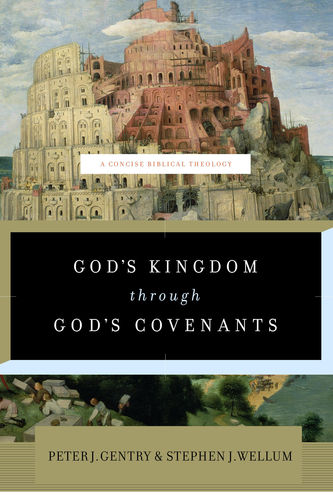

 Just as the food we eat expresses and establishes the relationships we have, so too meals in the Bible establish and express kinship relationships. Even more, a meal is often a central part of entering into a covenant. And once that covenant is established, a shared meal is one of the greatest ways our identity is formed and reinforced. Let’s follow these two strands through Scripture to see how they shine light on the Lord’s Supper.
 What is our aim in preaching? What should it be?
 Via Emmaus