Rejoicing in Christ’s Royal Priesthood: The 2024 Bauman Lectures (Toronto Baptist Seminary)

In 2022, I wrote a book entitled The Royal Priesthood and the Glory of GodThis book clarified, synthesized, and streamlined my doctoral dissertation. In 2013, I finished a biblical theology of the priesthood which sought to answer the question: For whom did Christ die? Looking at the priesthood from Genesis to Revelation I argued for a definite atonement. In that large volume I came to love the theme of priesthood in the Bible and what that means for knowing Christ and for imitating Christ.

Since 2013, I have written a handful of articles on the priesthood, and in the last few weeks I have spoken twice on the subject. The first series of lectures took place at Eden Baptist Church in Burnsville, Minnesota, and the second lecture series is taking place this weekend at Toronto Baptist Seminary and Jarvis Street Baptist Church in Toronto, Canada.

To assist students, faculty, church members, and guests of the Bauman Lectures, I am posting notes here. I will add to them as the weekend goes on, and in the end, I hope this post will link to all the priestly things I have written to date.

The Bauman Lectures (2024)

  • Lecture 1: Building a Kingdom of Priests — In this lecture, I survey the way in which the institution of the Levitical Priesthood came into being. This lecture simplifies my larger SBJT article and puts into lecture form the second chapter of my book, The Royal Priesthood and the Glory of God.
  • Lecture 2: In Search of a Priest-King Like Melchizedek (Genesis 14, Psalm 110, Hebrews 5–7) –In this lecture, I examine the context, content, and concepts found in three places where Melchizedek is named. Together, this helps us understand who Jesus is, as a royal priest.
  • Lecture 3: Seeing Melchizedek in the Book of 1–2 Samuel: An Exploration in Typology — In this lecture, I have written a working manuscript (with limited annotation) to show how Melchizedek is a figure found in the book of 1–2 Samuel. This reading depends upon a careful comparison between Bera, king of Sodom, and Melchizedek, king of Salem. It also explains how David saw his own son as a priest after the order of Melchizedek.
  • Sunday Morning Sermon: Getting to Know Our Great High Priest (Exodus 28–30; Hebrews)
  • Sunday Evening Sermon: A Kingdom of Priests: Washed, Worshiping, Working, Witnessing (Exodus 19:5–6; 1 Peter 1:22–2:10)

More to come . . .

Soli Deo Gloria, ds

From Creation to New Creation: A Seven Day Pattern in Genesis 1–3

time lapse photo of stars on night

Both James Jordan and Alistair Roberts have made a case that the literary structures of Genesis 1 and Genesis 2 mirror one another.[1] As evidenced in Genesis 1:1–2:3, creation took place over the course of seven days—six days of work, one day of rest. Equally, Genesis 2:4–25 follows a similar pattern, as observed below, as does Genesis 3, which Jordan develops in his book Trees and Thorns: Studies in the First Four Chapters of Genesis.

If this reading is correct, then the first three chapters of Genesis give us three parallel events—three weeks that speak of the same creation week. To put it in temple terms, Genesis 1 gives us the creation of the macro-temple, the cosmos; Genesis 2 gives us the formation of the micro-temple, the garden; and Genesis 3 gives us the defilement of the garden which leads to the de-creation of the cosmos, what I might call the massacred-temple.

If this approach is correct, then it not only stresses the seven day pattern of creation, with each chapter following the same basic pattern (see below). But it also situates the first three chapters as following.

  • Genesis 1 outlines the full, seven-day creation week (Gen. 1:1–2:3),
  • Genesis 2 returns to Day 6 to detail how God created man at the beginning of the day and woman at the end of the day (Gen. 2:4–22),
  • Genesis 2:23–25 develops the glory of God’s good creation, as the woman comes to the man when he awakes on Day 7. But it continues to watch that glory turn to shame, as the rest of Day 7 follows the tragic sin of humanity to believe the serpent, eat the fruit, and rebel against God. As a result, man’s first disobedience results in him being cut off from the Tree of Life (Gen. 3:1–24; cf. Rom. 5:12, 18–19).[2]

Following Jordan and Roberts, therefore, I offer the following seven day outline of Genesis 1–3. Let me know what you think and how it might be improved. At the end, I’ll share why reading these chapters in this way matters. Continue reading

Four Loves: The Path to True Fellowship

Unknown

Four Loves: The Path to True Fellowship (A Sermon on 2 John)

In 2020, ESPN published a ten-part series call The Last Dance. The series followed the 1998 Chicago Bulls, the team led by Michael Jordan. This was the sixth and final championship series, the one that ended the dynasty.

As a basketball player growing up in the 1990s, this series was pure nostalgia. Every episode brought back memories and added backstories. It was the best of the old and the new. It returned me to a period of basketball glory, and it scratched a prevalent modern itch—the need to know all the details of what happened behind the scenes.

It’s funny a thing that today we live at a time when people think they need to know everything. Undercover surveillance, tell-all documentaries, and best-selling books by whistle-blowers are all uber-popular, and all of these feed the belief that we deserve all the facts.

Yet, such a god-like desire to know everything is confronted by the fallout of The Last Dance. That is to say that by bringing everything out the open, The Last Dance did untold harm. For not only did it reveal tensions and troubles from the 1990s, but it also started new fires. Continue reading

Prosopological Exegesis: Four Reasons Not to Buy This Modern Approach to Scripture

books on the table

Yesterday, I explained in four points what Prosopological Exegesis (PE) was and is. Today, I offer a point-by-point examination.

This excerpt comes from the following from “Reading the Psalms with the Church: A Critical Evaluation of Prosopological Exegesis in Light of Church History” SBJT 25.3 (2021): 87–91. The larger article engages various approaches to the Psalms, and compares older modern versions of Psalm studies to the new approach found in PE. Suffice it to say, I am concerned with what PE offers. And here are four reasons why:

  1. PE’s use of Greco-Roman literary tools and dramatic practices are anachronistic, and should not be used for interpreting Scripture.
  2. PE’s rejection of Enlightenment typology misses the way Scripture employs typology; we need to go back and evaluate what true biblical typology is and is not.
  3. PE’s defense of orthodox doctrine comes at the expense of biblical unity, an interpretive practice that will ultimately undercut orthodoxy.
  4. PE’s interpretation of Hebrews is mistaken; we need to evaluate how Scripture interprets Scripture.

Here is the full text, explaining each point in detail.

Continue reading

Reading for Scripture Saturation: (Re)Introducing the Via Emmaus Bible Reading Plan

rod-long-DRgrzQQsJDA-unsplash

How can a young man keep his way pure?
By guarding it according to your word.
10  With my whole heart I seek you;
let me not wander from your commandments!
11  I have stored up your word in my heart,
that I might not sin against you.
12  Blessed are you, O Lord;
teach me your statutes!
— Psalm 119:9–12 —

A few years ago, I introduced a reading plan focused on Scripture saturation more than Scripture box-checking. As a new year begins, I return to that reading plan for myself and for others who might be interested in focusing on one (or two or three) books in a month, instead a daily selection of Bible readings.

As we all know, or should know, the Word of God is not a trifle; it is our very life (Deut. 32:47). Man does not live on bread alone, but on the very word that proceeds from the mouth of God (Deut. 8:3; Matt. 4:4). So we should aim to read the Bible and to read it often!

Truly, the Bible is not a book to read once, or even once a year. It is meant to be imbibed and inhabited, adored and adorned, studied and savored. Mastery of the Bible does not mean comprehensive understanding of Scripture; it means an ever-increasing submission to the Master who speaks in Scripture. This is why in the closing days of the year, it’s good to consider how we can saturate ourselves with Scripture in the new year.

And today I offer a reflection on why a reading plan dedicated to saturating in Scripture may be a help for those who need to slow down and meditate on God’s Word. Or, for others, why a plan that encourages reading larger sections of Scripture might help Bible readers see more clearly the full message of the Bible.

Continue reading

Last Things First: Four More Ways Christ’s Birth Fulfills An End Times Prophecy

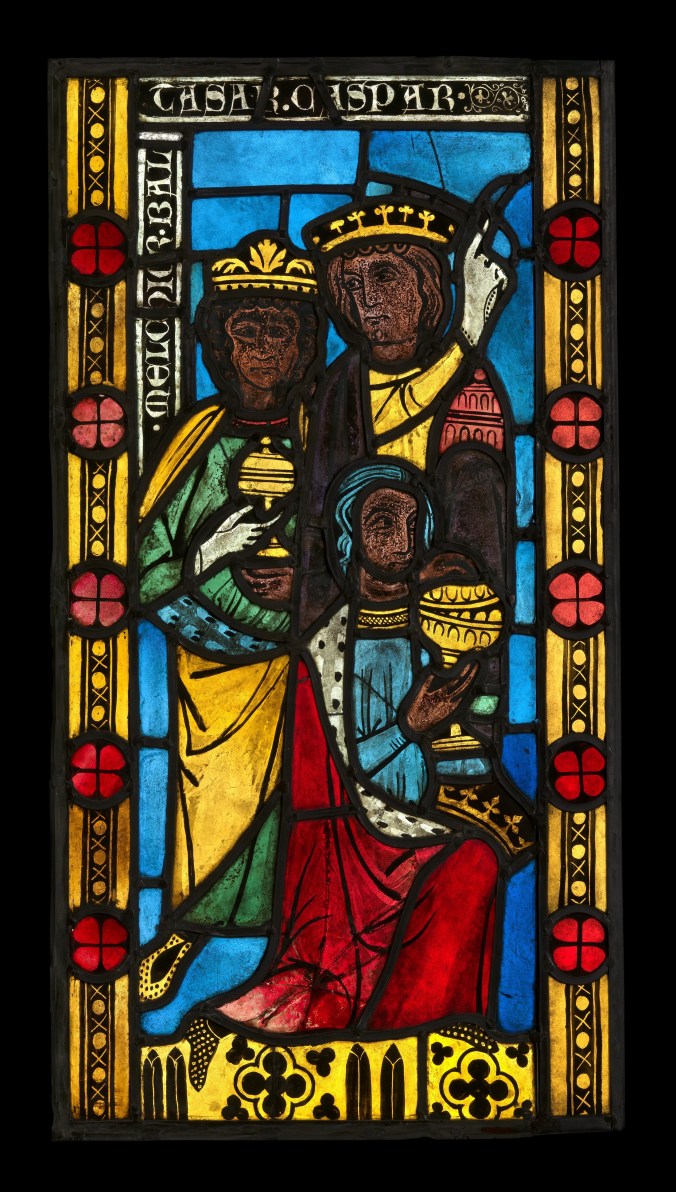
The Adoration of the MagiPicking up where I left off yesterday, I want to continue showing how the end-times prophecy of Isaiah 60 is fulfilled in the birth of Christ. From Isaiah 60:1–6, I highlighted three ways that Christ’s birth fulfilled the promises of (1) light, (2) joy, and (3) treasures brought to the temple. Today, I will pick up four more promises that are fulfilled in Christ’s birth.

4. Gentiles Have Been Received By Christ

In Isaiah 60:6 the LORD says kings will come to Zion bringing gifts. Now, in verse 7, we find the promise that those gifts “will beautify my beautiful house.” This “house” is a reference God’s holy temple, the place where God dwelt on earth. But incredibly, this house, its altar and inner sanctuary, were off limits–especially to Gentiles. And yet here, in Isaiah 60 we find the invitation for Gentile kings to “come up with acceptance on my altar.” The inclusion of “acceptance” is remarkable.

Under the old covenant, Gentiles were ritually and religiously unclean. In Ezekiel 44:6–9, Israel received the harshest condemnation because they permitted Gentiles to come near to God’s house. But now, Isaiah 60 says these foreign kings will be acceptable. How is this possible? The answer goes back to the international scope of the Servant’s work (Isa. 49:6–7).

While God chose Israel to be his covenant people in the Old Testament, the goal was always bigger. God would redeem a people from all nations, a theme that runs throughout Isaiah, and goes back to Abraham himself (see Gen. 12:1–3). In Isaiah 60, we now see the nations coming to Zion, bringing gifts (vv. 6–9), and building up the city of God. Listen to verse 10, “Foreigners shall build up your walls, and their kings shall minister to you; for in my wrath I struck you, but in my favor I have had mercy on you.”

Incredibly, when God exiled the people of Israel to Babylon and the nations, he in turn made a way for the nations to begin coming to Zion to find salvation in Israel’s king. In Zechariah 8:23, the post-exilic prophet puts it like this, “In those days ten men from the nations of every tongue shall take hold of the robe of a Jew, saying, ‘Let us go with you, for we have heard that God is with you.’” Indeed, in God’s unfathomable wisdom, he would turn Israel’s exile into a pathway of salvation for the nations. And in Isaiah 60:6–16 we find the nations coming to Israel bringing gifts and finding a place to reside near God.

In the New Testament, this emigration towards Zion is seen in the way the Magi come to Jerusalem to worship the king of the Jews. Most likely, these men of the East came to Jerusalem in response to the knowledge they received from exiled Jews. Daniel is a likely candidate for this kind of knowledge, but it could be others too. For our purposes, it is clear that Isaiah 60’s vision of the nations coming to Zion anticipates the arrival of the Magi. Or to turn it around, Matthew includes their pilgrimage to Zion (to Jesus, not just Jerusalem) to show how Isaiah 60 is being fulfilled.

On this point, we can go even further. These Gentile kings did not merely come to Bethlehem, they were welcomed into the Jewish living space Joseph, Mary, and Jesus. As Matthew 2:11 begins, “And going into the house, they saw the child with Mary his mother.” Let us not miss the significance of this moment. These unclean Gentiles are received into the presence of the Israel’s king because of their worshipful faith. This too reinforces the fact that Isaiah 60 is being fulfilled in the way Gentile kings are received the King of the Jews. Continue reading

Trust in the Lord, the Promises of God Incarnate (A Sermon on Isaiah 28–35)

Seed of the Woman 1024x1024With Thanksgiving behind us and Christmas Carols upon us, the holiday season is now here. And with the holidays comes the making of many lists.

Santa has his list. And I am sure many readers of this blog have theirs. Whether it is a list of things to get done for Christmas or a list of this to wrap up before the new year comes, lists are a part of life. And lists can be all sorts of things.

They can be harmful, if your list is filled with grudges. Or, they can be helpful, if they help you remember all that your need to do. And they can even be misunderstood, if they are intercepted and read out of context.

Recently, my daughter found a list of family names with corresponding items under each. Still learning how to read, she thought it was surely a list of Christmas presents. But actually, when examined, this list contained all the school work to be done before Christmas. Such are the ways of lists. They can help, but they can also mislead.

In fact, lists can have negative consequences when we read the Bible. If you haven’t noticed, Scripture is not written in list form. Oh, it has lists. The first eleven chapters of Genesis contain two of them; they are called genealogies. Likewise, throughout the Bible, you can find lists of names, places, treasures, and laws. In short, the Bible is not against lists; it’s just that, on the whole, the Bible is not a list.

Resultantly, when we grind the Bible into list form, as many sermon-makers are quick to do, we run the risk of missing its message. Even more, when we turn the Bible into lists, we often miss the Messiah!

That said, there are times when it is helpful to put the truths of Scripture in list form. Systematic theologies do that, as do many sermons. And though I think the listicle sermon often misses the shape of the text, there are times for it. And this Sunday was one of them.

After riding an airboat through Isaiah 1–12 and a helicopter over Isaiah 13–27, I offered a sermon with four encouraging truths from Isaiah 28–35. Without abandoning the literary structure of the text, I focused on the applications that came from these eight chapter. To find those applications of the gospel, you can listen to the sermon here. You can also find the literary structure of Isaiah 28-35 here.

So far, preaching Isaiah 1–35 has been a challenge, but it has been a happy challenge, as it has forced us to see how the whole book fits together and leads us to Christ. Truly, Isaiah is glorious book, so let’s keeping reading it. And as you do, I pray these sermons may help you as you read.

Soli Deo Gloria, ds

Salvation and Judgment From Zion to Zambia: An International Comedy (A Sermon on Isaiah 13–27)

Seed of the Woman 1024x1024

Salvation and Judgment From Zion to Zambia:
An International Comedy (Sermon Audio for Isaiah 13–27)

Sermon Handout: Isaiah 13-27 PDF Slides

Has the Bible ever made you mad? Have you ever stopped reading the Bible because you couldn’t understand it? Are there parts of the Bible that you have avoided because they are too difficult to comprehend? To each of these questions, I can offer an affirmative response, with illustrations to prove it.

For instance, a number of years ago Isaiah 13–27 was one of those places. Or rather, it was somewhere in Isaiah 13-19. Reading those chapters, with their endless judgments against ancient foreign powers, I got frustrated and put the Bible away. Looking for a word of encouragement, the endless oracles made no sense.  After all, what do Philistines and Moabites have to do with me? As it turns out, there are lots of ways that God’s judgment on these nations applies today (see Rom. 15:4; 2 Tim. 3:16-17), but it took some time to see it.

Fast forward two decades from the time I closed the book on Isaiah 13–19, and I can say that these chapters are some of the most exhilarating in the Bible. But such exhilaration requires learning how to read them on their own terms. And on Sunday, that’s what I attempted to do as I preached Isaiah 13–27.

Based on literary clues in the text, we find that Isaiah 13–27 is a single unit, broken into three main sections, maybe four (13-19 / 20 / 21-23 + 24-27). Accordingly, to hear the message of this section (1 of 7 in the book), requires listening to the whole thing. Just as understanding The Count of Monte Cristo requires reading beyond the imprisonment of Edmond Dantès, so too these chapters must be read from beginning to end—-just as the whole book of Isaiah must be read to understand its good news.

Indeed, while stretching for the preacher and the listener, I attempted on Sunday to show how this whole section hangs together and offers an international comedy. Moving from the bad news of God’s judgment on wicked nations to the good news of salvation offered to a remnant from all nations, I showed how these 15 chapters work together to bring us hope for a glorious future.

If you are interested in hearing how this all goes, I would encourage you to begin with last week’s sermon on Isaiah 1–12 here. (Don’t miss the Isaiah 1-12_Handout). And then with another set of Isaiah 13-27 notes in hand, you can listen to this week’s sermon on Isaiah 13–27 here. All told, it is my hope to preach Isaiah in 7 sermons. So stay tuned for an ongoing overview of this glorious book.

Soli Deo Gloria, ds

The Ripple Effect of the Resurrection: How Resurrection Shockwaves Produce Unshakeable Faith (A Sermon on John 11:45–12:11)

john03

The Ripple Effect of the Resurrection: How Resurrection Shockwaves Produce Unshakeable Faith (A Sermon on John 11:45–12:11)

When Jesus died and rose again, rocks cracked open, tombs emptied, and creation shook. As Matthew reports it, there was an earthquake associated with Christ’s death and resurrection. And that earthquake not only shook creation, it also raised the dead. As Matthew 27:52 says,

The tombs also were opened. And many bodies of the saints who had fallen asleep were raised,  and coming out of the tombs after his resurrection they went into the holy city and appeared to many.

While this resurrection of the holy ones is mysterious, it shows the power of God to change the world  and to change a life. Death is not the final word to God, because God has the power to put death to death. And in Christ’s resurrection, this what he did and is still doing to those who he raises to life today (see Eph. 2:5)

Not surprisingly, when Jesus raised Lazarus from the dead, it also sent shockwaves into the world. First, it touched the lives of Mary, Martha, Lazarus, as well as those who saw Lazarus raised. Then quickly, news of Lazarus resurrection went viral. Just as God intended, Lazarus’s illness did not result in death  but in the glory of God (John 11:1–6).

Indeed, as God’s glory spread like a light over Jerusalem, it began shake the city. Jesus’s light began to give illumine believers and expose unbelievers. Just like the rest of Jesus’s ministry in John, news of this resurrection served to separate light from darkness and faith from unbelief. More exactly, Jesus’s seventh sign served as the climactic event that would lead to his death. Indeed, Lazarus’s resurrection had such a powerful effect  that everyone in Jerusalem was forced to take a side—Will you trust Jesus? Or will you reject him?

In fact, that’s the whole point of John’s Gospel and the point of the passage before us (John 11:45–12:11)—namely, to give us an unshakably faith by way of Christ’s resurrection shockwaves. Or to put it the other way round, the shockwaves of the resurrection produce unshakable faith.

Consider how this works: when we come to John 11:45 we are immediately confronted with the effects of Lazarus new life. In John 11:1–16 we have the set up for the resurrection of Lazarus. In John 11:17–44  we have the resurrection itself. And now in in John 11:45–12:11, we have the shockwaves of the resurrection.

As verses 45–46 indicate, these shockwaves do one of two things—they either produce faith or hostility. Notice the contrast here: “Many of the Jews therefore, who had come with Mary and had seen what he did, believed in him, but some of them went to the Pharisees and told them what Jesus had done.”

Already in John, we have seen this kind of separation. Jesus does something—e.g., he heals the sick or he feeds the 5,000—and people must make a decision. Will you believe on him, or not? And now, Jesus is at it again. Only now he has raised someone from the dead and has performed his seventh sign within ear shot of Jerusalem.

On Sunday this is what I preached, as I showed from John 11:45–12:11 how Christ’s power to raise the dead gives us a firm foundation on which to build our faith. You can listen to the sermon here. And you can see a bit more on the passage here.

As we remember the resurrection power of Christ, may we have confidence in him to secure us and save us even from all the deadly threats that surround us.

Soli Deo Gloria, ds

Why the Lord’s Supper Requires Baptism: A Typological Approach

religious artwork

Who can take the Lord’s Supper is a question of no little dispute among those who call themselves Baptist (yes, this is a Baptist blogpost). In my estimation, the best answer to the question of baptism and Lord’s Supper goes something like this:

Those who have undergone believer’s baptism (the initiation rite of the new covenant) are permitted to eat at the Lord’s Supper (the continuing rite of the new covenant).

In what follows, I will offer a biblical typology to explain why baptism should precede Lord’s Supper. Rising from the Old Testament, these symbols of the new covenant do not arise de novo from Jesus or apostles. Rather, as we appreciate the Old Testament pattern of water-crossing that leads to feasting in God’s presence, we will see why baptism must precede the Lord’s Supper.

In short, OT “baptisms” are types of the NT baptisms and the Passover is the chief type of the Lord’s Supper. To understand baptism and the Lord’s Supper requires understanding the symbolism of these OT events. But also, because these OT “water crossings” are paired with a meals in God’s presence (e.g., Passover), we see that baptism and Lord’s Supper should also be paired together. This is the basic argument and we will consider it below in four steps, giving primary attention to the way baptism and the Lord’s Supper are informed by the book of Joshua. Continue reading