Don’t Waste Your Summer: Read the Bible

What is your church doing to redeem the time this summer?  

Here is something we started last night called “The Summer Biblical Triathlon.”  Here is the invitation and explanation I gave to our church, Calvary Baptist Church (Seymour, Indiana)

Don’t Waste Your Summer: How Will You Build Up Your Most Holy Faith?

In the short but powerful epistle of Jude, Jesus’ half-brother commands: “Keep yourselves in the love of God.”  In his context and ours, this instruction is vital for Christians who are on their heavenly journey.  Only those who continue in faith, hope, and love will enter the gates of heaven (Matt 24:13; Col 1:23).  Those who start well, but leave their first love are in jeopardy of proving themselves wolves in sheep’s clothing, flowers planted in rocky soil.

To spur us on, Jude commands “those who are called, beloved in God the Father, and kept for Jesus Christ” to “keep themselves” in the love of God.  And he gives three ways that Christians are to do this: (1) by waiting for the mercy of God to come in Christ (v. 21b), (2) by praying in the Holy Spirit (v. 20b), and (3) by building yourselves up in your most holy faith (v. 21a).  It is this last that we consider today.

One of the primary ways that your love for God will continue is to walk in faith, faith that is not self-generated, but faith that comes from the Holy Spirit (Gal 5:23) as a gift from God (Eph 2:8-9; Phil 1:29).  But this faith does not come like a digital download from the Internet.  It is an exercise of your Spirit-enlivened soul, such that Jude can tell us that we need to build ourselves up in our most holy faith.  So, how do we do that?

The theological answer is that we need to hear the word of God in Christ, for our faith comes by hearing his Word (Rom 10:17), but the practical answer is that every week we are summoned to come and hear the word of God—read, sung, prayed, taught, and preached.  In fact, faith is built not by weekly activity, but daily meditation (Col 3:16).  Still, it is from the weekly instruction that most of us have learned how to read and rightly interpret the Bible.  With that in mind, I am calling our church to go deeper in the Word of God.

The Spiritual Discipline of Learning

For the last ten weeks, as we have read Spiritual Disciplines for the Christian Life, we have been considering how to discipline ourselves for the purpose of godliness.  We began by considering the central place of “Bible Intake.”  In the weeks that followed, we considered prayer, fasting, evangelism, and worship—to name a few.  And finally, our last lesson has called us to a lifestyle of learning.

The danger of learning the spiritual disciplines is knowing about them and not practicing them.  Christian self-deceit always lurks with learning (James 1:22).  The solution is not to stop learning, but to put learning to practice, and this summer I am calling our church to do just that.

With the Olympic spirit that will wash over us by August, I am challenging you to participate in a ‘Summer Biblical Triathlon.’  As with an athletic triathlon, the goal is to train and push yourself in three endurance activities.  In our case, we will fight the temptation towards lethargy this summer, and strive to build up our most holy faith.

Together, I am calling us to grow in our understanding and adoration of God’s plan of salvation.  Here are the three components.

  1. Beginning (or continuing) a Bible Reading Plan.  For those just beginning (or starting over), our reading plan will be the The Essential One Hundred Reading PlanThis reading plan selects 100 Scriptures to move you from Genesis to Revelation in 100 days or 20 weeks (5 days per week).
  2. Attending one of two Wednesday Night classes.  These five-week classes offered in May/June and July/August will explain how the parts of the Bible fit with the whole.  It will give you a guide for seeing God’s drama in biblical history and current events.  If you have ever gotten lost in the Old Testament or wondered what God’s plan for the future is, then this class is for you.
  3. Reading a book (or three) about the Bible.  In the foyer are a selection of seven triathlon books, call them “Pastor’s Picks,” to help you better read the Bible.  For example, Tim Chester’s From Creation to New Creation is a helpful overview of God’s plan of salvation, while Michael Williams’s How to Read the Bible through the Jesus Lens gives 4-5 pages on every book of the Bible and how they relate to Jesus.

At the end of the summer, we will have a ceremony for those who complete the triathlon and those who read three books will receive a gift book.

As summer dawns, instead of just focusing on the vacation, the yard work, or the summer job, let’s build ourselves up in our most holy faith.  Before we know it, summer breezes will be replaced by falling leaves.  The seasons prove true Isaiah 40:8, “The grass withers and the flowers fade,” so let us resolve to live in the light of the rest of that verse: “but the word of God will remain forever.”

You will never regret spending more time in God’s word.  The investment is eternal.  And this summer we can protect ourselves from wasting our summers by running together and beholding the beauty of God in the pages of his Scripture.  I hope you join us!

For His Glory and your joy, Pastor David
Biblical Interpretation Requires Both Testaments

At the close of his introduction to The Progress of RedemptionWillem Van Gemeren summarizes the need for including both testaments in our interpretation of the Bible. 

Interpretation also involves equal concern for the Old and New Testaments.  When the two parts of the Bible are held in careful balance, the continual tension between law and gospel, token and reality [VG’s terminology for shadow and substance], promise and fulfillment, present age and future restoration, Israel and the church, and earthly and spiritual only enhances a christological and eschatological focus.”  (Van Gemeren, The Progress of Redemption38)

As you read and study Scripture, be aware that a right understanding of the immediate text requires awareness of what came before it (antecedent theology–types, shadows, terms, and concepts), what time it is (where in the storyline is the passage), and where it is ultimately going (Christology and eschatology).  Only as we relate the trees to the forest will we gain an appreciation for both.

Sola Deo Gloria, dss

Book Notes: Biblical Theology in the Life of the Church

Michael Lawrence supplies a number of illuminating thoughts as he introduces the idea of exegesis in his book, Biblical Theology in the Life of the Church.

Describing the role of the interpreter or biblical reader, Lawrence quotes Jerome saying,

The office of a commentator is to set forth not what he himself would prefer, but what his author says (41, Jerome’s letter “to Pammachius, 17).

Then discussing the task of exegesis, Lawrence cites John Owen,

There is no other sense in it than what is contained in the words whereof materially it doth consist . . . In the interpretation of the mind of anyone, it is necessary that the words he speaks or writes be rightly understood, and this we cannot do immediately unless we understand the language wherein he speaks . . . the [idiom] of that language, with the common use of and intention of its expressions (41, John Owen, Works, IV: 215, quoted in J. I. Packer, Quest for Godliness: The Puritan Vision of the Christian Life, 101)

Finally, Lawrence supplies his own helpful axioms that the parts of Scripture (words and phrases) must be related to the whole.

So the basic unit of meaning is not the word, but the sentence.  And the unit that determines what sentences mean, and therefore the words in them, is the paragraph (42).

Interpretation actually begins with the whole, not the part. Then, in the context of the whole, we work backwards through the parts, back to sentences, back all the way down to individual words.  What we learn and discover there then takes us back to the whole with a more accurate and perhaps nuanced understanding of meaning (42).

Today, ponder these thoughts and put them into practice.  Much interpretive error stems from microscopic reading of Scripture and trying to interpret the Bible in light of our personal opinions and experiences.  Rightly, Lawrence’s observations, if taken to heart and applied, will help correct much improper Bible reading.

Soli Deo Gloria, dss

Via Emmaus: A Christ-Centered Walk Through the Bible

Yesterday, The Gospel Coalition ran an article on how to teach through the whole counsel of Scripture in a year.  It was something that I wrote based on the things I learned when our church walked through the Bible together in 2010.  For those who are interested in what those lessons looked like, here are the lessons I shared with our people each week.

Introduction: An Overview of the Bible

Pentateuch
Genesis 1-11: The Beginning of It All
Genesis 12-50: Four Families Under the Faithfulness of God
Exodus 1-15: Salvation Through Substitution & Conquest
Exodus 16-40: Moving Into the Presence of God 
Leviticus: Sinners in the Presence of a Holy God
Numbers: In the Wilderness
Deuteronomy: God’s Royal Covenant with Israel

History

Joshua: Into the Land

Judges: A People in Need of a King
Ruth: A Painful & Pleasant Providence
1 Samuel: The Good, The Bad, and the Ruddy
2 Samuel: The Rise and Fall of King David
1 Kings: Redemptive History is a Royal Mess–Part 1
2 Kings: Redemptive History is a Royal Mess–Part 2
Ezra: Return, Rebuild, Renew, Repent
Nehemiah: Rebuilding God’s City and Reforming God’s People 
Esther: Seed Warfare

Wisdom
Job: Knowing God In The Crucible Of Satanic Suffering

Psalms: Redemption in the Key of D(avid)
Proverbs: Wisdom is the Way to the Obedient Son
Ecclesiastes: To Work Wisely is Futile, To Fear Faithfully is Wise
Song of Songs: More Than Just an Old Fashioned Love Song

Prophets

The Prophets (1): Hearing the Spirit of Christ in the Days of Elijah

The Prophets (2): Putting the Prophets in their Place: Before the Exile
The Prophets (3): Putting the Prophets in their Place: During and After the Exile
Isaiah: The Servant-King Will Lead His People Into a New Creation
Jeremiah: A New Heart For An Idolatrous People
Ezekiel: That You Might Know the Lord
Daniel: Keep the Faith! The Sovereign LORD Reigns In History
The Twelve: Judgment and Salvation is a Major Theme in the Minor Prophets

Gospels-Acts
Matthew: The King and His Kingdom
Mark: Seeing the Christ of the Cross
Luke: The Messiah Must Go To Mount Zion
Acts: Taking the Gospel From Zion to Zimbabwe
John: Jesus, The Son of God, The Messiah of Israel, and The Savior of the World

The Letters and Revelation
Paul (1): The Apostle to the Gentiles
Paul (2): The Prison Epistles and Philemon
Hebrews: Believe and Draw Near, For Jesus Christ is Greater Still
General Epistles: James, 1-2 Peter, 1-3 John, and Jude
Revelation: The Revelation of Jesus Christ

A Biblical Theology of Business (and Church Growth)

A few weeks ago I came across this video from the Gospel & Culture conference in NYC.  It features Jeff Van Duzer, dean of the business school at Seattle Pacific University giving a message entitled, “A Theology of Business.”

I have watched it a few times now and gleaned much.  It it is a great biblical-theological treatment of business that grounds itself in the four-fold movement of redemption history–Creation, Fall, Redemption, New Creation.

However, it is more than just a good presentation for businessmen who want to follow in the footsteps of Truett Cathy, founder of Chick-Fil-a.  It is a good paradigm for church leaders and churches to apply to the local church.  Usually, I am slow to make such claims because I think too many popular business practices have shaped churches.  Too little attention has been given to what the Bible says.  (Yes, I have drunk the punch served by 9Marks).

This is where Jeff Van Duzer is different.  He builds with the Scriptures and he gives a good model for business and for those doing God’s business in the local church.  Tonight our church leaders are going to watch the video and discuss.  I encourage you to do the same.  Spend an hour thinking through Van Duzer’s main points, and how, if they were implemented in your business, Bible college, or area of ministry, they would glorify God by producing good fruit.

If it helps here are a number of questions to consider

  1. What does Jeff Van Duzer critique?
  2. Some people say business is bad, others that it is good, even messianic.  What is wrong with these polarities?
  3. I would propose that his comments about “business” could easily be translated to “church growth.”  What is church growth?  And what should we think about it?
  4. He speaks of two issues: The PURPOSE and PRACTICE of business.  What are the two purposes for business that he mentions?  How do these contrasting visions of business relate to Mark 10:44-45?
  5. According to Jeff Van Duzer, should profit be the means or the end?  Translating to the church, should “numbers” be an end or a means?  What does it mean that numbers are a means in the church?
  6. In the church, who are the “shareholders”?  Who are the “customers”?  Who should we serve? Who are we serving?
  7. Using his illustration of blood circulation, what does a church that only circulates blood look like or do?  What characteristics does it have?
  8. What does a living and healthy church have?  What are the metrics of a healthy church?
  9. When leaders make decisions, Van Duzer says that they ask one of two questions:         (a) Which of these choices will maximize my return or investment?  Or, (b) Given our core competencies, how can we best employ them to serve others.  When we make decisions in the church, which are we asking? 
  10. When we make decisions are we making them to (a) increase our numbers or (b) increase our faithfulness?  Do we trust that if we focus on being “boringly biblical” that God will bless our church?  Or do we need to add to the message?
  11. Using the illustration of levies, Van Duzer speaks of limitations on pursuing capitol.  What limits do we have / should we have in our ministries?  Can we do anything or are their delimiting factors?  What are they?
  12. What in our day and age do we need to guard against?   What temptations do churches face who want to grow?
  13. What was the difference between the Gold Medal and Silver Medal companies surveyed by Jim Collins?
  14. What should a mission of the church include?

Now, go do God’s business (John 15:1-8).

Sola Deo Gloria, dss


A Temple Story: Tracing God’s Presence Through Scripture

A Temple Story

What is the best way to describe the Bible?  Is it a collection of verses that supply promises and warnings for the Christian life?  Is it a collection of books that each point to Jesus Christ?  Or is it an epic story of Paradise Created, Paradise Lost, Paradise Promised, and Paradise Made New in Christ?

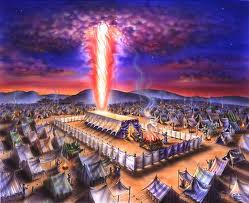
Perhaps, the best answer is all the above.  While each of these three answers are correct, I think the last is the most difficult to see in Scripture.  In the last month at our church, we have given attention on Sunday mornings to the tabernacle in Exodus and how it fits into God’s plan of redemption.  Because of that, I want to give you a biblical roadmap that traces God’s “tabernacles.”  I think by seeing this line of dwelling places, it will give you and I a greater ground for hope in God.  Call it a temple story.

Garden of Eden.  This is God’s first dwelling place on earth. In Genesis 3, it describes God walking in the Garden in the cool of the day.  This garden has many features of the later sanctuaries of God—gold, bountiful trees, flowing rivers, priestly guardians, and more.  Thus, from the beginning, God sets a pattern for the kind of place he will inhabit with his people.

Exodus 25-40. On Mount Sinai God gives Moses a vision of his throne room, which becomes the pattern for the tabernacle and all future sanctuaries.  Interestingly, as we have seen this tabernacle points back to Eden and ahead to a New Eden.  The tabernacle given in Exodus is a portable Sinai where God’s people—through the priest—can climb the rungs of Jacob’s ladder and come into God’s presence.

1 Kings 8.  After Israel is settled and resting in the land, 1 Kings records how God gives Solomon wisdom to build a temple in Jerusalem.  This temple replaced God’s nomadic tent and became a permanent fixture in Israel.  It’s size and beauty surpassed that of the first tabernacle, showing that as time goes by, God’s temple increases in glory and beauty.

Ezekiel 40-47.  During the Exile, after God’s spirit had abandoned the temple, Ezekiel describes a future temple that overflows with streams of living water.  This water will cleanse the earth, and God’s presence will once again dwell with his people.  Significantly, when Jesus comes, John uses imagery from Ezekiel to describe Christ’s cleansing ministry (see John 7:37-39).

Jesus.  Perhaps most amazing of all, Jesus Christ is described as God’s dwelling place.  He is God with us, Immanuel.  John 1:14 says that the Word became flesh and “tabernacled” among us.  In truth, Christ is the meeting place between God and man.  In him the fullness of God dwelt bodily (Col 2:9), and in him we have access into the very throne room of God (Heb 10:19-25).  Therefore, we ought to come regularly into his presence with thanksgiving and supplication.

The Church.  Today, God dwells in heaven, but by his Spirit, he also dwells in his church. Paul says, “We are the temple of living God” (2 Cor 6:16), and that our bodies are the “temple of the Holy Spirit” (1 Cor 6:19).  Likewise, 1 Peter 2:5 describes believers as living stones “being built up as a spiritual house.”  In this way, the church is the spiritual house of God (Eph 2:19-22).

Revelation.  Finally, there is the promise at the end of the age that God will dwell with his people on earth.  In fact, Revelation 21 speaks of a New Jerusalem that will come down out of heaven adorned as a bride. It says there won’t be a temple, for the lamb will be the temple of God.  This is our hope. At the end of the age, all the cosmos will experience the glory of God’s holiness, and will be as sacred as innermost chamber of the temple.

This temple theme is a source of great wonder and hope.  When the world around us seems to be crumbling, the ever-steady rise of God’s dwelling place in our world is a gospel reminder that even if our flesh and funds may fail, God is bringing us into his dwelling place.

Remember what Jesus promised.  He said, “In this world, we would have tribulation, but take heart, I have overcome the world” (John 16:33).  Such a promise is good news, but its goodness grounded in another promise: “Let not your hearts not be troubled.  Believe in God; believe also in me.  In my father’s house are many rooms.  If it were not so, would I have told you that I go to prepare a place for you?  And if I go and prepare a place for you, I will come again and will take you to myself, that where I am you may be also” (John 14:1-3).

I am praying that this month God will give you and me a greater vision of his heavenly tabernacle, and that such a vision will purify our daily desires, and motivate us to live more radically for Christ.  God’s temple story gives us hope for tomorrow, no matter what is transpiring today.

Soli Deo Gloria, dss

Sermon Notes: Christ’s Consecration is Our Confidence (NT)

Picking up where we left off, the New Testament comes in looking backward, looking at God’s covenantal promises, and then it begins to show how Christ fulfills them all.  So we move from prophetic anticipation, to Christotelic (Christ in the end) fulfillment.

4. Christ fulfills Zechariah 3.  Not simply by being a perfect Levitical priest, Jesus far exceeds the old system.  Hebrews records that he is a priest not because of genealogy, but because of living a perfect life.  He is called a priest after the order of Melchizedek.

Hebrews 7:1-9. Now if perfection had been attainable through the Levitical priesthood (for under it the people received the law), what further need would there have been for another priest to arise after the order of Melchizedek, rather than one named after the order of Aaron? For when there is a change in the priesthood, there is necessarily a change in the law as well. For the one of whom these things are spoken belonged to another tribe, from which no one has ever served at the altar. For it is evident that our Lord was descended from Judah, and in connection with that tribe Moses said nothing about priests. This becomes even more evident when another priest arises in the likeness of Melchizedek, who has become a priest, not on the basis of a legal requirement concerning bodily descent, but by the power of an indestructible life. For it is witnessed of him, “You are a priest forever, after the order of Melchizedek” [Psalm 110].  For on the one hand, a former commandment is set aside because of its weakness and uselessness (for the law made nothing perfect); but on the other hand, a better hope is introduced, through which we draw near to God.

But even more to the point, in connection with the consecration of the high priest, is Hebrews 10. There, the priest it says is not acceptable to God on the basis of a sacrifice or sacrifices made for him.  He doesn’t need a sacrifice.  Christ is accepted because of his perfect obedience.

Hebrews 10:1-10. For since the law has but a shadow of the good things to come instead of the true form of these realities, it can never, by the same sacrifices that are continually offered every year, make perfect those who draw near. Otherwise, would they not have ceased to be offered, since the worshipers, having once been cleansed, would no longer have any consciousness of sins?  But in these sacrifices there is a reminder of sins every year.  For it is impossible for the blood of bulls and goats to take away sins. Consequently, when Christ came into the world, he said,

 “Sacrifices and offerings you have not desired, but a body have you prepared for me; in burnt offerings and sin offerings you have taken no pleasure. Then I said, ‘Behold, I have come to do your will, O God, as it is written of me in the scroll of the book.'”

When he said above, “You have neither desired nor taken pleasure in sacrifices and offerings and burnt offerings and sin offerings” (these are offered according to the law), then he added, “Behold, I have come to do your will.” He does away with the first in order to establish the second. And by that will we have been sanctified through the offering of the body of Jesus Christ once for all.

The beauty of Hebrews 10, in relation to Exodus 29, is that Christ does not need to be cleansed of sin.  He is clean.  Thus, his consecration does not depend on the blood of animals; his purity emits from a life that has displayed perfect obedience to the father.  God accepts Christ’s priestly sacrifice and representation, because he is His Son, in whom he is well-pleased.  This is far better than the Levitical system.

 5. The Gospel: We have a priest that is acceptable to God and sympathetic to us.  The promises and invitations to approach the Lord in Hebrews about this are astounding.  Hebrews 7:25, “He lives to intercede for us.”  What does that mean?  Consider how he prays in John 17.

(1) He prays for our protection from the world (17:15)
(2) He prays for our sanctification (17:17)
(3) He prays for the effectiveness of our evangelism (17:20)… which means
(4) He prays for the salvation of those given to him
(5) He prays for the unity of the church (17:23)
(6) He prays for his saints to know his love (17:26)

6. The Application: Draw Near With Confidence.  The New Testament calls us to draw near to God (James 4:8), but such a command would have been absolutely terrifying to the Old Testament people (and maybe even the priests).  Entering God’s presence in any unclean manner resulted in death (cf. Lev 10:1-3).  However, Christ takes away that threat.  Through his perfect consecration, he stands at God’s right hand and bids us come.  He clothes us, who trust in him, with his righteousness and makes us acceptable in God’s sight. Thus, Christian have full access and assurance that our prayers, petitions, and confessions will be heard and received.  This is great news, and one that comes at the end of the line that begins in Exodus 29 passes through the OT and finds fulfillment in Christ in the NT.

May we draw near to God in Christ today, because of his perfect consecration.

Soli Deo Gloria, dss

Sermon Notes: Christ’s Consecration is Our Confidence (OT)

TEST CASE # 1 :: Exodus 29: Consecration of the Priests

Following the five-fold model (Law, Prophets 1 &2, Christ, Gospel, Christian Application) presented in the last few days, I will today try to give a “test case” for getting from the consecration of the high priest in Exodus 29 to Christ to Christians today.

1. Exodus 29 gives explicit laws for consecrating the priest. 

Exodus 29 is an exposition of Exodus 28:41, “And your shall put them”—that is the priestly garments— “on Aaron your brother, and on his sons with him, and shall anoint them and ordain them and consecrate them, that they may serve me as priests.”  The point of the chapter is to explain how the high priest might be received into the presence of the Lord.  And it is an incredible process. To begin with, verses 4-9 give a point by point process for cleansing the priest.

Verses 4-9: Five Steps for Consecration

Verse 4. The priests are washed.  In a hot, dusty desert, these men needed a bath. This would not be sufficient, but it was a necessary beginning.

Verse 5. The priest is clothed.  All the garments made for “dignity and honor,” or “beauty and glory” were put on the priest.

Verse 6. The priest is crowned. The most significant element of the apparel was the turban.  It was put on last, and it essentially crowned the priest (Zech 6).

Verse 7. The priest is anointed.  With the anointing oil, the priest is ordained, as God’s chosen vessel to represent the people before him.  This anointing is defined with greater detail in Hebrews 5, where it says that the priest did not appoint and anoint himself.  As one commentator has said, this anointing basically stamped the priest with heavenly approval.

Verse 8-9. The priest is supported. Each of the priests are dressed and ready to serve him, in the service of the temple.

Verses 10-28: Six Atoning Sacrifices

Now everything was ready for the offerings.  In verses 10-28, Moses lists six different kinds of offerings that were involved in the priests ordination.  Most of these would be further explained in Leviticus 1-7, but let’s take a short survey here to simply mention the complexity of all the sacrifices involved.

Sin offering.  Unclean sections of the animal are taken outside the camp and burned.

Burnt Offering. First ram is completely consumed, symbolizing the priest’s total devotion

Ram of Ordination.  Only for the priests, this lamb was slaughtered and the blood applied to their ear lobes, thumbs, and big toes.  All the exposed parts of the priest are cleansed by the blood.

Wave Offering.  Taking the cooked meat and bread, the offering was waved before the Lord. Walter Kaiser describe them like this: “The waving was not from side to side but toward the altar and back, showing that the sacrifice was given to God and then received back by the priest for his use” (Exodus, 470). This food is then burned up on the altar as a Food Offering.

Peace Offerings.  Included in the consecration was the eating of the food before the Lord.  This ‘portion’ to eat represented the kind of peace the priests (and Israel) had with God through the atoning sacrifices.

Verses 29-42: Further Priestly Instructions

After the offerings came another round of detailed instructions.  Everything from how to boil the food that the priest would eat with God to directions on the daily offerings.

Verse 29-30.  God gives instructions concerning the garments, and how they are to be passed down from one generation to the next.

Verse 31-35.  The priests have instructions for boiling the meat and eating it.

Verse 35-37.  This ordination takes 7 days, again showing how weak the sacrifices were and how great was the need for cleansing.

Verse 38-42. On top of the ordination service, there is the morning and evening sacrifice, which twice a day provided atonement for the holy place.

This elaborate system, along with everything else in Exodus 25-40, was put in place to teach Israel about the holiness of God, the sinfulness of man, and what it takes to get into God’s presence.  In one sentence, the message was this: You need a priest who will represent you before God, and that priest needs the highest degree of cleansing.  Now the question becomes, “How did Israel do with this?”  Let’s see.

2. Malachi 2:1-9 shows how the priests failed to keep covenant with God. Reciting the covenant God had with Levi, Malachi indicts the sons of Levi for their corrupted service.

 And now, O priests, this command is for you. If you will not listen, if you will not take it to heart to give honor to my name, says the LORD of hosts, then I will send the curse upon you and I will curse your blessings. Indeed, I have already cursed them, because you do not lay it to heart. Behold, I will rebuke your offspring, and spread dung on your faces, the dung of your offerings, and you shall be taken away with it. So shall you know that I have sent this command to you, that my covenant with Levi may stand, says the LORD of hosts. My covenant with him was one of life and peace, and I gave them to him. It was a covenant of fear, and he feared me. He stood in awe of my name. True instruction was in his mouth, and no wrong was found on his lips. He walked with me in peace and uprightness, and he turned many from iniquity. For the lips of a priest should guard knowledge, and people should seek instruction from his mouth, for he is the messenger of the LORD of hosts. But you have turned aside from the way. You have caused many to stumble by your instruction. You have corrupted the covenant of Levi, says the LORD of hosts, and so I make you despised and abased before all the people, inasmuch as you do not keep my ways but show partiality in your instruction.

3. Zechariah 3 promises a new priest who will be pure and devoted to God. In a book full of Messianic promises, the hope of a royal priest who will cleanse the people is especially prominent, because God’s dwelling with his people depended on the people’s purity.  Verses 6-10 read,

Thus says the LORD of hosts: If you will walk in my ways and keep my charge, then you shall rule my house and have charge of my courts, and I will give you the right of access among those who are standing here. Hear now, O Joshua the high priest, you and your friends who sit before you, for they are men who are a sign: behold, I will bring my servant the Branch. For behold, on the stone that I have set before Joshua, on a single stone with seven eyes, I will engrave its inscription, declares the LORD of hosts, and I will remove the iniquity of this land in a single day. In that day, declares the LORD of hosts, every one of you will invite his neighbor to come under his vine and under his fig tree.

At this point in redemptive-history, the people of God wait for a pure priest.  God’s promise is sure, but the fulfillment is still future.  The flow of the narrative builds anticipation for the arrival of the Messiah.

Following the lead of the inter-testamental period, we will pause here too, and come back in our next post.

dss

Holy War in the Bible: Before, During, and After the Battle

Exodus 15 is the first of many accounts in the Bible of “Holy War,” where God himself is the Divine Warrior.  Explicitly in Exodus 15:3, we learn that God is called “a man of warrior” or “a warrior,” however, this is just the tip of the iceberg.  The Bible, both the Old and New Testaments, is filled with imagery devoted to this theme of God as warrior.

Tremper Longman and Daniel Reid both completed independent studies on this theme in 1982, and came together in 1995, to provide a comprehensive review of this biblical motif in their book God is a Warrior.  In the historical narratives and legal books of the Old Testament they show a consistent pattern of God’s activity before, during, and after these holy battles.  They are worth outlining to help us see the variegated uniformity by which God “warred” for Israel.

Before the Battle

Seeking God’s Will: Before the battle, God made known his will to his people and their leaders.  In Joshua 5:13-15, the commander of the army of the LORD appeared to Joshua and instructed in God’s battle plan for defeating Jericho.  Likewise, in 1 Samuel 23:1-6, David inquires of the Lord to discern his military movements regarding Keilah and the Philistine army.  By contrast, Israel fails to inquire of the Lord in Joshua 9 when they encountered the deceitful Gibeons.  Consequently, Israel fails to defeat this nation.

Spiritual Preparation: Sacrifice is an important act of preparation before going to war.  This is evident in 1 Samuel 13 when Saul fails to wait upon Samuel to come and offer sacrifices to the Lord.  Saul’s sacrifice is illicit not because of the occasion or the act, but because of the person offering it.  Likewise, in Joshua 3-5, Israel consecrates itself before going to war with Jericho (3:5).  Moreover, Uriah the Hittite is shown to be more spiritually-minded than David when he refuses to go home and have relations with his wife.  As a man dedicated unto holy war, Uriah refused to subject himself to uncleanness (see Lev 15:16-18 for explanation).  Instead, he was maintaining purity for holy war—unlike his royal betrayer, David.

Ritual Cleanness: Holy war also esteems two ostensibly mundane laws in Deuteronomy.  Because God as Divine Warrior encamps with Israel, the people of Israel are forbidden to defecate in the camp and they must purify themselves if they have a nocturnal emission (23:9-14).

In all of these ways, we learn how God is leading the people of Israel into battle.  But his instructions are not only for preparations leading up to holy war.  He also fights with the people of Israel.

During the Battle 

Numbers and Weapons Technology:  In Israel’s history, God often sets them in disadvantageous places, in order to display his power.  Israel flees (and fights) Egypt with no weapons.  God reduces Gideon’s army from thirty-two thousand to three-hundred.  In the battle between David and Goliath, we again see how the Lord fights for his people despite their weakness.  Only for a short period of time in Israel’s history (e.g. the United Kingdom) does Israel have great military might.  In all other periods, Israel is the underdog who is defended by the Lord.

The March: God’s word gave great instructions on how Israel was to march.  They were broken into ranks just like an army.  Numbers counts the number of military men, demonstrating that Israel was primarily depicted as a warring nation.  They were the army of the Lord.  He dwelt in their midst.  He dwelt in the center of the their military campground.  And he traveled with in the midst of Israel’s battalion.

The Ark:  Central to the military nature of God’s dwelling with Israel was the way that the ark was incorported in warfare.  The ark was the “mobile symbol of God’s presence” (40).  Wherever Israel went, it went.  It was carried into battle and was presumably present in all military campaigns, even though it is not uniformly mentioned in all accounts.  For a time it was even lost because of its (wrongful) use in battle.

The Combatants:  The combatants at YHWH’s disposal were his angelic host, as seen in the incident with the Syrian army in  2 Kings 6, and the natural elements of creation.  In Exodus 14, Joshua 10, and Judges 5, creation fights for YHWH.  Furthermore, in the prophets, God’s word depicts creation withering under the oppressive judgment of God (cf. Nah 1:2-6; Hab 3:8).

After the Battle

Praise: Finally, we see in God’s holy war, a pattern of praise.  After the Red Sea crossing (Exod 15:1-21), Moses records a song of praise for God’s victory over Egypt.  Again, in Judges 5, the song of Deborah resounds with praise for God who liberated Israel from their oppressors.  Interestingly, the command to sing a “new song” seems to be a technical term for new divine victories.  As it is used in Isaiah, Psalms, and Revelation it calls God’s liberated saints to praise him for his victorious salvation.

Plunder: In addition to praise, there is plunder.  God receives the spoils of war, and anyone who wrongfully takes away God’s spoils is subject to lethal punishment (e.g. Achan in Joshua 7).  Yet, God often in other instances takes the spoils of war and shares them with his people.  To the victor, goes the spoils and while these spoils are always dedicated unto the Lord and sometimes off limits to his people.  In his generosity, he often shares his plunder with his people.  Sadly, in the case of Achan, his stolen booty is a premature grasp at what God was going to give to his people in just a few short days (see Josh 8:27).

This chronological pattern is a helpful way to think about warfare in the Bible.  It shows that warfare is not an accidental or tangential idea, but rather it is at the very heart of what God is doing with his people Israel.  Moreover, it functions typologically to help us see the way in which Jesus Christ, himself, is a divine warrior, one whose entire life consecrated him for battle.  His death on the cross was the battle where God was with him (Immanuel) even as the wrath of God was poured out upon him.  And finally, his death achieved the plunder and praise.  In other words, the three phases laid out by Longman and Reid helpfully display the glory of Christ’s own holy war.

It is worth our time to consider the violent acts of war in the Old Testament because they set the stage for the peace-making work of Jesus Christ on the cross–a peace-making achieved through bloodshed.  Indeed, the beauty of the gospel radiates from the fact that Christ has made peace with sinners by once and for all defeating all the forces and factors that separated man from God.  Through his penal substitution he canceled the effect of the law, he paid the penalty for sin, and he defeated Satan, the great enemy of God and his people.  His is a victory over sin and Satan, and for that we will forever sing a New Song unto the Lord.

Soli Deo Gloria, dss

The Biblical Authors as Biblical Theologians

This morning I began reading Jim Hamilton’s new book, God’s Glory in Salvation Through Judgment, where he begins with an apologetic for biblical theology.  In his first chapter, he makes an obvious but often overlooked point: the biblical authors inspired of God were involved in the task of biblical theology.  He writes,

[B]iblical theology is as old as Moses.  That is, Moses presented a biblical-theological interpretation of the traditions he received regarding Cain and Abel, Isaac and Ishmael, Jacob and Esau, Joseph and his brothers, and his own experience with his brothers.  Joshua then presented a biblical-theological interpretation of Israel’s history (Joshua 24), and the same can be said of the rest of the authors of the Prophets and the Writings, the Gospels and Acts, the Epistles and the Apocalypse.  The biblical authors used biblical theology to interpret the Scriptures available to them and the events they experienced.  For the believing community, the goal of biblical theology is simply to learn this practice of interpretation from the biblical authors so that we can interpret the Bible and life in this world the way they did (41-42).

Scripture not only provides for us the record of God’s work in redemptive history, it also provides an inspired interpretation of that work.  In the Scriptures themselves, God has provided a ruled reading of redemptive history, and provides for us today a model of how we should read the Scriptures. While some might reject the notion that we can/should interpret the Bible like the apostles (cf. Richard Longenecker), Hamilton’s point is well-taken.  Biblical theology is as old as Moses, and thus God’s people have always sought interpret their experience according to the pattern(s) of redemption that have preceded them.  While we do not write down inspired Scripture today, we nonetheless can see how the Bible informs our place in redemptive history, and we proclaim to the nations how they too can be engrafted into Israel’s vine, now fulfilled in Jesus.

I look forward to reading more.  I hope to jot down thoughts and quotes along the way.

Soli Deo Gloria, dss