A Theological Introduction to Ecclesiastes (Pt. 1): Authorship, Authority, and Intertextuality

[This post starts a three-part series aimed to introduce Ecclesiastes and draw a few theological implications from its overview].

Ecclesiastes 1

To get a handle on the book of Ecclesiastes it is imperative to understand who the human author is (or in this case, who is the most likely candidate). Likewise, since Ecclesiastes is part of the biblical canon, it behooves us to see how the New Testament cites Ecclesiastes. Last, since Ecclesiastes is one of many wisdom books, and one of three in Solomon’s corpus (Proverbs and Song of Songs being the other two), we will consider how Proverbs and Ecclesiastes relate to the life of Solomon and how a structural comparison with Proverbs helps us better understand this enigmatic book.  Continue reading

The Doctrine of the Trinity: Three Distinct Persons

Trinity_3Over the weekend I presented the first part of a ‘bare-bones’ outline of the Trinity. In short order, I argued that the doctrine can be sub-divided into two basic assertions, which each require a healthy dose of explaining.  The first proposition is God is one God. The second proposition is God is three Persons. Under those headings I added the following points.
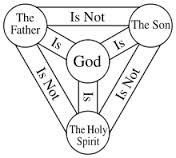
God is One God

  1. The Father is God.
  2. The Son is God.
  3. The Holy Spirit is God.
  4. The Father, Son, and Holy Spirit are Uncreated, Co-Eternal, Inseparable, and Perfectly Equal in Essence.

God is Three Persons

  1. God is Father, Son, and Holy Spirit.
  2. The Father Sends the Son and the Spirit.
  3. The Son is Sent by the Father, and Sends the Spirit.
  4. The Spirit is One Sent by Father and Son.
  5. Father, Son, and Holy Spirit works together to create the cosmos, sustain life, and redeem the church.
  6. God’s visible actions in history reveals his invisible triune nature.

Because of the difference in classification (God and persons) there is no logical inconsistency between saying God is ‘one’ and God is ‘three.’ Still, there is natural difficulty (not too mention the effect of sin on our thinking) in trying to understand how God is one and three. On the one hand, natural man cannot grasp an infinite God—even with God’s inspired word. On the other hand, God’s revelation under the guidance of the Holy Spirit guides Christians to a true but incomplete knowledge of him.

Keeping our creatureliness and Godward-dependence in mind as we approach this doctrine, this outline aims to help us put some of the pieces together.  Since, I’ve already laid out a defense of God as one God, the  next step is to pick up the second proposition—God is three persons—and  consider the first four points. Continue reading

The Doctrine of the Trinity: God is One God

TrinityThere is nothing bare-bones about the Trinity. But sometimes when introducing this doctrine it helps to give a brief, ‘bare-bones’ outline to help young believers or novice theologians understand the parameters of orthodox belief about Scripture’s deepest mystery.

With such an intention, let me lay out a bare-bones doctrine of the Trinity. In its shortest and most incomplete delineation, the Christians doctrine affirms two things: (1) God is One God and (2) God is Three Persons. This denies modalism (one god in three forms) and tritheism (three gods), and gets on the way to a right view of the doctrine. Continue reading

From Eden to Zion: A Temple Story

What is the best way to describe the Bible?

Is it a collection of verses that supply promises and warnings for the Christian life?  Is it a collection of books that each point to Jesus Christ?  Or is it an epic story of Paradise Created, Paradise Lost, Paradise Promised, and Paradise Made New in Christ?

Perhaps, the best answer is all the above.  While each of these three answers are correct, I think the last is the most difficult to see in Scripture.  In the last month, we have given attention on Sunday mornings to the tabernacle in Exodus and how it fits into God’s plan of redemption.  Because of that, I want to give you a biblical roadmap that traces God’s “tabernacles,” I think by seeing this line of dwelling places, it will give you greater ground for hope in God.  Let’s see. Continue reading

A Letter to My Church: A Sexual Manifesto on Biblical Holiness

Pastors have a responsibility to teach the whole counsel of God and to help the people of God form a biblical worldview. With this conviction in mind, I will be leading a series on what the Bible says about marriage and sexuality. In preparation for that series, I wrote this letter to our church: ‘A Sexual Manifesto: Embracing the Church’s New Mission.’ Let me know what you think.

If you haven’t noticed, things aren’t the way they used to be.

It wasn’t long ago that the boys’ bathroom was for . . . well, boys. Homecoming queens had to use a razor on their legs (not their face). Marriage was legally defined as the union of a man and woman. And Christians had a place at the table in regards to influencing public policy.

In what seems like the blink of an eye, all of these givens are gone. With more people in Georgia supporting same-sex marriage than opposing it, the once influential Bible Belt is nor more. Christendom as we know it—or should we say, as we knew it—has collapsed. Welcome to the new America.  Continue reading

Happily Ever After: A Meditation on God’s Word

What is the Bible?

In theological terms, the Bible is God’s inspired Word, his authoritative revelation of who he is, what he has done, and what he expects from his creatures. Yet, in terms of genre, what is the Bible?

Some speak of Scripture as God’s love letter to humanity; others describe it as God’s instruction manual—Basic Instructions Before Leaving Earth (B.I.B.L.E.). I am much more inclined to ground the Bible’s imperatives (read: laws) in the infinitives of what God has done (think: gospel). The Bible is not a human book for struggling humans. More fundamentally it is a book from God, about God, for God’s people to be reconciled to God. To say it differently: It is a word about the Living Word, the Lord Jesus Christ, the one in whom all creation is unified (Eph 1:10).

For this reason, the most appropriate designation for the Bible is that it is an Epic Comedy that effects Salvation and Judgment. Let me explain.  Continue reading

The Light of the World (Genesis 1:3)

Genesis 1:3“And God said, ‘Let there be light,’ and there was light.”

God created physical light. The Bible also says that God is light in a moral and spiritual sense (1 John 1:5). By God’s design, the physical aspects of creation can serve as vehicles for developing themes about God and his salvation. Jesus is “the light of the world” (John 8:12). (History of Salvation in the Old Testament: Preparing the Way for Christ,” in ESV Study Bible’s, p. 2635)

Let There Be Light

The first thing created in the Bible is “light.” In this God not only communicated his essence to creation; he also ensured that all things would be made under the rule of his light. As it will be in the new creation—a world illumined by the light of the Lamb (Rev 21:23)—so it was in the beginning.

God spoke light into existence and made the physical universe to display his radiant glory. Indeed, as the Bible tells, God’s glory shines in the heavens (Ps 19:1) and is reflected by men and women made in his image (Ps 8). With the Fall, sin dimmed and deranged that reflection—almost to the point of total darkness sometimes—but the light of God remains.

Truly, all creation was made by the Lord of light (John 1:3), and nothing exists that did not come from his light. The Lord of light is the Author of Life (Acts 3:15) and in his light we see light (Ps 36:9). In this way, the world was fashioned in the light; nothing that was made was made from darkness, by darkness, or contained darkness. As Genesis 1:31 states, all of it was “exceedingly good.” Continue reading

Taste and See the Sweet Layers of Scripture

My wife is an excellent maker of cakes. My favorite is the homemade chocolate cake she makes. What makes it so good? Well, the sweet, moist cake is a good starting place, but it moves from good to great when she adds the frosting, and it goes from great to ‘out of this world,’ when she makes a double-layered cake with a large portion of frosting in the middle.

Makes you hungry, doesn’t it?

Well, the richness of a double-layered, chocolate is not unlike the word of God, which the Psalmist described as sweeter than honey (Ps 19:10). If he had chocolate in his vocabulary, I bet he would have made that comparison, as well.

Continue reading

The Word of God (Genesis 1:3)

Genesis 1:3

“And God said, ‘Let there be light,’ and there was light.”

“God speaks, and it is done. The centrality of the word of God in the acts of creation anticipates the deeper truth given in John 1:1, that the second person of the Trinity is the Word” (History of Salvation in the Old Testament: Preparing the Way for Christ,” in the ESV Study Bible, p. 2635).

Word and wisdom; Logos and logic. Imbedded in creation is the capacity for (in)finite communication. That God’s relationship with man comes through the medium of words reveals the necessity of speech and the essence of who God is.  He is the speaking God. Creation happened when God spoke, because as it is revealed later in Scripture, the God who created the world with his word, is “the Word” himself (John 1:1). Continue reading

The Bible: Literature’s Gold Standard

The Bible is inspired, inerrant, sufficient, necessary, and authoritative, just to name a few of its divine qualities. It is also different than every other book ever written. Not just by degrees, either. It is categorically different.

In his insightful book about reading, Lit!: A Christian Guide to Reading BooksTony Reinke makes that case. In one category are the myriads of books written by human authors, and in the other category—with only one book checking in—is the Bible.

Concluding his chapter on the Bible’s uniqueness, he cites the ‘Prince of Preachers,’ Charles H. Spurgeon, who said of the Bible,

All other books might be heaped together in one pile and burned with less loss to the world than would be occasioned by the obliteration of a single page of the sacred volume [Scripture]. At their best, all other books are but as gold leaf, requiring acres to find one ounce of the precious metal. But the Bible is solid gold. It contains blocks of gold, mines, and whole caverns of priceless treasure. In the mental wealth of the wisest men there are no jewels like the truths of revelation. The thoughts of men are vanity, low, and groveling at their best. But he who has given us this book has said, “For my thoughts are not your thoughts, neither are your ways my ways, declares the LORD. For as the heavens are higher than the earth, so are my ways higher than your ways and my thoughts than your thoughts” (Isa. 55:8-9). Let it be to you and to me a settled matter that the word of the Lord shall be honored in our minds and enshrined in our hearts. Let others speak as they may. We could sooner part with all that is sublime and beautiful, or cheering and profitable, in human literature than lose a single syllable from the mouth of God (1881; repr., Metropolitan Tabernacle Pulpit, vol. 27 [Pasadena, TX: Pilgrims, 1984], 124; citation from Reinke, Lit!, 27-28).

Amen!

As we read, may we remember that Scripture is in a class by itself. May that reality press us to put it at the top of our reading list, and to judge all other books by the gold standard of God’s Word.

Soli Deo Gloria, dss