There is a dangerous tendency in the life of any Christian, and especially among those who labor to teach the Word, to read the Bible for the sake of someone else. I experienced this recently as I was teaching on the glories of the cross of Christ. Admittedly, my spirit was not exulting in the doctrines I was teaching as much as I was encouraging others to exult in them. Like a dutiful usher, I was leading others to find room at the table, but I was too busy to sit down myself.
It is a scary thing when we lead others to see the glories of God, all the while failing to enjoy them ourselves. Continue reading →
A few weeks ago, I preached on the fourth beatitude: “Blessed are those who hunger and thirst for righteousness, for they shall be satisfied” (Matt 5:6). Jesus words call attention to the fact that those who will be righteous will first hunger and thirst because of their lack of righteousness.
In my sermon, I spoke about three kinds of people:
those who are self-righteous and boast of their good works;
those who are unrighteous and boast in their unrighteousness;
and those who are unrighteous but long to be righteous.
I argued that only the third kind of person will be justified. The self-righteous can be humbled and the unrighteous can be convicted, but only when the Spirit grieves us about the sin in our lives, will we call upon the Lord in faith and in turn be satisfied with God. (The Spirit, of course, does far more than convict us of sin—he also illumines our mind (2 Cor 2:14-16), regenerates our hearts (Titus 3:5), enables belief (Gal 5:22-23), etc.—but in work or redemption, genuine grief for sin is necessary).
With desiring righteousness in mind, I urged our congregation to hunger and thirst for righteousness. Theologically, I know that such hunger and thirst is a gift from God, but I also know that hunger and thirst can and should be cultivated in the hearts of those who have been born again. Therefore, here are six ways that you can grow in your hunger and thirst for righteousness. These six steps towards cultivating righteousness did not make it into the sermon itself; the rest of which you can listen below.
Cultivating Your Appetite for Righteousness
1. Read Scripture. If you don’t hunger for righteousness, read the Word. That’s why it’s there. The Spiritual man lives on God’s word, because the Word of God created that man’s spiritual life. Just the same, hunger for righteousness comes from the Word. If you don’t feel hungry, sit down with the Bible and watch how God renews your appetite.
2. Pray. Ask God for a greater appetite. If you read Paul’s prayers, it will not take long before you realize that he doesn’t pray the way we do. Though he’s in prison and afflicted with physical pain, his prayer requests are always centered on the Word. Likewise, when he prays, he prays that his spiritual children would have spiritual power to perceive the beauty and glory of the gospel of grace. We should pray for this too . . . pray that God gives you stronger affections for his righteousness. God will never reject the saint who prays for this.
3. Spend time around people who will make you hunger for God and his Word.This can be done through good books, through friendships with people who love God, know his word, and speak the truth to you in love. A couple weeks ago, my wife and I took day away to attend the THINK Conference at College Park Baptist Church. John Piper was the speaker, and he spent four hours teaching through the text of Philippians. It was glorious. But what caused hunger & thirst in my soul was not his Bible teaching . . . it was his Scripture memory. He opened his first session quoting the whole book, and it urged me again to keep working on Bible memorization.
4. Meditate on Christ’s return and the satisfaction you will have when he returns. I cannot tell you how many times the thought of Christ’s return has given me strength to say ‘no’ to ungodliness. By meditating on the glories of the new creation, and the beauty of Christ, I have found strength to say no to sin, by means of choosing the greater pleasure of knowing God. There is no greater way to crucify the flesh, than to ponder the satisfaction of knowing God. Meditating on Christ is one of, if not the, greatest tools for fighting sin. Feed yourself on him, and you will have little appetite for unrighteousness.
5. Fast. No, that’s not an imperative to run your life at breakneck speed. Just the opposite, it is the call to pull away from the world and your bodies demand for food. We fast in order to quicken our senses for spiritual need. Just as we eat food when we are hungry, we fast so as to be more aware of the appetites in our life. Fasting cultivates a hunger for God and fasting reveals those created things which are most idolatrous to us. If you are struggling to hunger and thirst for righteousness, God has a specific medicine—fasting! I don’t do this well; I need to do it better.
6. Feast on the Lord’s Supper.Now this is a little bit curious, because when we come to the Lord’s supper most of us are hungry. In our church at least, the Lord’s Supper comes near the lunch hour or just before dinner (when we observe communion at night). In those moments, most people with normal sized appetites are looking for more than a wafer & shot glass of juice. Therefore, it may seem odd to “feast” on the Lord’s Supper. What does that mean?
Simply this: When you come to the table, you are not coming for the wafer and the shot glass. No, if you have eyes of faith, you see through these things to the Lord Jesus who satisfies your soul. He is the Bread of Life; the Living Water. His blood is the wine that quickens our hearts. He is our portion and our prize. Believers don’t come to him because they “have to.” We come to the table because we love him, and we hunger and thirst for him, his kingdom, and his righteousness. For those who know the Lord, the Lord’s Supper is a feast for your faith, even as we await the Wedding Banquet, where Christ will satisfy us in soul and body.
Surely, there are more ways to cultivate a hunger and thirst for righteousness. What would you add?
May God be gracious to us to give us an appetite for righteousness, and may he increase our hunger and thirst for him, that he might satisfy us now and forever.
Bethany Jenkins has kicked off what promises to be a fascinating blog series on—of all things—the making, selling, buying, and eating of . . . chocolate cake, apple pie, and no-bake cookies. Continuing to explore the subject of vocation, Bethany has begun this week’s series by sketching a Biblical Theology of Dessert.
Sounds tasty, doesn’t it?
In truth, I’ve never thought about dessert in the Bible. I’ve considered the importance of food—it’s blessedness in the Garden, its role in the Fall, and its place in redemption. But dessert? I like dessert, but I’ve never considered what Scriptures says about it.
So I am thankful for Bethany’s interest in brownies and her theological inquisitiveness to dive into this subject. I would encourage you to tune in to this series and to let the theology of the Bible interpret the sweets you eat.
Let me give you a taste of her article: After noting the complex relationship of sweets in the Scripture, she speaks of the three modes of eating in the Bible—ordinary, fasting, and feasting. Moving past the first, she quotes Kyle Werner and Tim Keller to explain the importance of food in our lives.
In feasting and fasting, however, we see two very different modes of eating. According to Kyle Werner, a classical composer, amateur chef, and former Gotham Fellow:
In the Bible, we see God regularly calling his people to fast and to feast. Through fasting, we learn an increased dependence on God’s strength; our physical appetite helps intensify our spiritual appetite. On the other hand, feasting reminds us of the original goodness and bounty of God’s creation, the redeeming work he is doing, and our fellowship in the body of Christ. Our regular eating routines can benefit greatly by being expanded in both directions through the extremes of these two spiritual disciplines.
In feasting we see the glorious purpose of dessert. Although it is not necessary to life for daily sustenance, dessert can give us a foretaste of the divine. In Every Good Endeavor, Tim Keller writes:
The work-obsessed mind—as in our Western culture—tends to look at everything in terms of efficiency, value, and speed. But there must also be an ability to enjoy the most simple and ordinary aspects of life, even ones that are not strictly useful, but just delightful. Surprisingly, even the reputedly dour Reformer John Calvin agrees. In his treatment of the Christian life, he warns against valuing things only for their utility: “Did God create food only to provide for necessity [nutrition] and not also for delight and good cheer? . . . Did he not, in short, render many things attractive to us, apart from their necessary use?”
For more on a biblical theology of dessert, see Bethany’ whole post: “Toward a Theology of Dessert,” as well as the YouTube video included at the end of her post: “A Theology of Food” by David Kim.
I love it when the Bible meets theology meets culture. Today Joe Carter triangulates those three in his illuminating “Nine Things You Should Know about Noah.”
Highlighting the facts about, Joe Carter reminds us of who Noah really is and not just who Hollywood would make him out to be. Beginning with the literary construction of the Noah narrative in Genesis 6-9, he writes,
The story of Noah is told is chiastic parallelism (or chiasmus), a figure of speech in which the order of the terms in the first of two parallel clauses is reversed in the second. If you assign the letters A and B to the first appearance of the key words or phrases and A’ and B’ to their subsequent appearance, they follow what is commonly referred to as an A-B-B-A pattern.
A chiasm in the story of Noah and the flood (Genesis 6.10-9.19):
A Noah (10a) B Shem, Ham, and Japheth (10b) C Ark to be built (14-16) D Flood announced (17) E Covenant with Noah (18-20) F Food in the Ark (21) G Command to enter the Ark (7.1-3) H 7 days waiting for flood (4-5) I 7 days waiting for flood (7-10) J Entry to ark (11-15) K Yahweh shuts Noah in (16) L 40 days flood (17a) M Waters increase (17b-18) N Mountains covered (18-20) O 150 days waters prevail (21-24) P GOD REMEMBERS NOAH (8.1) O’ 150 days waters abate (3) N’ Mountain tops become visible (4-5) M’ Waters abate (6) L’ 40 days (end of) (6a) K’ Noah opens window of ark (6b) J’ Raven and dove leave ark (7-9) I’ 7 days waiting for waters to subside (10-11) H’ 7 days waiting for waters to subside (12-13) G’ Command to leave the ark (15-17) F’ Food outside the ark (9.1-4) E’ Covenant with all flesh (8-10) D’ No flood in future (11-17) C’ Ark (18a) B’ Shem, Ham, Japheth (18b) A’ Noah (19)
After this literary point, Carter lists eight other facts about Noah, the Ark, the animals, and the Bible. To his nine, let me add two more theological considerations. Continue reading →
As I have been reading in the Psalms, I’ve noticed an interesting theme: The sorrow of sinners (and those suffering from the sins of others) affects their bodies. More specifically it afflicts their “bones.” Take a listen to some of the laments offered by David and others.
Be gracious to me, O Lord, for I am languishing; heal me, O Lord, for my bones are troubled. (Psalm 6:2)
Be gracious to me, O LORD, for I am in distress; my eye is wasted from grief; my soul and my body also. For my life is spent with sorrow, and my years with sighing; my strength fails because of my iniquity, and my bones waste away. (Psalm 31:9-10 ESV)
For when I kept silent, my bones wasted away through my groaning all day long. For day and night your hand was heavy upon me; my strength was dried up as by the heat of summer. Selah (Psalm 32:3-4 ESV)
All my bones shall say, “O LORD, who is like you, delivering the poor from him who is too strong for him, the poor and needy from him who robs him?” (Psalm 35:10 ESV)
There is no soundness in my flesh because of your indignation; there is no health in my bones because of my sin. For my iniquities have gone over my head; like a heavy burden, they are too heavy for me. (Psalm 38:3-4 ESV)
As with a deadly wound in my bones, my adversaries taunt me, while they say to me all the day long, “Where is your God?” (Psalm 42:10)
The bodily effect of sin traces it origins to Genesis 2:17, when God said to Adam, “On the day that you eat of this tree you shall surely die.” And for most Christians the connection between sin and death is well-understood: “The wages of sin is death” (Rom 6:23). But what is so striking about these Psalms is the way it speaks of “bones.”
Understanding the glory of God and God’s purposes in salvation history can be hard. First, the God’s singular pursuit of his glory is hard to accept because it crushes our innate man-centeredness. Second, the glory of God is hard to understand because it requires a wide-ranging biblical theology to see how God pursues his glory in salvation and judgment.
And yet, because glory stands at the center of God’s character (Isa 48:9-11), his creation (Ps 19:1), his purposes for humanity (Isa 43:6-7), and his plan of redemption (Eph 1:6, 12, 14), it is vital to see how God’s glory relates to salvation. Indeed, it is necessary to relate God’s glory and humanity’s redemption, because Scripture repeatedly speaks of his glory as the ultimate reason why he suspended his judgment on Israel, sent his Son for the world, and poured out his Spirit on the church.
To see how God’s glory relates to God’s loving act of redemption, let me draw your attention to a theme that runs throughout the Psalms and Prophets. It is the repeated refrain that God saves, forgives, and guides his people for the sake of his name.
Instead of commenting on what that means in each instance, let me simply list a number of verses and draw a couple implications at the end. Continue reading →
In the Puritan Paperback, The Mystery of Providence, by John Flavel, Michael Boland gives the publishers introduction. Commenting on Flavel’s remarkable influence, he writes of Luke Short, a man deeply impacted by Flavel—some eight decades after Short heard Flavel!
Here’s what Boland writes:
Luke Short was a farmer in New England who attained his hundredth year in exceptional vigor though without having sought peace with God. One day as he sat in his fields reflecting upon his long life, he recalled a sermon he had heard in Dartmouth as a boy before he sailed to America. The horror of dying under the curse of God was impressed upon him as he meditated on the words he had heard so long ago and he was converted to Christ—eighty-five years after hearing John Flavel preach. (John Flavel, The Mystery of Providence, 11) Continue reading →
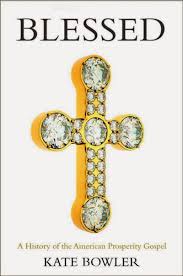
Blessing. It’s what every wants, but few know how to get.
In America, we have a certain brand of blessing that has come to be known as the prosperity gospel. You can find its explicit version on TBN and its more subtle form in a Christian bookstore near you. This subtler prosperity gospel comes with invitations to ask God for the impossible and promises to help you break through to the blessed life. In its softer form, the blood of Christ may not be denied; it’s just hidden behind the luggage of the Lord’s blessings.
In other words, instead of centering on the “blessed and only Sovereign” (1 Tim 6:15), this soft prosperity preaching, as Kate Bowler calls it, centers on man and his earthly desires. Lost is a sense of eternal gravitas and the biblical conviction that God created the universe for his glory. What it lacks is a sense of what blessing is and isn’t. We need to let Scripture inform our understanding of blessing, and we need to see that true blessing is radically God-centered. Continue reading →
In the years before seminary, when God was awakening a hunger in my heart for the bible and theology, I was introduced to the subject of ‘biblical theology.’ Now that makes sense right? Biblical theology is the mashup of ‘bible’ and ‘theology.’ Only it is more specific than that.
As my doctoral supervisor, Stephen Wellum, recently defined it: Biblical theology is the “hermeneutical discipline,” that
Seeks to unpack God’s unfolding redemptive plan, doing justice to the diversity of it, while always remembering that despite the diversity it is one plan which reaches its fulfillment in the person and work of Jesus Christ. Biblical theology is concerned to discover how the parts of Scripture fit in terms of the whole, according to God’s intention and purposes, not our own imaginative constructions. Biblical theology is utterly essential to rightly interpreting and ‘putting together’ the whole counsel of God and thus learning to ‘think God’s thoughts after him.’
In truth, everyone has a biblical theology. But not everyone has a good biblical theology. Since living the Christian life depends wholly on knowing God, his gospel, and how God’s word relates to our lives today, biblical theology is crucial matter of consideration for pastors and those in the pew. In other words, its not an optional class some Christians might enjoy. It is central to our Christian walk.
In that vein, for those who are interested in learning how to think God’s thoughts after him according to the way that God has revealed himself over time in the Scriptures, let me suggest a few quick resources.
Biblical Theology by Gerard Von Groningen. Covenant Seminary (St. Louis, MO) offers a whole seminary class on biblical theology taught by the insightful OT scholar Gerard Von Groningen. You have to sign up for the class, but the cost is free. (Covenant Seminary)
What’s in the Bible? Phil Vischer, the creator of Veggies Tales, has come up with a new and improved series that teaches biblical theology to young children. You can read about it hereor watch a preview below. (The Gospel Coalition)
Via Emmaus. It is my meager attempt to provide on this blog a collection of biblical, theological, and biblical-theological fodder for your edification, so that you might read the Bible better.
[This is the second part of a three-part series outlining a theological introduction to Ecclesiastes].
Date: Tenth Century
If Solomon is the author (see part one), the date is pretty easy to determine (10th Century B.C.). A better question might be—on the basis of Solomon’s wise but foolish life—when did Solomon write this?
The book itself portrays an aged and chastened king calling young men to avoid the mistakes he has had made. From Solomon’s life we have much to learn, and the point that Solomon wants to drive home on the basis of his own life is twofold:
Fear God and keep his commandments
Beware the vanity of material pleasures
This is the counsel of an older man, whose pain drives him to warn others of his mistakes. Continue reading →
 There is a dangerous tendency in the life of any Christian, and especially among those who labor to teach the Word, to read the Bible for the sake of someone else. I experienced this recently as I was teaching on the glories of the cross of Christ. Admittedly, my spirit was not exulting in the doctrines I was teaching as much as I was encouraging others to exult in them. Like a dutiful usher, I was leading others to find room at the table, but I was too busy to sit down myself.






 Via Emmaus