Of Spaceships and City Streets: G.K. Beale on Two Kinds of “Literal” Reading

In his massive and massively helpful A New Testament Biblical TheologyG. K. Beale spends the opening chapters outlining the storyline of the Bible and the eschatological nature of the Old Testament. Rather than defining eschatology as merely that category of doctrine that describes future events, he rightly explains how the original creation came with “eschatological potential” (89). Still, what is most helpful in his approach to reading the Bible eschatologically is his approach to reading the Bible “literally.”

Much debate continues on this point today, and to quote the “theologian” Mandy Patinkin (of Princess Bride fame), I do not believe most people who demand a literal reading know what that word means. Or at least, their definition and use only consider one aspect of a literal reading—namely, a narrow reading of individual texts, without considering how a literal reading can also be applied to whole books, including the whole canon itself. Continue reading

Reading the Bible Better in 2019

podcastlogo

The law of the Lord is perfect, reviving the soul;
the testimony of the Lord is sure, making wise the simple;
the precepts of the Lord are right, rejoicing the heart;
the commandment of the Lord is pure, enlightening the eyes;
the fear of the Lord is clean, enduring forever;
the rules of the Lord are true, and righteous altogether.
More to be desired are they than gold, even much fine gold;
sweeter also than honey and drippings of the honeycomb.
Moreover, by them is your servant warned;
in keeping them there is great reward.
— Psalm 19:7–11 —

On the eve of 2019, I want to share a new podcast that our church will host in the new year. In conjunction with our church-wide Bible reading plan, which is based on Robert Murray McCheyne’s classic plan, we are going to offer a weekly podcast that answers questions from the Bible and helps us to read the Bible . . . . and read the Bible better.

If this blog has been helpful to you over the last few years, perhaps this podcast will also be of interest. My hope is to help our church and those who listen in to read Scripture more and better—which I might define as seeing Christ more clearly and more fully in all of Scripture. As Jesus taught his disciples, all the Scriptures point to him (Luke 24:27; John 5:39). Yet, often we can miss how Scripture points to Christ.

For some time, I have found the most helpful books and teachers are the ones who help me see more of Christ from the whole Bible. In this blog, I have sought to share their observations and some of my own with you. In recent months, I have written very little on this blog as I’ve been finishing up a manuscript on a biblical theology priesthood.

That manuscript will be finished, Lord willing, by the end of January. After that I hope to resume more writing here. Until then, and after, I pray this podcast will serve as a catalyst for conversations about Christ from all Scripture and will complement the biblical-theological writing found on this blog.

If you are interested in listening to this podcast, you can find a button on the right side of my website, a webpage on our church website, and (in time perhaps) we’ll be able to link this podcast to Apple or wherever you find your podcasts.

As the hours tick down in 2018, let me encourage you to make plans to read the Bible in 2019. If you don’t have a plan for reading, consider using McCheyne’s reading plan. If you do have a plan, let me encourage you to read the Bible in community—ideally, in your local church. And if this blog or podcast can be of help to you in reading the Bible and reading it with an eye to Christ, then let me know some of the questions you have as you read Scripture. In print or on air, I will seek to answer them, as we seek to know more of Christ together.

Indeed, God’s Word is an incredible gift to us. May we see it as the treasure it is and shape our lives to read it and read it better, so that our wet be changed by it and our triune God would receive the glory he deserves!

Soli Deo Gloria, ds

Joshua & Associates: Finding Your Place in Christ’s Royal Priesthood (Zechariah 3)

priestcolorJoshua & Associates: Finding Your Place Christ’s Royal Priesthood (Zechariah 3)

The angel of the Lord. A satanic accuser in the throne room of God. A priest with dirty clothes. The promise of a coming Messiah. And a front row seat to God’s plan of redemption. On Sunday we considered all of these items, as they appear together in Zechariah 3.

Finishing up our series on the priesthood, we saw in Sunday’s sermon how our lives fit into the incredible storyline of the priesthood. From Zechariah 3, in particular, we learned how God restored the priesthood after the exile, which served as “sign” (v. 8) for a greater priesthood to come.

If you want to understand how the priesthood moved from the Old Testament to the New, Zechariah is an important book. And this sermon will help you understand that book and how Joshua the high priest foreshadowed the coming of a greater Joshua and his friends.

You can listen to the sermon online. Response questions are below along with a few resources on Zechariah and the priesthood. Continue reading

Our Great High Priest (Exodus 28–30)

priestcolorSermon Audio: Our Great High Priest (Exodus 28–30)

Last week we celebrated the Reformation Day (October 31) and the recovery of the gospel brought about by men and women like Martin Luther and Katherine von Bora. Both of these Reformers fled the monastic life in order to follow Christ. Yet, in departing the Roman Catholic system of priesthood, they did not abandon the priesthood of Christ nor the priesthood of believers.

In fact, Martin Luther was one of the most prolific exponents of the biblical teaching that all followers of Christs are saints—a priesthood by faith in Jesus Christ. Thus, in a very real sense any Protestant view of the Bible that denies the place of priesthood actually denies the very gospel which the Reformation recovered. Jesus Christ is our great high priest, one whose sacrifice for sin and priestly intercession makes faith possible.

Thinking again, therefore, about what Scripture says about priesthood, we considered in Sunday’s sermon the necessity of a high priest, and what means that Jesus is our great high priest. Going back to Exodus 28–30, we considered the original purpose of the high priest in Israel and how Jesus came to both fulfill and exceed those original expectations.

If the priesthood is something you care about, or if its something you don’t care about, this sermon is for you. You can listen to it online. Response questions are below as are a few additional resources. Continue reading

You Were Made for This: An Introduction to the Priesthood (and Yourself)

priestcolor“You were made for this!”

This phrase seems to be thrown around quite a bit these days: Sports commentators talk this way about athletes; teachers about pupils; mentors about those they coach. In short, it is a way of speaking that comes from a recognized “authority” on someone who is ascending in their field. It is language meant to boost esteem and put everyone on alert, that the next star is rising.

In our celebrity-crazed culture, everyone wants to be special. Indeed “special” is the carrot that has motivated so many to aspire to greatness. I’ve felt this pull and have thanked God that my dreams of athletic glory were mercifully cut short. Still, the hunger for this kind of glory remains.

And it remains with such a strong pull because we were made for glory! Not just some of us, but all of us were made to enjoy and exhibit the glory of God. And thus, until we discover the true source of glory, we will chase glory in vain. Therefore, we must see what Scripture says about the glory of God.   Continue reading

Read the Whole Bible as a Whole Bible: Rejecting Critical Source Theory and Reconciling Genesis 1 and 2

alexander-michl-724529-unsplashOne of the great questions about the opening chapters of Genesis is the relationship of the two creation accounts. Are Genesis 1 and Genesis 2 two different accounts? From two different sources? Or is there a rhyme and reason for the repetition and ostensible differences between the six days of creation in Genesis 1 and the formation of Adam and Eve in Genesis 2?

Since Julius Wellhausen—a pioneering German scholar in the 19th C who advocated a source theory to the Pentateuch and who fabricated a competition between priests and Levites behind the Bible—there has grown a small cottage industry arguing that the books of Moses and the opening chapters of Genesis have multiple authors. While various “documentary hypotheses” have been put forward, four sources have often been posited. Labeled by the letters E, J, P, D, these four sources are various traditions in Israel—respectively, Elohim, Jehovah, Priestly, and Deuteronomist.

I first encountered this higher-critical approach to the Bible in my liberal arts college—stress on the word liberal. Though I had no way of knowing how to counteract this teaching at the time, I have since seen how reductionistic and unfaithful this approach is to the Bible. In particular, it short-circuits any theological intentions of the original author. In other words, whenever a tension or apparent contradiction is observed, the solution is to attribute contrasts to various sources behind the Bible. Consequently, it denies the need to wrestle with the text and understand the author’s original text.

In this way, it actually diminishes scholarship and the theological glory of the biblical text. That is, it reduces the weight of the full revelation of God. And thus, I happily and unswervingly repudiate the source theory of the Bible. Likewise, I give praise to God for Old Testament scholars who stand against the critical consensus and write for the upbuilding of the church. Continue reading

From Covenant-Breakers to Covenant-Keepers: How Christ Redeems Marriage and Divorce (Matthew 5:31–32)

sermon05

From Covenant-Breakers to Covenant-Keepers: How Christ Redeems Marriage and Divorce (Sermon Audio)

What does the Bible say about divorce?

Unfortunately, it says quite a bit. As a book that gives us everything we need for life and godliness, the Bible gives instructions about marriage and warnings about divorce. But that is not all that it says.

If our minds jump too quickly, we may only remember the words of Malachi 2: God hates divorce. But we can’t read that prophetic utterance without reading Jeremiah 3, a passage that tells how God issued a certificate of divorce to his covenant people Israel, when their sin destroyed their covenant with God. Moreover, we cannot forget the grace God gives to heal past sins, even as we read and repeat his instructions about covenant marriage and the sinfulness of divorce.

Accordingly, we must understand divorce according to the full gospel story of creation, fall, redemption, and new creation. In this context, we begin to see how the whole Bible gives comfort and conviction about this and every subject.

But why are we taking about divorce?

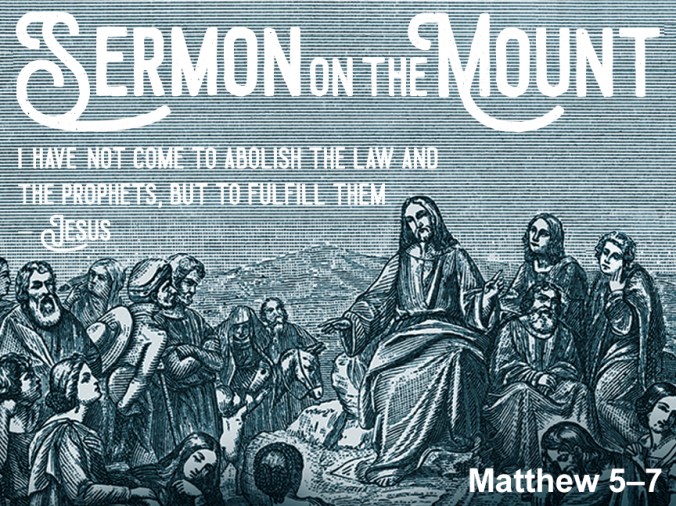
Well, to our series on the Sermon on the Mount, we had to return to one section of the Sermon our schedule forced us to postpone—namely, Jesus’s teaching on marriage and divorce in Matthew 5:31–32. With help from Jeremiah 3, I preached a message on the root problem of divorce (a hard-heart) and how Christ enables covenant-breakers to be covenant-keepers.

You can listen to the sermon online. Response questions are below, as are additional resources—both ethical and practical—regarding marriage and divorce.   Continue reading

Mizpah: A Clue for the Storyline of 1 Samuel and for Reading the Bible Better

nick-tong-76567-unsplashWhat is in a name? Or, for that matter, what is in a place? In the Bible, often there is a lot in a place or a name. Just think about Jabez (1 Chronicles 4:9–10) or what Nathanel thought about Nazareth (John 1:46).

Those are just two examples of the way names and places matter in the Bible. In fact, O. Palmer Robertson has written a whole book on the theological significance of geography. And the careful reader of Scripture would do well, especially in narrative books, to consider the location where the story takes place.

For instance, in 1 Samuel Mizpah, a city in Benjamin, shows up eight times—seven times in chapter 7, once in chapter 10. And I believe this location gives significant information about the book of 1 Samuel and the ominous choice of Saul as king. Let’s consider and see how paying attention to this place helps us understand 1 Samuel and how to read biblical narratives. Continue reading

From the First Adam to the Last Adam: 15 Quotations from ‘Christ from Beginning to End’

christ.jpegWhen one of my closest friends (Trent Hunter) and my doctoral supervisor (Stephen Wellum) write a book together on biblical theology, it is not surprising I’d commend it. In fact, I did that months before it came out and as soon as it came out, I assigned our “Theology Thursday” book study, a men’s group at our church, to discuss Christ from Beginning to End: How the Full Story of Scripture Reveals the Full Glory of ChristWe’ll do that Thursday, but before then let me say a couple things about this new book.

In this biblical theology the reader will find a well-crafted but non-technical summary of the Bible which helps people understand how to read the Bible and what is in the Bible. Following the trajectory of the biblical covenants (with Adam, Noah, Abraham, Israel, David, and Christ), Christ from Beginning to End incorporates a biblical vision which I have shared with them in personal discussions and teaching for the last decade.

In fact, the book itself comes from the teaching ministry of Dr. Wellum at Southern Seminary and Ninth & O Baptist Church, where Trent worked with Dr. Wellum in his Sunday School class. This is where I met them both, and I rejoice in the publication of this book, as it so well-expresses the way I hold the Bible—as a result, no doubt, of my time spent with Dr. Wellum. Still in reading this book, one feature stood out above the rest, and one I want to highlight it here.

From beginning to end, Wellum and Hunter make a strong connection between the first and last Adam. In fact, somewhere in the middle of reading, I realized that I can’t think of another biblical theology that does as a good a job of connecting Adam to the rest of the Bible. With meticulous consistency, they show how each biblical covenant mediates the gap between Adam and Christ, and how figures like Abraham, Israel, and David both repeat Adam and anticipate the Second Adam (Christ).

Indeed, without having read the book I was already giving it away, because of my close friendship with both of these brothers. But now having read it, I commend it for a fresh reason. If you want to understand the Bible’s Adam-Christ typology, a framework that fills Paul’s letters (e.g., Romans 5 and 1 Corinthians 15) and the rest of the New Testament (e.g., Hebrews 1–2), Wellum and Hunter’s book is the place to begin.

In addition to giving a biblical framework for the world (i.e., creation-fall-redemption-new creation) and expounding how the biblical covenants work their way towards Jesus Christ, this attention to Adam helps us understand how Christ is more than a New Israel or a Savior of our own making. He is the true man (Adam) and the one who is both God and the Son of God, according to the biblical covenants, who has come to bring redemption to all the nations—just as God promised Adam (Genesis 3:15), Abraham (Genesis 12:1–3), Israel (Exodus 19:5–6), and David (1 Samuel 7:19; cf. Psalm 72).

In what follows, therefore, I share 15 quotes from Christ from Beginning to End which I pray may help you see the role of Adam in the Scripture. At the same time, if these quotes pique your interest in biblical theology and Adam’s role in God’s redemptive history, I encourage you to pick up this book and read through it. Better yet, pick up a handful of copies, share them with friends, and then meet to discuss. That’s what we are doing on Thursday. You should do the same. Continue reading

A Prayer God Hears (Matthew 7:7–12)

sermon05

Sermon Audio: A Prayer God Hears (Matthew 7:7–12)

How deep the father’s love for us / How vast beyond all measure
That he should give his only Son / To make a wretch his treasure

These words by Stuart Townend express in song what Jesus tells us in the Sermon on the Mount, namely that the Father in heaven loves his children and longs for us to come and find our greatest reward in him. Indeed, this is why Jesus Christ came, to bring the Father’s kingdom to earth by means of his death and resurrection. In the new covenant Jesus made a way for sins to be forgiven and for forgiven sinners to enter God’s presence.

In Matthew 7:7–11 specifically, we find another place where Jesus’s focus on the Father teaches disciples about the kind of access they have to God and the kind of prayer our Father in heaven loves to hear. On Sunday considered this passage and how Jesus teaches us to pray.

You can listen to the sermon online. Below you can find discussion questions and additional resources, including the majestic rendition of How Deep the Father’s Love for Us by the Austin Stone Church. Continue reading