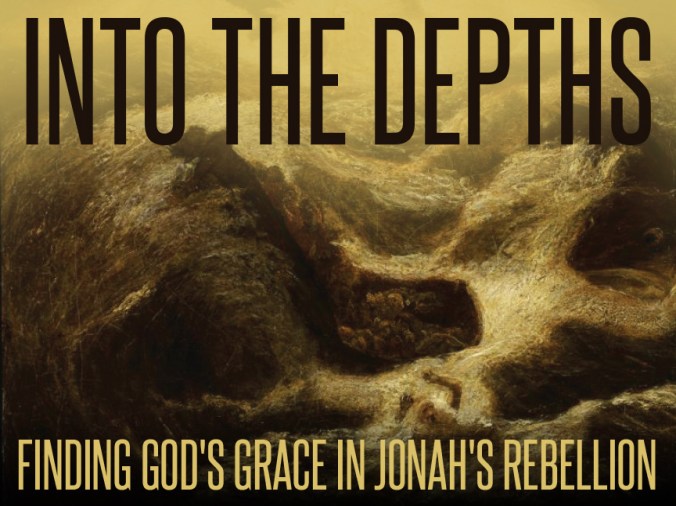
 For being only four chapters and 48 verses, the book of Jonah demands a lot from its readers. In the original language, it becomes clear how well-crafted the book is. In four chapters, there are at least four chiasms that organize the book, and on the whole, Jonah is a literary masterpiece. At the same time, the book is best understand in combination with the rest of the Minor Prophets—consider the way Jonah’s rebellion mirrors that of Edom in Obadiah, or the way the king of Nineveh preaches Joel 2:12–14 (see Jonah 3:6–9).
Still, if Jonah demands a lot from its readers, it gives even more. In its four scenes, it gives its readers an incredible vision of God, his grace, his power, and his purpose among the nations. In other words, in the rebellion of Jonah, a (false) prophet of the Lord, we find much about God’s grace.
Over the next two months, our church will be spending ample time in this book, along with a few other Minor Prophets. So in this post, let me introduce a few themes we will see again and again—namely, God’s sovereignty, the book of Jonah’s satire, and the promise of second chances for sinners who repent and turn to God. Continue reading
 Psalm 1, Psalm 23, Psalm 51, Psalm 103, Psalm 110, Psalm 121 and Psalm 139. These are just a few of my favorite Psalms. Through the years, I have prayed these Psalms, memorized them, preached them, and turned to them in dozens of counseling situations.
 Via Emmaus