 Last month the Southern Baptist Journal of Theology (SBJT) published an article I wrote. In “From Beelines to Plotlines: Typology That Follows the Covenantal Topography of Scripture,” I argued that (most, if not all) typological structures begin in creation, move through the undulating contours of Israel’s covenant history (hence, covenant topography), until they find their terminus in Christ. Then, after being fulfilled by the person and work of Jesus Christ, they are continued in the new covenant people of God. My test case, or textual proof, was the typology of the priesthood. If you are interested, you can read the article online. I’d be interested in your feedback.
Today, however, I’m interested in looking at another test case, namely the typology of circumcision found in the Bible. I believe that the only way we can understand circumcision (and its relationship to baptism) is by looking at its development in the canon. And thankfully, instead of making that case, John Meade has already done so (far better than I could) in his chapter, “Circumcision of the Flesh to Circumcision of the Heart,” in Progressive Covenantalism: Charting a Course between Dispensational and Covenantal Theologies, edited by Stephen Wellum and Brent Parker.
Building on his earlier work on circumcision and its cultic origins and priestly intentions in Egypt, Meade shows how circumcision from the start was a sign, with in-built tension designed to lead to a greater reality—namely, circumcision of the heart. Indeed, as one follows the narrative of the Old Testament we can see how, long before the New Testament applies this sign to Christ (Colossians 2:11–12) and the people of faith (Philippians 3:3), the sign of circumcision is already shifting. From a careful reading of Deuteronomy, Jeremiah and the Prophets, Meade makes this point, and I share a few of his conclusions below. Continue reading
 Otherwise, what do people mean by being baptized on behalf of the dead?
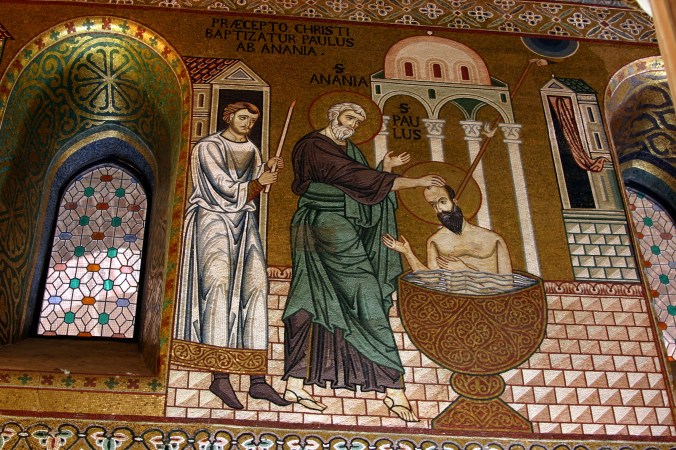 The book of Acts is pivotal for understanding the nature and function of the church. It is also challenging, because it presents a church that is “born” on Pentecost, at first contained to Jerusalem, but later expanded to Judea and Samaria and finally unleashed the ends of the earth. At the same time, it’s founding members were believers before receiving the Spirit and yet the gift of the Spirit is one of the distinguishing marks of the church as it spreads from Israel to Italy. In four instances (Acts 2, 8, 10, 19), the Spirit is given, but in no two instances are the exact events the same. For instance, speaking in tongues accompanies the Spirit in Acts 2, 10, 19, but not Acts 8. Likewise, water baptism precedes the Holy Spirit in Acts 8, but follows in Acts 10.
 In your Law it is written that the testimony of two people is true.


 Via Emmaus