Over the next couple days, I want to consider the subject of gender complementarity and the Great Commission. While reading Reforming Marriage by Doug Wilson, this subject arose, and it prompted some lengthy reflections. I hope you will consider the subject with me.
“For man is not from woman, but woman from man. Nor was man created for the woman, but woman for the man” (1 Cor. 11:8-9).
Douglas Wilson comments on these verses: The prepositions in these verses are important. The woman was created for the man. The man was not created for the woman. Now Paul is telling us here about how God made us. His instruction elsewhere about what we are to do as men ans women is based on what we are as men and women, and how we are oriented. The fundamental orientation of an obedient man is to his calling or vocation under God. Under normal circumstances, he cannot fulfill his calling alone–he needs help. The fundamental orientation of an obedient woman is to give that help. Another way of saying this is that the man’s orientation is to do the job with her help, while the woman’s orientation is to help him do the job. He is oriented to the task, and she is oriented to him (Douglas Wilson, Reforming Marriage [Moscow: Canon Press, 1995], 64-65).
Responding to Wilson’s cogent analysis, the question becomes, “What is the God-given task? And what difference do gender roles make in the accomplishment of the task?” In other words, can the task that Wilson describes be accomplished without particular attention to the roles? Fortunately, the Bible is not silent to the nature of the task or the means by which men and women united together accomplish the task.
In Genesis 1:28, God instructed Adam and Eve to “be fruitful and multiply and fill the earth and subdue it.” Their task was to have dominion over the earth, labeling all creation and overseeing its productivity. In Genesis 2, before the formation of the woman, this was Adam’s vocation in the garden of Eden: “to work it and keep it” (Gen. 2:15). In other words, by drawing connections between Genesis 1-2 and 1 Corinthians 11, the plain teaching of Scripture is that man was given the task of having rule in the world and the woman was created to assist in that endeavor. “It is not good that the man should be alone; I will make him a helper fit for him”, says the Lord (Gen 2:18). Why? So that together they could accomplish the task of multiplying image-bearers, cultivating creation in the field and at home, for the purpose of having God-glorifying dominion over all creation. This was the original task.
Enter Genesis 3 and this program is destroyed through stealth. Adam fails miserably at his priestly task of service and protection in the garden (cf. Num. 3:5-10), and Eve is acts as his tempting accomplice when she listens to the serpent and dismisses Adam’s protective role of authority. (Adam is by no means guiltless. He watches the whole scenario take shape, and passively remains silent [Gen. 3:6]). The result is a curse upon creation, the land that the man and woman were to cultivate and keep (Gen. 3:17; cf. Rom. 8:20ff). Moreover, a curse is put on them with the promise of pain, toil, interrelational strife, and ultimately death.
But what about the task? Does it change?. A survey of the Scriptures, seems to indicate that it does not. Despite the increased difficulty, in fact, the impossibility of accomplishing the task, the imperative to be fruitful and multiply does not change, nor does the command to have dominion over the earth. The problem is now that men and women have insufficient resources to accomplish the task. This is because all descending offspring are now marked by their father’s pattern of rebellion and sin (cf. Rom. 5:12-21), and their ability to rule over creation as God’s vice-regents is now infused with personal ambition, relational competition, and the ever-present threat of re-appropriating the serpents promise, “to be like God.” The task of subduing the earth for God, when humanity is in sinful rebellion against God.
Still the task remains. As the biblical narrative unfolds, glimpses of YHWH’s creational directive surface. To borrow terminology from Stephen Dempster’s work on the Hebrew Bible, dominion (rulership over creation) and dynasty (the proliferation of offspring) continue. Man’s orientation to the field and to the task of subduing the earth remains, though viciously skewed by sin and sometimes enacted with utter disregard for the Creator. Likewise, women in the Bible and in history continue to fulfill the task by bearing children who image God (cf. Gen. 9:6; James 3:9). Nevertheless, humanity itself has been unable to fulfill the task in all of its glory as is apparent in a world that groans and in a human race that dies!
So what can be done?
The resolution to the problem is that in the midst of mankind’s puny attempts to carry out the work established by God in the beginning, God himself interceded and interjected his own man to accomplish the task. Promised from the beginning (Gen. 3:15), brought about in the fullness of time (Gal. 4:4), Jesus Christ came as the second Adam (cf. Rom. 5; 1 Cor. 15) to accomplish the task, to redeem and remake humanity, and to put all things once again under humanity’s feet. He did this by living a life completing obedient to his Father in heaven, thus attaining perfect righteousness, by dying an undeserved death on a Roman implement of torture and punishment–the cross, and by raising again on the third day proving his righteousness and newly creating the promise of life after death (1 Cor. 15:1-3). In so doing, Jesus Christ accomplished the task and recast it in the form of the Great Commission: “All authority in heaven and on earth has been given to me. Go therefore and make disciples of all nations, baptizing them in the name of the Father and of the Son and of the Holy Spirit, teaching them to observe all that I have commanded you. And behold, I am with you always, to the end of the age” (Matt. 28:18-20).
In the Great Commission, we have the miraculous and powerful reversal of the effects of the Fall and the re-establishment of original task: “Make disciples” corresponds with the original command to be fruitful and multiply. Now image-bearers of the risen Christ are not simply born, they are reborn, and all those who are born again will be able to enter and see the kingdom of God (John 3:3-8). Moreover, the authority that Christ possesses is a promise that the earth, knocked from under the feet of Adam and Eve, will one day be restored to all those who have submitted themselves to Jesus Christ, believed his gospel, and have been made ready (i.e. made ready through imputed righteousness) for his coming reign. In this, the task has been restored to redeemed humanity in an already but not yet fashion. Whereas the creational imperative to be physically fruitful remains, and the task of cultivating the earth–even in its corrupted state–continues, the greater task now becomes the preaching of the gospel and making disciples of all the nations in preparation for the age to come. This is the task of the Great Commission, and the task of every Christian couple!
From here we can ask, “How do gender roles fit into this biblical mission? Are they essential or merely optional? And why does it even matter?” Certainly, the Bible is not neutral and gives us instruction for life and godliness (2 Pet. 1:3-4). Tomorrow, we will pick up this theme and continue to consider marriage, gender roles, and the Great Commission.
Sola Deo Gloria, dss
 Sunday our church begins a new series in the letter of 1 Corinthians. To help get my mind around this book, I decided to summarize it in 16 tweets, the number of chapters later assigned to Paul’s letter.
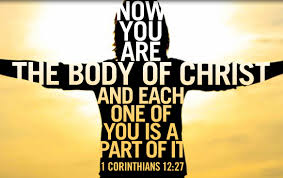 Now you are the body of Christ and individually members of it.
 Via Emmaus