
The Drama of Marriage: What Christ and the Church Teaches Husbands and Wives (Ephesians 5:22–33)
more-than-we-can-imagine_The Drama of Marriage: What Christ and the Church Teaches Husbands and Wives

Few things in life are more delightful and more difficult than marriage. And this week, as our church, returned to the book of Ephesians we picked up Paul’s Christ-centered teaching on marriage.

You can find the sermon online. Below there are discussion questions with additional resources that include some preliminary thoughts on marriage that fed into this weeks sermon. Continue reading

Noah as a Second Adam: Eight Evidences

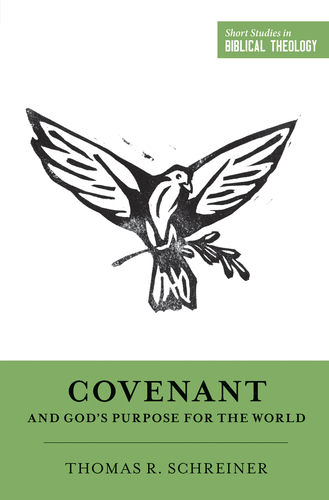
covenantIn his short study on biblical covenants, Covenant and God’s Purpose for the World, Tom Schreiner provides a helpful comparison between Adam and Noah. As our men’s Bible study looks at this section of Scripture today, I share Schreiner’s eight evidences for seeing textual connections between Adam and Noah. Clearly, Moses wrote Genesis 1–11 to show how Noah is a Second Adam.

Here are his eight observations. I’ve added the italicizes to highlight the observations.

First, God’s work of ordering and shaping the creation occurred when the earth was covered with water and chaos (Gen. 1: 2). So too, after the flood the earth was inundated with water, and a new beginning took place when the water receded.

Second, God created the birds, creeping things, and animals to flourish and multiply on earth (Gen. 1: 20–21, 24–25). After the flood, the birds, creeping things, and animals again began to propagate on the earth (8:17–19). Continue reading

The Enduring Goodness of Marriage: What the Gospel Has to Say to a Culture of Cohabitation

old-people-couple-together-connected.jpgWith his characteristic biblical insight and cultural engagement, Tim Keller’s book on marriage, The Meaning of Marriageis filled with wisdom and encouragement. Aimed at marrieds and singles considering marriage (and singles who have sworn off the institution), Keller provides a helpful look at God’s design for marriage.

Importantly, he spends the first chapter considering the state of marriage today. He recognizes the way in which marriage has been assailed by the culture, and he makes a cogent argument for the enduring goodness of marriage in a secular age.

It’s from this first chapter, I want to share a few quotations that reflect on the pain of marriage, the enduring goodness of marriage, the perversion of marriage (i.e., how redefined expectations for marriage have twisted God’s original design); and way the gospel brings hope and meaning to marriage.

If these quotes resonate with you, I encourage you to pick up Keller’s excellent book. Continue reading

Marriage: Counter-Cultural in Every Generation

louis-moncouyoux-3615There are many who have read Paul’s instructions to husbands and wives in Ephesians 5:22–33 as an accommodation, or even an appropriation, to the Greco-Roman culture. However, Clinton Arnold in his outstanding commentary on this section, shows why that cannot be true. Taking an extended look at “The Roles of Wives in Roman-Era Ephesus and Western Asia Minor” (pp. 372–79), Arnold shows why Paul’s words are radically counter-cultural—both in his day and in ours.

Writing to a church combatting spiritual powers, Paul is not adopting the idea of patriarchy and headship from the Roman culture. If anything, he is opposing an ancient form of feminism that saw women asserting greater independence. In particular, citing many primary sources, Arnold shows how growing wealth among women, coupled with positions of leadership and the rise of goddess cults all worked to create “freedom and opportunity for women,” which had the effect of creating competition between married men and women (376).

This “new Roman woman,” as Arnold calls it, shows why Paul’s words about marriage and the family in Ephesians are not simply a cultural accommodation. Rather, as he puts it,

Ephesians was thus written to a place and at a time where traditional Greek and Roman roles for women and wives were in a dynamic flux. It is no longer accurate to portray the social-cultural environment as oppressive for women, denying them opportunities for leadership in religious and civic institutions, and extending to them no places of involvement outside of the domestic sphere. Of course, these opportunities would not have been available to most of the peasant and populations. But the same opportunities would have been closed to peasant and slave men as well since their primary focus was on survival. (378)

This is a vast change from the way many have read Ephesians. But we can ask, what significance does this have for our reading of Ephesians? Continue reading

Washed by the Water of the Word: How Paul Applies Ezekiel’s Words on Marriage to Christ and the Church

geetanjal-khanna-81242.jpg

Husbands, love your wives, as Christ loved the church and gave himself up for her, that he might sanctify her, having cleansed her by the washing of water with the word, so that he might present the church to himself in splendor, without spot or wrinkle or any such thing, that she might be holy and without blemish.
— Ephesians 5:25–27 —

In his commentary on Ephesians, Clinton Arnold shows how Paul takes up the imagery and language of Ezekiel to explain the work of Christ in purifying his bride, the church. As Ezekiel 16 looks forward to a day when the God of Israel will redeem and purify his covenant people, it is important to see how Ezekiel’s prophecy is fulfilled by Christ and the church. Thankfully, Paul demonstrates how Christ’s purchase and purification of his bride gives us explicit textual evidence for that fulfillment.

Arnold picks up the way Paul has made those connections and helpfully shows us how the many passages describing God’s marriage with Israel (e.g., Isaiah 54:5; 58:8; 61:10; 62:5; Jeremiah 2:2; 3:1–10; Ezekiel 16; Hosea 2:19–20; 4:12; 5:4; 14:4) are picked up and applied to the bride of Christ composed of Jews and Gentiles. Here’s what he says, Continue reading

Reading the Transfiguration on Mount Sinai: A Comparison Between Exodus 24 and Mark 9

transfigurationLast week, I taught on the Mount of Transfiguration in Mark 9. And in my studies I discovered just how much this passage depends on the events of Sinai. In what follows, I will try to show a few of the connections and why reading these passages together is so fruitful for understanding the revelation of God’s glory in Christ’s transfiguration.

Comparing Mount Sinai and the Mount of Transfiguration

Mount Sinai (Exodus 24:15–18) Mount of Transfiguration (Mark 9:2–9)
15 Then MOSES [and Joshua, LXX] went up on the mountain, and the cloud covered the mountain. 16 The glory of the Lord dwelt on Mount Sinai, and the cloud covered it six days. And on the seventh day he called to Moses out of the midst of the cloud. 17 Now the appearance of the glory of the Lord was like a devouring fire on the top of the mountain in the sight of the people of Israel. 18 Moses entered the cloud and went up on the mountain. And Moses was on the mountain forty days and forty nights. And after six days Jesus took with him Peter and James and John, and led them up a high mountain by themselves. And he was transfigured before them, and his clothes became radiant, intensely white, as no one on earth could bleach them. And there appeared to them Elijah with Moses, and they were talking with Jesus. And Peter said to Jesus, “Rabbi, it is good that we are here. Let us make three tents, one for you and one for MOSES and one for Elijah.” For he did not know what to say, for they were terrified. And a cloud overshadowed them, and a voice came out of the cloud, “This is my beloved Son; listen to him.” And suddenly, looking around, they no longer saw anyone with them but Jesus only.


From a side-by-side comparison, we can see numerous parallels between Exodus 24 and Mark 9. Here are eight points of similarity that I see. (If you see more, feel free to share in the comments.) Continue reading

Learning to Love One Another: The Gospel, Racial Reconciliation, and Burden-Bearing (Galatians 1–6)

crawford-ifland-86286

Learning to Love One Another: The Gospel, Racial Reconciliation, and Burden-Bearing (Galatians 1–6)

In recent years, it’s been hard to miss our country’s rise in racial tensions. Or maybe we are just seeing what’s been there under the surface all along. Our country seems overwhelmed by all kinds of racialized sentiments. And in the church, Christ’s multi-ethnic bride continues to bear the scars of deep-seated racial division and hurt that goes back decades and centuries.

By contrast, the Bible presents a glorious vision of multi-ethnic worship, centered around the throne of God (see Revelation 5, 7, 21–22). And in Paul’s letters, there is a constant refrain for a diverse people to be unified in the work of Christ and the gift of the Spirit.  

On this point, this Sunday’s sermon focused on the gospel message in Galatians and how it relates to racial reconciliation. From Galatians’ six chapters, I drew out six gospel truths. In six points, we see that Galatians

  1. is all about the gospel;
  2. identifies a kind of division (in the church) that denies the gospel;
  3. proclaims a gospel that is international in scope and content;
  4. prioritizes faith as the fundamental community marker;
  5. teaches those who have been justified by faith alone to be passionate about justice;
  6. and calls the gospel community to seek justice in love, service, and burden-bearing to one another.

This sermon marks the second time I’ve preached on this subject. (The first was a biblical theology of race). As before, this subject is an incredibly heavy one, and one that still raises more questions than I have answers. That being said, the gospel of Jesus Christ is the answer that can give hope and help to the body of Christ bruised and broken by racism.

My prayer is that God would use this sermon as one small step to help our church grow as community compelled by the vision of Revelation and led by the directions of Galatians (and the rest of Scripture). May God bring healing to his church and may the power of gospel be see in multi-ethnic communities of faith. You can listen to the sermon online. Discussion questions and further resources are below.  Continue reading

Nine Spiritual Disciplines from Charles Octavius Boothe (1845–1924)

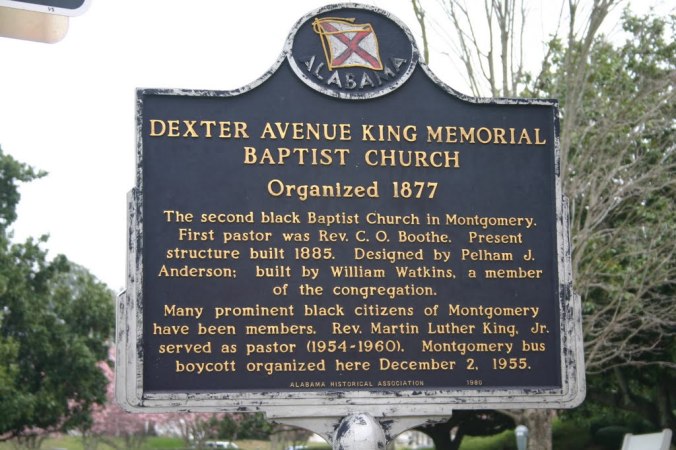
dexter avenueAs our church finishes up a month-long study on the spiritual disciplines—personal and public—I turn to Plain Theology for Plain People by Charles Octavius Boothe (1845–1924). In chapter 6, entitled “How Christians Should Live and Labor,” Boothe lists nine “spiritual disciplines” that should mark the life of the believer.

In what follows I will introduce the man and his work, as well as the nine spiritual disciplines that should mark every believers’ life. I encourage you, if you are looking for a short, readable book on doctrine that is heavy on Scripture and clear on doctrine, take up and read Boothe’s Plain Theology for Plain People. Continue reading

Four Ideas That Led Margaret Sanger and Others to Deadly Consequences

sangerBecause ideas have consequences, it matters what a leader believes. This is true in general, but it is also true with the mother of abortion in America, Margaret Sanger.

Over the last week, I read the book Killer Angel: A Biography of Planned Parenthood’s Margaret Sanger by Presbyterian pastor George Grant. The book, commended by R.C. Sproul and Michael Milton, uncovers the dark life of Margaret Sanger. In Grant’s book, he exposes many of the underlying ideologies which fueled Sanger. To understand what drove her and what still drives her disciples, its vital to know her story, and Grant’s book is excellent. (Here’s my summary of it).

In what follows, I want to make four summary observations from Sanger’s life and legacy that show how her views of sex, culture, eugenics, and money led her to start an organization that continues to prey upon the most vulnerable in our country. My prayer is that by knowing more of her story it will help us to be better equipped to expose Planned Parenthood’s lies and bring hope to those who women targeted by their organization. Continue reading

True Religion Defends Life Against Abortion (James 1:19–27)

george-hiles-189441True Religion Defends Life Against Abortion (James 1:19–27)

Since 1973 60 million babies have been killed through the legal practice of abortion. Tragically, the legal nature of abortion doesn’t change its lethal nature, nor does it change the fact that abortion unfairly targets minorities in our country. In other words, abortion is not unjust, in general; abortion’s injustice specifically targets black and Hispanic babies.

Since 2010 I have preached a sanctity of human life message every January. This year, my sermon considered the historic racist aims of abortion and the deadly influence of Margaret Sanger, the found of Planned Parenthood, on our country. Sanger’s reputation has been whitewashed through the years, but her lethal ideology shows its true colors when we learn more of her history.

In this years Sanctity of Human Life sermon, I trace some of her history and explain why it pleases God, protects the image of God, and produces Christlikeness to stand for life. Please take time to listen to this important message. You can find the sermon notes here. Discussion questions and additional resources are below. Continue reading